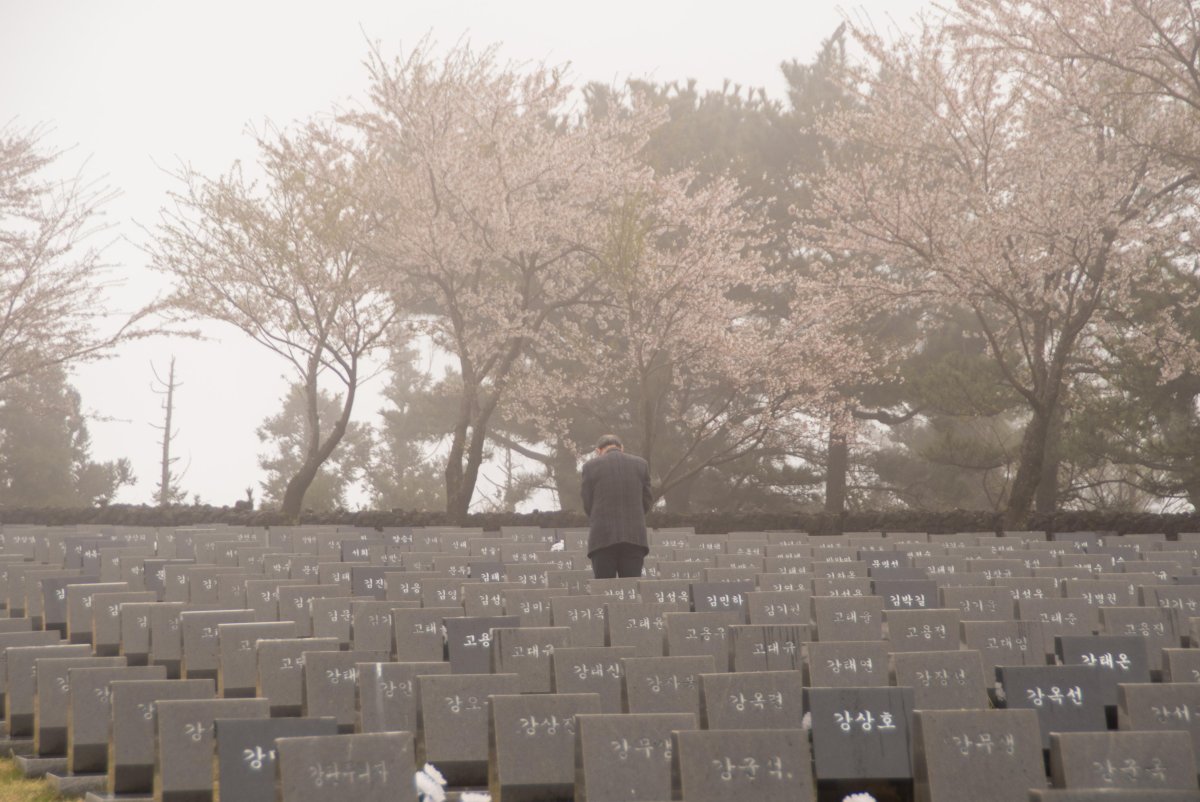
A man pays his respects during the 76th anniversary of the Jeju 4.3 memorial ceremony at the Jeju 4.3 Peace Park in Jeju City, South Korea, on April 3, 2024. File Photo by Darryl Coote/UPI
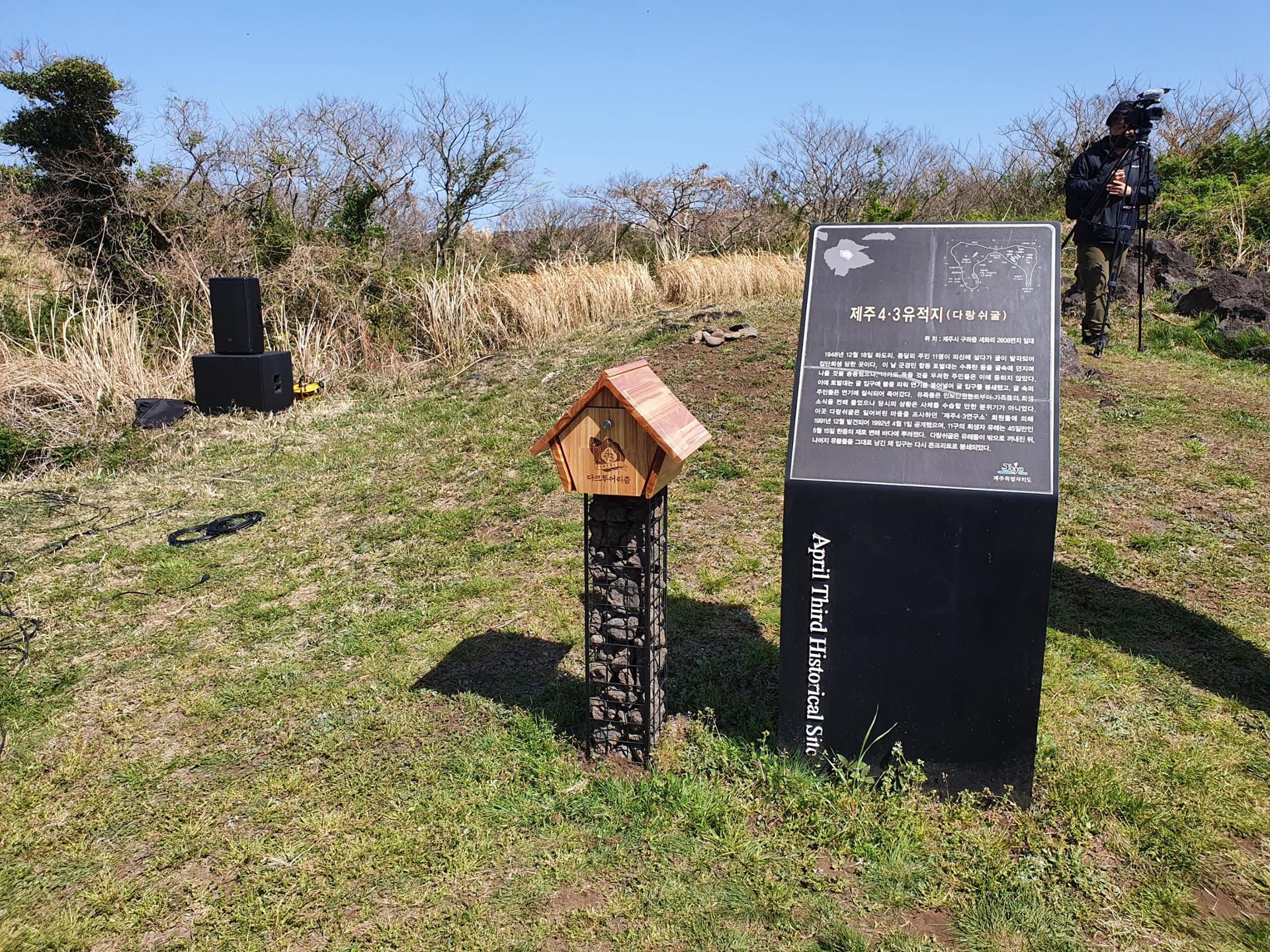
JEJU ISLAND, South Korea, Aug. 12 (UPI) -- The Korea Heritage Service announced Wednesday that Jeju Island's Darangshi Cave was under final consideration for registration as a national cultural heritage site, highlighting its importance in exposing the government's role in an early Cold War-era massacre and catalyzing a decades-long truth and reconciliation movement.
The cave was discovered on Dec. 22, 1991, in Jeju's northeastern Sehwa village by researchers investigating the Jeju Massacre, the slaughter of some 30,000 islanders from 1947-54 mainly by government forces in an effort to snuff out a communist uprising. Inside were the remains of 11 people, including three women and a 9-year-old boy, local villagers who were hiding from the government's scorched-earth operations of 1948.
The Korea Heritage Service described the site in a statement as being of "considerable academic value as a vivid historical location of the Jeju 4.3 Incident because it served as a catalyst for the movement to uncover the truth about the incident, became widely known to the general public through media coverage, and preserves much of the original form of the refuge."