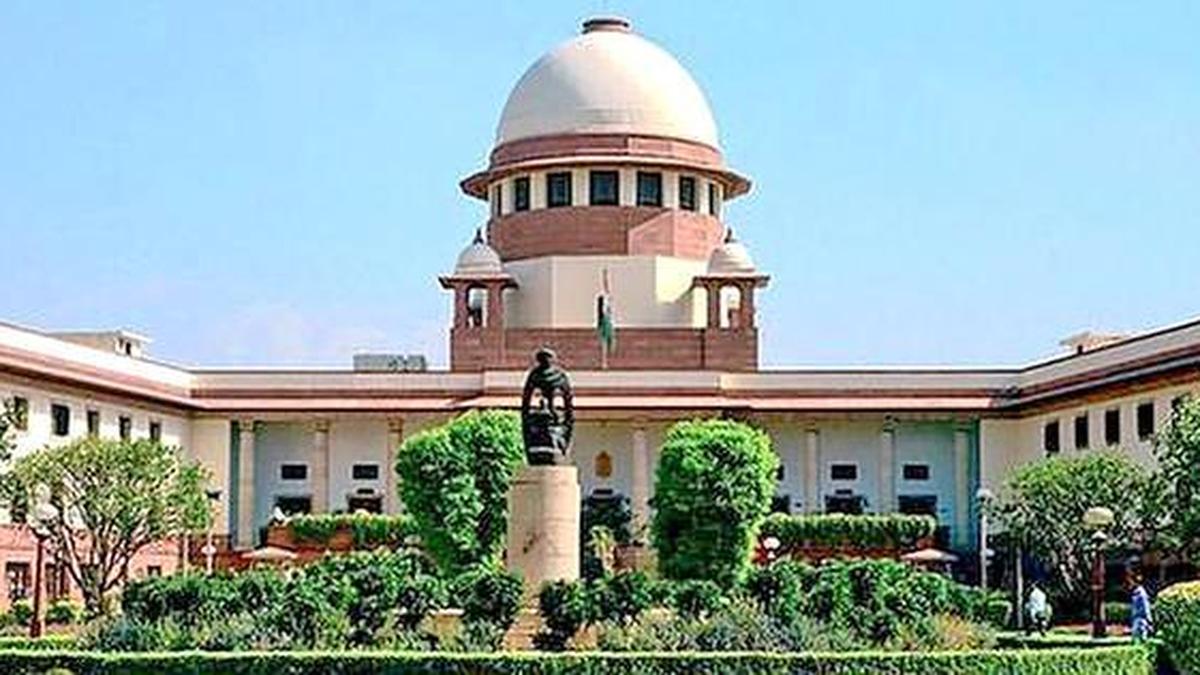
The story so far:The Supreme Court recently held in The State of Andhra Pradesh vs Suda Suresh Veera Venkata Naga Raju that Section 187(2) of the Bharatiya Nagarik Suraksha Sanhita (BNSS), enlarges the window during which police custody may be sought by the investigating agency. Such custody, under the BNSS is now available in parts, though in aggregate not exceeding 15 days during the first 40 or 60 days of the total permissible period of detention, rather than being confined to the first 15 days of remand alone.The Court also held that though the right to meet an advocate of choice is guaranteed under Section 38 of the BNSS, it does not, by any means contemplate the continuous ongoing physical presence of an advocate for the entirety of each interrogation session.Case under consideration by the SCIn a case of custodial death in which the dead body of the deceased-victim remained untraced, the original hard disks of the CCTV system were yet to be discovered, and discoveries under the Bharatiya Sakshya Adhiniyam (BSA) were imminent, the judicial magistrate granted eight days of police custody (against the requested 12 days), and allowed the accused to nominate two advocates of his choice to be present during police custody. Out of the two advocates, one was allowed to be present at any given point of time during investigation. The order clearly stated that ‘under no circumstances shall the period of police custody granted under this order be extended’.While on appeal, the Andhra Pradesh High Court modified some conditions pertaining to the period of police custody and presence of an advocate throughout the probe. The State therefore challenged the above conditions in the Supreme Court on the premise that these directly impinged upon the rights of the investigating officer to conduct unhindered investigation.The Supreme Court held that the apprehensions expressed by the investigating agency were realistic and justified and the statutory scheme under the BNSS which enlarges the window of police custody, must also be borne in mind. A magistrate or a court while exercising its supervisory jurisdiction, cannot place an absolute and non-extendable outer limit on custody, since such a limit forecloses recourse to Section 187(2) of the BNSS, regardless of what the investigation may yet reveal.The Court therefore permitted 7 days of (additional) police custody so that the total period of police remand, including that granted by the lower courts would not exceed 15 days.Current law on police remandSection 58 of the BNSS provides that any person arrested by the police without warrant cannot be detained for more than 24 hours, unless authorised by a magistrate under Section 187.Section 187(2) of the BNSS provides that in case it appears to the investigating officer that the probe cannot be completed within 24 hours, and there are grounds for believing that the accusation is well founded, the magistrate may authorise the detention of the accused for a period not exceeding 15 days in the whole, or in parts, at any time during the initial 40 days or 60 days out of the detention period of 60 days or 90 days as the case may be.Section 187(3) provides that the magistrate may authorise the (judicial) detention of an accused person beyond the period of 15 days, if he is satisfied that adequate grounds exist for doing so, for a period exceeding – (i) 90 days, where the investigation relates to an offence punishable with death, imprisonment for life or imprisonment for a term of 10 years or more; (ii) 60 days, where the investigation relates to any other offence. Thus, in case the probe is not completed within the above stipulated time period, the accused person may be released, which is widely known as default bail.The Supreme Court in the Suda Suresh case held that this legislative change was intended to meet situations where fresh facts, discoveries or leads may emerge during the course of investigation. Therefore, the window of police remand was enlarged beyond the initial 15 days, up to 40 days or 60 days of investigation.Previously, Section 167 of the CrPC provided that the detention of an accused in police custody could not be granted beyond the initial 15 days in the whole. However, during this first period of 15 days the magistrate could alter the nature of the custody from judicial custody to police custody and vice versa.On the presence of an advocateSection 38 of the BNSS provides that ‘when any person is arrested and interrogated by the police, he shall be entitled to meet an advocate of his choice during interrogation, though not throughout interrogation’. This provision is pari materia to Section 41-D of the CrPC.The top court held that a plain reading of the provision makes it clear that it does not contemplate the continuous, ongoing physical presence of an advocate for the entirety of each interrogation session, whatever be the visual or audible distance maintained. The Court held that an unqualified entitlement to continuous presence, would travel beyond what Section 38 BNSS itself contemplates. The Court therefore modified the condition imposed by the High Court, and held that such a lawyer shall only be allowed to remain present within the site of interrogation where he can see the respondent-accused. Further, the lawyer shall not be permitted to intervene in the process of investigation at any cost.On the question of videography and CCTV documentation, the Court also held that instead of uninterrupted videography of the transit of the accused between locations, the audio-visual recording of the actual session of interrogation, and of any proceedings of discovery or recovery undertaken with the accused, will satisfy the requirement.(R.K. Vij is a former Indian Police Service officer.)
Supreme Court clarifies scope of police custody under BNSS
Court held that Section 187(2) of BNSS enlarges the window during which police custody may be sought
943 words~4 min read