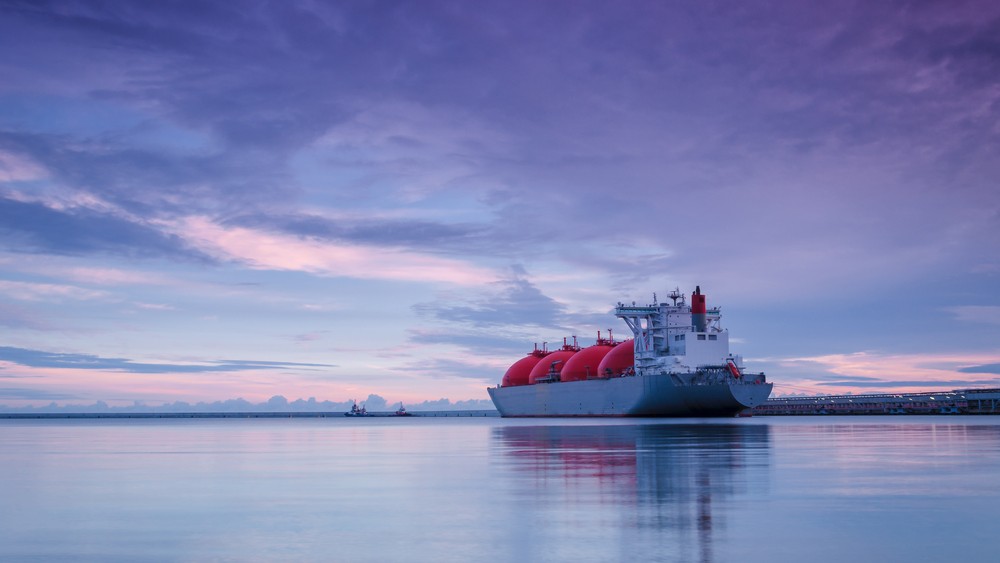
(Hahn & Co.) SK Shipping will become Asia’s largest LNG carrier operator and rebrand as K-LNG through a trillion-won fleet reshuffle orchestrated by private equity owner Hahn & Co..The company will acquire 16 liquefied natural gas carriers from sister company H-Line Shipping in exchange for 12 oil tankers and approximately $300 million in cash, Hahn & Co. said Thursday.The deal will give SK Shipping a fleet of 32 LNG carriers, placing it among the world’s three largest LNG shipping companies, according to Hahn & Co. Combined with its 14 liquefied petroleum gas carriers, the expanded fleet will sharpen its focus on gas and cleaner-energy transportation.To reflect that shift, SK Shipping plans to change its name to K-LNG.The transaction is awaiting approval from customers and lenders. Once completed, SK Shipping’s assets will total approximately 11 trillion won ($7.8 billion), while H-Line’s will be around 5 trillion won.The reshuffle is designed to give the two carriers clearer areas of specialization. While SK Shipping concentrates on LNG and LPG, H-Line will add oil tankers to its existing dry bulk and vehicle carrier operations.The 12 tankers being transferred to H-Line are tied to long-term transportation contracts with Korean and overseas customers, providing the company with a stable source of revenue. The additions will also strengthen its role in transporting crude oil and other key commodities for Korean companies.Hahn & Co. expects LNG shipping demand to grow as electricity consumption rises, driven partly by the expansion of artificial intelligence data centers. Energy major Shell projects that global LNG demand could increase by as much as 68 percent by 2040 from 2025 levels.The larger Korean-owned LNG fleet could also support the country’s energy security. Although Korea is one of the world’s three largest LNG importers, domestic shipping companies transported only 34.5 percent of its LNG imports in 2024, according to the Ministry of Oceans and Fisheries.The government aims to keep the share of key energy resources carried by Korean-flagged vessels at 70 percent or higher, seeking to reduce reliance on foreign carriers during supply disruptions and geopolitical crises.Hahn & Co. established H-Line in 2014 by acquiring Hanjin Shipping’s dedicated bulk shipping business. It added the bulk carrier operations of Hyundai Merchant Marine, now HMM, in 2016 and acquired management control of SK Shipping in 2018.The private equity firm has since shifted both companies away from volatile spot freight markets toward long-term transportation contracts.H-Line’s operating profit rose from 127.3 billion won in 2015 to 369.4 billion won last year, with its operating margin reaching about 28 percent. Its earnings before interest, taxes, depreciation and amortization nearly quadrupled to 753.8 billion won over the period.SK Shipping’s operating profit increased from 73.3 billion won in 2018 to 504 billion won last year. Its EBITDA more than tripled from 231.7 billion won to 781.1 billion won.
SK Shipping to become Asia’s largest LNG carrier in trillion-won fleet swap
SK Shipping will become Asia’s largest LNG carrier operator and rebrand as K-LNG through a trillion-won fleet reshuffle orchestrated by private equity owner Hah
467 words~2 min read