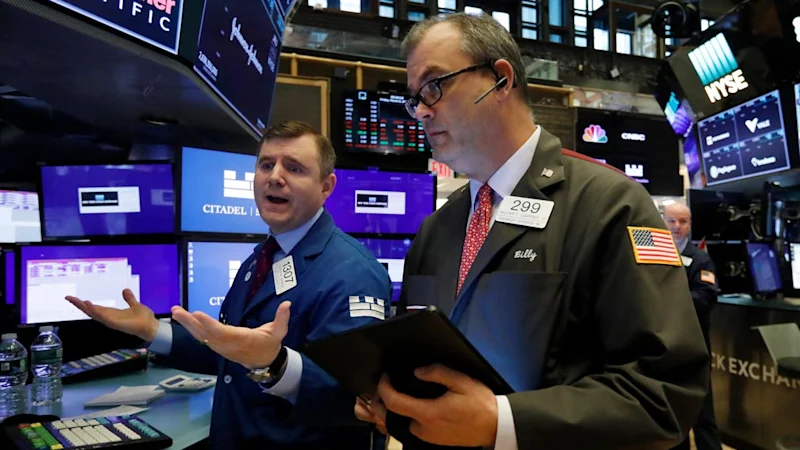
Staff reportersUpdated August 13, 2026 — 11:08am,first published August 13, 2026 — 5:15amThe Australian sharemarket stumbled in early trade on Thursday after some mixed company results, even as Wall Street edged near its record after several AI companies reported more growth than expected and a report showed inflation in the world’s largest economy slowed last month.The S&P/ASX 200 dropped 33.90 points, or 0.4 per cent, to 9105 as of 10.50am AEST, with eight of its 11 industry sectors in the red. The ASX lost 0.5 per cent on Wednesday. The Australian dollar was trading at US70.62¢.Wall Street jumped as the AI trade reignited, but the mood on the ASX was more sombre.BloombergEarnings season is in full swing now, with Telstra, ANZ Bank, Origin and Treasury Wine Estates among the major names who reported their results before start of trading.Telstra fell 2.3 per cent, despite sweetening its full-year result with a 10.5 per cent bigger dividend and a fresh $1 billion share buyback. Net profit edged up 2.7 per cent to $2.4 billion while its revenue dipped 0.8 per cent to $22.9 billion. The telco handed chief executive Vicki Brady an 11 per cent pay rise to $6.8 million, a bumper payday delivered against a backdrop of 1200 job cuts, and just weeks before a catastrophic network outage cut off Triple Zero calls.ANZ Bank climbed 3.4 per cent after reporting $1.9 billion in cash profits for the June quarter, up 2 per cent from a year ago, even as it said home loan applications have fallen 12 per cent since the May budget, excluding applications it received via a government deposit guarantee scheme.Its trading update comes a day after the Commonwealth Bank said it saw its home loan applications fall 15 per cent since the budget, which included moves to rein in negative gearing and capital gains tax concessions. CBA shares lost 2.3 per cent, while Westpac was flat and National Australia Bank added 0.4 per cent.Treasury Wine Estates added 1.3 per cent, with investors betting a new masterplan presented in June will turn around its fortunes. The nation’s biggest winemaker ran up a $1.08 billion full-year loss, dragged down by $1.3 million in writedowns for its troubled business in the US. Operating earnings came in at $492.3 million, slightly ahead of its own forecast but down 36 per cent from a year ago as even its premium Penfolds brand booked a 15 per cent profit slide.Origin Energy jumped 5.9 per cent after its full-year profit beat analyst estimates. Net income rose 6.3 per cent to $1.57 billion, while underlying profit fell 22 per cent to $1.16 billion, slightly ahead of forecasts. Australia’s energy transition is increasingly being driven by households embracing rooftop solar, batteries and electric vehicles. Meanwhile, the large-scale build-out of renewables and grid infrastructure faces rising costs, lengthy approvals and regulatory uncertainty, Origin said.Meanwhile, Cleanaway Waste Management shares rallied 13.7 per cent after the garbage giant said it received a takeover bid from Swedish company EQT Infrastructure, and will give the suitor exclusive access to its books for due diligence. The board flagged it’s likely to support the $3.13-a-share offer, which is 32 per cent above the stock’s closing price on Wednesday.Australia’s biggest aluminium smelter Tomago Aluminium, majority-owned by Rio Tinto, will receive a $2.5 billion government bailout package to stay open, ending months of crisis negotiations with federal and NSW officials over ways to keep the plant viable and safeguard more than 1000 jobs. Under the agreement announced on Thursday, Tomago Aluminium will invest $1.1 billion into the future of the smelter. Rio Tinto shares are 3 per cent lower in early trade while BHP is flat and Fortescue added 0.3 per cent.Energy stocks traded lower, with Woodside down 0.9 per cent, Santos down 1.1 per cent and refiner Ampol down 0.7 per cent, even as oil held the bulk of a six-session gain as the stand-off continues over the Strait of Hormuz. Brent traded near $US88 a barrel, after rising 12 per cent over previous six sessions.Talks between the US and Iran appear deadlocked as both sides harden their positions, with Washington pressing on with a blockade of the Islamic Republic’s ports to raise the economic pressure against Tehran.Tech stocks benefited from their peers’ gains on Wall Street, which helped WiseTech Global rise 2.4 per cent, Xero add 0.8 per cent and data centre operator NextDC climb 2.1 per cent.On Wall Street, the S&P 500 added 0.3 per cent and marked its first gain since setting its all-time high on Friday. The Dow Jones Industrial Average slipped less than 0.1 per cent, and the Nasdaq composite climbed 0.5 per cent. Stocks in the artificial-intelligence technology business helped lead the way after strong profit reports bolstered hopes they can continue to deliver big-enough growth to justify the huge gains their prices have made.Super Micro Computer, which sells servers and other equipment, jumped 19.6 per cent after reporting earnings per share for the latest quarter that were 84 per cent higher than analysts expected. It also gave forecasts for upcoming profit and revenue that topped analysts’ expectations.CoreWeave, which offers AI computing power to customers over the cloud, leaped 19 per cent after reporting better revenue for the latest quarter than analysts expected, along with a milder loss. CEO Michael Intrator said demand is accelerating from customers as big businesses adopt AI.CoreWeave gives its customers access to AI chips from Nvidia, and Nvidia climbed 3 per cent. It was the single strongest force lifting the S&P 500.It’s a return to strength for AI stocks, which have been veering on a roller-coaster ride. After surging to records, AI stocks came under pressure on worries that they shot too high. Investors wanted to see big spenders on AI prove that their investments are yielding enough in profits and productivity to make them worth it. That in turn could lead to continued demand for chips and other AI infrastructure.Wall Street also got some support from easing yields in the bond market. Treasury yields fell after a report showed that US consumers paid prices for gasoline, groceries and other costs of living last month that were 3.4 per cent higher than a year earlier.That’s higher than anyone would like, but it’s not as bad as June’s 3.5 per cent inflation rate.The deceleration could give the Federal Reserve more leeway to hold off on hikes to interest rates. Higher rates would help keep a lid on inflation, but it would do so by making it more expensive for US households and companies to borrow and forcing a slowdown in the economy. Higher interest rates also would undercut prices for stocks and other investments.The Fed’s members have been notably split about whether they should have already begun hiking interest rates. But Wednesday’s update on inflation pushed traders to pull back on bets the Fed will hike its main interest rate at its next meeting in September.That helped pull the yield on the 10-year Treasury down to 4.68 per cent from 4.70 per cent late Tuesday. It, though, still remains well above its 3.97 per cent level from before the war with Iran, which sent oil prices and worries about inflation spiking.In other international markets, indexes were mixed across Europe.with AP, BloombergThe Market Recap newsletter is a wrap of the day’s trading. Get it each weekday afternoon.From our partners
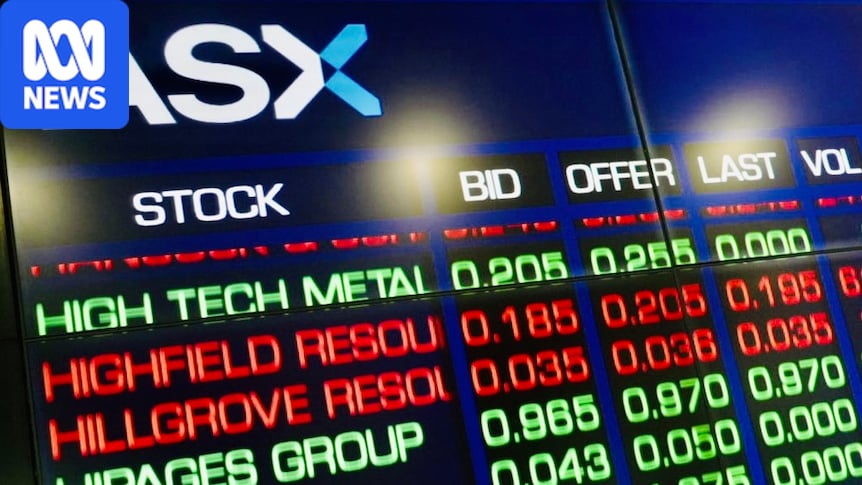
ASX slides as energy stocks, Telstra fall; ANZ, Origin and Cleanaway gain
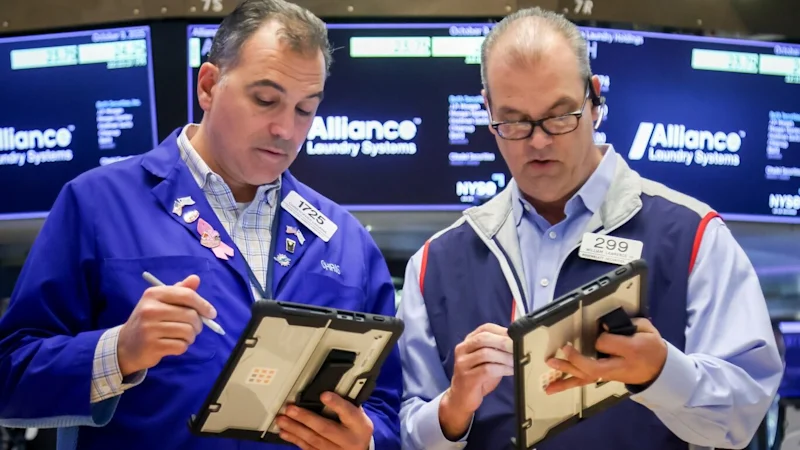
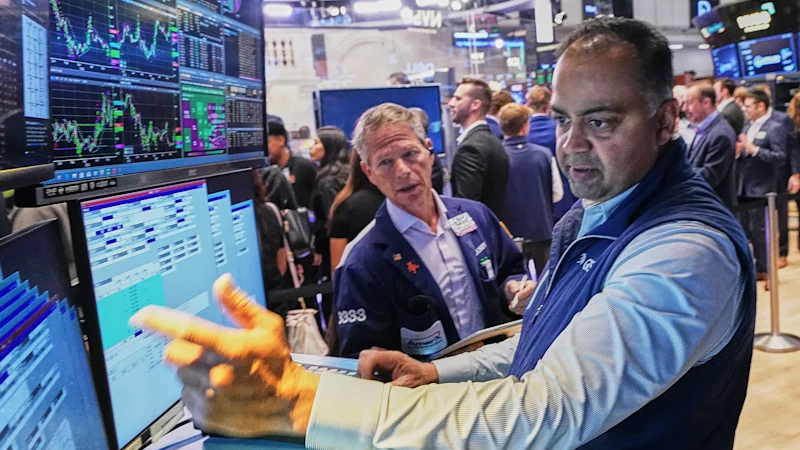
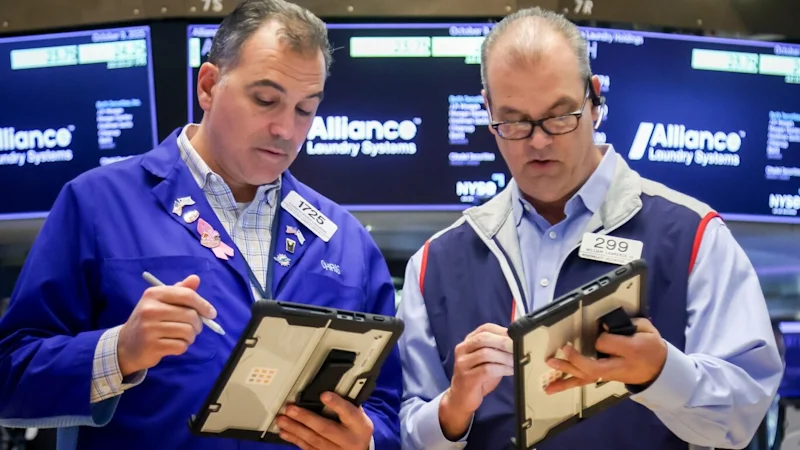
Wall Street edged near its record after several AI stocks reported better growth than analysts expected, while a report showed inflation across the United States was slightly less bad last month.
TL;DRAI
Super Micro Computer (EPS +84%) and CoreWeave beat earnings, sparking 19% AI rally. Market shift: AI capex now demands concrete ROI proof. Strong execution on infrastructure and productivity finally drives valuations, resetting IT spending strategy.
1,223 words~6 min read