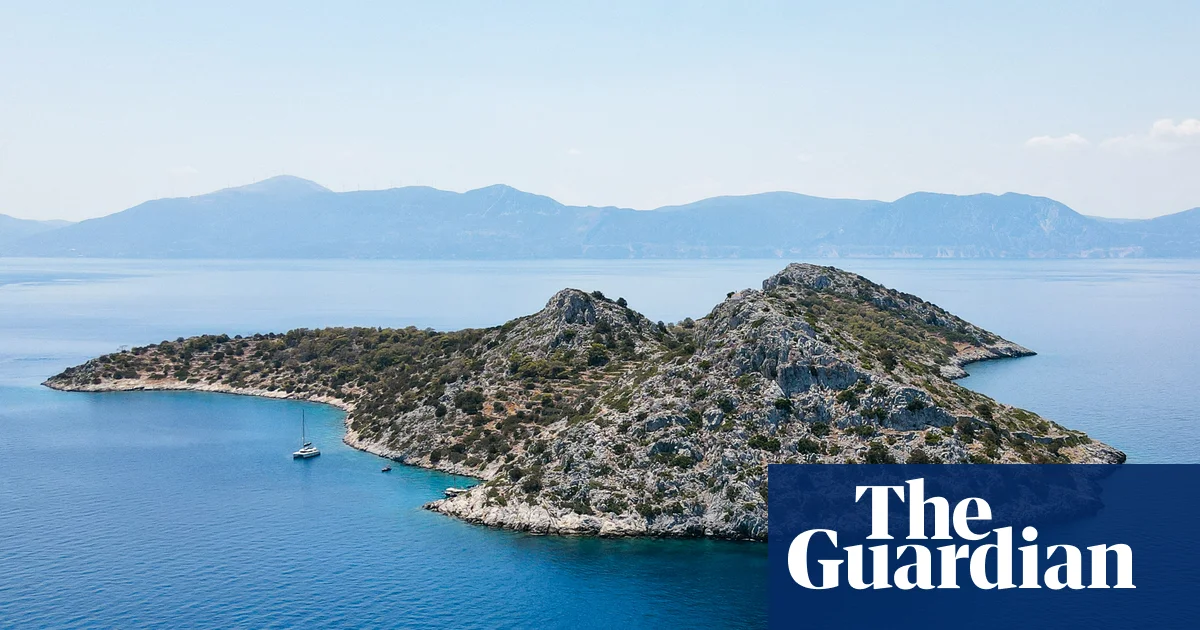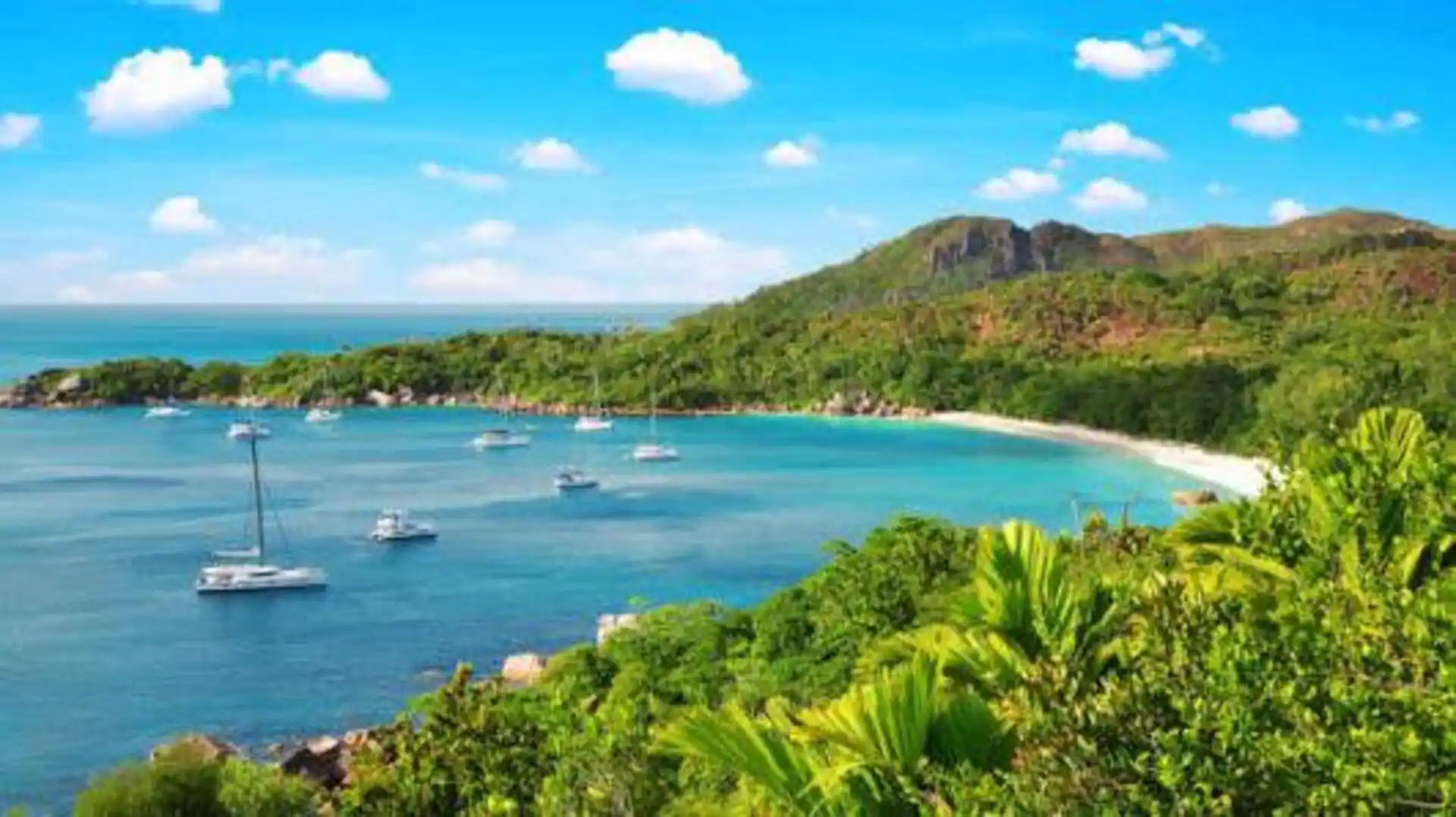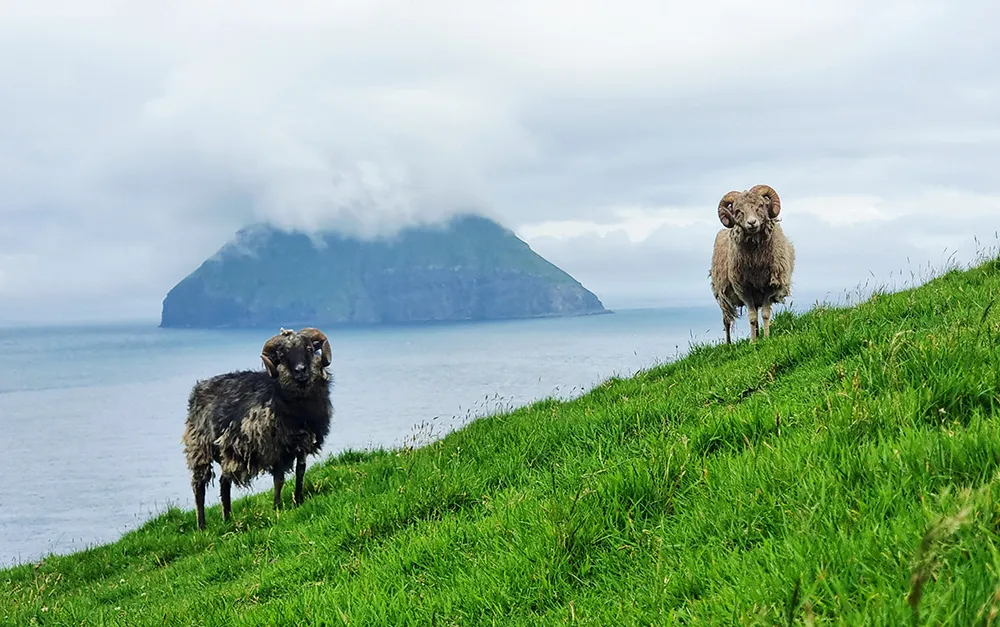
Tim Ecott has always been drawn to islands, and the seas that surround them: ‘I once ran away from England to live in the Seychelles so that I could scuba dive obsessively in the Indian Ocean,’ he writes at the beginning of Eva and the Island. ‘The tropical humidity and seductive blue water drew me into its spell.’ Gradually his love for what he calls ‘the torrid zone’ faded, and he found himself attracted to ‘the higher latitudes’. He decided to spend time on all the inhabited islands in the Faroes, including the smallest, Stora Dimun, ‘a frayed and crumbling chunk of basalt’ covering ‘just over one square mile’, which has ‘the qualities of a secret kingdom’.
What better way to spend an evening in good company than eating sheep’s heads and singing?
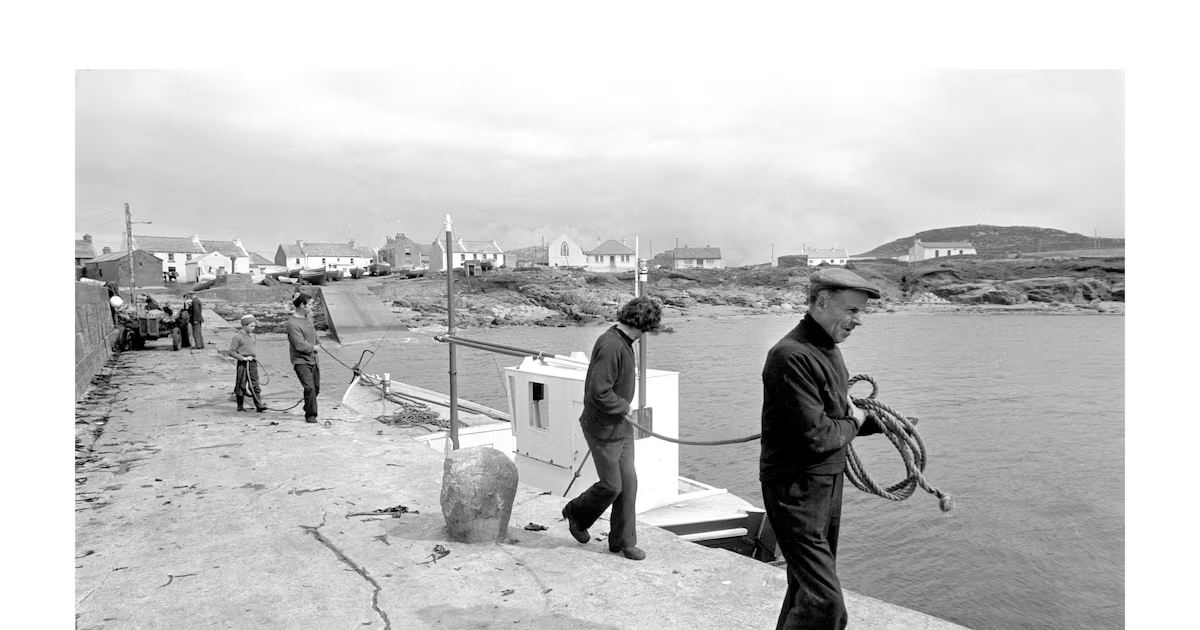
Stora Dimun used to be home to 35 people, but today there are only two human inhabitants – a woman called Eva, whose family have farmed the island for eight generations, and her husband, Jogvan Jon. Even their two children, Dogg and Sproti, have left. Not surprisingly, other Faroese islanders regard it with suspicion: ‘Naughty children were warned “Behave yourself, or you will be sent to Dimun,”’ according to Ecott. ‘Not everyone will feel at home here,’ Jogvan Jon says, ‘but for those that understand it, there’s nowhere like it.’ Ecott agrees: ‘I have met magic here, if not wizards.’ He doesn’t say exactly what he means by magic, and perhaps he can’t: doing so would be at odds with what drew him there in the first place.