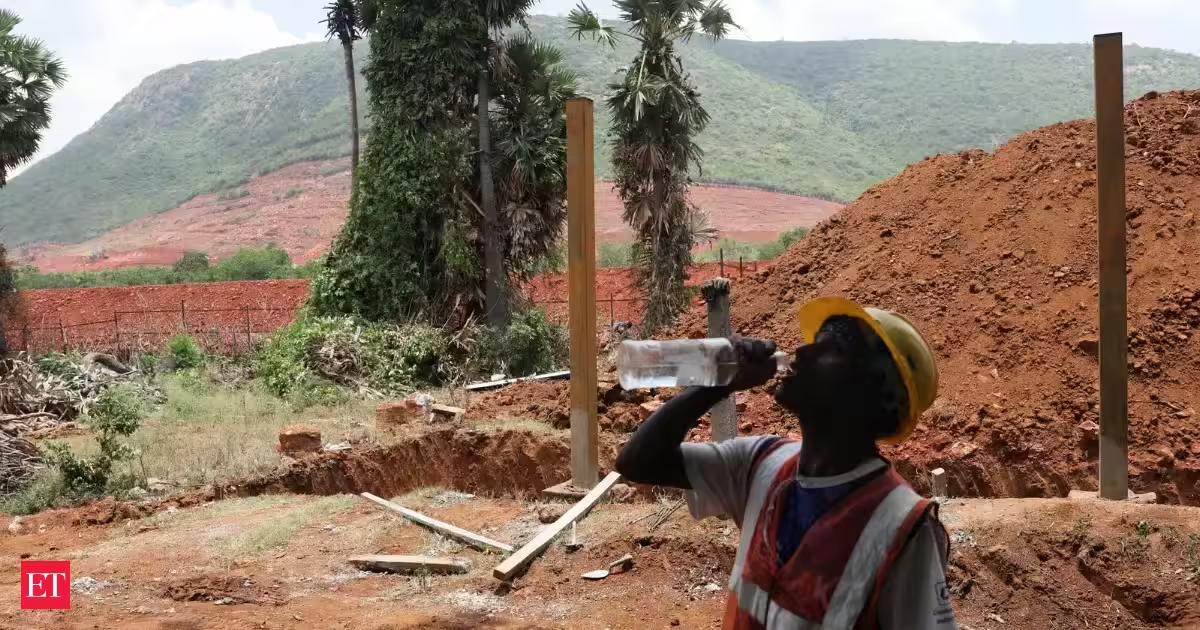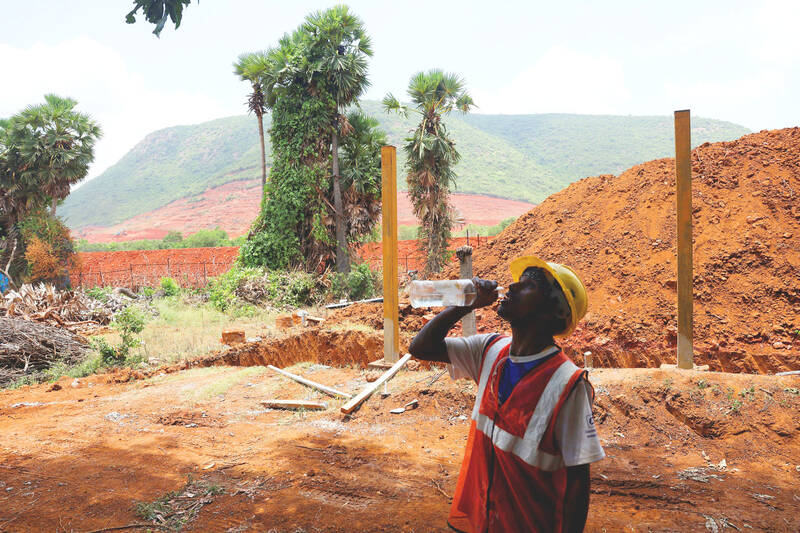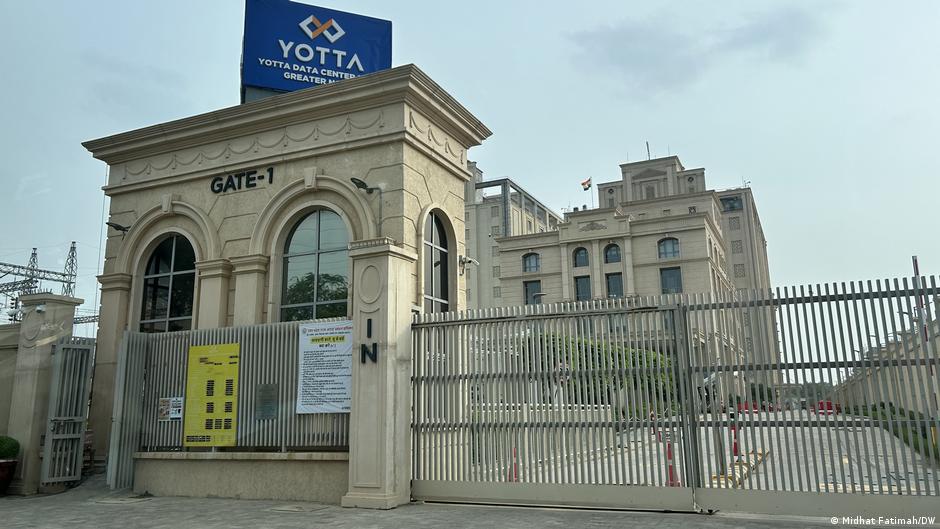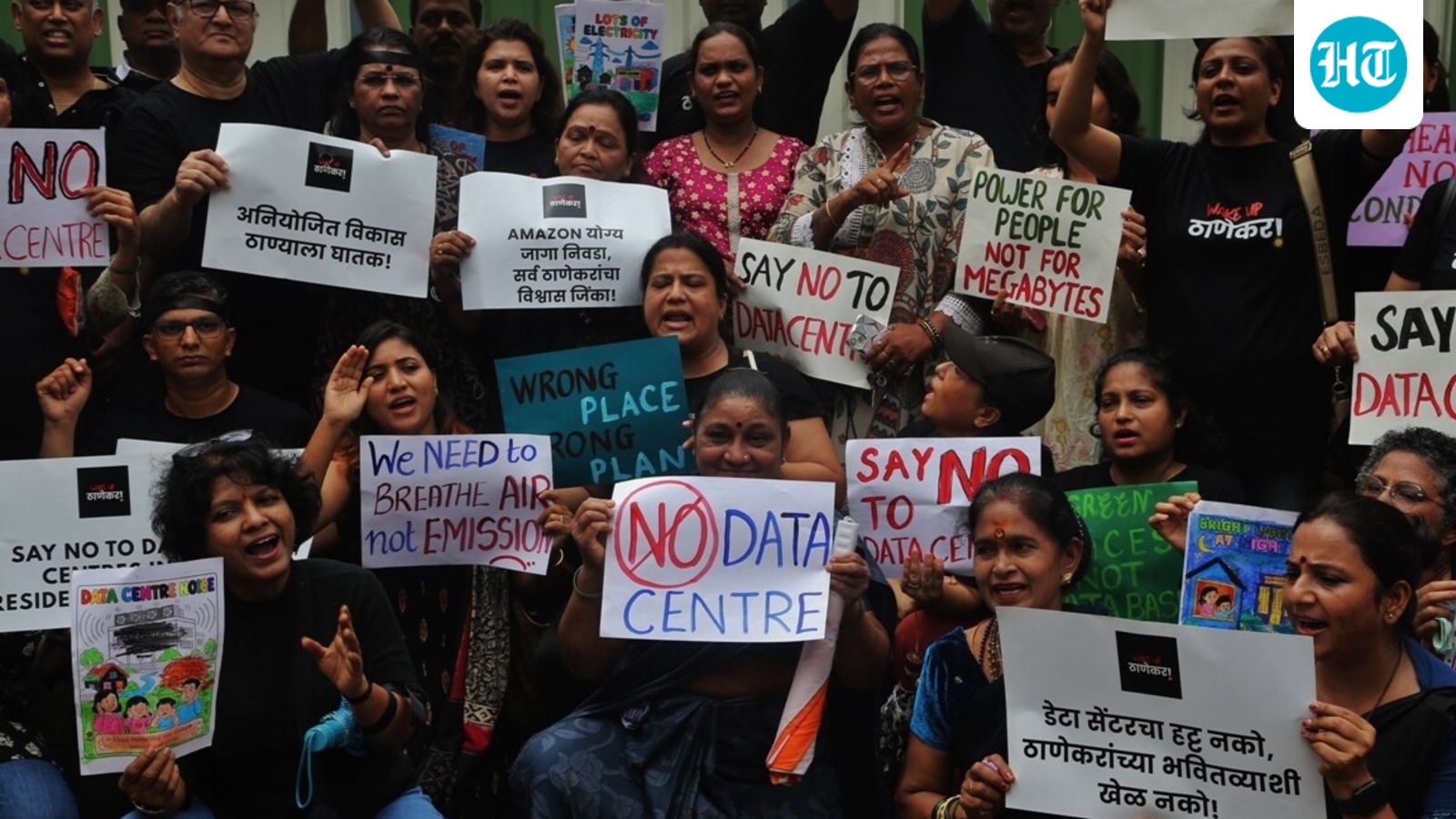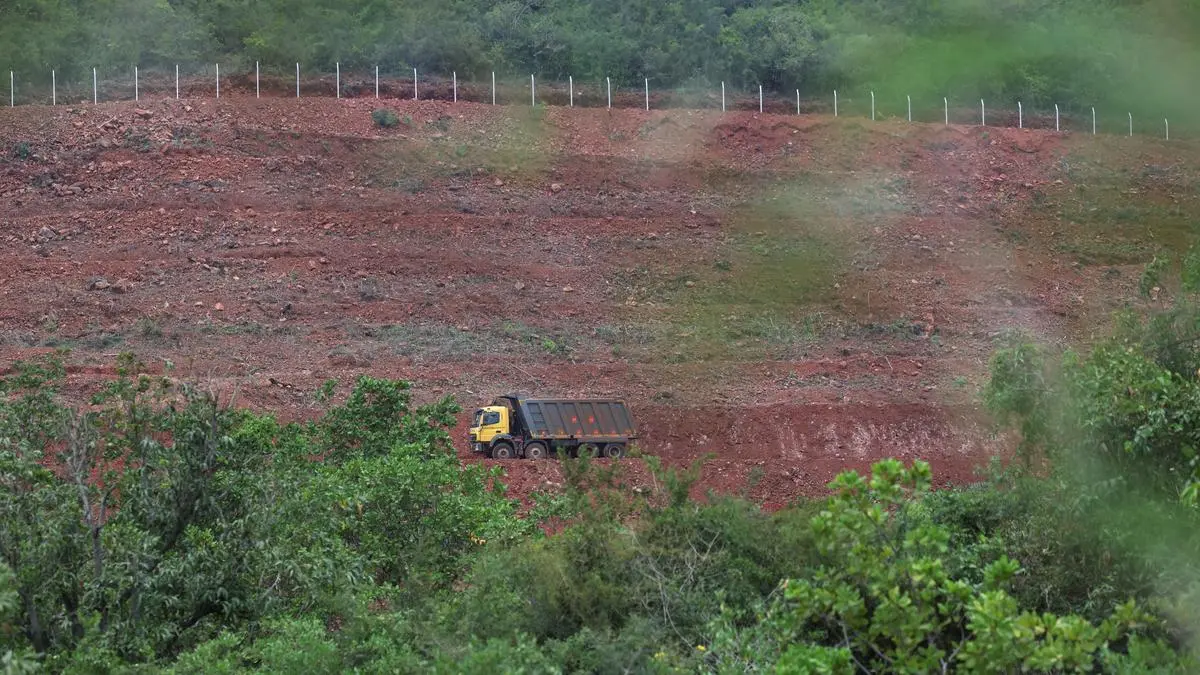
A hillside above Visakhapatnam has been stripped to red earth, cut into steps. Here, Google and the Adani Group are raising a fifteen billion dollar data centre. Less than two kilometres away sits the Kambalakonda Wildlife Sanctuary, home to leopards and pangolins.In recent weeks, activists and children have marched against it, worried for their water, holding a four-word banner. We cannot drink data.Everyone has their own take on it. So here is a disclaimer, before this column adds its own.This is not an argument for an untouched, utopian world; none of us opines with clean hands. The desks we write from rest on quarried stone, and the hill roads we love on holiday were blasted through slopes like that one.Growth is part of being. The argument is only about how we grow, and what we will be proud to hand down.One of India’s most celebrated founders shared his take on X. The protests, he wrote, reflect a woke mindset imported from the West, one to be dealt with strictly.Truth be told, he is guarding against something real. In parts of the West, projects sit in court for years; little gets built. India cannot afford that.But contempt is not the answer either, and saying so does not put me on the other side. I am not against data centres; I have cheered this build in these pages. I have argued for faster clearances, base-load power, campuses beyond the big three metros, and one national body to coordinate them all.However, I also do believe topics like these need nuanced handling. More than that, they need a room where both sides can argue their case. Because this argument should not be only about speed but the terms on which India is building these data centres.The same founder, on X, offers a choice between growth and conscience. I wish it were that simple a choice to make. A nation of 1.4 billion cannot pick between compute and drinking water, between the server hall and the sanctuary; it must engineer both.Start with the arithmetic, which comes not from the protesters but from the project’s own side. In June, defending the data centre at a press conference in the municipal corporation’s own office, the city’s Member of Parliament put the numbers on record. Visakhapatnam needs about 480 million litres of water a day. It receives about 410.That is 70 million litres short daily, in a city already rationing taps, before one server hums. He assured the city there would be no crisis, and that the state was strengthening infrastructure to meet demand.That assurance may well hold. But consider what it assumes. That every augmentation scheme lands on schedule. That the funding survives each budget cycle. That whoever governs a decade from now inherits this promise and treats it as their own.Assurances leave office with the people who give them.This is why the children’s banner is not a metaphor. That shortage, written on cloth, is the one thing here we know for certain today.The second assurance comes from the company. Google has promised air cooling to protect local water.Fair enough. In 2024, a Chilean court partly reversed Google’s campus permit over water; the company responded similarly.But a promise in a press statement is a courtesy; a promise in an approval condition, with penalties, is a contract.Third, the claim that this concern is borrowed from the West. It is not.Chipko movementIn 1974, in the Garhwal village of Reni, the men were called away to collect compensation for land the army had taken. Contractors arrived to fell the forest while they were gone. Twenty-seven women, led by a villager named Gaura Devi, stood between the trees and the axes and refused to move. They clung to the trunks. That is what chipko means, and it is where the movement took its name.They were not against the forest being used. They were against it being cut by outsiders who would leave nothing behind. Within six years, the government banned commercial felling across those Himalayan slopes for fifteen years.The Chipko movement came fifty years before anyone thought to call it woke.That leaves the biggest claim of all, that strict rules mean falling behind. So consider what actually protects growth. In 2008, Lehman collapsed and the world’s most sophisticated banking systems seized. India did not escape. Foreign money fled, credit tightened, growth slowed sharply. But our banks opened on Monday, September 15, as usual.Our banks held that day, not because our bankers were smarter but because the Reserve Bank of India (RBI) had been stricter. It refused exotic instruments, restrained leverage, ignored the claim that rules are the enemy of innovation. Banks that grumbled in 2006 owed it their balance sheets by 2009.Tough rules are not a tax on growth but the insurance that makes it survivable. Trust is infrastructure: it compounds like capital, collapses like credit.That is what rules do when they exist. Here is what happens when they do not. In 2018, Facebook told Indian authorities that more than five lakh Indian users may have had their data harvested by Cambridge Analytica. India had no data protection law then. It would not pass one for another five years. In a separate case, the news agency ANI has sued OpenAI in the Delhi High Court over the use of its reporting to train models. Indian publishers and music labels have joined the case.In July, the court declined an interim injunction. It held, for now, that training on published articles is fair dealing for research under the Copyright Act of 1957.So a statute older than the internet is the rulebook for frontier AI. The court did not err. It simply had nothing else to work with.In both cases, the technology arrived first and the rules arrived late, or not at all. That hillside sits inside the pattern, unless the terms say otherwise.This is the backdrop to every large project India now builds. Communities have seen it before, which is why they object early rather than late.At Greyhound Research, our fieldwork keeps returning the same lesson. Rules rarely stop a project.Neighbours who were never consulted do.So the real risk at Visakhapatnam is not the protests. It is building at this scale without community engagement from day one. Water, land and livelihoods are chapter one of the infrastructure playbook, not an anti-technology agenda.India learnt that chapter the hard way. POSCO’s Odisha steel plant, then its biggest foreign investment, died over land and consent after twelve years.The trees were felled anyway; the jobs never came. Nobody called those villagers woke.The Nike scandalNor is the lesson uniquely Indian. In the 1990s, conditions in the Asian factories making Nike’s shoes became a global scandal. The company denied it, then resisted, and in 1998 its founder conceded publicly that the brand had become synonymous with slave wages and forced overtime.Seven years later, Nike published the address of every factory in its supply chain. No rival had done it. Today that disclosure is ordinary practice, and American law moved the same way: anti-bribery statutes, forced labour import bans.Imperfect then and still imperfect now, the rules improve because scrutiny never stops.Nike then. Shein now. In its supplier factories in Guangzhou, reporters documented illegal hours.One worker told the BBC: “If there are 31 days in a month, I will work 31 days.”The company admitted finding child labour in its chain. Lawmakers took note. Nobody calls that pressure anti-fashion.None of this adds up to a finished body of law. It is progress one case at a time. And it happens only where governance leaves room for pressure groups and counter-narratives, instead of treating them as noise.That scrutiny is now reaching data centres, as it must. Ireland’s regulator ruled in December 2025: newcomers must bring their own generation, matched to their demand, and give power back when asked.Last month, New York froze new hyperscale facilities for a year, slamming the brakes because it never built the steering.Singapore built the steering first. It braked in 2019, spent three years writing the rules, and reopened only to builders who meet them; applications outran the capacity on offer.India still has time to build the steering. At Greyhound Research, we have proposed it in these pages more than once: a single National Data Centre Council. Banking survived 2008 because it had a custodian. Data centres have none. Power sits with one ministry and the state utilities. Groundwater sits with a central authority and the state boards. Land sits with the state. Environment sits with the centre or with a state authority, depending on how the project is classified. No single desk sees the whole.Consider how a data centre gets cleared. India’s environmental clearance rules, framed in 2006, list the activities that need appraisal. Data centres do not appear on that list. A campus is caught only if its built-up area crosses 20,000 square metres. Even then it is appraised as a building, not as an industrial user of water and power. The Minister of State for Environment confirmed as much in the Rajya Sabha on August 6.So no authority formally assesses what a data centre will draw from the aquifer or the grid. When no institution owns that question, the street and courtroom own it.That is already happening here. One petition before the Andhra Pradesh High Court challenges the project’s water use and its proximity to the sanctuary. Three more before the National Green Tribunal (NGT) concern a rural drinking-water scheme. The High Court hears the matter on August 24.None of this was unforeseeable. The Ministry of Electronics and Information Technology (MeitY) published a draft data centre policy in 2020. It proposed much of what is missing today: time-bound clearances, a facilitation unit, coordination across the ministries that hold the pieces. Six years on, it has not been finalised. In that time the sector was granted infrastructure status, and campuses worth tens of billions of dollars were announced and approved.The draft was right. It was simply never finished.This is exactly why we proposed the council. One custodian to settle the water question, and the hundred others like it, before ground is broken rather than after.The Andhra Pradesh government, to its credit, calls the protests a democratic right and says it will engage with genuine concerns. That is the right instinct. But it is only an instinct. No rule requires it, and nothing happens if it is ignored.Four commitmentsBuilding fast and building well are not opposites, so long as one body plans for both from the start. Four things that body should own.One, water before watts. Before a campus breaks ground, the public should know four things. How much water it will draw. From where. What will replace it. Who else draws from the same source.The Central Ground Water Authority (CGWA) and state boards should publish that account before clearance, not after. And it has to be a local number. Amazon Web Services, for example, publishes its water use by region: 0.02 litres per kilowatt-hour in Ireland, 2.85 in Jakarta. Same company, same engineering, more than a hundred times the water.And keep three claims apart. Efficient is not water positive. Water positive is not more water in this reservoir, in the driest month of a failed monsoon. Replenishment projects can do genuine good in one basin and still not answer what a city is asking about its own.A corporate average is a press release. A local number is a commitment. And it cuts both ways: if the fear is exaggerated, the arithmetic will show that too.Two, disclosure that reads like a balance sheet. Clearance today is a single event. A file is approved, ground is broken, and nobody is required to look again. Yet a company that borrows money must report its position every year, in public, in a form anyone can compare.A campus that draws water and power should do the same. The Ministry of Environment, Forest and Climate Change (MoEFCC) should require every facility above a threshold to publish five figures once a year. Water drawn and from which source. Power consumed. Diesel burned. Heat rejected. Land altered.And the council should hold all of it in one place. As we argued in these pages last December, it should run a national registry of data centres. Every facility, its location, its owner, its power and water draw, its workforce. India today cannot say with confidence how many data centres it has or what they consume.Until it can, we are governing this by anecdote.Three, benefit written into the licence. When the State Investment Promotion Board cleared this project, it put the employment figure at 1.88 lakh. That number is worth reading closely.A data centre is capital landing in a district, not labour. Thousands may build it. Far fewer will run it. The projection covers direct and indirect work across the build and the economy around it. It is not a headcount for the campus, and much of it ends when the concrete sets.This is not an argument against the project. It is an argument for writing down what the district keeps once the cranes leave. Grid upgrades, water infrastructure, road access, training places for local candidates.Each with a number and a date, inside the approval rather than inside a brochure.Andhra Pradesh has already committed public support to this campus, in land, power tariffs and tax concessions. When the public invests, the return should be specified rather than hoped for.Four, adjudication with a clock. The law already asks for speed. The National Green Tribunal is meant to dispose of matters within six months where practicable. In practice, benches sit vacant, cases go to committees, and months become years.Delay is not neutral. While a matter waits, work continues, and a hillside that has been cut cannot be uncut. Slow process favours whoever already has an excavator on site, which is exactly why communities distrust it.So give the NGT and the High Courts the benches and technical staff to decide these disputes in ninety days. A fast ruling protects the aquifer and the balance sheet alike. It also starves the petition filed as a business, because litigation run for leverage does not survive speed.None of this is hostile to industry; a campus that can answer the water question is easier to finance, harder to stall. The operators who lead this build will be the ones who can answer the water question in public, with published figures, to the people who live nearest.In Visakhapatnam, those people have already spoken. The children were not marching against the future. They were asking to be counted in it. Their banner was a policy question awaiting an institution’s answer.Growth is sustainable only when it benefits the masses. The four commitments above are that principle, put in writing.The question is no longer whether India builds the infrastructure of intelligence. It is whether India builds it on terms the next generation is proud to inherit.Lest we forget, we truly cannot drink data.The writer is the Chief Analyst at Greyhound Research (part of The House Of Greyhound), a global, award-winning technology research, advisory, consulting & education firmPublished on August 13, 2026
Data centres: The watts and the water
The question is not how fast India builds data centres. It is on what terms and whether the masses benefit
2,502 words~11 min read