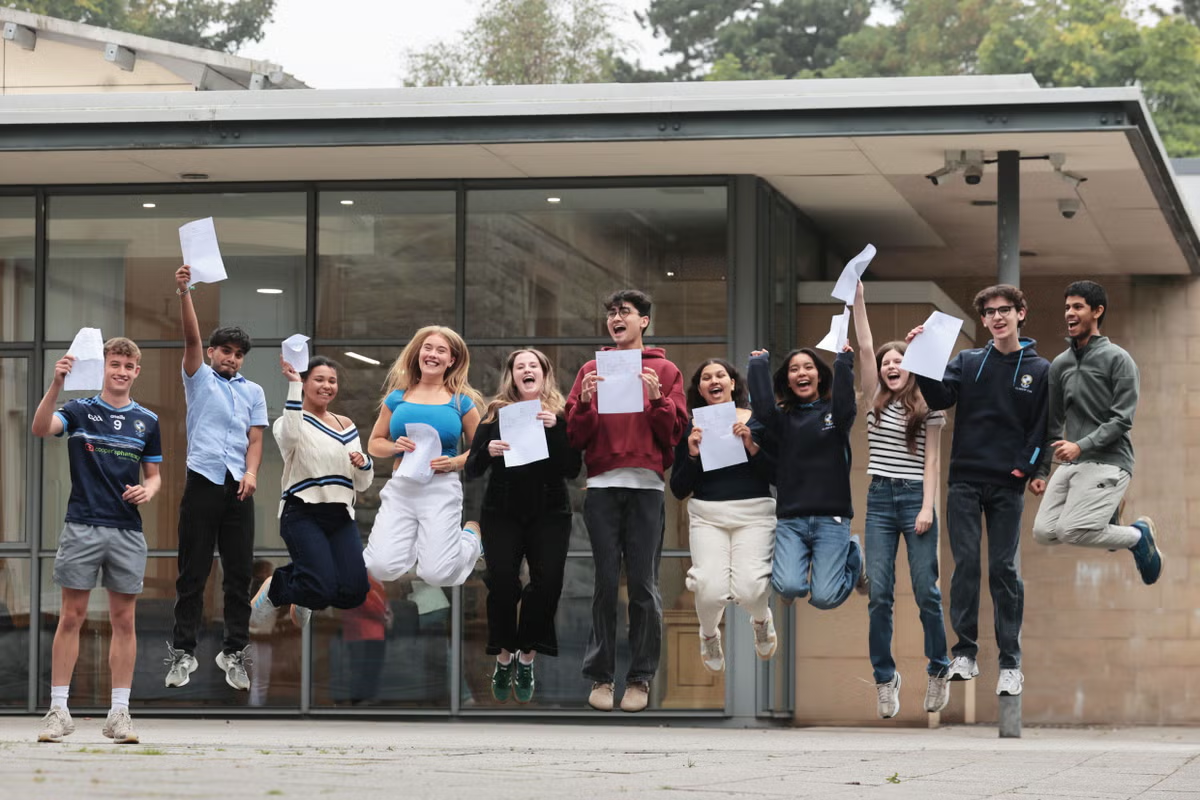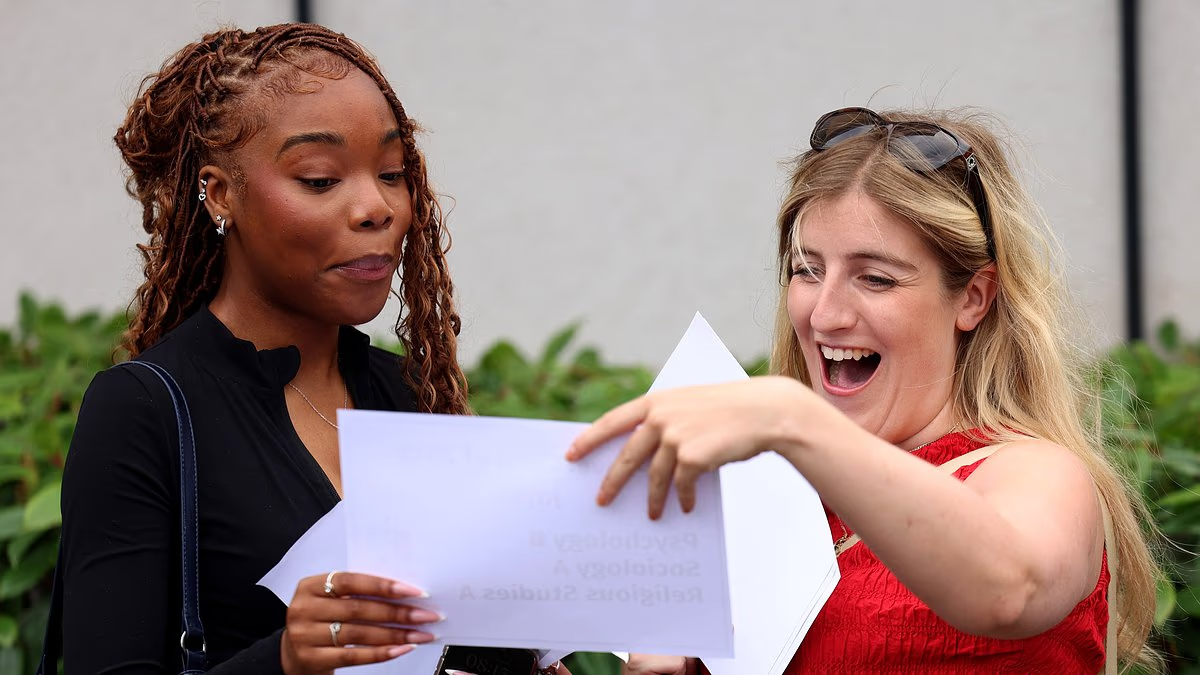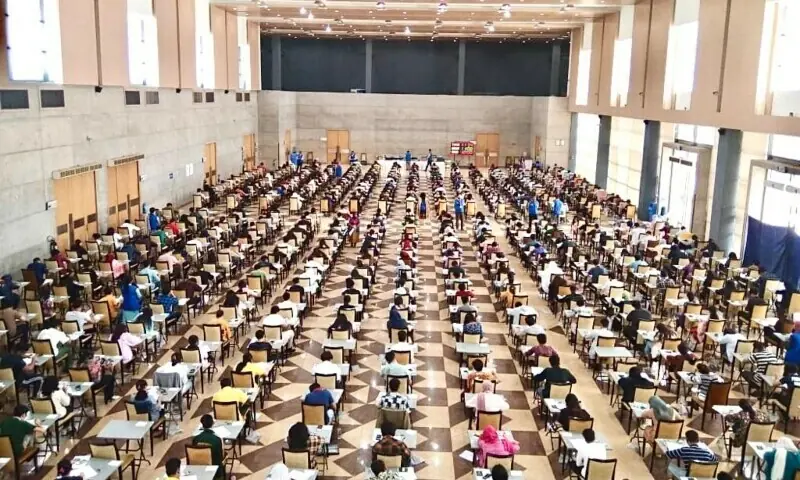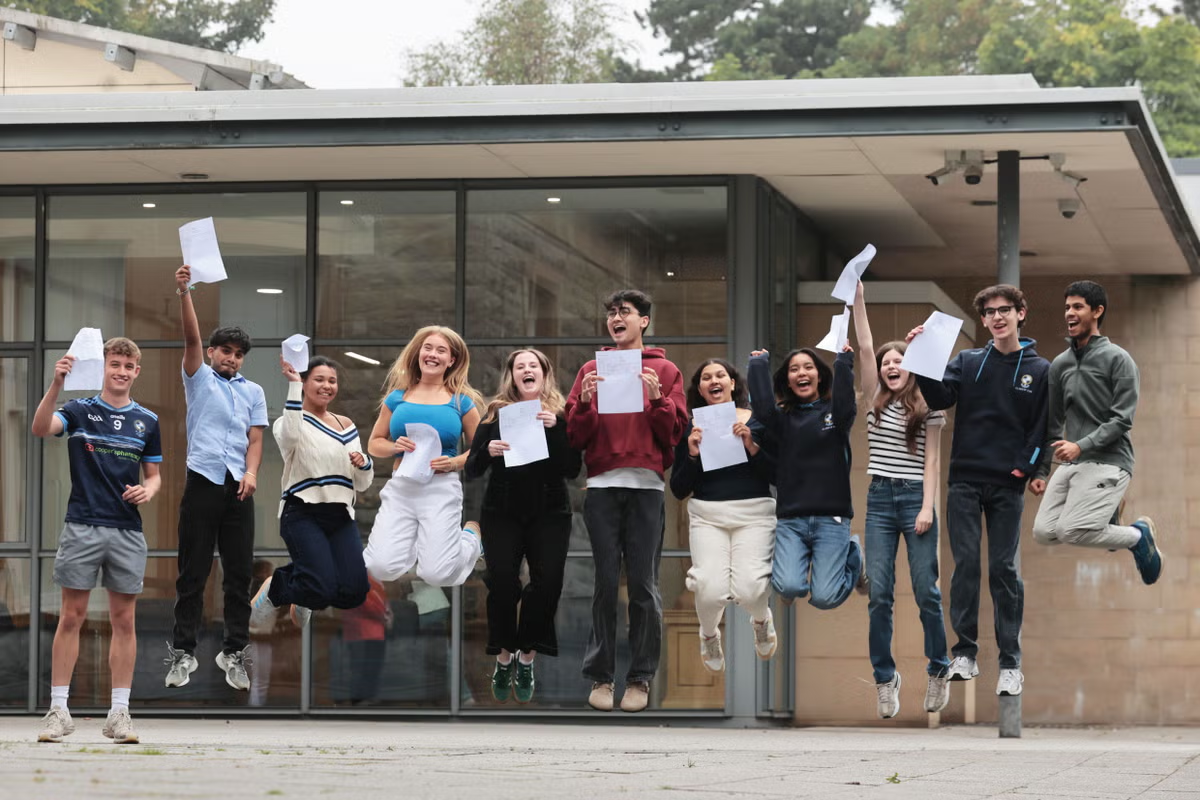
Hundreds of thousands of students across England, Wales and Northern Ireland will collect their A-Level grades on Thursday.Here is what you need to know...Who will receive their exam results?School and college leavers will receive their A-level and AS grades, as well as results for vocational technical qualifications (VTQs) at Level 3, on Thursday.Students in England will also receive their results for T-levels – which were launched to provide high-quality technical alternatives to A-levels.Last year, more than one in four (28.3%) of UK A-level entries were awarded an A or A* grade – up from 27.8% in 2024.It was the highest proportion of entries scoring top grades outside the pandemic-affected years of 2020-22.In 2019, the last year summer exams were taken before the pandemic, 25.4% of entries were awarded A or A* grades.The Covid-19 pandemic led to an increase in top A-level and GCSE grades in 2020 and 2021, with results based on teacher assessments instead of exams.How does the situation differ in the devolved nations?In 2023, GCSEs and A-levels returned to pre-pandemic grading arrangements in England.In Wales and Northern Ireland, exam regulators returned to pre-pandemic grading in 2024 – a year later than in England.Last year, more than one in four (28.3%) of UK A-level entries were awarded an A or A* grade – up from 27.8% in 2024 (Liam McBurney/PA)Scotland has a different qualification system and students received their results on Tuesday last week.Figures showed the number of passes at National 5 reached record levels.Pass rates for National 5, Higher and Advanced Higher increased across the board, to 79.2%, 76.7% and 77.6% respectively.The proportion of pupils who achieved an A also rose for National 5 and Higher to 40.3% and 20.9%, while the rate for Advanced Higher fell to 30.9%.Will it be tougher to get university places?A record number of 18-year-olds are likely to be successful in securing their first choice of university this A-level results day, the head of Ucas said.Jo Saxton, chief executive of the university admissions service, also said she was expecting record numbers of students accepting places through, and applying directly to, clearing this year.A record number of 18-year-olds are likely to be successful in securing their first choice of university this A-level results day, the head of Ucas said (Getty)The head of Universities UK, which represents more than 140 institutions, is hopeful that admissions will be more predictable than last summer after “stabilisation” in the sector.“There’s been a period in which universities had to adjust to some quite significant decreases in international student demand, for example, and that caused quite a lot of turbulence in the admissions landscape,” Vivienne Stern told PA.“There’s still a bit of that around but I’m optimistic that we’re beginning to see things settle down a bit.”Nearly 22,700 courses with vacancies for undergraduate students living in England were available on the Ucas clearing site as of Wednesday, a PA analysis of 131 of the UK’s largest higher education providers showed.Eighteen of the 24 elite Russell Group universities had more than 3,400 courses with vacancies for English residents on clearing the day before results day.What can students do if they do not get their first-choice university?Clearing is available to students who do not meet the conditions of their offer on A-level results day, as well as those who did not receive any offers.Students who have changed their mind about what or where they wish to study, and also those who have applied outside the normal application window, can also use the clearing process through Ucas.In England, if a student is unhappy with their grade they can ask their school or college to request that the exam board review the marking.If there are still concerns, the student can ask their school or college to appeal against the result.
A-level results day: What students can expect from this year’s exam results
School and college leavers will receive their A-level and AS grades, as well as results for vocational technical qualifications (VTQs) at Level 3 and T-levels
626 words~3 min read