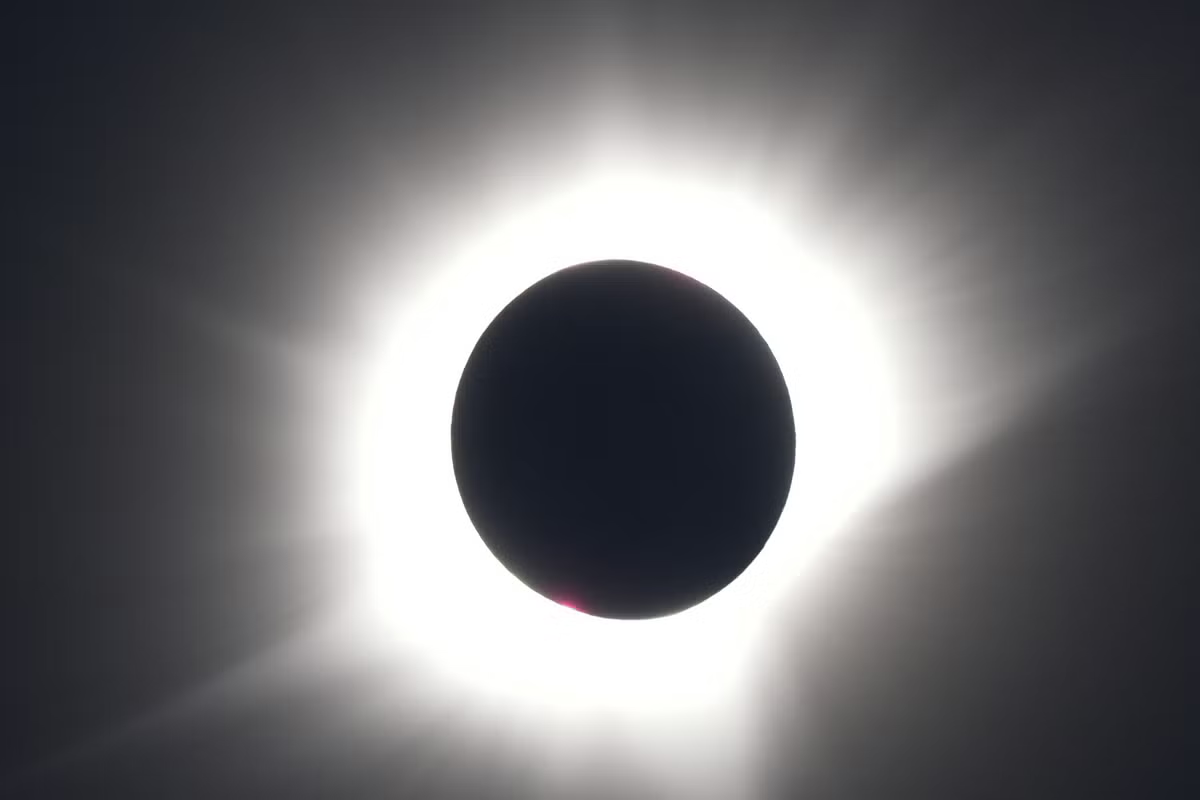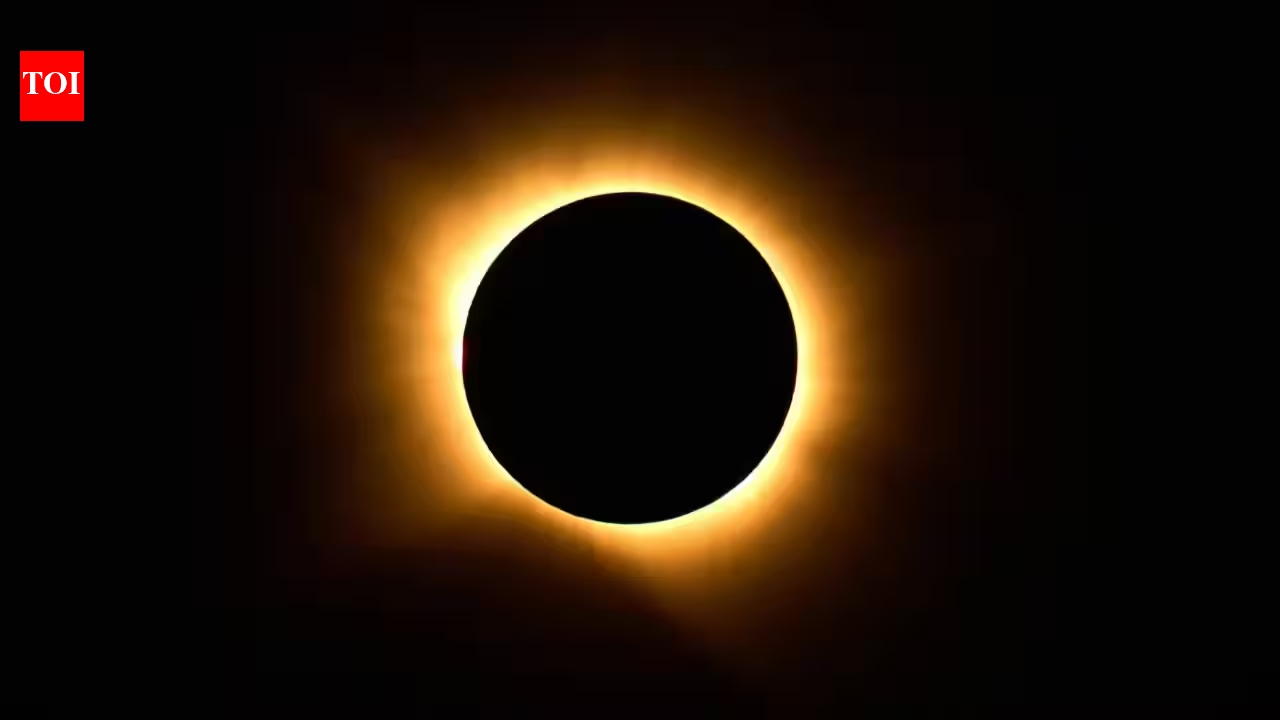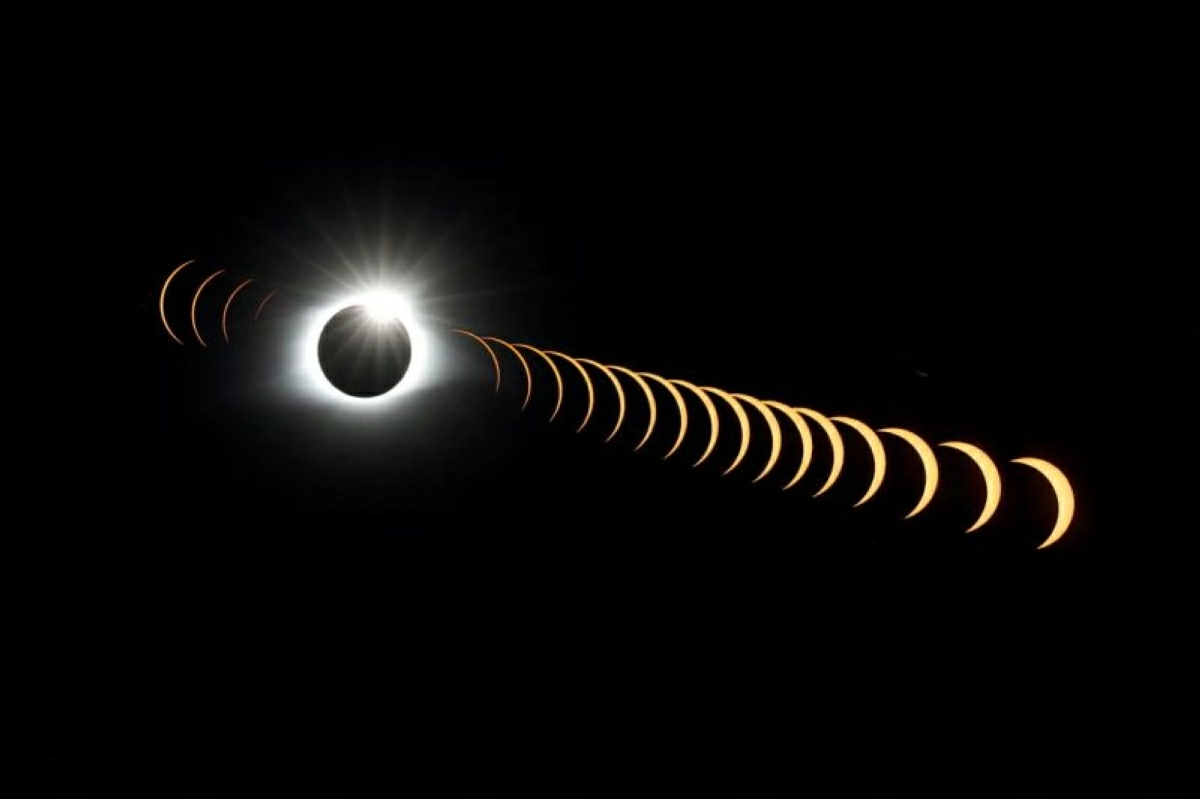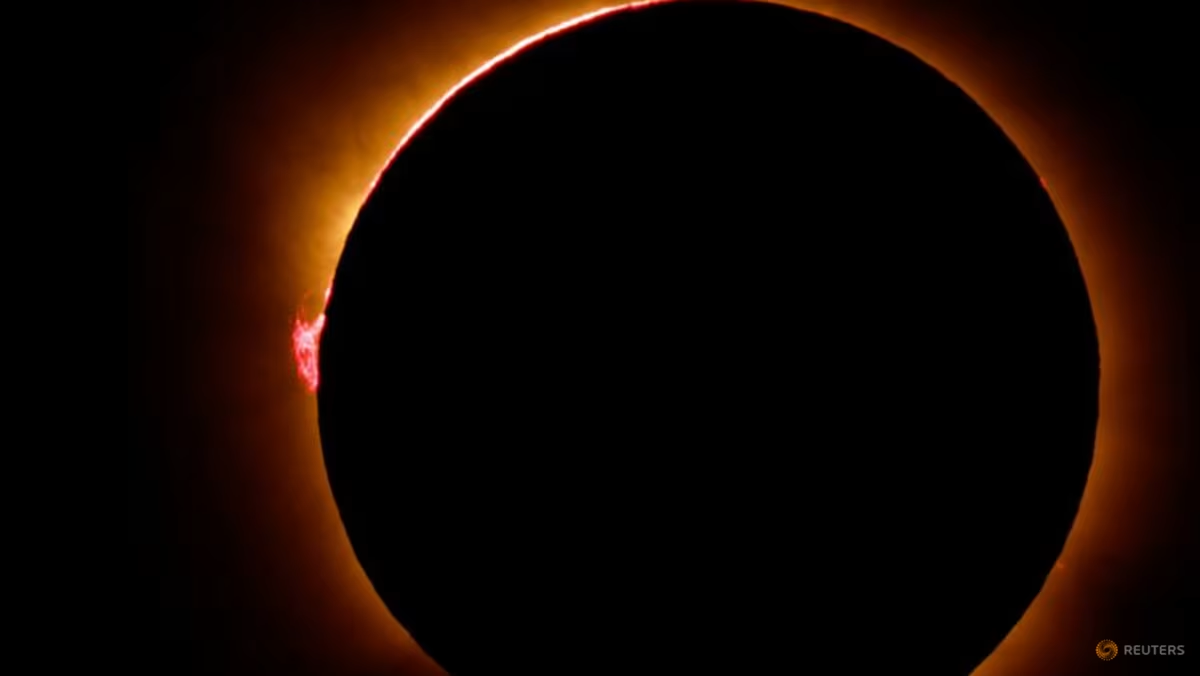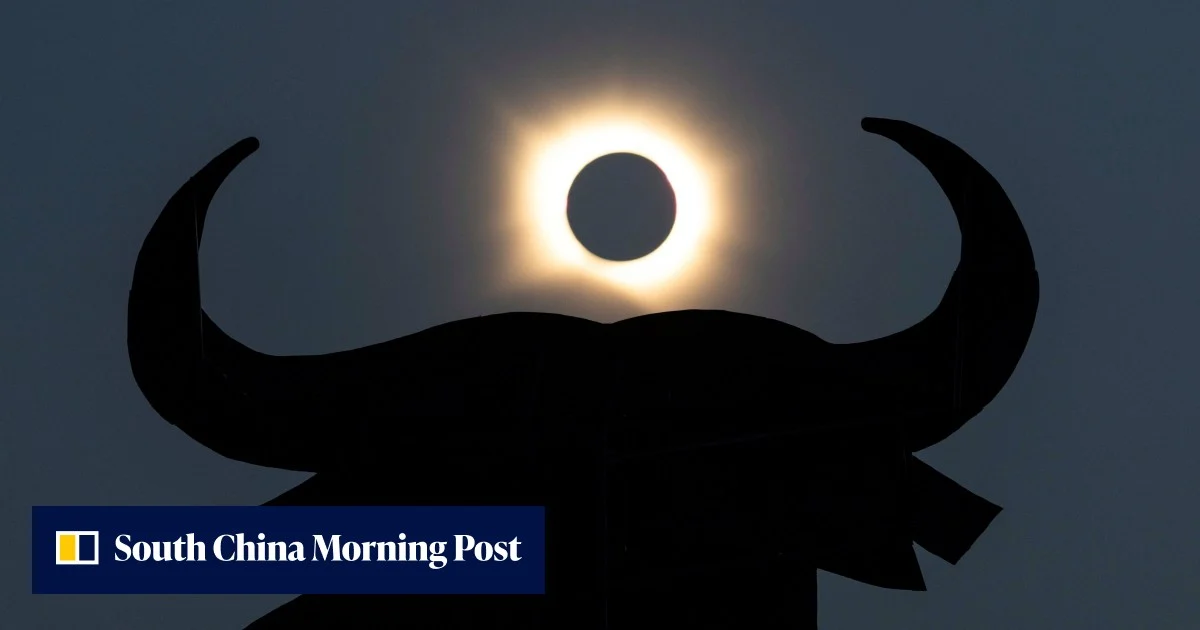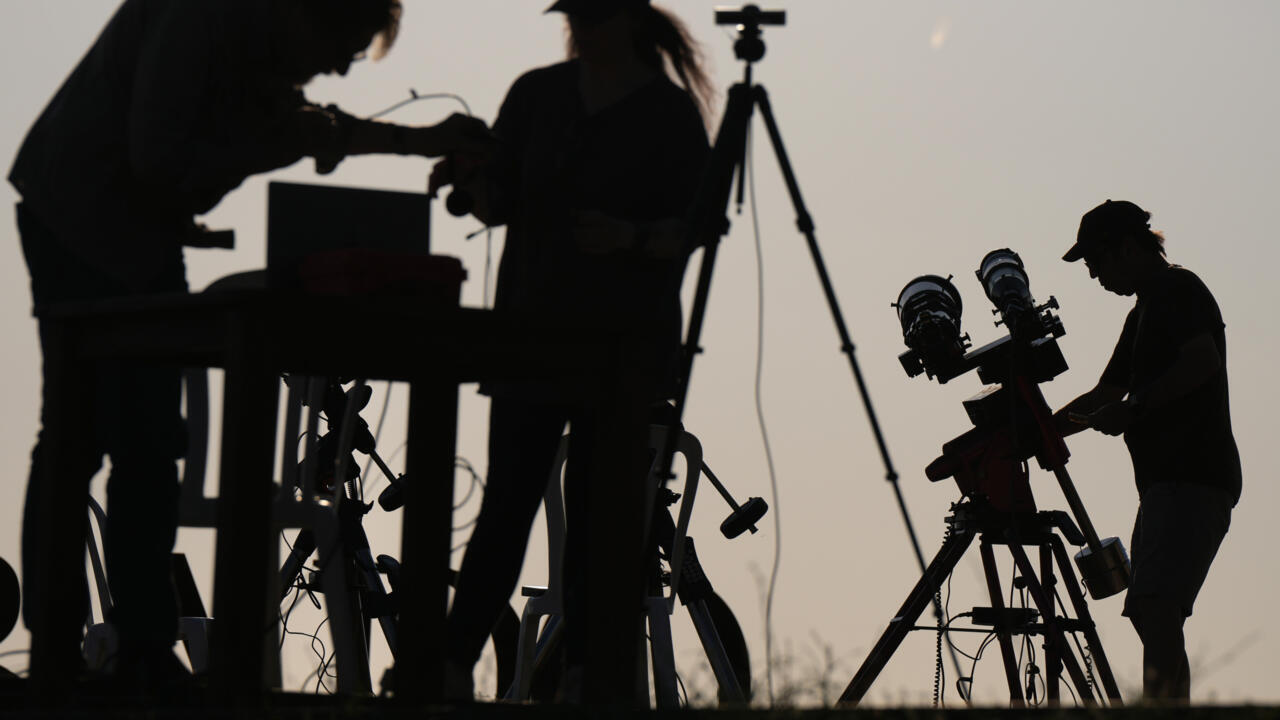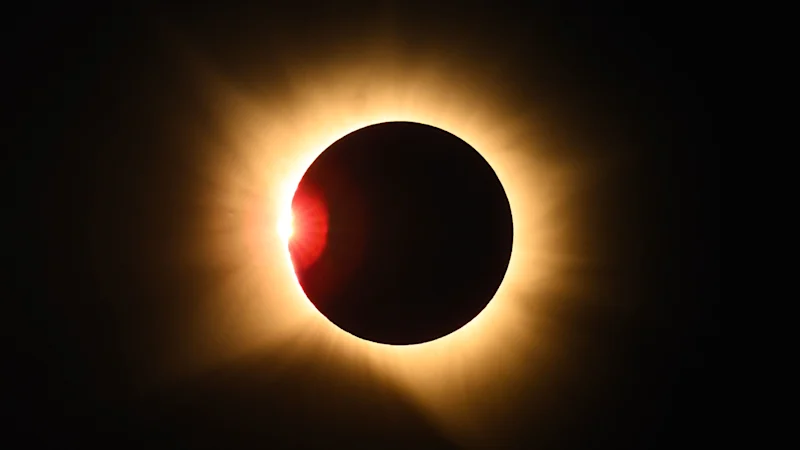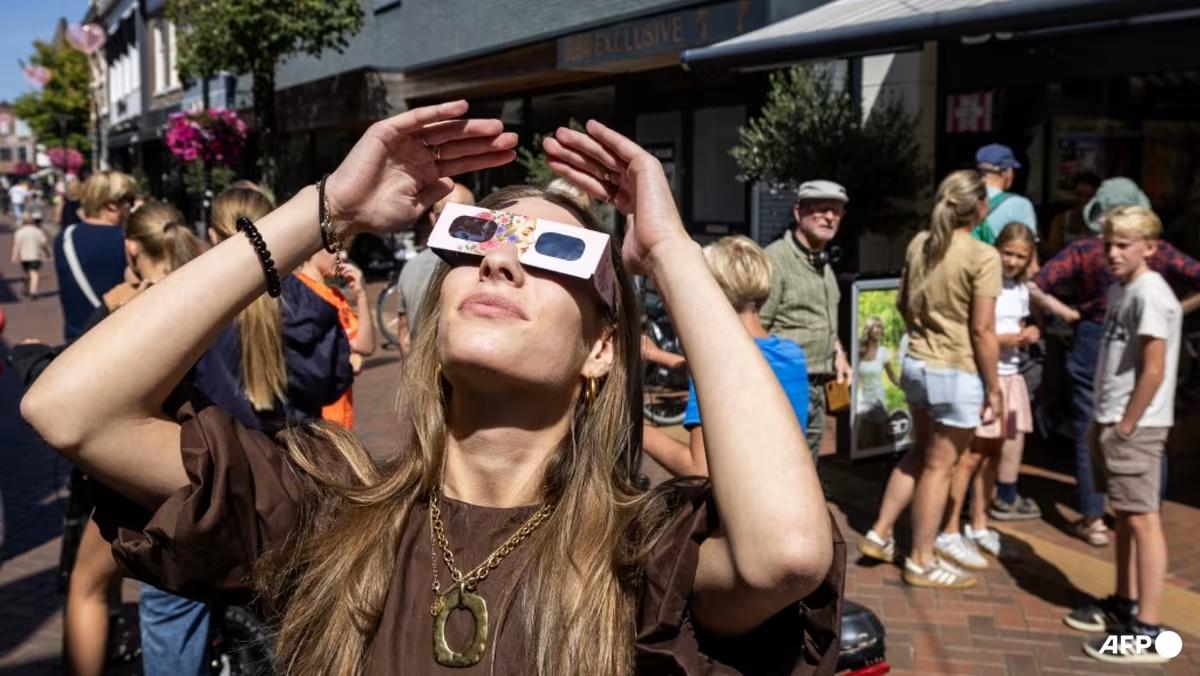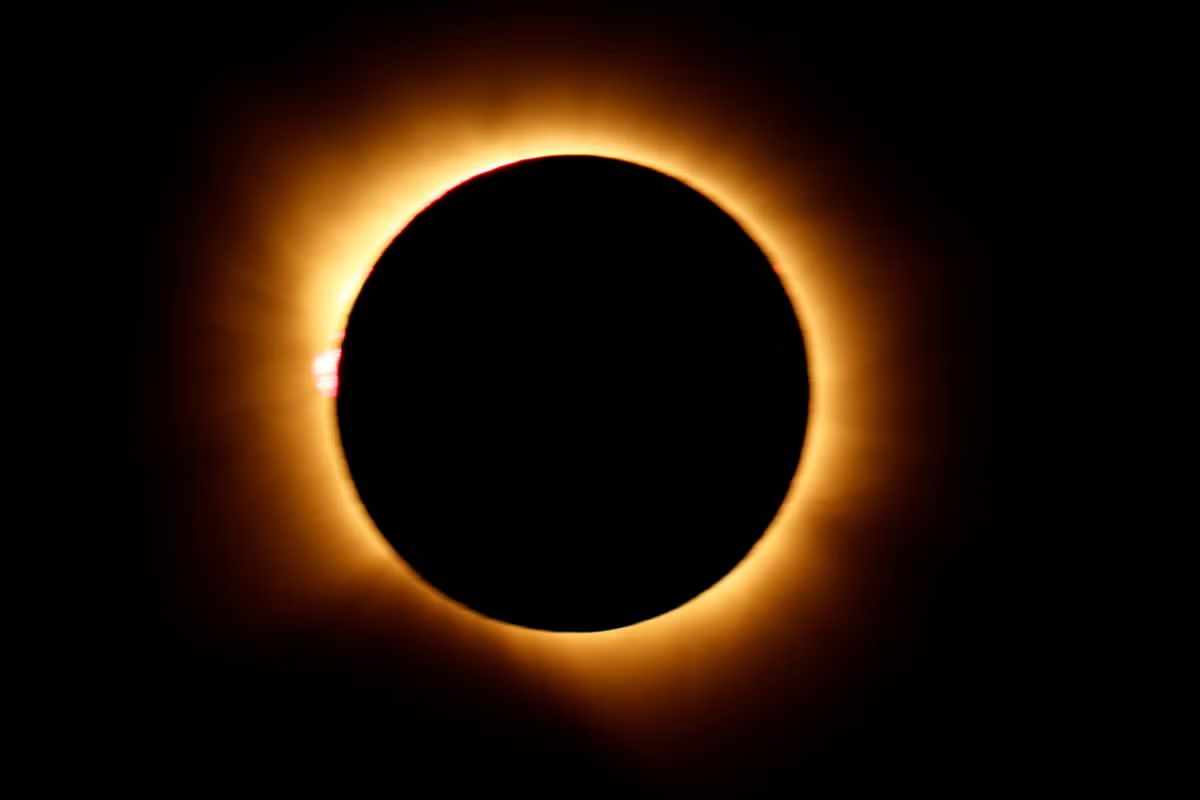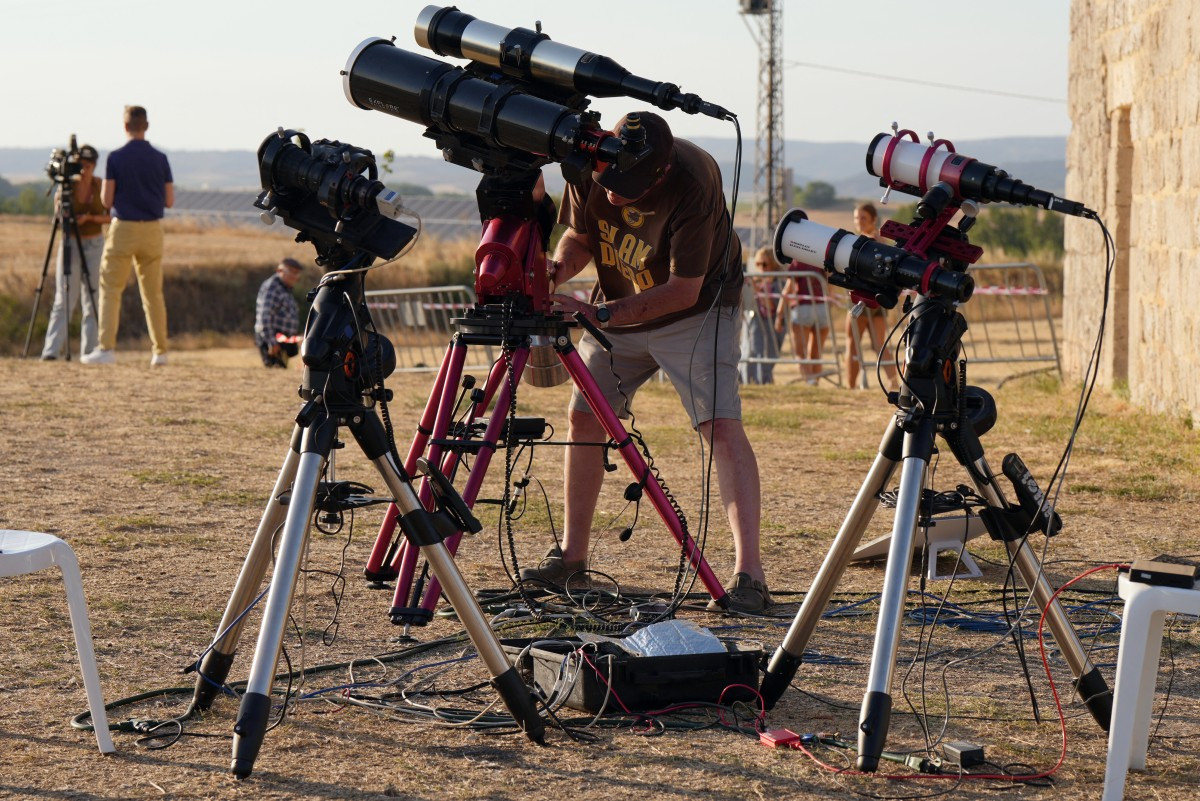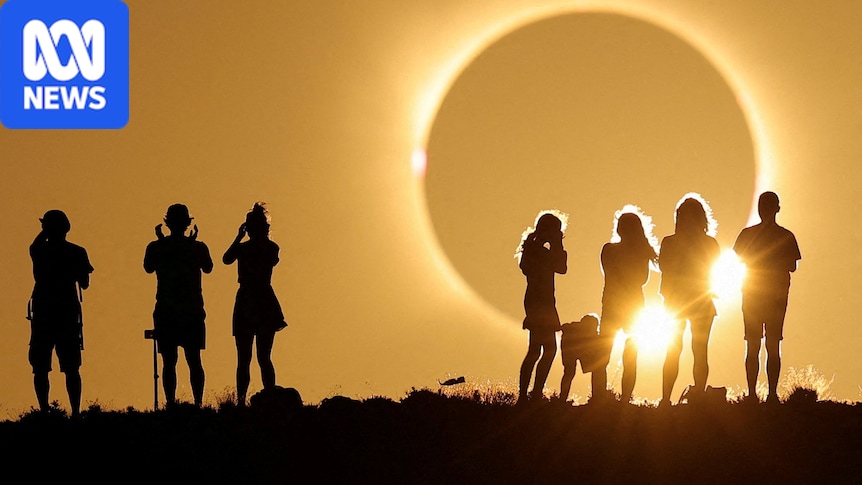
Crowds have gathered around Europe to see the skies fall dark in a rare total solar eclipse.The moon completely covered the sun as seen from the Javalambre Astrophysical Observatory in Arcos de las Salinas, near Teruel, Spain. (Reuters: Christian Hartmann)Artists use self-made artefacts to observe the solar eclipse near the small village of Castell de Cabres, Spain. (Reuters: Eva Manez)From Spain to Iceland, people gathered to witness the sun's light be fully blocked by the moon in the continent's first solar eclipse in 27 years.Totality — when the moon completely covers the sun's light — was expected to last less than 2 and a half minutes, reaching its maximum duration off Iceland's west coast.By the time it got to a small patch of Portugal and then to Spain, just before sunset, totality dwindled to a minute or so. The total eclipse then ended over the Mediterranean.Beachgoers watched the solar eclipse along the coast of Fregene, near Rome. (Reuters: Guglielmo Mangiapane)Masks and glasses are essential when viewing the eclipse. (Reuters: Denis Balibouse)Before the spectacular celestial event, long queues were seen outside shops selling special eclipse glasses.The glasses are essential for safe viewing, even if only a sliver of the sun remains visible. They are made with special filters that block solar radiation that can damage the eyes.Spain was a popular viewing point of the eclipse. (Reuters: Christian Hartmann)Watch parties were held, with crowds heard cheering as the sky went dark in Iceland's capital, Reykjavik.Authorities were expecting up to 6 million visitors in mostly rural areas within the eclipse's path across the north of Spain and the Balearic Islands, said Juan Cruz Cigudosa García, Spain's secretary of State for science."I hope that tonight will see the emergence of a wonderful generation of astrophysicists," he said.A single camera captured the different stages of the eclipse. (Reuters: Borja Suarez)"It's such a special moment."The eclipse was followed by a sunset in Spain, making the event particularly alluring.The eclipse was visible from Berlin. (Reuters: Fabrizio Bensch)The Molecule Men, a 30-metre-high metal sculpture in Berlin's Spree river, stood out. (Reuters: Joachim Herrmann)The eclipse reflected over the Vistula river in Warsaw, Poland. (Reuters: Kuba Stezycki)Millions of others across Europe enjoyed a loss total view of the celestial spectacle.Thousands gathered in town squares and on beaches to see the show.Some of the best views were in rural parts of Spain. (Reuters: Ana Beltran)The Eiffel Tower silhouetted while the moon partially covered the sun. (Reuters: Sarah Meyssonnier)Landmarks from Paris to Saint Petersburg shone through bright red and yellow skies.The Prague Castle stood out in the light. (Reuters: Eva Korinkova)Parts of central and eastern Europe like Belgrade in Serbia saw the skies go dark. (Reuters: Djordje Kojadinovic)Across Britain, where the sun was more than 90 per cent obscured, people flocked to hilltop parks and anywhere with an open view of the sky to see the best eclipse since 1999.Grey clouds did not deter viewers in Glastonbury. (Reuters: Toby Melville)In Greenwich Park, with views of the River Thames and central London, the sky turned an eerie gray as a sliver of light sat atop the moon like a hat.Beaches in Italy were a popular viewpoint. (Reuters: Guglielmo Mangiapane)In the east, Saint Petersburg, Russia turned red in the eclipse. (Reuters: Marina Lystseva)According to NASA, the next total solar eclipse is expected in August 2027, to be visible across northern Africa.In July 2028, Australia and New Zealand will also have a chance to experience the skies go dark in a total solar eclipse.The "diamond ring" effect appeared as the moon moved across the sun. (Reuters: Borja Suarez)The eclipse was the most significant since 1999. (Reuters: Fabrizio Bensch)ABC/wires
Europe's first solar eclipse in 27 years in pictures
From Spain to Iceland to Russia, millions gathered to witness the sun's light be fully blocked by the moon in the continent's first solar eclipse in almost three decades.
603 words~3 min read