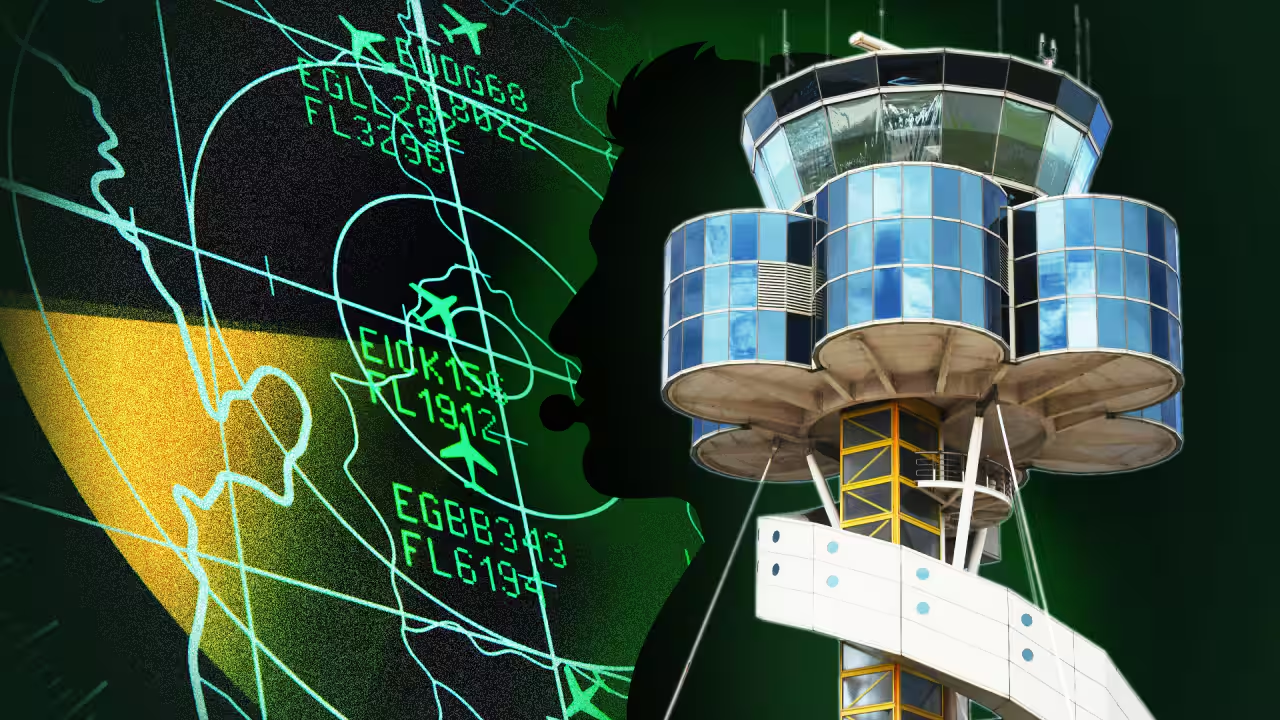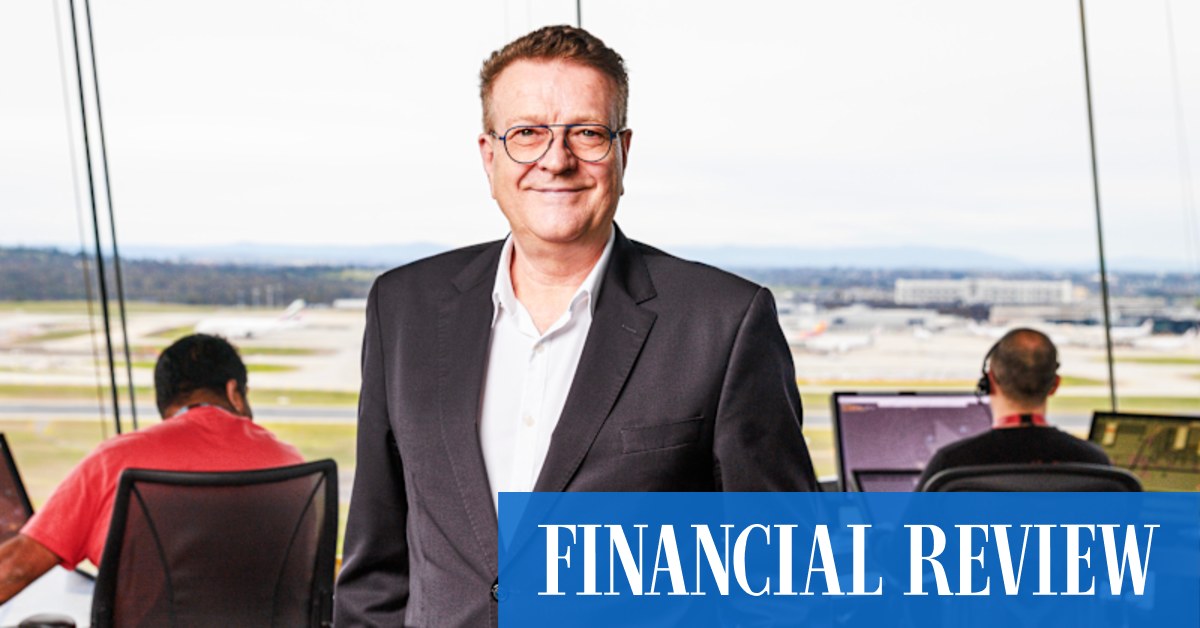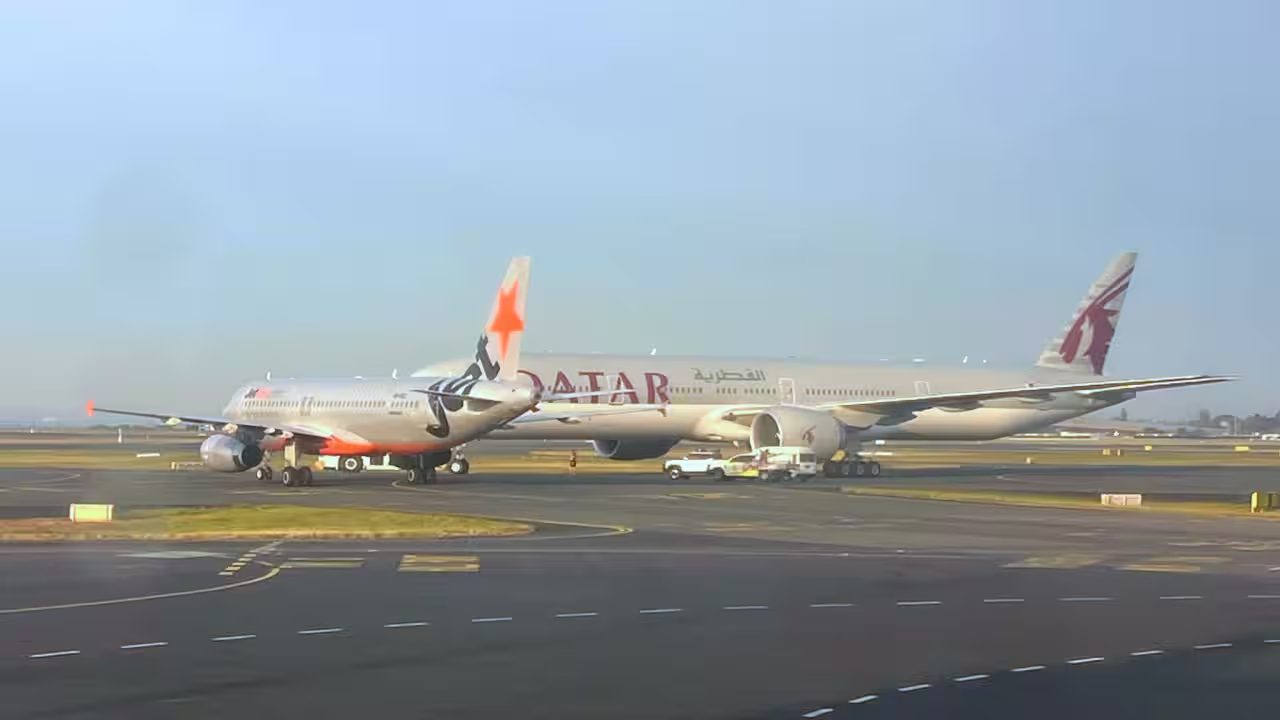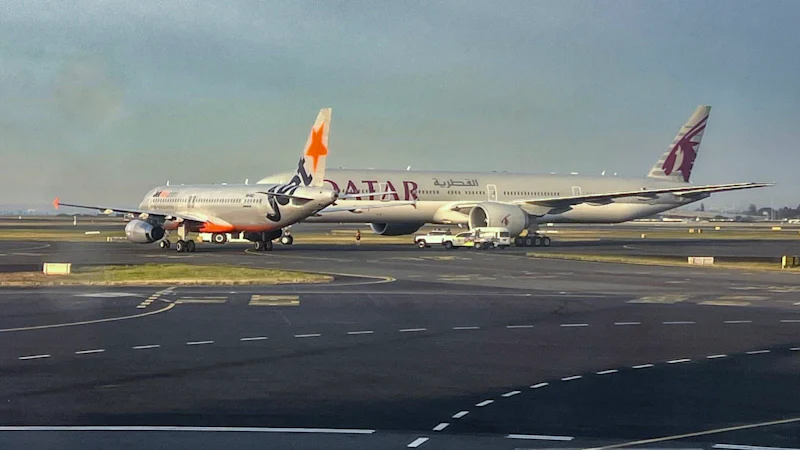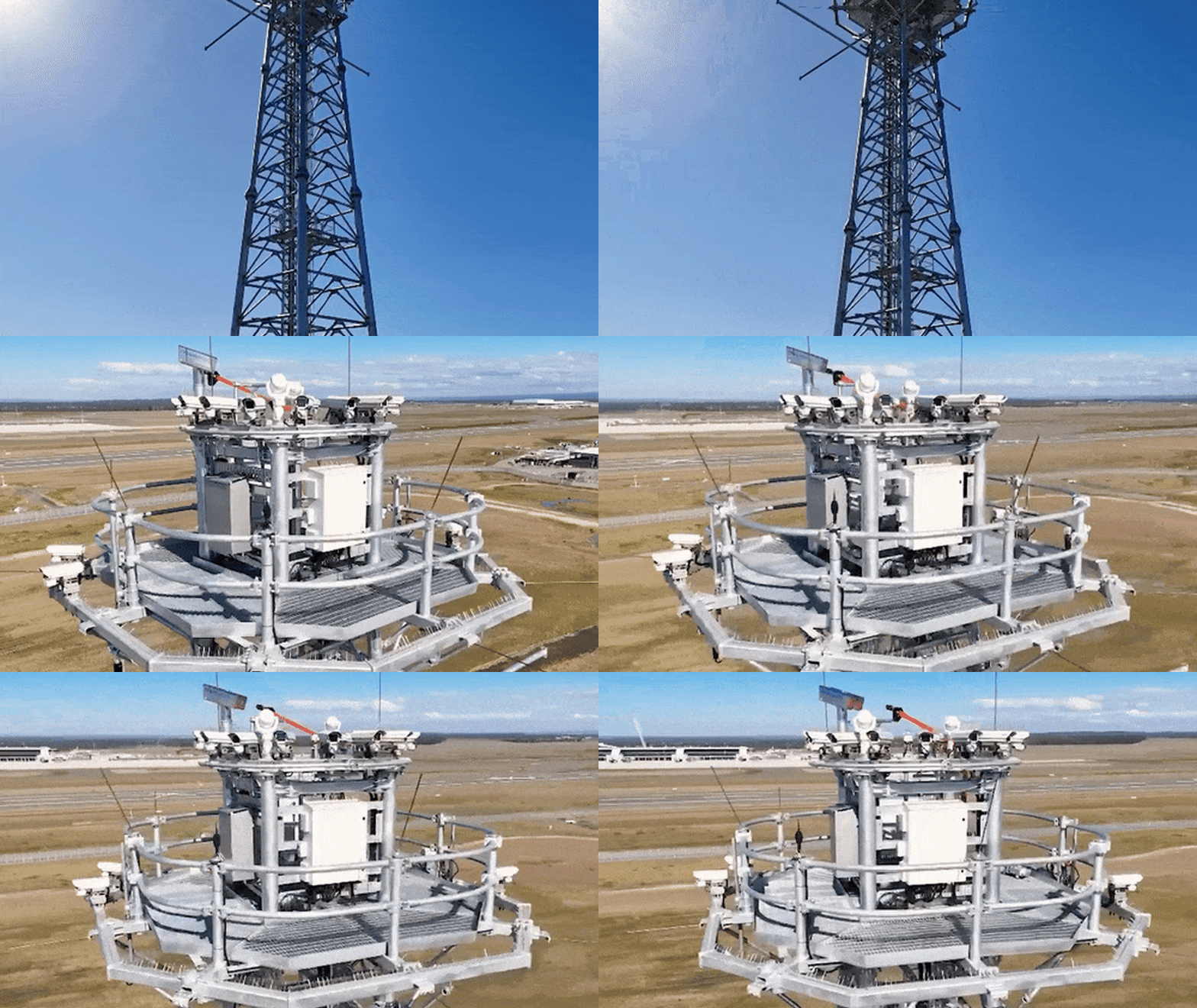
August 13, 2026 — 5:00amThe poor quality of digital images beamed from cameras at Sydney’s new international airport to air traffic controllers 17 kilometres away is forcing aircraft to be kept significantly further apart during landing for safety reasons.The technical problems raise the risk of delays for passengers if they cannot be fixed before flights start to ramp up at Western Sydney International Airport late this year.The restrictions require controllers managing the airport to keep planes at least 15 nautical miles (27.8 kilometres) apart as they land because they cannot adequately see the farthest plane on screens due to the quality of images from the cameras, according to sources close to the project who spoke on the condition of anonymity.The tower, fitted with 25 cameras, is located on the western side of the new airport’s 3.7-kilometre runway. Sitthixay Ditthavong“The visibility is quite poor with the main screens. They look like mosquitoes,” one said of how planes farther out on the approach to land appear on screens to controllers. “When they are on the runway at the airport they are fine to see.”A separation of 15 nautical miles between aircraft can result in about seven-minute intervals between planes landing, significantly curbing the number of flights an airport can handle. In comparison, the required distance at airports with a traditional, manned tower is typically four to five nautical miles.The restrictions at the new airport come as Airservices Australia, which oversees the country’s civilian airspace, has been under fire for passenger delays at Sydney Airport due to a controller shortage, forcing a cut to flight frequencies. A second near-collision between planes on the tarmac at Sydney Airport in two weeks has also cast a spotlight on the Commonwealth-owned corporation.At the curfew-free Western Sydney Airport, images from 25 cameras mounted on the digital tower near the western side of the runway are fed to air traffic controllers watching screens 17 kilometres away in a centre at Eastern Creek.So-called visual separation of aircraft at the $6 billion airport has also been banned because the camera images lack sufficient clarity.The country’s air-safety regulator permits visual separation at other airports because controllers can watch aircraft with their own eyes by peering out windows with binoculars from a physical tower.It means that if two aircraft were taking off about the same time as a rescue helicopter at Western Sydney Airport, for example, air traffic controllers would have to stop the other planes to allow the chopper to depart.Cargo aircraft have been flying in and out of the new airport since late July.Wolter PeetersIn contrast, a controller operating from the tower at Sydney Airport could use binoculars to ensure separation between aircraft.Western Sydney Airport is the first airport in Australia without a traditional air traffic control tower, and Airservices has spruiked the digital technology as a way for it to modernise its capabilities.The Civil Aviation Safety Authority said the current controls at Western Sydney Airport would remain in place until it was satisfied that any proposed changes could be implemented safely.“CASA approved the air traffic control service at Western Sydney International Airport in a phased approval that included operational controls,” it said.“Our approval considered the fact that the digital aerodrome service in place at Western Sydney International Airport is a first-of-type in Australia.”Jetstar will be the first airline to operate passenger flights from Western Sydney International Airport on October 25.Wolter PeetersAirservices said that “no changes to the cameras” at the airport were planned, noting in a statement that the remote tower had started operations under “a phased operating model that has been designed to support the safe and controlled introduction of services”.“Airservices continues to work closely with the Civil Aviation Safety Authority through established safety assurance and regulatory processes to support the safe introduction of air traffic services at WSI as part of preparations for the commencement of passenger operations,” it said.The sources close to the matter say that if the problem with the camera images is unresolved, and the aircraft separation limits remain, Western Sydney Airport faces a growing risk of delays when passenger flights ramp up late this year.However, Airservices said air traffic services have been designed to safely accommodate forecast flights, including an increase when passenger services start.The first passenger flights will begin on October 25 when a Jetstar A320 aircraft takes off for the Gold Coast, followed a day later by Air New Zealand launching the first international service to Western Sydney Airport from Auckland.Singapore Airlines will start flights to western Sydney in November, while QantasLink will begin domestic services from the new airport next March. On Monday, Vietnam’s budget airline VietJet committed to launching flights between Ho Chi Minh City and Western Sydney Airport in January, followed by Bangkok from November.Cargo flights started late last month at the airport, led by Qantas Freight, Texel Air and Team Global Express. Qantas expects 96 cargo flights at the airport every week once fully operational.Start the day with a summary of the day’s most important and interesting stories, analysis and insights. Sign up for our Morning Edition newsletter.From our partners
Camera bungle forces curb on flights to Sydney’s new airport
Technical problems raise the risk of passengers being delayed if they are not fixed before flights start to ramp up at Western Sydney International Airport.
843 words~4 min read