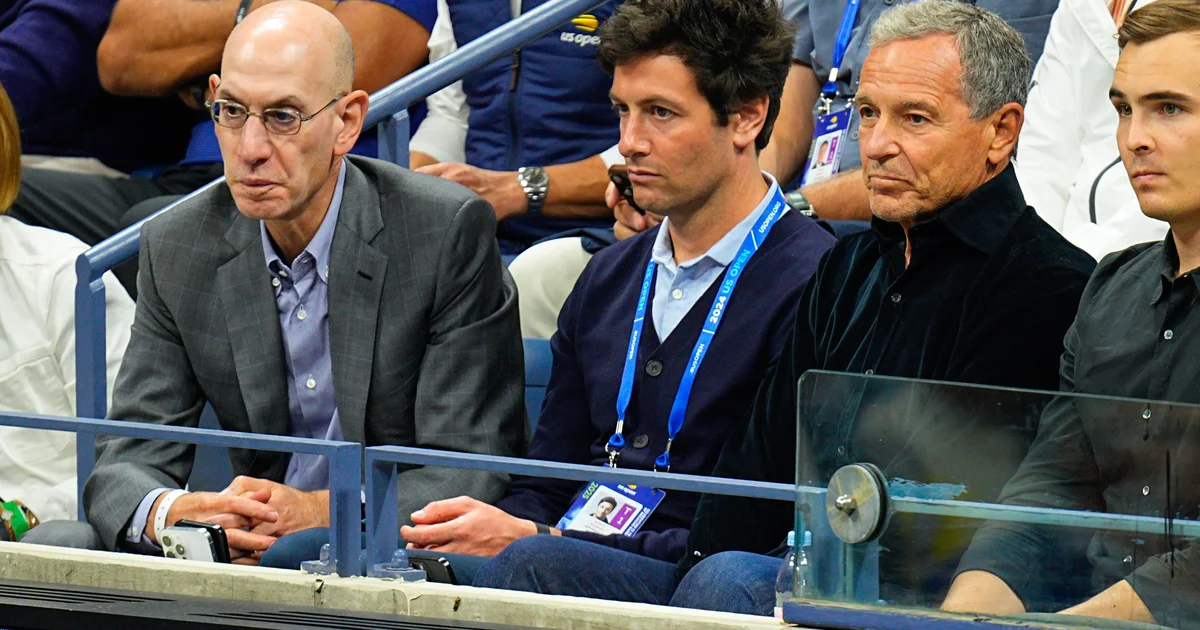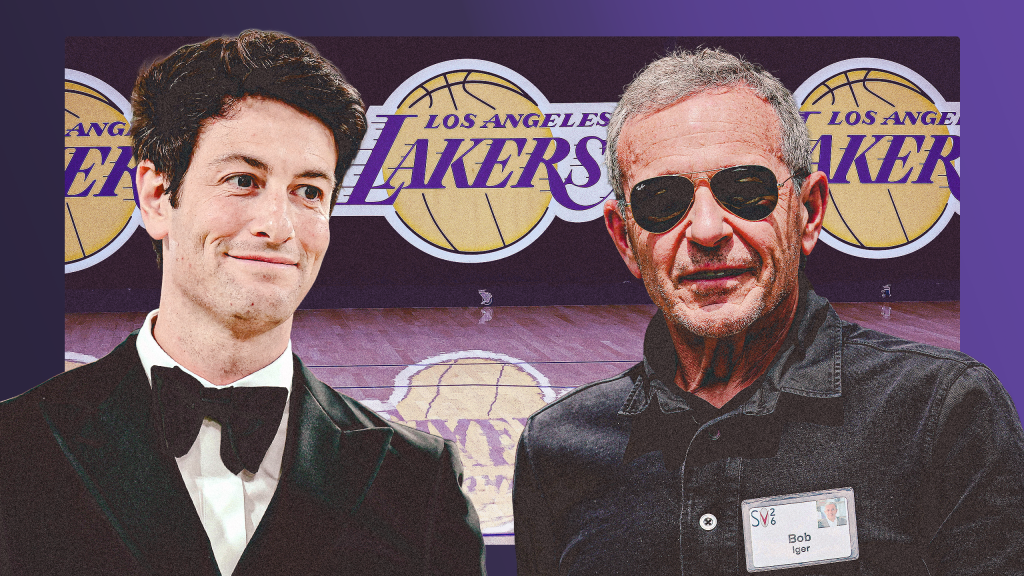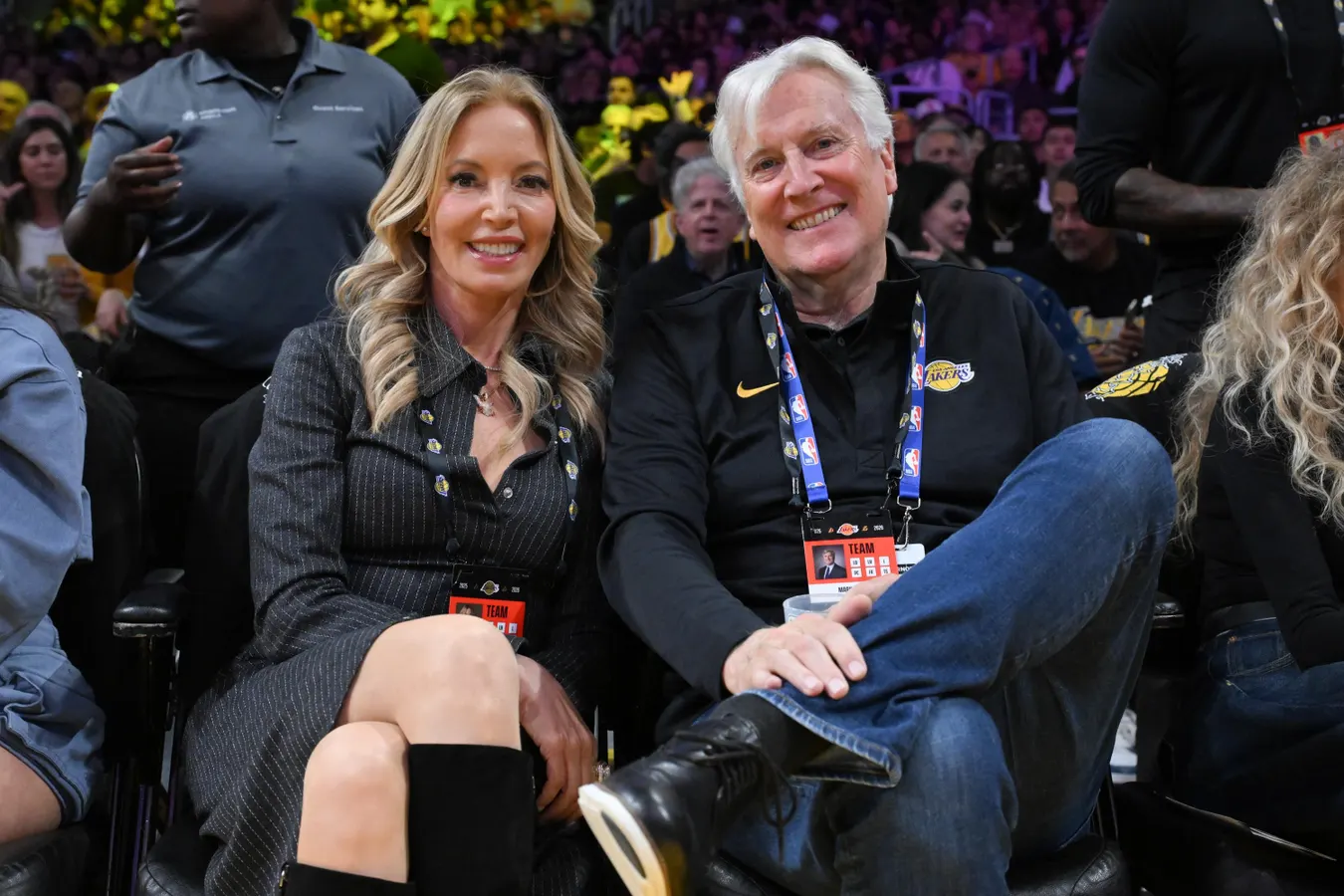
LOS ANGELES, CALIFORNIA - OCTOBER 21: Jeanie Buss (L) and Mark Walter attend a basketball game between the Los Angeles Lakers and the Golden State Warriors at Crypto.com Arena on October 21, 2025 in Los Angeles, California. NOTE TO USER: User expressly acknowledges and agrees that, by downloading and/or using this Photograph, user is consenting to the terms and conditions of the Getty Images License Agreement. (Photo by Allen Berezovsky/Getty Images)Getty ImagesIn less than a year, Mark Walter bought the NBA’s most valuable franchise and then flipped it for a handsome profit.Walter sold his majority shares of the Los Angeles Lakers to Josh Kushner and Bob Iger for $12.5 billion, more than $2.5 billion than when he purchased the franchise last October from the Buss family. In 2014, former Microsoft CEO Steve Ballmer bought the LA Clippers for $2 billion. In 10 months, Walter made more than that after making various efforts to expand the Lakers’ front office and business staff.No wonder Walter told ESPN in a statement that he considered becoming part of the Lakers’ ownership group as “one of the great honors of my life” and “an extraordinary investment.” Walter, who also owns the Dodgers and Sparks as part of Guggenheim Group, has 2.5 billion reasons to sell instead of further cementing his imprint on the NBA’s most iconic franchises. But the pending transaction also raises plenty of questions.Why would Walter sell the Lakers?Beyond an enticing financial offer, why would Walter part ways with the Lakers after only purchasing it 10 months ago?Bloomberg reported that the Securities and Exchange Commission (S.E.C.) and U.S. prosecutors in Manhattan are investigating whether Walter failed to disclose private credit holdings involving two insurers that he controls, Delaware Life Insurance Co. and Clear Spring Life and Annuity Co. Kushner is the brother of Jared Kushner, who is the son-in-law of President Donald Trump. Is Walter’s sale related to any potential punishments he may face from this investigation?Walter has shown his financial commitment with the Dodgers by signing the league’s elite players, revamping its front offices and analytics staff. That philosophy contributed to the Dodgers winning three World Series in the past six years. Walter has displayed the same financial commitment toward expanding the Lakers’ front office, analytics department and other staff members. But Major League Baseball doesn’t have a salary cap. The NBA does, which entails luxury tax penalties and second-apron restrictions for high-spending teams. Did Walter sense this ownership experience could become more headache-inducing with the Lakers than the Dodgers?MORE FOR YOUHow will the NBA react to the sale?Technically, the NBA will have to approve the sale at the Board of Governors meeting sometime next month in New York. The NBA will likely approve such a measure. But philosophically, how will this latest transaction sit with the league office?On one hand, the NBA has loved that the valuation of recent franchises have skyrocketed in recent seasons. That included the Portland Trail Blazers ($4 billion, 2026), the Boston Celtics ($6.1 billion, 2025), Dallas Mavericks ($3.5 billion, 2023). and Minnesota Timberwolves ($1.5 billion, 2025). That drives up total revenue. On the other hand, the NBA wants owners to become actual stewards of the franchises that they oversee. Maybe Walter genuinely fielded an unexpected offer too big to pass up. But this move does not set a good precedent. It enables potential owners to become house flippers. It can also lead to organizational instability. Kushner and Iger were reportedly among the candidates that wanted to be part of the Las Vegas’ new NBA expansion team. They are obviously out of the mix. But the NBA will need to ensure that its potential candidates will commit toward growing that actual team than using it as an investment vehicle.NEW YORK, NY - SEPTEMBER 2: Adam Silver, Joshua Kushner and Bob Iger are seen on Day 10 of the 2025 US Open Tennis Championships at USTA Billie Jean King National Tennis Center on September 2, 2025 in Flushing Meadows, Queens, New York City. (Photo by XNY/Star Max/GC Images)GC ImagesHow will Iger and Kushner run the Lakers?Iger (former Disney CEO) and Kushner (venture capitalist) have overseen successfully and financially lucrative businesses. But every owners’ business philosophy can vary.Will they have the same spending appetite to bolster the Lakers’ front office and support staff? Or will they only spend on the Lakers’ star players? Will they prioritize front-facing and behind-the-scenes staff continuity? Or will they make wholesale changes? Will they match Walter’s aggressiveness with securing new sponsorships and with expanding Crypto.com Arena’s courtside seats? Or will they stay more deliberative with their initiatives? Will Iger and Kushner follow Walter’s lead by increasing ticket prices? Or will they prioritize with keeping at least some tickets relatively affordable for everyday families?Will this spark a change in the CBA?Two dueling developments have taken place. Wealthy businessmen have purchased NBA franchises for record values. The NBA has placed collectively-bargained spending restrictions.The NBA said it implemented these changes to ensure more parity among its 30-league team. Indirectly, it relieves pressure from franchise from spending too lucratively without appearing cheap to the general public or its players. Here’s the problem: the NBA and its owners can’t cry poverty when they have overseen franchises ballooning. Hence, the National Players Basketball Association plans to talk with the NBA about ratifying the CBA to alter spending restrictions. Currently, the NBA established its salary cap at $164.961 million and requires teams to spend at least $148.465 on player payroll. If teams spend above $200,428 million, they have to pay luxury taxes. If teams spend above $209,015 million (first apron) and second apron ($221.686), they are subject to various roster-building restrictions. Some examples. Teams that pay below the luxury tax threshold can sign a player with a mid-level exception at $15.044 million. Tax-paying teams can only sign players at a mid-level exception up to $6.064 million. If a team spends above the first apron, they cannot acquire players via sign-and-trade without reducing salary and do not have access to the Bi-Annual exception. If teams spend above the second apron? They can’t use a mid-level exception. They can’t sign plays through the buyout market. They can’t deal first-round picks or trade exceptions. They can’t package multiple players together in a deal to match another player’s higher salary. These rules essentially function as a hard cap, requiring even deep-pocketed and high-spending owners to become more deliberative. But it also sends mixed messages on whether the NBA truly values whether their owners invest in their actual teams.
Why Lakers’ Sale To Bob Iger And Josh Kushner Raises Questions
Mark Walter sold his majority shares of the Lakers to Bob Iger and Josh Kushner for $12.5 billion, yielding a $2.5 billion profit
1,083 words~5 min read