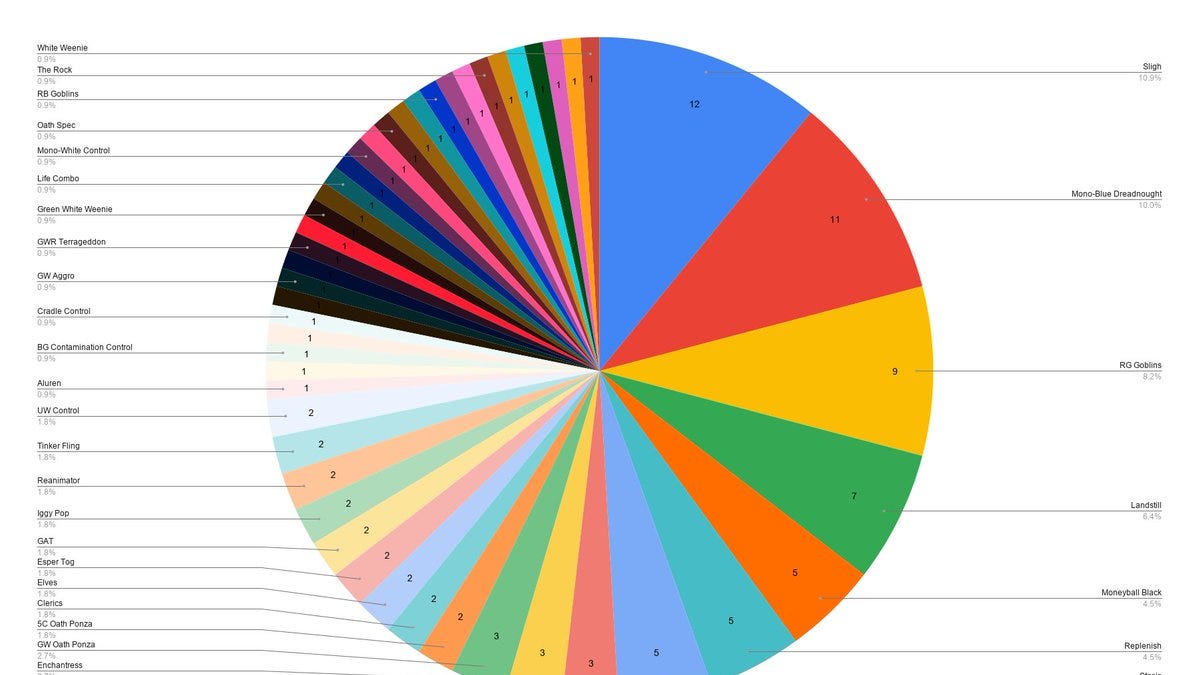
As AI has escalated increasingly quickly, more and more of my posts have ended up focusing on AI. This past month, with the hacking incidents at OpenAI and elsewhere, that has hit the limit, where if you count Lightcone Commons then every single post since the last monthly was primarily about AI in some form. That is not how I want this to work in the long term. We need breaks to experience new things and refresh our thinking, and to not forget about the rest of the world. If things are not fully on fire, I plan on getting back to the roundups on childhood and education, and on fertility, on housing and also on dating. And I want to get back to writing more focused posts on those and other topics. It’s important, and I need to avoid too much audience capture.On to the monthly roundup of all things that don’t go somewhere else.Plagiarize.The Jury Duty Scam.Play The Good Guy.Don’t Dither.UVC Lighting.Goal Factoring For Relaxation Time Is Underrated.Protein Is Mostly A Solved Problem.Twitter Changes Payment Programs.Wikipedia.Minds Mostly Do Things For Reasons.Woke 1 Was Crazy.For Your Entertainment.The Unicontext.Gamers Gonna Game Game Game Game Game.I Was Promised Flying Self-Driving Cars.Sports Go Sports.To Last a Lifetime.Government Working.Jones Act Watch.Variously Effective Altruism.The Lighter Side.Plagiarism is terrible in its own right, as theft, and like cockroaches if you see one instance it almost never stops at one. It is also a reliable indicator of general dishonesty and lack of honor, and thus of much worse things. Thus, in the latest case of Jason Arday, we quickly found many instances of data fabrication and other fraud. Kevin Bryan finds that every paper of Arday’s he examined was not only fraud, but rather obvious fraud. A huge portion of everything, perhaps all of it, seems to be flat out made up. His resignation letter, unsurprisingly, was identified by Pangram as entirely written by AI.When will we get the reckoning, as in when we use Claude to run basic integrity checks across all of academia? If you are doing a plagiarism, unless you are stealing unpublished work like that of your students, the only thing protecting you is security through obscurity. When will we stop putting up with institutions that tolerate not only clear plagiarism but obvious fraud? The ‘you missed jury duty and now you have to pay or else’ scam is on the rise. Authorities never do this, so you can easily know this is 100% a scam, but people don’t know that. The scam can work on those who don’t remember or know this, because it uses particular details to appear credible when they threaten to arrest you. There are some very very obvious ‘this is a scam’ neon signs one could spot, but people aren’t thinking clearly. The whole thing seems ‘classically executed’ throughout, so this is an illustration that scams are mostly still very much in the pre-AI era, although perhaps AI is used to scout for targets and gather the info. I agree with Shoshana Weissmann that we could do a lot more to catch the bastards. I realize that law enforcement has limited resources, but it seems impossible for such efforts not to pay for themselves many times over. In general, massively larger investment in enforcement of white collar and fraud crime seems like it would be a huge and simple win.Sarah is correct here, in most circumstances. Take the win.Sarah Constantin: Something I’m gradually drilling into my head:If someone’s worldview amounts to dividing up the world into Good Guys and Bad Guys, and if this person is friendly towards you & you want a good relationship with them, it’s prudent to always presume that it’s mutually understood that you’re one of the Good Guys. Even if you think their Good Guy/Bad Guy categorization is unfair; even if you think you logically would fall into the Bad Guy category, by their definition.If they like you, they already believe you’re a Good Guy, and are not strictly abiding by their own “rules.” Stop being shocked that people can be unprincipled; it’s true, and it means that you can’t change their worldview by going “you like ME but I’m one of the Bad Guys, checkmate!” Accept the unprincipled favoritism, or decide you don’t want a close relationship with the person.There are notably rare exceptions, when you can use this to change their minds about their worldview and classification system, but so long as they do not otherwise need their focus drawn to the relevant information it is not in your local interest to try.She is also correct here: Don’t dither, especially when you are young.As in, if you have a decision, especially a major life decision, and everything about you screams that you want to Do The Thing, then Do The Thing, rather than waiting because you are ‘not sure.’ Sarah Constantin: You want to do the thing. You think doing the thing is the right move. I can’t promise you that you’re right! But I do have a sort of faith that people can’t, in practice, do much better than following their own integrated judgment and desire. To put it more superstitiously, even if it is a bad move, it’s a bad move that you kind of “have to make”. It’s a necessary part of how your life must unfold, given that you are you.And to put it less superstitiously, it’s important for development, learning, human flourishing, all that stuff, to move forward with your life, to take on the “natural” next challenge or opportunity that “advances the plot” and will require you to learn and change. You are not going to get out of life 100% unscathed; nobody is wholly untouched by regret or adversity. So you might as well make the decision you want to make. In particular, I far more often see young people underrate experimentation than overrate it. And this makes sense; if you’ve had very few life experiences thus far, it’s easy to imagine “this is basically How The World Is; if I make a change in my life it probably won’t get any better than this.” Whereas actually, you have tried almost nothing yet and anything you’re dissatisfied with is probably fixable if you change something about the basic conditions of your life.She also correctly tells young people to value experimentation. If you are unhappy with your circumstances, change them. Change your job or relationship status. Move. The exception, where you should tell them not to Do The Thing, is if you know very strong reasons why they really, really should not do this particular thing. It has to be damn strong reasons. We should absolutely be installing UVC lighting in public spaces, but you do not have the authority to do that. Should you use what authority you do have to install UVC lighting in your apartment to cut down on germs, and if so when should you run it? They run $500 per light, which is not nothing, and there is some concern about ozone in closed off areas like apartments and especially bedrooms, if you’re not also using active filters. But yeah, it seems like the cost-benefit is pretty good given how much you would actually pay to not get sick. I have ordered the lights, and an accompanying additional air filter, of which I already owned two. David Sedaris plagiarized the classic Kurt Vonnegut take that he goes to the post office to buy stamps because that’s what he wants to do with his day, and it generates stories and new experiences. Whereas staying inside might be more efficient, but has zero perplexity. The thing about this story is that it makes zero sense. The Post Office is a terribly low-perplexity way to spend that kind of time. Someone being grumpy is not peak experience on any level. Going to the post office is not living. It is not being out there.Yes, I speak from some amount of post office experience.It is more ‘living’ or ‘being out there’ than dropping the letter off at the hotel front desk, sure, but you could have dropped the letter off and then gone out to do something else whimsical with your afternoon. The steelman of this is that you could take that walk anyway, but you won’t, so buying one envelope at a time gets you into the good habit, and provides an excuse to do it. What I have figured out is that you can do the boring thing efficiently, and then decide to spend some of the surplus time going outside, doing relaxing and quieter things, and not directly working. So I do that, instead. Writers, both like myself and like Sedaris or Vonnegut, need some of that alone quiet time to let things ruminate, and that has to involve some amount of walking around every so often.Thus, the better steelman is to properly value that quiet time very differently from zero. Often you will have a choice between spending 1 unit of time in a hurried way requiring unpleasant attention, or spending 2+ units of time in an unhurried way that can refresh you and provide perplexity and time to think and a chance to walk around.We are not, contra Vonnegut, here to fart around, but doing some of that is useful, and some of that is fun. Never confuse instrumental with terminal goals. So yes, in those cases you often want to choose to spend the 2+ units of time. That transitional time can be essentially free, in that you’d need that break anyway. But make it count.It is pretty weird to look back, and see all the silly little things that used to eat entire hours or afternoons of remarkably productive people, back before the internet, and we can say that again now for ‘back before AI.’ We can make an exception if you are going to the Post Office because (as per Vonnegut) you are then flirting with your ‘secret love,’ that’s totally fair, but if so ask them out already. Standard consensus is that you should consume more protein than any ‘natural’ diet would contain, especially if you want to work out. Until recently, the ways to do this involved very large hedonic sacrifices, basically turning your caloric consumption into something unpleasant. Now things are dramatically easier. Rejoice. roon (OpenAI): it used to be really hard to consume enough protein to make working out worthwhile. your choices were to eat enough chicken breast until you’re nauseous or drink some whey isolate chalky disgusting proteinslop for about 15g of protein.now, thanks to technological advances in distillation, you can have a 42g corepower elite and it tastes like chocolate milk. you can add enormous amounts of protein to any normal thinglook I am just celebrating technological progress you’re reading too much into thisMy personal choice is Pure Protein shakes and especially Protein2O waters, because I have a crazy slow metabolism and I treasure eating tasty foods, so I highly value caloric efficiency - if I am going to burn a bunch of calories on this I want to have the absolute minimum number of calories involved that aren’t going to either protein or fiber. And that number is indeed remarkably close to the theoretical minimum, without the experience being that unpleasant. Twitter will be discontinuing revenue sharing, and replacing it with an Original Content Rewards Program. Twitter: Original content is content you have personally created – written, filmed, designed, or produced – that reflects your own voice, perspective, or expertise.What doesn’t count is content where your contribution is minimal or absent. If the primary value comes from someone else’s work and you’ve done little to transform or add to it, it won’t generate qualified impressions under the program.Qualified impressions means post is 50% visible, and the impression is a logged in paying user on the Home Timeline, not a repost of content by others (but there is an explicit carve-out that reposting your own content is fine), not ‘created or posted using automated means,’ not sexually explicit (boo!), without a community note. I see what they are going for here. The threshold is 500,000 such impressions over 90 days. We do not know how much they will be paying. Until now, payment size has been ‘chump change’ and I assume that will continue. But every little bit helps, and this seems comically well-matched to my existing content on Twitter.I expect this to be an excellent change. Payments have been warping content towards a generic form of slop and engagement farming. This change probably improves incentives.To what extent has Wikipedia lost its reputation in light of the overwhelming evidence that it stacks the deck on many political issues, sometimes absurdly so, and uses exclusive preferences and trust for approved ‘journalists’ to exclude those who point out true things? PoliMath: I enjoy a good Wikipedia takedown but it is interesting that Wikipedia has already lost a lot of its reputation. It’s not the widely respected knowledge repository that it was 13 years ago. Another data point in a fracturing world.I would say that I now treat Wikipedia the same way I treat mainstream media sources, as if it is subject to the rules of Bounded Distrust and is frequently attempting to sell me a Narrative with a capital N, and will do things like strategically frame, word and omit key facts, but does have lines it will try hard not to cross. For some issues, those with political implications, it is worse than useless. For places without political implications, it is mostly still a good source, but consistently not as good as asking top AIs, currently Fable or Sol, for the same information. Worth reflecting on, and potentially relevant to many things including AI:Paola: Female aggression strategies tend towards being covert and plausibly deniable. I think this leads to a lot of confusion about why women often do “uptalk”, make constant hedges, speak softly, etc. The standard frame on this suggests that women are just often insecure and socially disempowered—however, I think more often than not these are learned strategies to appear like less of a threat than they actually are.I think it’s interesting that this strategy is effective, and does probably say something undesirable about the female condition, but I think it’s important to recognize that when people are putting out signals of weakness they are often a strategy and not a bug. Organisms tend to hold enough intelligence to not engage in behaviors that systematically and predictably actually work against them.But of course there are obvious exceptions, many of which matter a lot, where intelligent organisms such as humans really do use strategies that systematically and predictably work against them, often for reasons we understand quite well. The key fact is that there was an original good reason, even if this action is now a mistake.AOC has said it, so now most of us can officially agree that ‘Woke 1 was crazy.’ Yes, Woke 1 was crazy. Points for moving towards common knowledge of this.However. I do not think that is an excuse for those who said crazy things. You do not get a free pass by walking back the crazy things you said.Jack: You know, I actually know quite a few people who didn’t get caught up in that particular psychosis, and if AOC now wants to claim that people who did should be given more power, I think we all could do with an accounting of which substantive actions were wrong and why.Josh Barro: If you’re going to go with the line “Woke 1 was crazy,” I think we need a bit fuller of an account of why you and these other politicians became crazy and what you all learned about how not to do it again.This goes double because the central theme of Woke 1 was not excusing people for things they previously said or did, that the woke people now considered unacceptable, even if the person was young and stupid at the time, or expressing what at the time was a mainstream or even majority opinion or action, or even if you were a long dead historical figure from a very different context. Didn’t matter. My minimum threshold for mea culpa is, convince me that you regret what you did last time and think you shouldn’t have done it, and convince me that if things went in that direction again for a Woke 2, that you wouldn’t do similar things again, or worse, regardless of the target of the future Woke 2.I really do appreciate the acknowledgment that Woke 1 was crazy, and I want to be sure to reward that. But if you try to excuse Woke 1 via ‘Woke 1 was crazy’ then I am unconvinced that you regret the actions, or that you wouldn’t do it again. The Odyssey was amazing. Go see it. My spoiler-filled review is here. I broadly agree with Matthew Yglesias about a lot of what Nolan is trying to do.It was filmed in IMAX, so if you have the chance see it that way, I’m sure it’s even better, but it totally does not need this. This example is telling.Yes, it’s kind of cool to get the other half of the screen, but it does not add anything important and might distract, because Christopher Nolan knows most people won’t see the other half. A long rectangle is indeed the correct ‘efficient’ screen shape, it’s just that with IMAX you get the opportunity to add more so you might as well use it. The people disliking The Odyssey consistently miss the point of the film. Either they complain about the ‘woke’ casting, or that Odysseus is not properly ancient, or they complain about other historical detail accuracy or changes or omissions. They don’t care about, or think much about, the story Nolan actually told. Almost all of them are telling on themselves. Usually you already knew. David Burge: I’m enjoying all the self-humiliating tweets about the Odyssey movie. Nothing political or anything, it’s just that watching people publicly humiliate themselves is my favorite form of entertainment.You are of course allowed to wish it was different in particular ways, especially in terms of matching the historical situation or original text, and yeah we could have seen Odysseus be shown more as a warrior or as being more clever, and the emphasis on shame instead of glory, as Emily Wilson laments here. I mostly disagree, but that is a reasonable position. Elon Musk has pledged to make a ‘full-length movie of The Odyssey that is historically accurate and true to the art of Homer’ by the end of the year, using Grok Imagine. I hope he does. I even hope it is good. Also, in Never Leaving This App:Paul Crowley: You missed his best response.Rishabh Jain: >> Character named Odysseus >> Goes on an odyssey I like foreshadowing, but can we TRY to keep it SUBTLE?It has been an excellent year for movies so far. In terms of the best movie of 2026, we have two choices I would be happy with: It is now close between The Odyssey and The Invite. Both are clearly better than every movie other than Resurrection that I’ve seen from 2024 and 2025, which is when I started tracking.Peacock semi-Premium, as in the ad-supported version, will be added to YouTube Premium. I am happy to see bundling, but sad to see the trend of bundling ad-supported versions. Usually there is no way to pay marginal costs to get ad-free versions, here they are promising an upgrade path for 2027. I don’t watch things with unskippable ads unless I am in rather dire straits and have no alternative. This will cause a lot of highly inefficient ad watching. We have a new candidate for best movie description here for Gone With the Wind, but seriously, you’re never going to beat ‘Transported to a surreal landscape, a young girl kills the first person she meets and then teams up with three strangers to kill again.’A close second is probably still ‘An industrial magnate invites children to his home with the promise of candy, picking them off one by one.’The World Cup was a fun instance of The Monoculture, a thing a lot of people could enjoy together. Group stage games averaged 5.1 million English-language American viewers, or 9.7 million if you include Telemundo, which is less than 4% but enough to get you off the ground. Matthew Yglesias is right that a lot of this is that we used to watch a lot of objectively rather bad television, because we had little alternative, and now we have lots of alternatives. And he’s right that watching things is better with people to talk to about them, and that having good podcasts and recaps makes a show a lot more appealing. ‘Are there good recaps I will enjoy, if I liked this’ is a major input to whether I will consider watching a new show. That, alas, is why I did not end up watching the World Cup, as those around me were not that into it. I’ll still get into college football, but it’s getting harder over time to watch sports with only one close friend and no family members who follow sports at all. Agnes Callard has a new theory called The Unicontext.Derek Thompson: Here are some questions that I consider self-evidently compelling about the modern world:Why is the news media so interested in telling you how much the world sucks all the time? Why are so many of us obsessed with distraction and managing our attention?Why is it so hard to stop comparing ourselves to others? And why does everything in art and design seem the same these days?A week ago, I didn’t think these questions were related. I’m not sure I would have told you I had a good answer to most of them. And I certainly wouldn’t have made the audacious and borderline bonkers claim that one single theory could begin to explain all of them, at once.But then I had the pleasure of speaking to Agnes Callard, the University of Chicago professor, about her new theory called “the uni-context.” It’s easily one of the most interesting conversations I’ve had all year. And once you’ve heard or read it, I think you might find it hard to think about anything else.The theory of the unicontext is a new statement of the idea that you are being pressured to follow the same norms at all times, in all contexts, and to otherwise unify those contexts. Goodness is more context-dependent than badness, and more boring. It is easier to transfer a complaint ‘out of context,’ and it attracts attention, so everyone fixates on the details they think suck. And if something is bad out of context, such as a comment being racist, then anyone anywhere (or if offline anyone in the room) can correct it, and potentially get rewards for doing so. Similarly, identity becomes more important than character, because identity is constant, and transfers better out of context. And if you are comparing everything and everyone to everything and everyone, then you face impossible standards. This also supposedly plays into constantly having to fight to focus our attention, as we no longer can choose this via local cues, although I don’t think linking that in works so well. Agnus thinks the start of this dates back to around 1910. I like this restatement of similar observations from others, and advise trying to consciously resist its effects. The Magic: The Gathering Hall of Fame is back, baby. There will be a class of 2026, inducted in Atlanta in November. I was not put on the selection committee, which is wise since I have not followed the game for years and have no idea who deserves to be inducted first, but looking at the list I am confident they will choose wisely. I especially appreciated that you need both a top finish before 2019, and also a top finish after 2020, with a minimum of five total. Premodern continues to be a fantastic format. Years in, check out this metagame, from a tournament with a $6k cash prize and 128 players:Credit really is a wonderful thing, gaming illustration edition.Ryan Moulton: One way of demonstrating the benefit of credit to the economy is that every economy building game would be totally broken by adding access to credit in the early game.liontender: In Sid Meier’s Railroad Tycoon, you begin the game with $1,000,000 -- half from having sold shares in your railway and half in loans. Taught me a LOT though I didn’t realize it at the time. “Hey every time I try to buy back part of my company the share price goes up, what gives?”And yeah it really is a magical experience. Here you are in the wilderness clearing land, laying track, buying engines, and building stations -- all tremendously expensive stuff -- and you get to do a lot of it “for free” at the very beginning of the game.Game also taught me that debt can be good - almost always it’s better to build out your network and get more paying traffic rather than repaying loans early. Also taught me a healthy respect for geography as it’s VERY expensive to build track on a hill.David: I remember having to institute a “no futures trading” rule in several board games due to one of my finance pals.Railroad Tycoon was great, and one reason it was great was that it puts you to very complex decisions on what to do with your stock. At least at lower difficulties it seemed you almost always wanted to buy back at least some of it early on. Europa Universalis and other Paradox games offer another perspective, where most of the time taking a loan is utter madness, but if you are a good player going sufficiently ruthless you can use it to raise an army to win a war and then use the spoils to pay the loans back or otherwise keep going. Or in Victoria it can work for economic investment.Waters of the Hudson Bay: Victoria 3 has it. If you load up on modifiers to reduce the interest rate then you can sustain a massive deficit pretty much indefinitely as long as GDP growth is fast enough, which it will be once you get your heavy industry off the ground. This was the month I played through one cycle of the final 1.0 version of Orb of Creation, which is the ultimate actually interesting version of the idle clicker progression genre. The first half does an excellent job of not tempting you to let it run all night and rewarding you for actually thinking about how to make progress. The second half, once you start earning interest, loses some steam, especially once you hit rituals and need to climb a lot of orders of magnitude mostly by repeating similar strategies and then waiting to recharge to do it again. I am glad I did it once, and if you would enjoy such a thing then this is a thing you would enjoy. But now I feel done with the genre for a long time. The trial lawyers are lobbying against Waymo, because Waymos cause 94% fewer serious injuries and 93% fewer pedestrian injuries. Ryan Petersen reports that his loaner Tesla worked exactly like the one he owns, which raises the question of whether anyone needs to own one at all. Call for it when you need it, hand it off when you don’t. Coming soon, one hopes.An argument that England’s substitutions against Argentina into essentially a prevent defense in the World Cup semifinal was not the reason they lost, England was tired and hurt and had no better options.This is the first summer in a while in which I am not attempting to watch any baseball. I notice that I do miss it, as it provided a form of relaxation I don’t easily get elsewhere, but the time investment is just too much given I can’t get anyone else in the family interested and my team is so bad.The clip here is really something. Yes, it is hard to not go broke.katsu: Odell Beckham Jr. reveals the real math on a $100,000,000 NFL contract: • On paper → $100,000,000 • Actually guaranteed → $60,000,000 • After taxes → $12,000,000/yr • Car, house for mom, living → $4,000,000/yr• What’s left → $8,000,000/yr • Five years. Then it’s over. Forever “Can you make that last forever?”Cate Hall: Im obsessed with this clip, I’ve been thinking about it all week. I think what he’s pointing at is, despite having all this money, he doesn’t feel *secure,* and that feels wrong. But this just points to the fact that no amount of money can make you feel secure.I think lifestyle inflation happens because ppl keep expecting there to be a point where they finally feel safe, like it’s enough. It’s always mysteriously just out of reach. But they don’t seem to draw the obvious conclusion that no amount of stuff can ever deliver that feeling.The agent also gets a cut, which isn’t mentioned, but the NFL in particular somehow managed to cap agent fees at 3%.Odell makes it clear at the end that no one teaches him or other players financial literacy. That’s a huge part of the problem. They don’t know how to handle it.The other part is that the implicit social tax rates are huge. Everyone knows that you got that $100 million contract.Buy your mama a house is great, but it does not end there. Everyone’s expectations scale with the headline number, and they don’t know about all the other drains on you or appreciate that you need to save for the rest of your life, and they all feel entitled. And your time is super valuable so no one expects you to spare any expense. It is actively hard.Mamdani’s new government run grocery stores (oh no) are going to pick a core set of goods to sell out of, via every month pricing them 30% below retail prices. I suppose we’re committed to going all the way to finding out, and if the stores ever open at all I do expect some of the outcomes to be very funny.Nick Kokonas looks at the RFP for the stores and it is even less coherent than I would have expected. The RFP even asks how they will ‘prevent shelf-emptying in a fair and equitable manner.’ Good luck with that. I can be rough on Mamdani but I do appreciate the play of placing a tax on unoccupied New York City housing, and am amused by those who are mad about it.Mike Peters: Literally the discourse right now:Homeowner: This is so unfair, I bought my $3 million home for $200k in 1980, and I’ve lived here all my lifeEveryone: Okay, just submit your New York tax return and you’re off the hookHomeowner: But I didn’t file my taxes in New York.The biggest complainers: “New York is my primary residence, I just file my income taxes at my beach house in Florida to reduce my tax liability, I shouldn’t have to pay this tax since I live here.”The law is intended to catch people committing tax fraud by doing things like this.David Ulevitch: The NYC pied-à-terre tax is a great way to audit NY state residency, so it’s no surprise they send notices far and wide. Say your home is not a pied-à-terre and they’ll expect a tax return. Say it is and you’ll have to pay the tax.Seth Burn: It’s a surprisingly awkward conversation. People genuinely like owning property in NYC. They despise paying NYC taxes. Frankly, the idea that there’s no longer a way out of that is quite confusing to them. It is good that he is also getting rid of small things like a required license to serve ice cream, but those do not make up for rent freezes and government grocery stores. The White House is doubling down on the Lab Leak hypothesis for Covid-19. The big news is the continued waivers for the Jones Act. The hope is that the energy companies and other big interests notice, given the experiment, how expensive the Jones Act has been, and this leads to increased long term pressure.It would be a real shame if we flooded the anti-Jones Act candidate, Rep. Ed Case, with donations, vastly eclipsing this ‘thousands of dollars.’ Real shame.Scott Lincicome: In Hawaii, there are 2 congressional candidates: One “has pushed for years to repeal the Jones Act”. The other supports the law and has received “thousands of dollars in contributions” from “shippers and maritime unions” Coefficient Giving together with Good Ventures are boosting their annual spending on GiveWell recommendations from $175 million to $1 billion, in a one-off surge to prepare for an expected flood of future donations from other sources, including from those selling in the IPOs for OpenAI and Anthropic. The explanation is ‘very effective altruism.’ This seems better than holding onto the money, if Coefficient Giving otherwise couldn’t find enough good places to deploy its funds, but the scale-up is large enough to create potential incentive and ecosystem problems, so I am cautious.Using a Trojan Horse to go see The Odyssey. I would have allowed it.Circe: Had a business class seat but flight left at 11pm with a 3hr layover. So I switched to economy on an earlier flight. My connecting flight was delayed and now I’m in the last row of the plane. The moral of the story is never be in a rush to get home. The Odyssey talks about this. Christopher Babcock: Respectfully, not trusting an account named Circe on the meaning of the Odyssey.Circe: Help I’m being oppressed.In other related news:No posts
Monthly Roundup #45: August 2026
As AI has escalated increasingly quickly, more and more of my posts have ended up focusing on AI.
TL;DRAI
Research fraud exposed: Jason Arday's entire work fabricated, detected by AI—every paper examined showed obvious fraud and data manipulation. Tech leaders must implement AI verification on research, CVs, and vendor claims used in hiring and architecture decisions.
5,636 words~26 min read