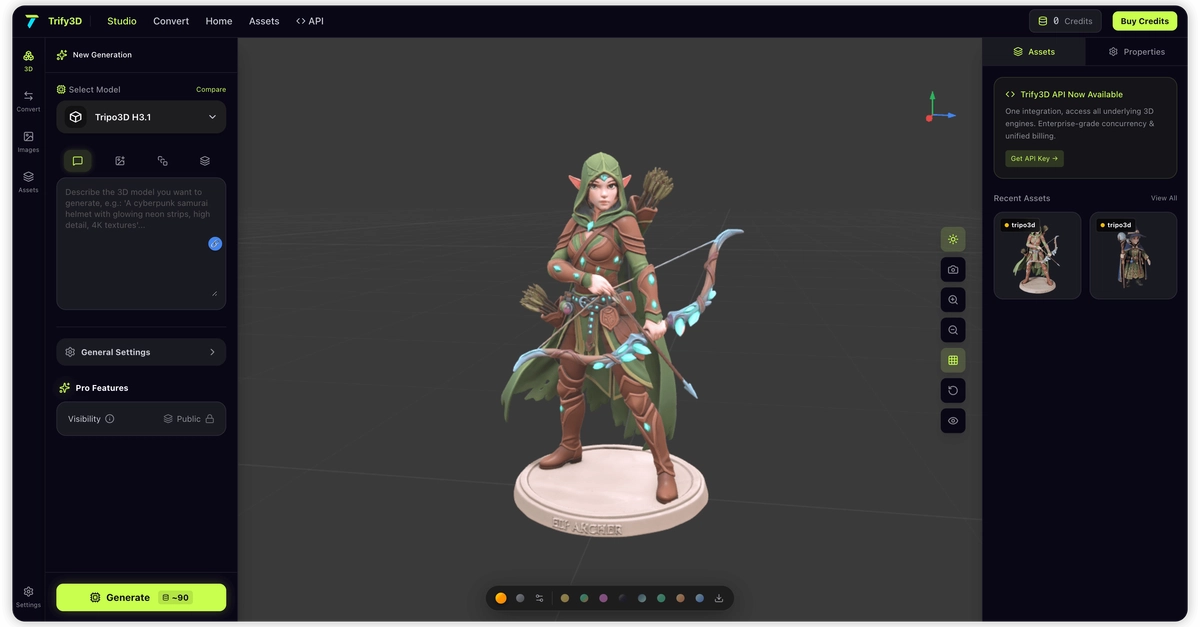
How I designed the API layer for Trify3D — a platform that routes one input across multiple AI 3D engines (Tripo3D, Meshy, Rodin) so users can compare meshes side by side. This post covers provider routing, async job management with Trigger.dev, idempotency for credit safety, and webhook delivery.
The Problem
Every AI 3D engine has a blind spot.
Tripo3D is fast (~48 seconds) and great at hard-surface props, but it flattens organic detail. Meshy handles characters and creatures more cleanly (~76 seconds), but its topology gets messy on hard surfaces. Rodin produces the highest-fidelity PBR textures (~90 seconds), but it's the slowest and most expensive.
If a user picks one engine, they're stuck with its weaknesses. To compare results, they'd need three separate accounts, three subscriptions, and three credit pools — then manually juggle browser tabs.