T
he battering ram took down the door first. A column of steel bolted to the front of a tactical vehicle slammed through Autumn Hill’s front entryway. Then the windows shattered. FBI agents threw flash-bang grenades through the glass, their concussions rattling the house’s front rooms. Hill was in the shared office space, in a thin red dress, puttering around on her computer. She heard screams from the other rooms. Then, the buzzing of a drone, as the police flew a quadcopter in through the splintered doorframe. A voice from the drone shrieked out, telling the residents of the house to come out with their hands up. Hill was terrified. She edged out of the door and immediately stared down a wall of gun barrels, masked agents screaming orders, the drone screaming in the air behind her.
“I remember thinking, ‘If I don’t do exactly what I’m told for the next minute of my life I’m going to die right now,’” Hill says.
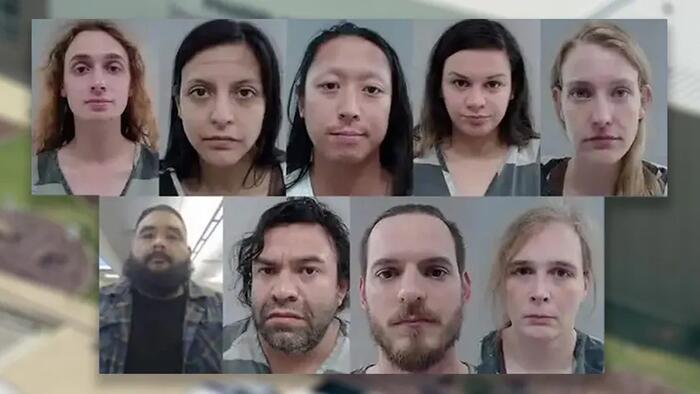
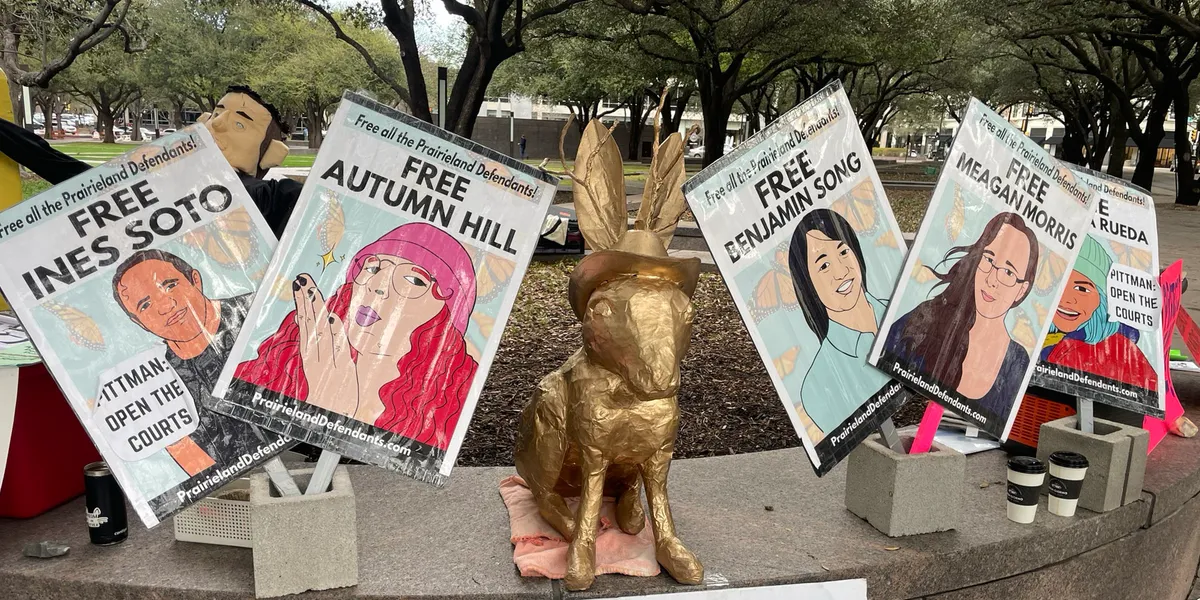
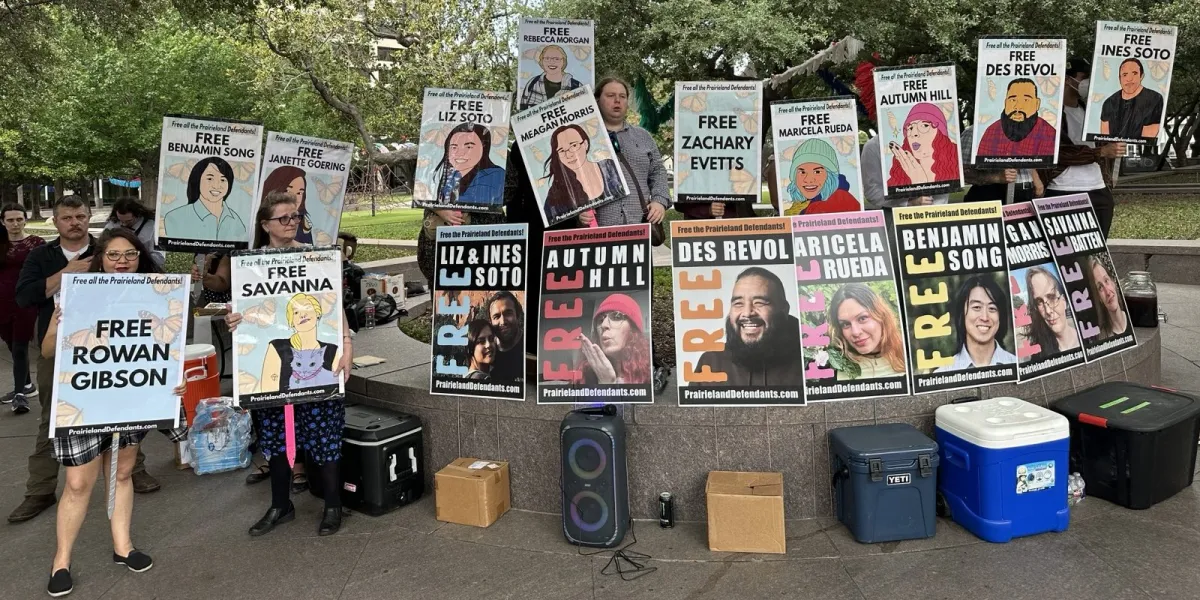
Through its loudspeaker, the drone called repeatedly for one name: “Benjamin Song.” Song wasn’t in the house, and no one inside knew them by that name. To Hill and her chosen family — an eclectic mix of personalities who lived together in what they called the “Big Gay House” — Song was “Champagne,” a gender-fluid, politically radical activist who had, the night before, led a group to a demonstration outside of an Immigration and Customs Enforcement detention facility near Prairieland, Texas. The protest, on July 4, 2025, was loosely organized in a collection of local activism group chats, and attracted a few dozen attendees, all of whom had their own idea of what they wanted to accomplish. Many, like Hill, planned a “noise demo,” or a loud protest involving fireworks and loud chants, aimed at disrupting the guards’ routine and letting the detainees inside know that they had supporters outside the fence.