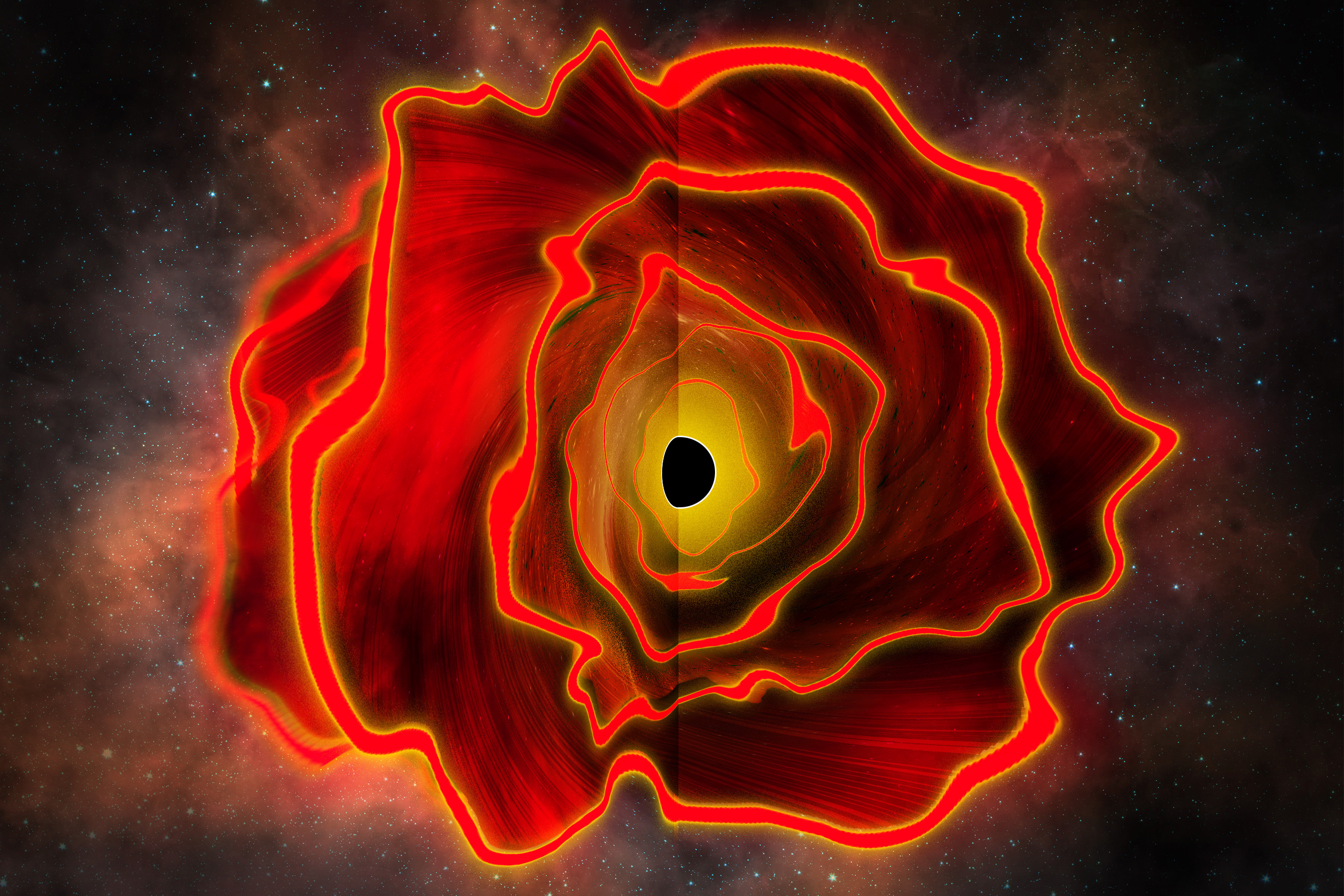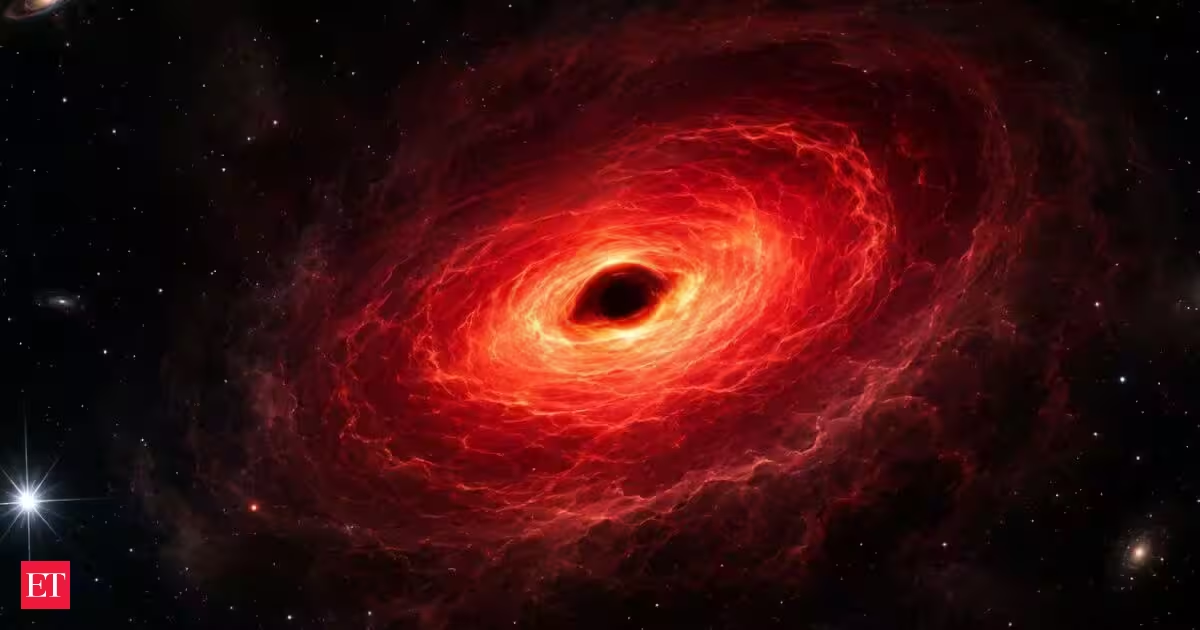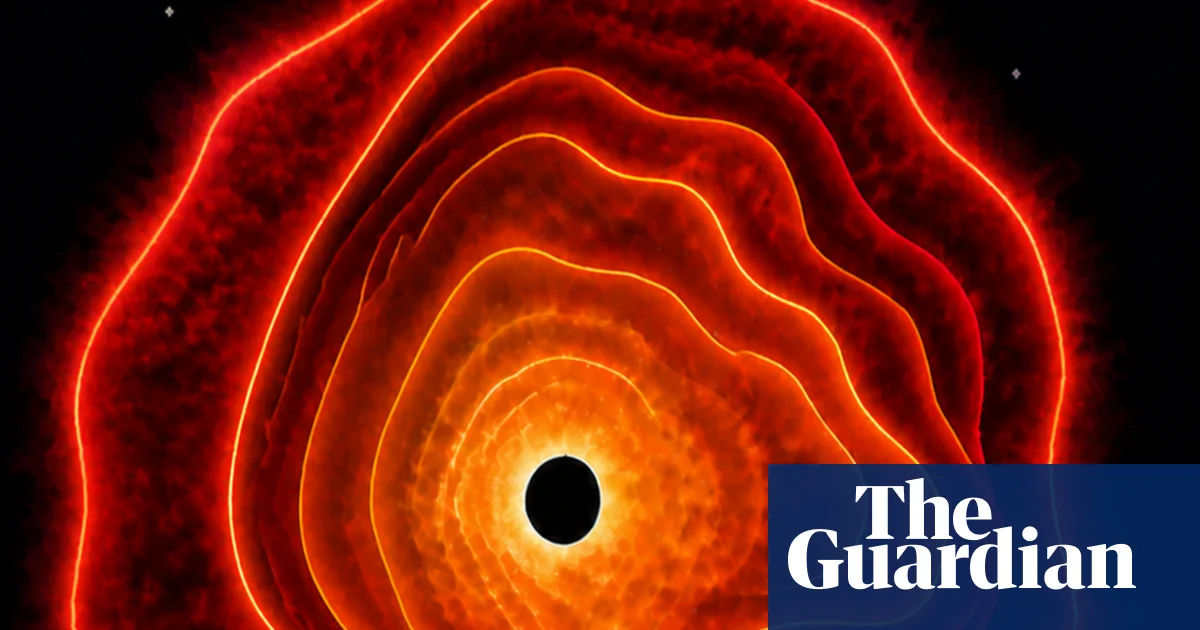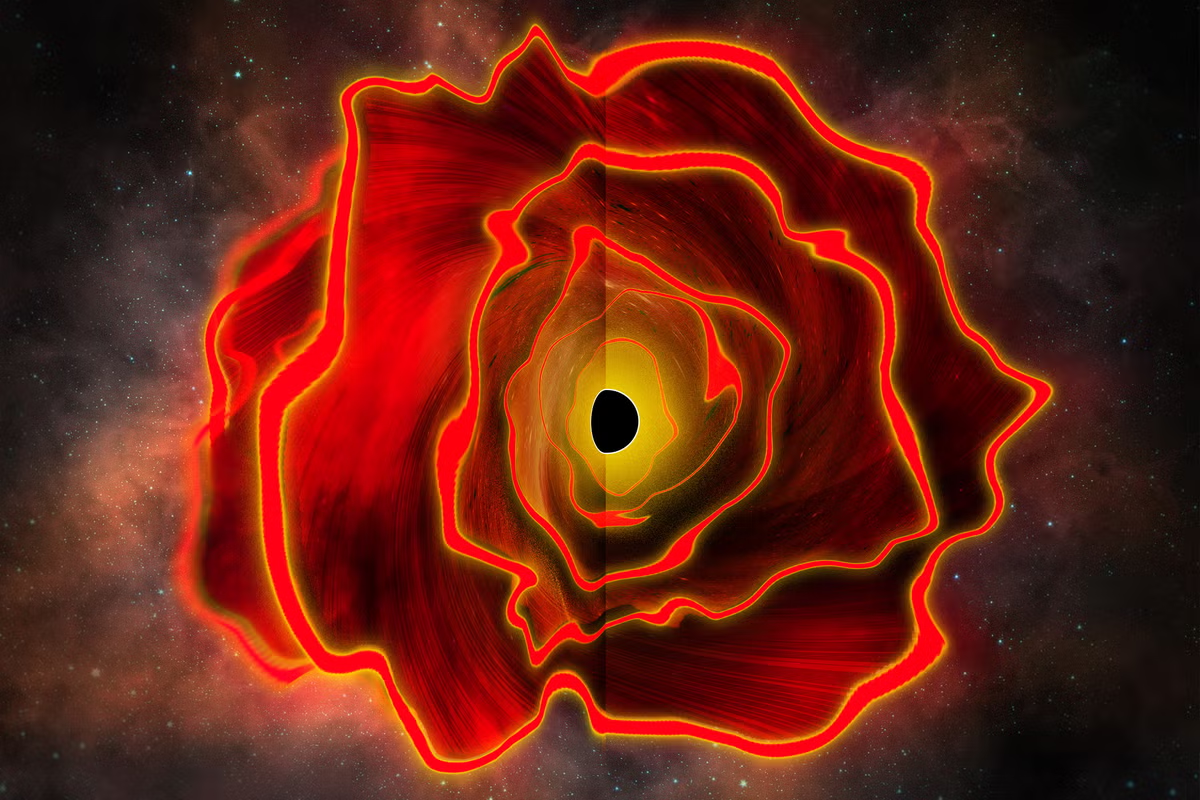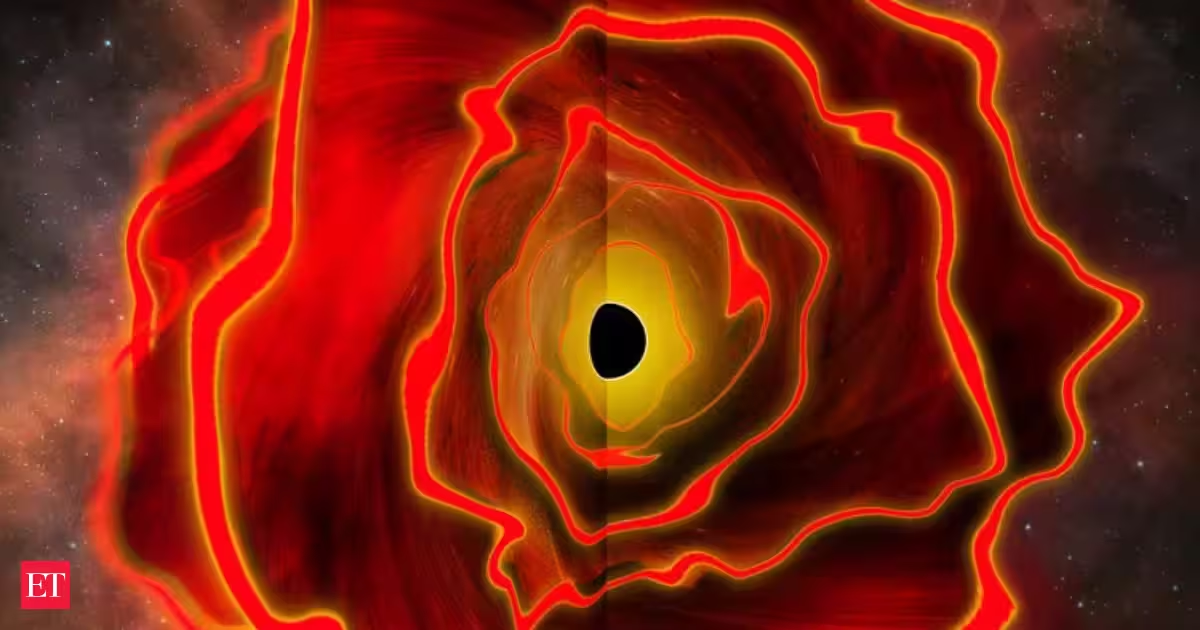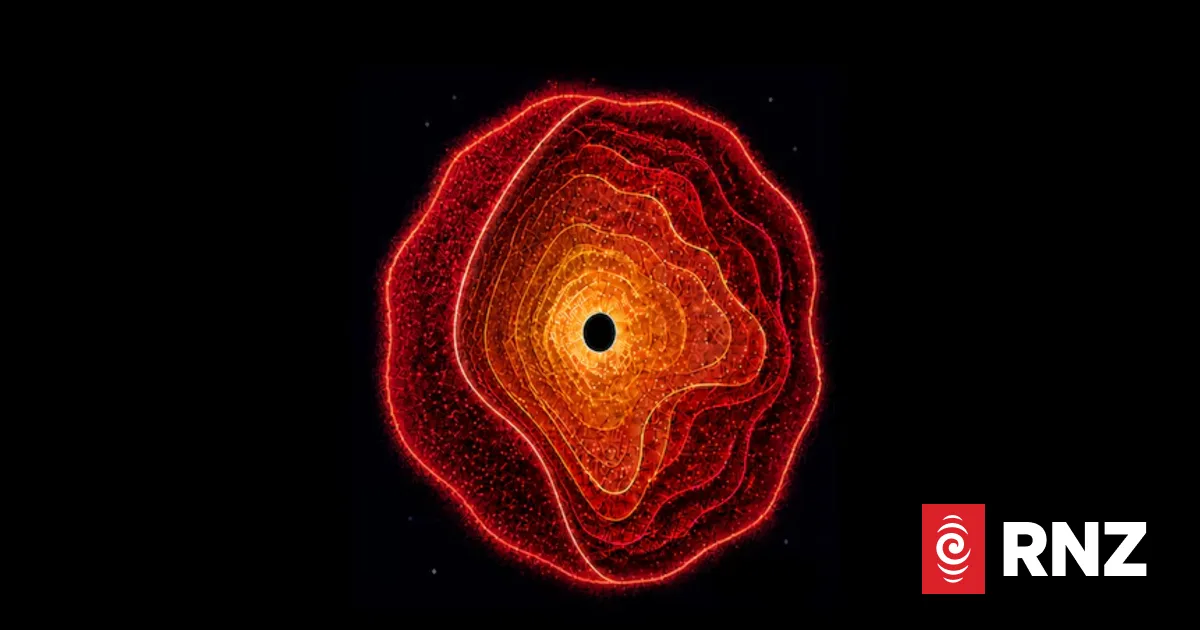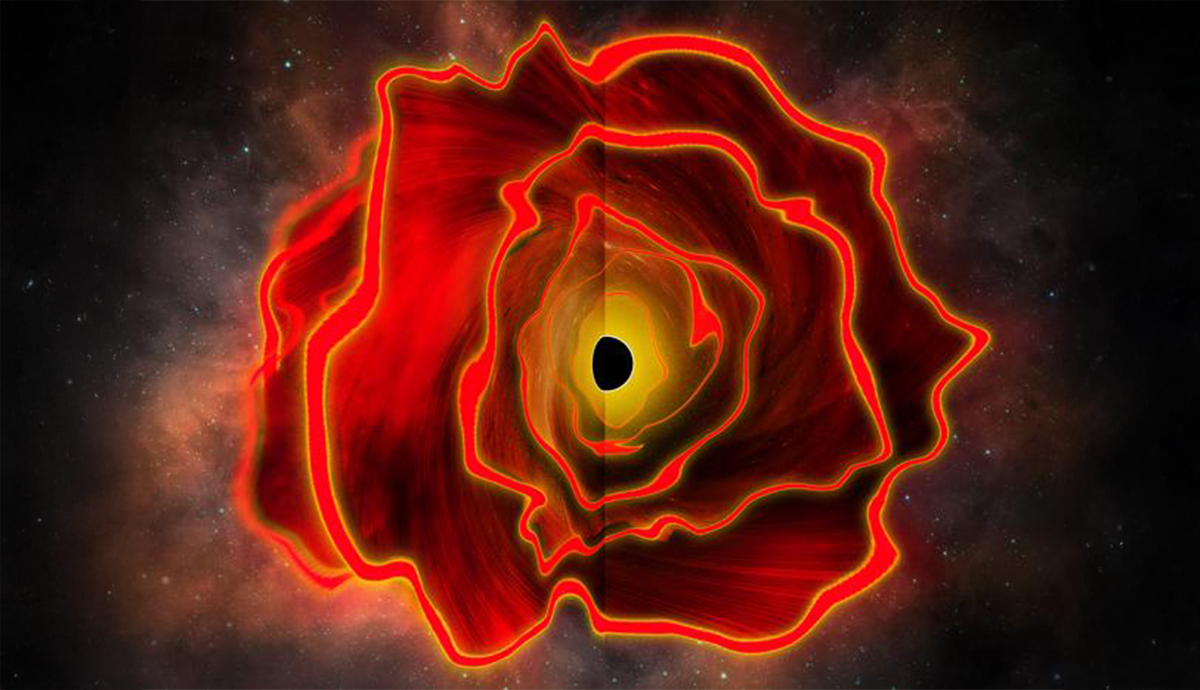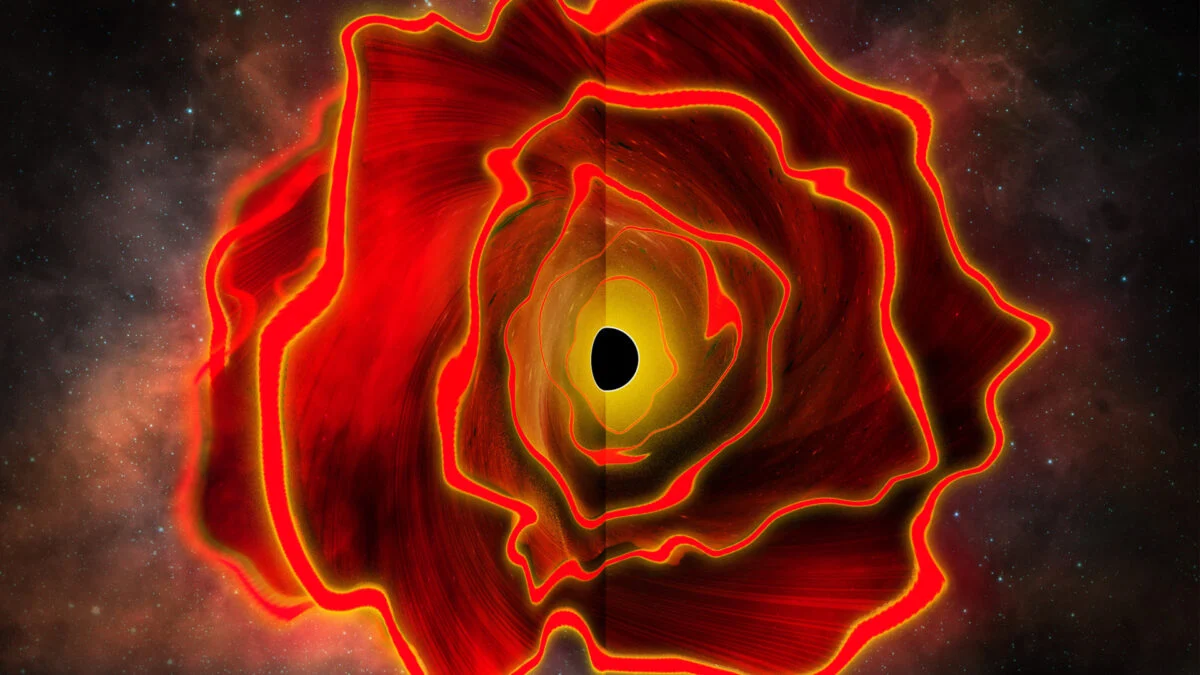
At the cosmic dawn, the universe was sprinkled with giant black holes—monstrosities so huge that scientists are still struggling to explain how they could have even existed. The answer may lie in a never-before-seen object from this cosmic era. In a paper published today in Nature, astronomers report the discovery of an extremely unusual, bright spot of red from the early universe. Externally, it looks like an enormous star about the size of the entire solar system. It’s radiating about 100 billion times more energy than any known star, making it more like a black hole. After careful analysis, the team concluded that it’s an entirely new type of object: a “black hole star.” This black hole star, named MoM (Mirage or Miracle)-BH*-1, “is so swaddled within shrouds of dense gas that it effectively radiates in a manner reminiscent of stellar phenomena,” Rohan Naidu, the study’s lead author, told Gizmodo. “It is a very special thing to find an object with no comparison given the vast stores of data on billions of stars, galaxies, and black holes that we have in our archival databases,” added Naidu, an astronomer at the University of Hawaii. “MoM-BH*-1 is one in a billion!”
Red tints in the cosmos If you follow astronomy news, you’ve probably heard the chatter about “little red dots” seen in the early universe. These are bright, compact objects observed at high redshifts, meaning the “light from them that reaches Earth has been traveling for billions of years,” according to an accompanying News & Views by Dominik Schleicher and Rodrigo Herrera-Camus, astronomers at Sapienza University of Rome in Italy and the University of Concepción in Chile, respectively.