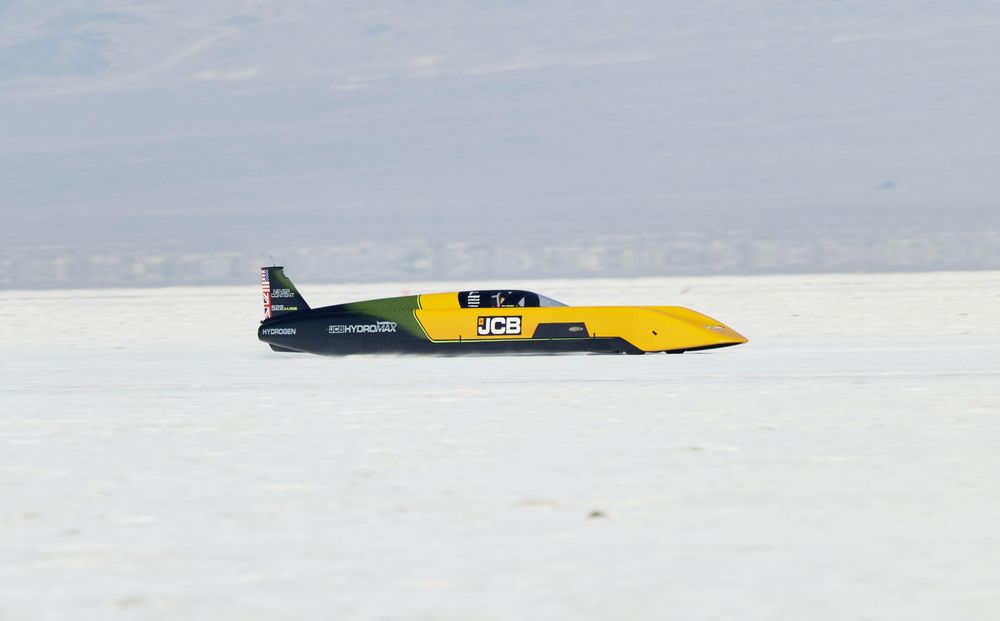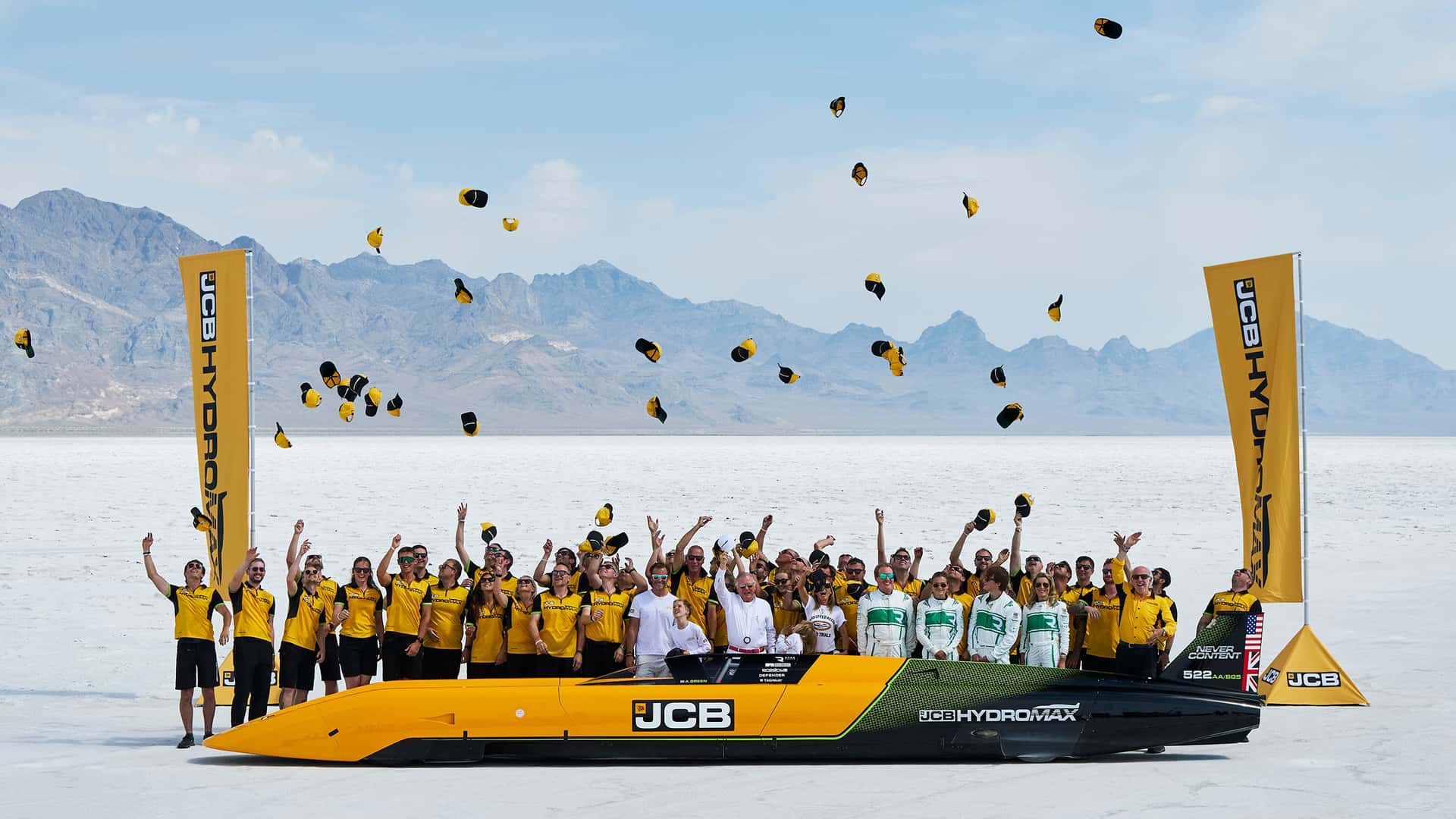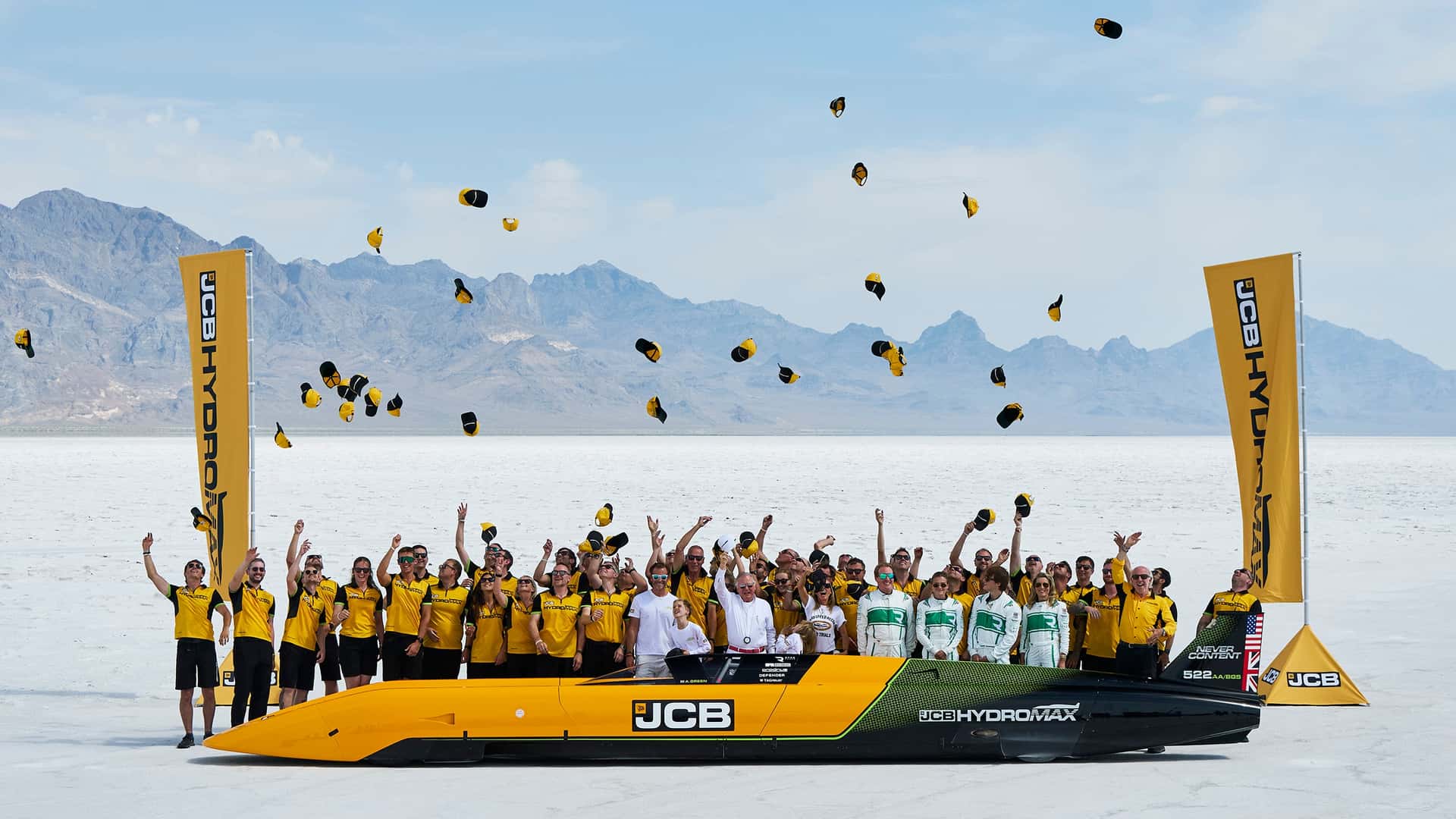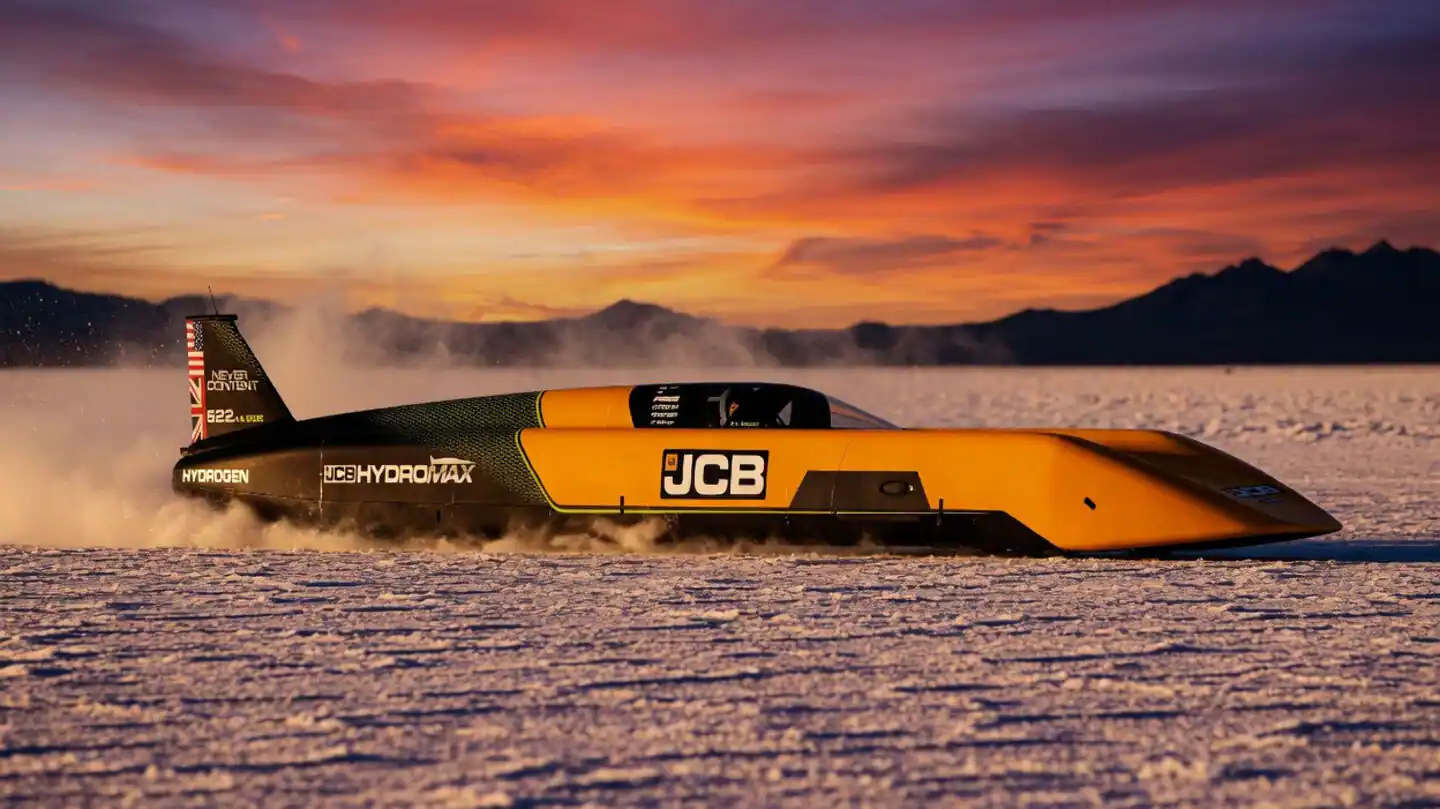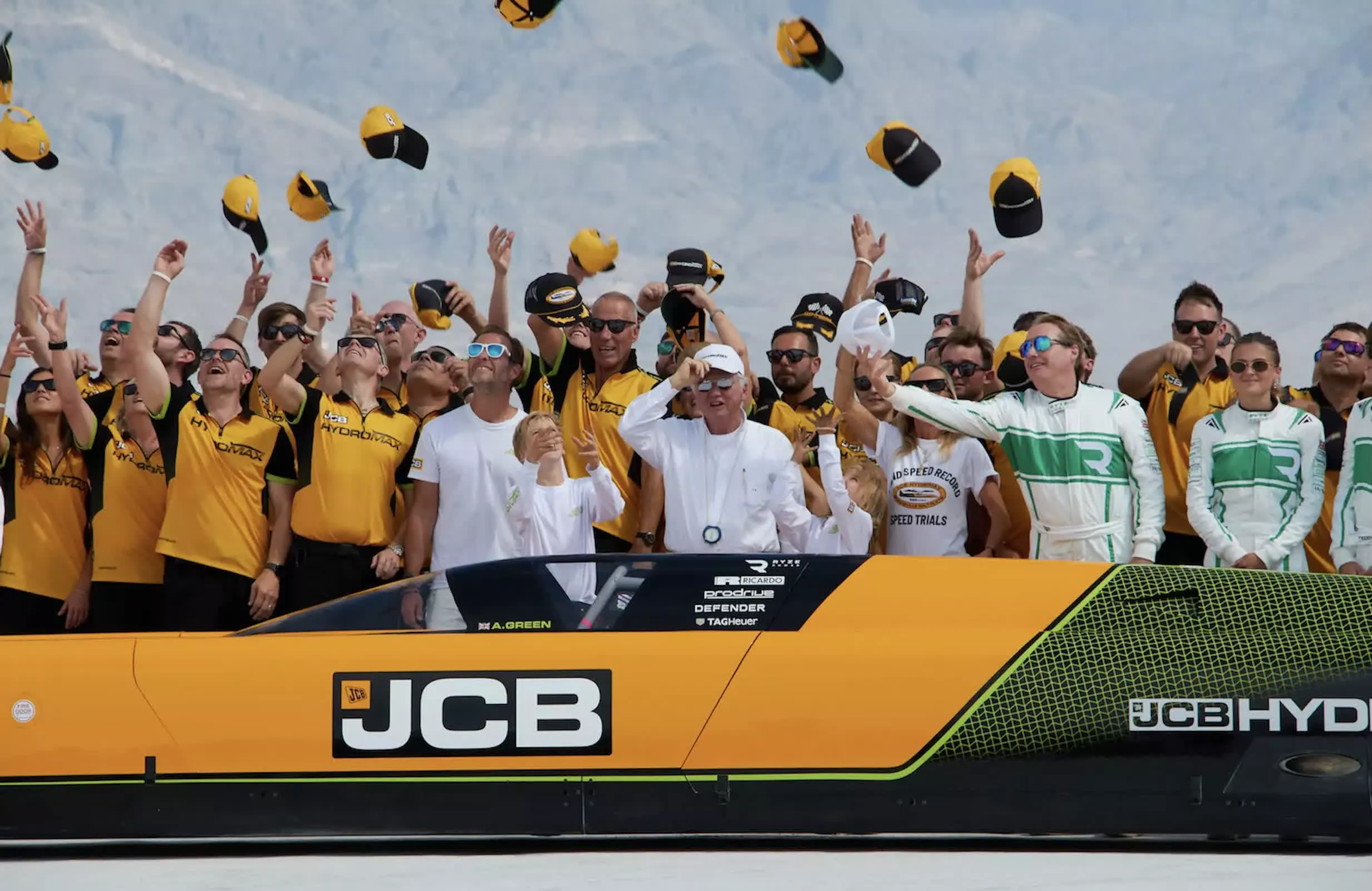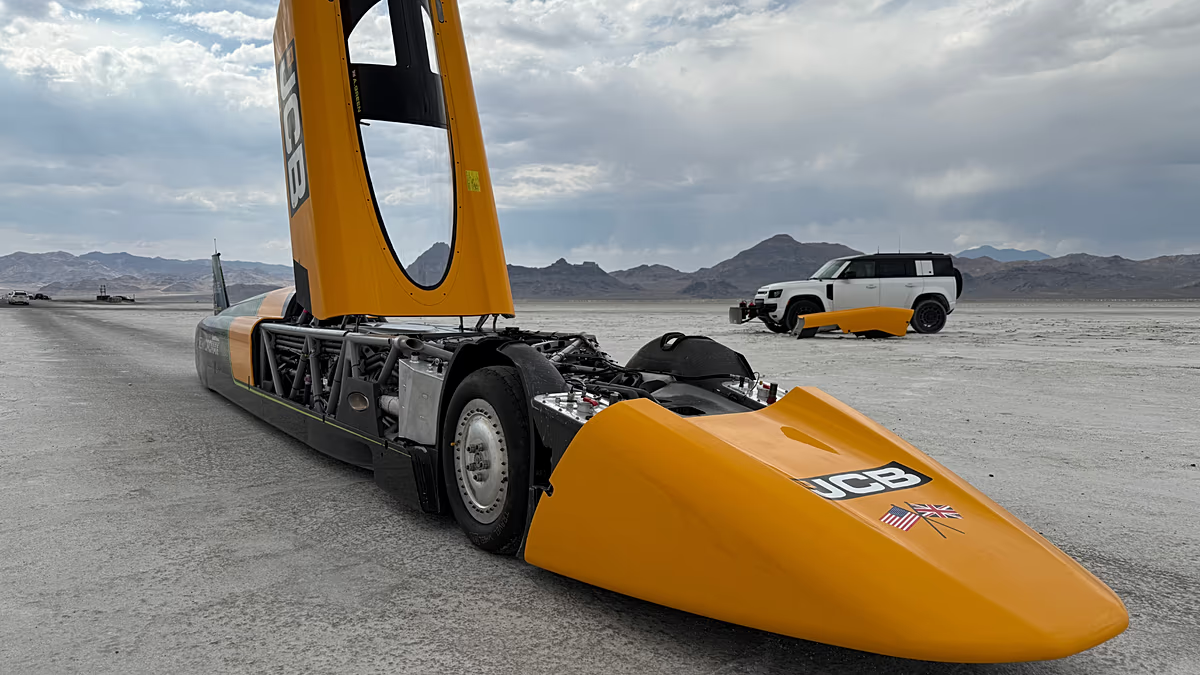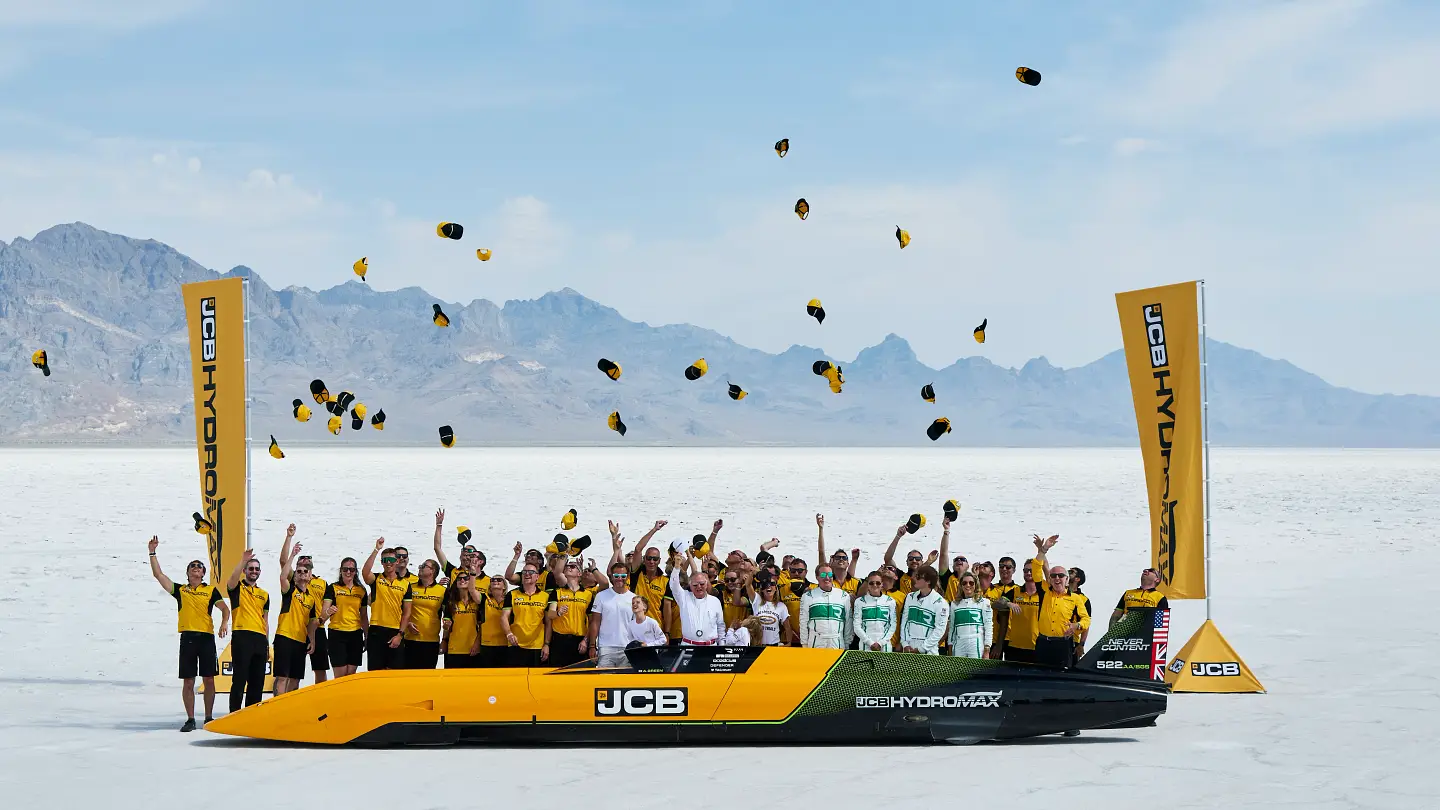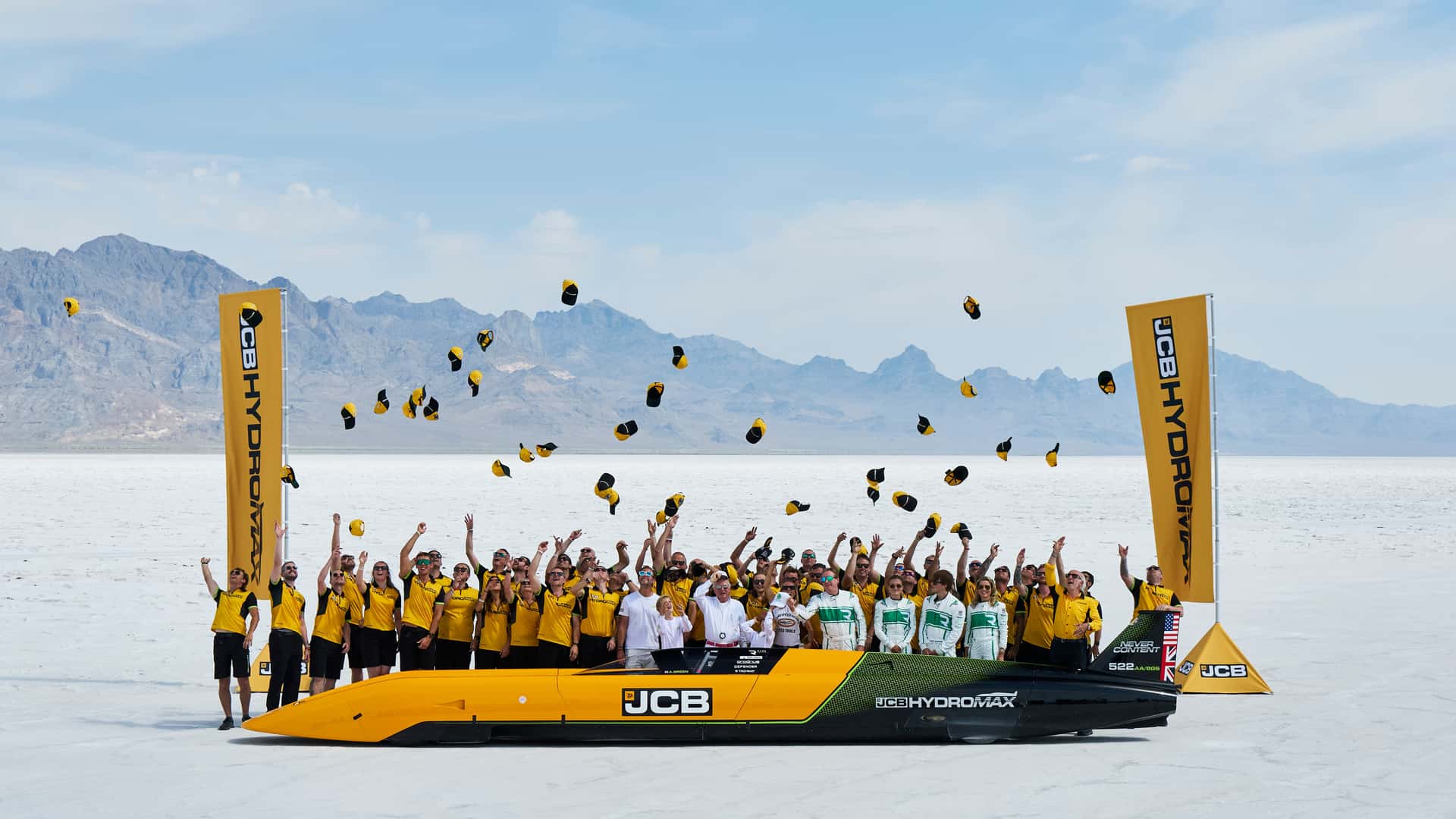
A new land speed record was just set, and the vehicle that did it produced almost no harmful emissions. The JCB Hydromax just recorded an average speed of 406.320 mph at the Bonneville Salt flats, making it the fastest hydrogen-powered vehicle of any kind in history. And since it uses a hydrogen internal combustion engine, not even a smidge of CO2 was emitted during its record-breaking runs.
In typical land speed record tradition, the 406 mph speed was an average of two separate runs. The first one reached 400.623 mph, while the second one was 412.135 mph, and both were done within an hour of each other. This broke every hydrogen-powered speed record, regardless of engine type. The previous fastest hydrogen internal combustion engine car, the BMW H2R, could only muster 185.5 mph back in 2004. However, the fastest hydrogen fuel cell car did 303 mph. So nothing that uses any sort of hydrogen propulsion is faster than the JCB Hydromax.
Photo by: JCB
Perhaps even more fascinating than the speed itself is the engine that got it there. Actually, engines. The JCB Hydromax uses two internal combustion engines that run on hydrogen fuel instead of gasoline or diesel. Since hydrogen has no carbon, its emissions are almost entirely water, with a bit of nitrous oxide, a primary driver of smog.