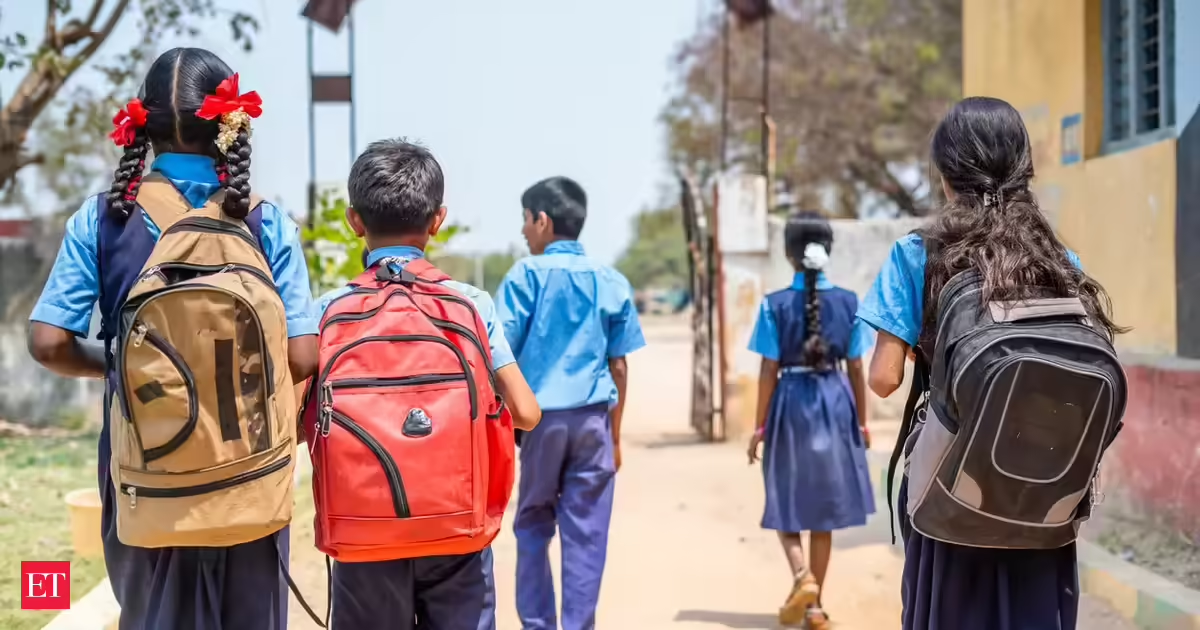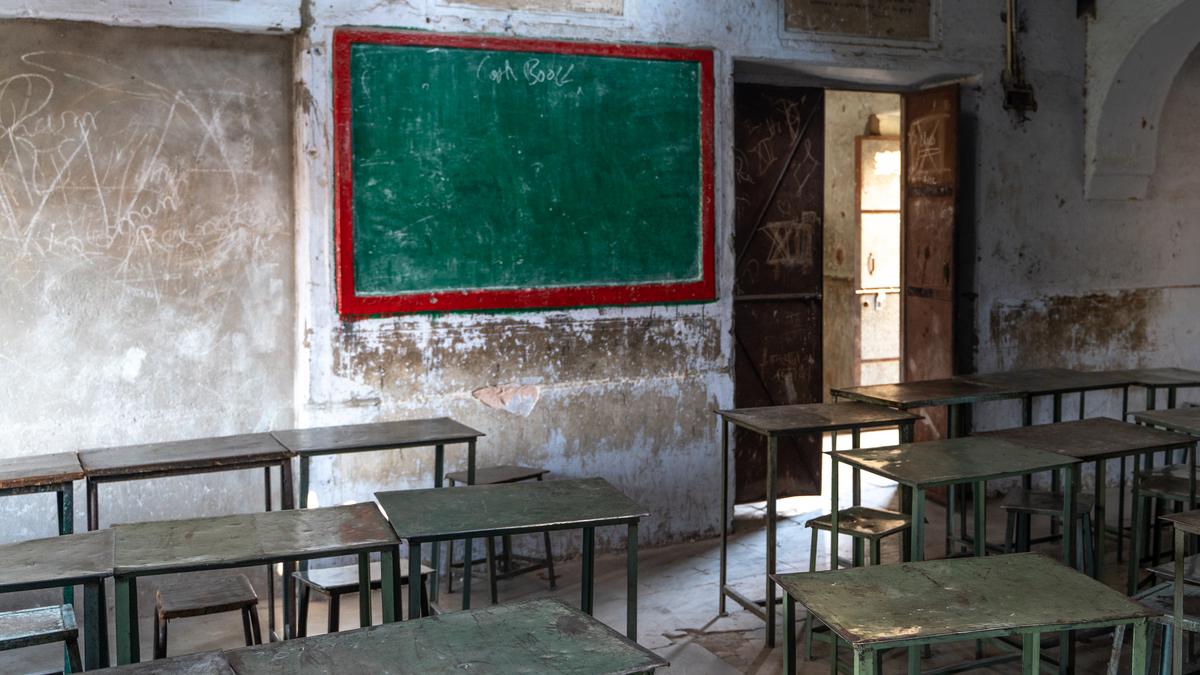
Several major school-education schemes have recorded significant under-utilisation of funds, a Parliamentary panel said on Wednesday. The report flagged gaps in implementation, weak monitoring and delays at the State and Union Territory levels.In its report on budget and policy aspects of affordable and quality education, the Lok Sabha Committee on Estimates has highlighted substantial differences between funds approved and expenditure incurred under schemes including NIPUN Bharat, Kasturba Gandhi Balika Vidyalayas (KGBVs), PM SHRI and inclusive education programmes for children with disabilities. The Committee has warned that persistent under-utilisation could affect the delivery of these programmes and called for stronger monitoring mechanisms.The report was adopted by the Committee on Estimates on August 10, 2026, after examining the Department of School Education and Literacy and organisations including CBSE, KVS, NVS, NCERT, NCTE and NIOS.The sharpest gap flagged by the panel is related to National Initiative for Proficiency in Reading with Understanding and Numeracy (NIPUN) Bharat, the Centre’s flagship programme for foundational literacy and numeracy. Against an approved allocation of ₹3,029.27 crore in 2024-25 under Samagra Shiksha, expenditure stood at only ₹1,847.08 crore, leaving around ₹1,182 crore, or 39 per cent, unspent.low utilisationThe Committee noted particularly low utilisation in Assam, Delhi, Goa, Gujarat, Kerala, Lakshadweep, Sikkim, Punjab, Rajasthan, Uttar Pradesh, West Bengal and Tamil Nadu. It said the low utilisation was a concern as foundational literacy and numeracy had been identified as a “critical and urgent national priority” under the National Education Policy, 2020.The panel asked the Ministry of Education to identify the systemic bottlenecks at the State and UT levels that were causing delays in implementation and fund utilisation.The Committee also flagged the financial performance of Kasturba Gandhi Balika Vidyalayas (KGBVs), residential schools for girls belonging to socio-economically disadvantaged groups. In 2023-24, against an approved amount of ₹5,482.06 crore, actual expenditure was only ₹384.95 crore.In 2024-25, expenditure increased to ₹2,386.68 crore, but remained substantially below the approved ₹4,551.38 crore. In 2025-26, as of December 17, 2025, ₹1,894.27 crore had been spent against an approved amount of ₹4,479.66 crore.The committee said the under-utilisation over the last three years may have affected the proper functioning of KGBVs in various States.inclusive educationAnother significant gap was found in funds meant for inclusive education of children with special needs. Against ₹4.82 crore allocated for 186 disabled-friendly toilets in 2024-25, only ₹2.60 lakh was utilised, with no physical progress reported. Similarly, only ₹80.50 lakh was spent against ₹9.62 crore allocated for new special educators. The Committee noted “meagre progress” in recruiting and retaining special educators.A gap was found in the infrastructure too for children with special needs (CwSN). The Committee note that as per UDISE+ 2024-25, out of total 14,71,437 schools at national level, only 5,23,143 schools have CwSN (Children with special needs) toilets, and only 8,08,466 schools have ramps with handrails. “During the year 2024-25, the budget of ₹482 lakhs were allocated for construction of 186 CwSN toilets, however only ₹2.60 lakhs were actually utilised with no progress in physical targets. The severe gap in the availability of CwSN friendly infrastructure shows that more than half of the schools across the country are devoid of CwSN friendly infrastructure,” said the report. The panel also questioned the pace of implementation of the PM SHRI scheme, under which selected government schools are being developed as exemplar institutions. Against revised allocations of ₹2,800 crore in 2023-24, ₹4,500 crore in 2024-25 and ₹5,800 crore in 2025-26, actual Central releases were ₹1,216.70 crore, ₹3,576.40 crore and ₹473.20 crore, respectively.The Committee added that the substantial financial commitments under the scheme had yet to translate into expenditure on infrastructure and development and called for close monitoring of fund utilisation. It also recommended an outcome-based monitoring framework covering learning outcomes, foundational literacy and numeracy, digital competencies, vocational skills and overall school quality.The report also highlighted problems in utilisation of funds for Right to Education entitlements. Physical targets were not achieved in Bihar, Delhi, Haryana, Jammu and Kashmir, Kerala, Odisha and Punjab in 2024-25, resulting in many students not receiving free uniforms and other amenities.The committee said slow fund utilisation in some cases could be linked to State-level functioning and lack of continuity among officers dealing with centrally sponsored schemes. It recommended stronger monitoring to ensure that all eligible children receive their entitlements without delay.The committee’s observations point to a recurring implementation problem: budgetary allocations are being made, but substantial portions are not translating into expenditure and physical outcomes on the ground.It has recommended tighter financial monitoring, better Centre-State coordination and identification of implementation bottlenecks so that approved funds reach their intended beneficiaries in time.Published on August 12, 2026
Parliamentary panel flags implementation gaps in education schemes as funds remain unused
Several major school-education schemes have recorded significant under-utilisation of funds, a Parliamentary panel said on Wednesday. The report flagged gaps in implementation, weak monitoring and delays at the State and Union Territory level
763 words~3 min read