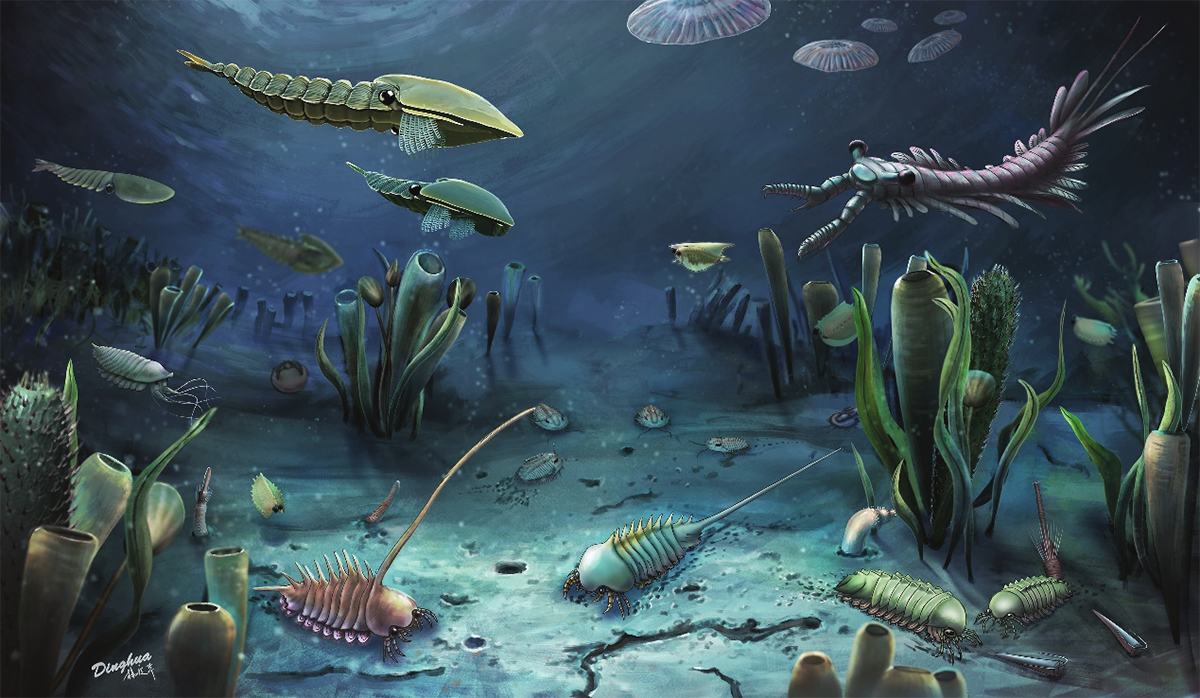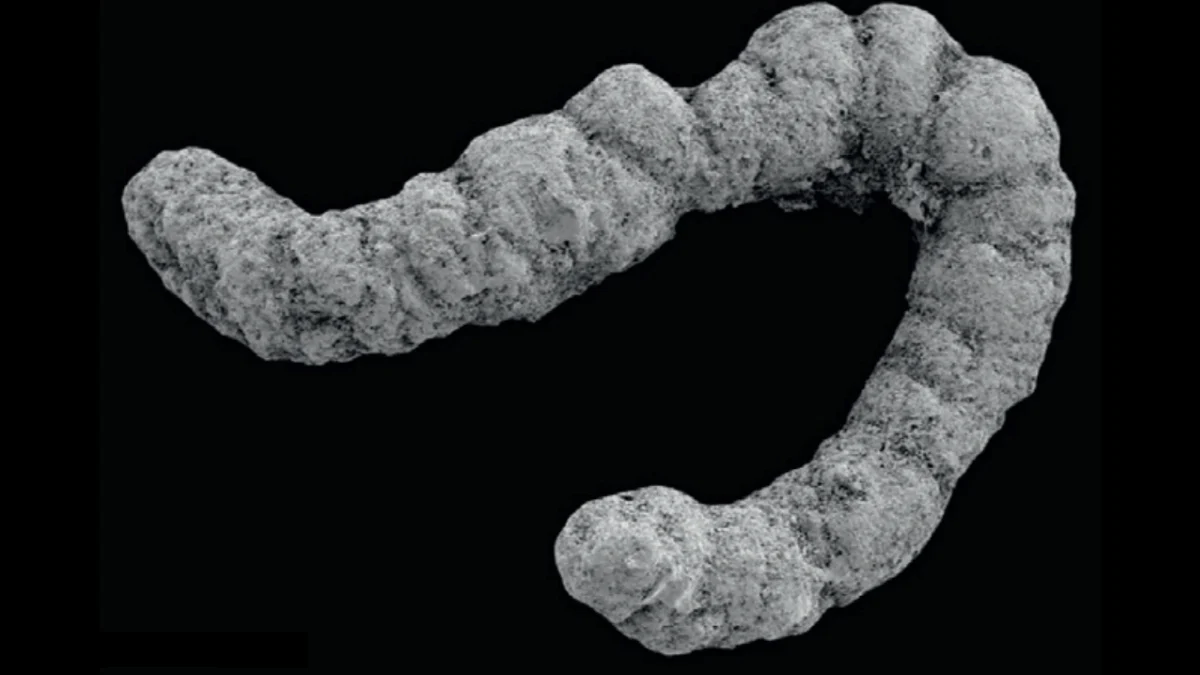
“The advent of fecal pellets,” wrote Kimming and Bicknell, “provided an additional source of organic carbon, as well as iron, nitrogen, and phosphorus, to deeper waters. … In this framework, fecal pellets significantly boosted support for marine animal life and possibly supported the diversification and increased Cambrian biomass.”
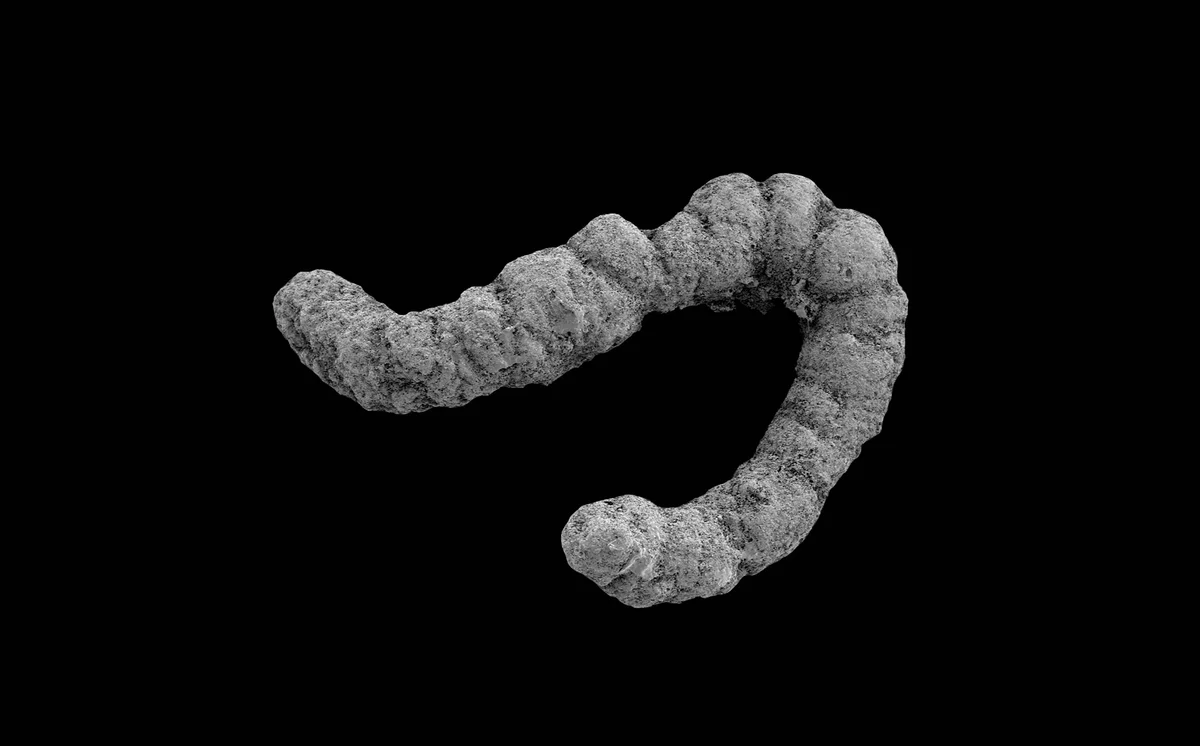
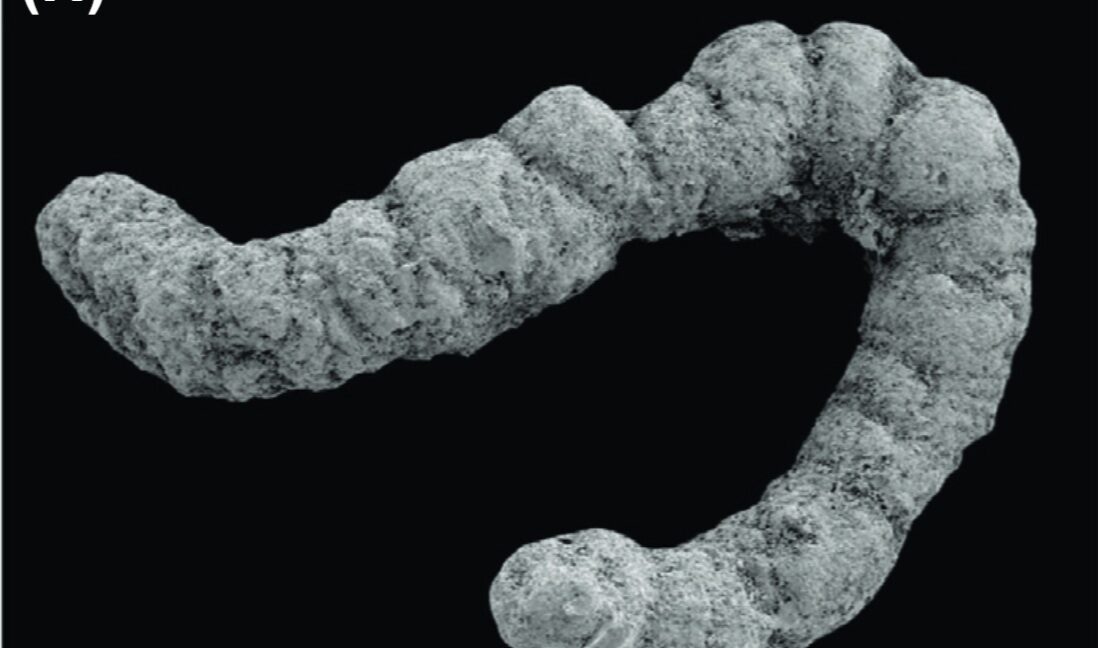
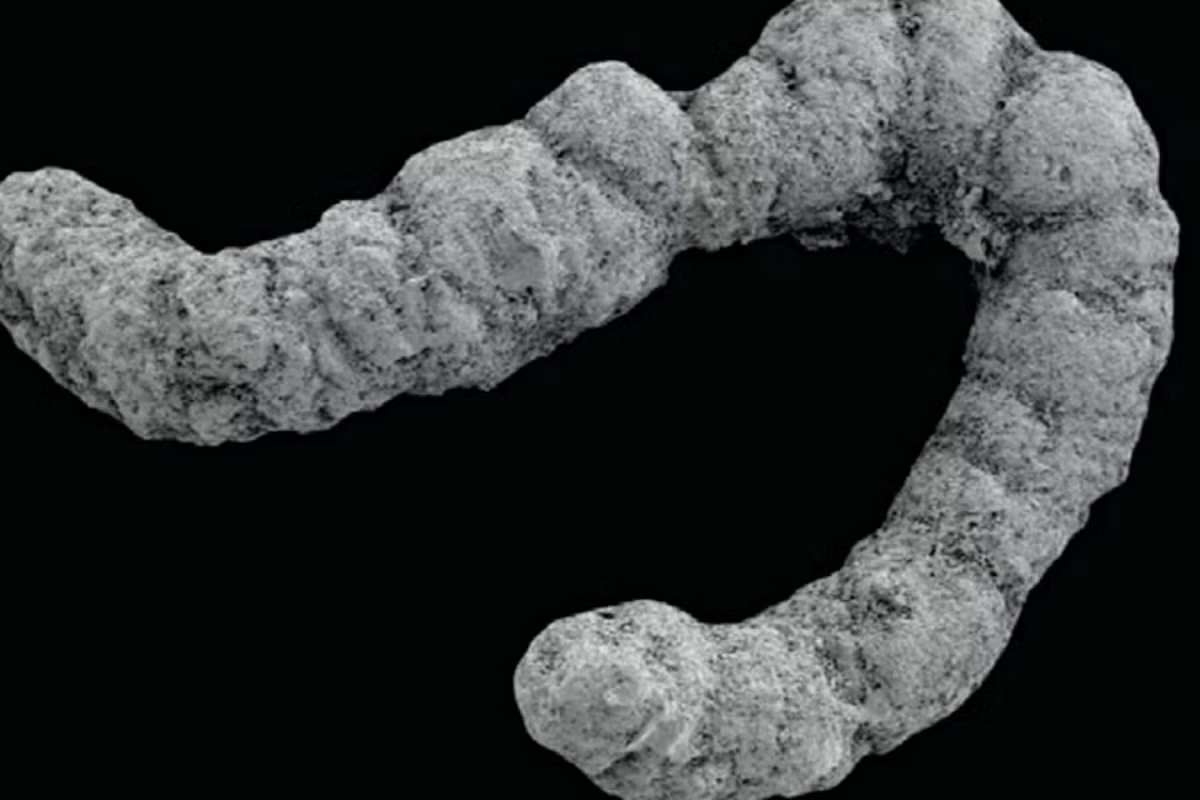
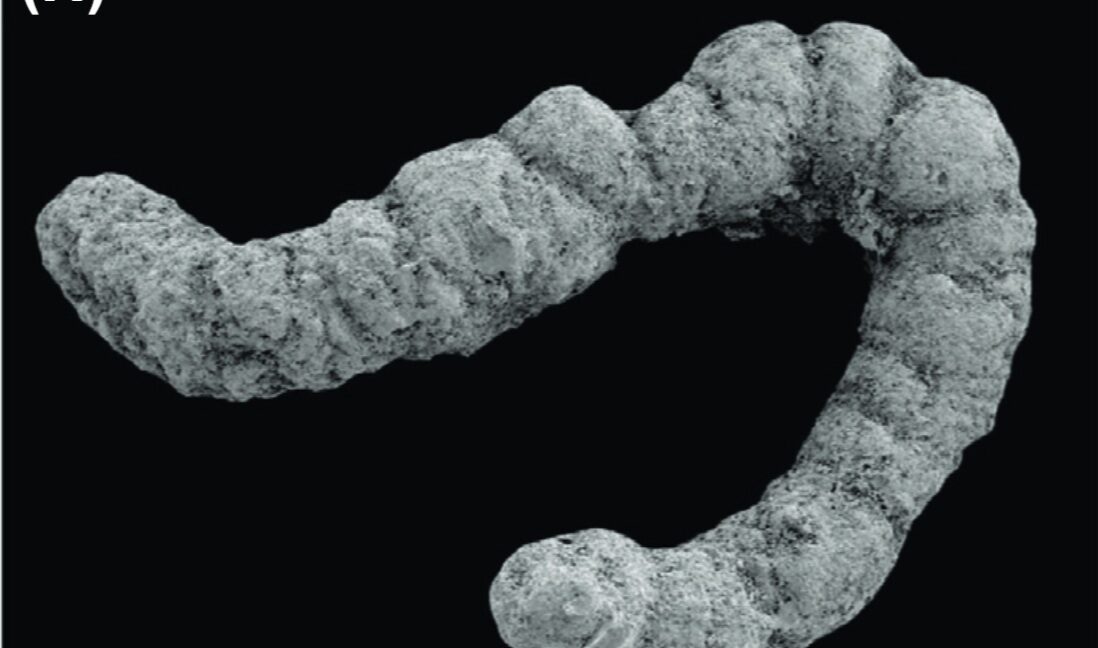
This coprolite still contains remnants of an unlucky trilobite, dating to somewhere between 520 and 506 million years ago in what’s now Australia.
Kimming and Bicknell 2026
How defecation changed the world
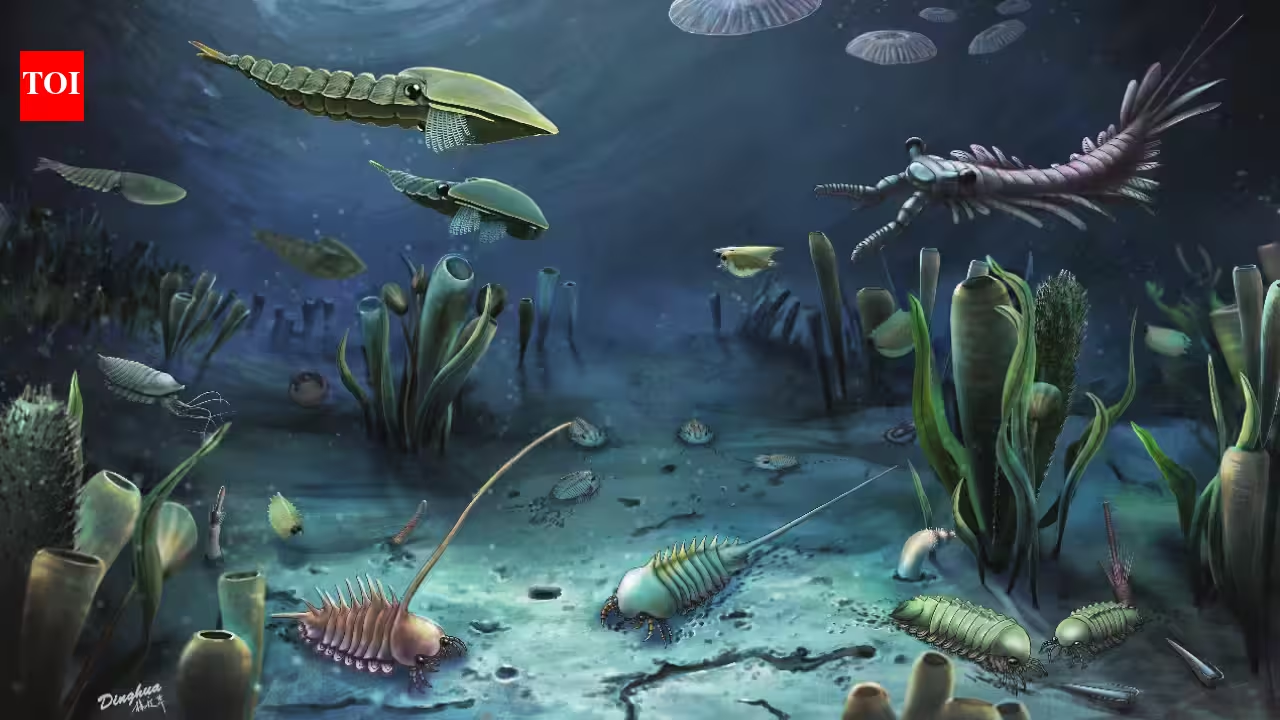
The first animals on Earth were mostly simple creatures that lived in the sunlit upper layers of the ocean or on the shallowest parts of the seafloor. Depending on which set of scientists you ask, those early animals were similar to either sponges or jellyfish. Organs hadn’t been invented yet, so “eating” just meant waiting for tiny particles of food, like bits of plankton or bacteria, to float into the only opening in the animal’s body. Its cells would then engulf the food particle and break it down into its constituent molecules.