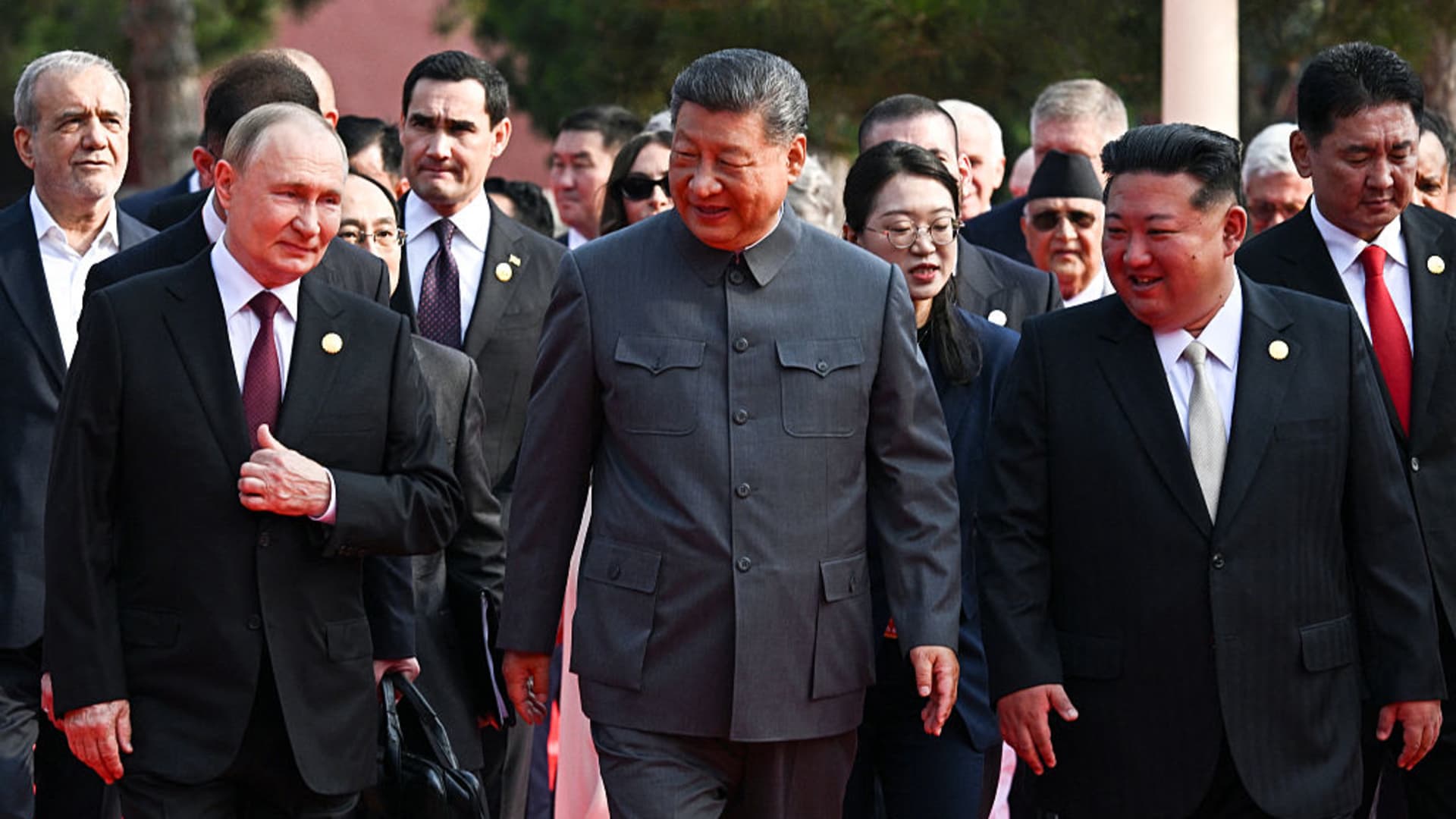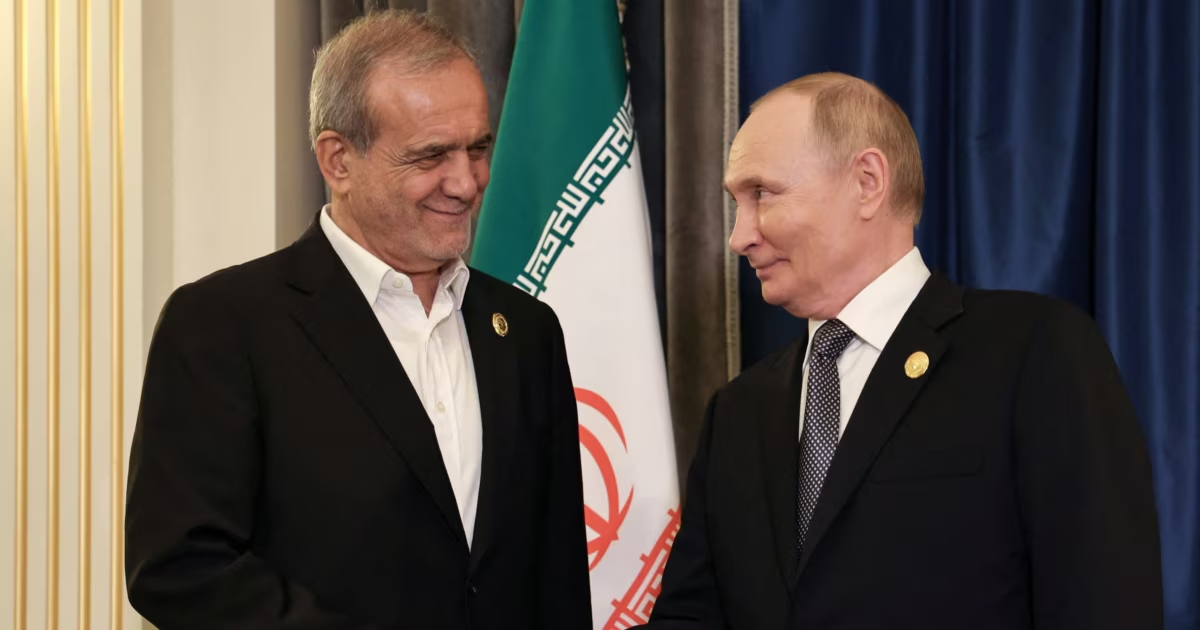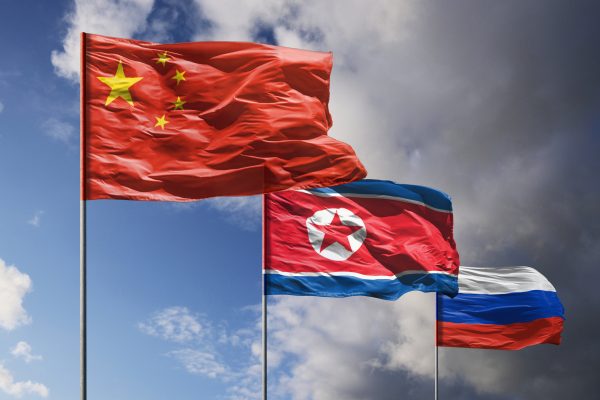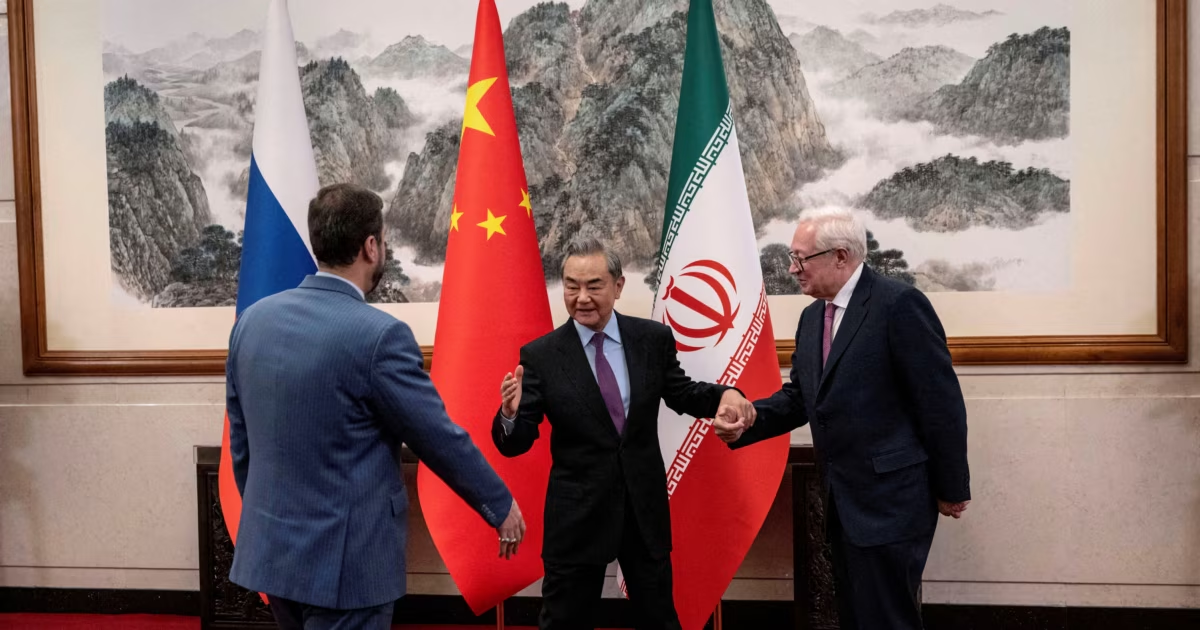
WASHINGTON -- The world's leading autocracies -- China, Russia, Iran, and North Korea -- are increasingly drawing on one another's resources, military capabilities, and geopolitical leverage to withstand Western pressure.For Washington, the strategic dilemma is no longer simply whether the four countries are cooperating, but the extent to which their alignment alters the balance of power across multiple theaters simultaneously.The urgency of that question has been laid bare on the battlefront in Ukraine.President Volodymyr Zelenskyy said on August 11 that a Russian air strike using North Korean ballistic missiles killed at least six people and wounded almost two dozen others. The attack came amid reports indicating that a North Korean missile unit equipped with up to 120 ballistic missiles has begun deploying to western Russia.
Meanwhile, Pyongyang test-fired another ballistic missile on August 11, just days ahead of major US-South Korean military exercises, prompting a joint response from the US and 40 other nations -- underscoring the dual security pressures facing Washington and its partners in both Europe and the Indo-Pacific.David J. Kramer, executive director of the George W. Bush Institute and a former senior US diplomat, told RFE/RL that while cooperation among the four states -- increasingly referred to by the acronym CRINK -- is already operational, it falls short of a formal alliance comparable to NATO.“It is operational, and it’s selective,” Kramer told RFE/RL.His assessment captures a nuanced reality gaining traction among Washington policymakers: CRINK is neither a tightly integrated military bloc nor merely a rhetorical convenience. Instead, it functions as a flexible network in which members cooperate where their interests overlap, allowing each regime to offset some of its strategic vulnerabilities.The war in Ukraine has become a major arena for the exchange of military capabilities among CRINK members.Iranian-designed Shahed drones played a critical role in Russia's offensive campaign during the early stages of the full-scale invasion launched by Moscow in February 2022.North Korea's involvement in the conflict, meanwhile, has expanded significantly. Pyongyang has dispatched troops to support Moscow's war effort, with estimates rising from an initial 12,000 to 15,000 personnel to reports suggesting as many as 50,000, while North Korea has also supplied ballistic missiles.Practical CooperationChina's role remains less overtly kinetic but significant.Beijing has helped fund Russia's war by purchasing Russian energy while also providing dual-use technology to Moscow.“All of these countries have been supporting and reinforcing each other,” Kramer said.