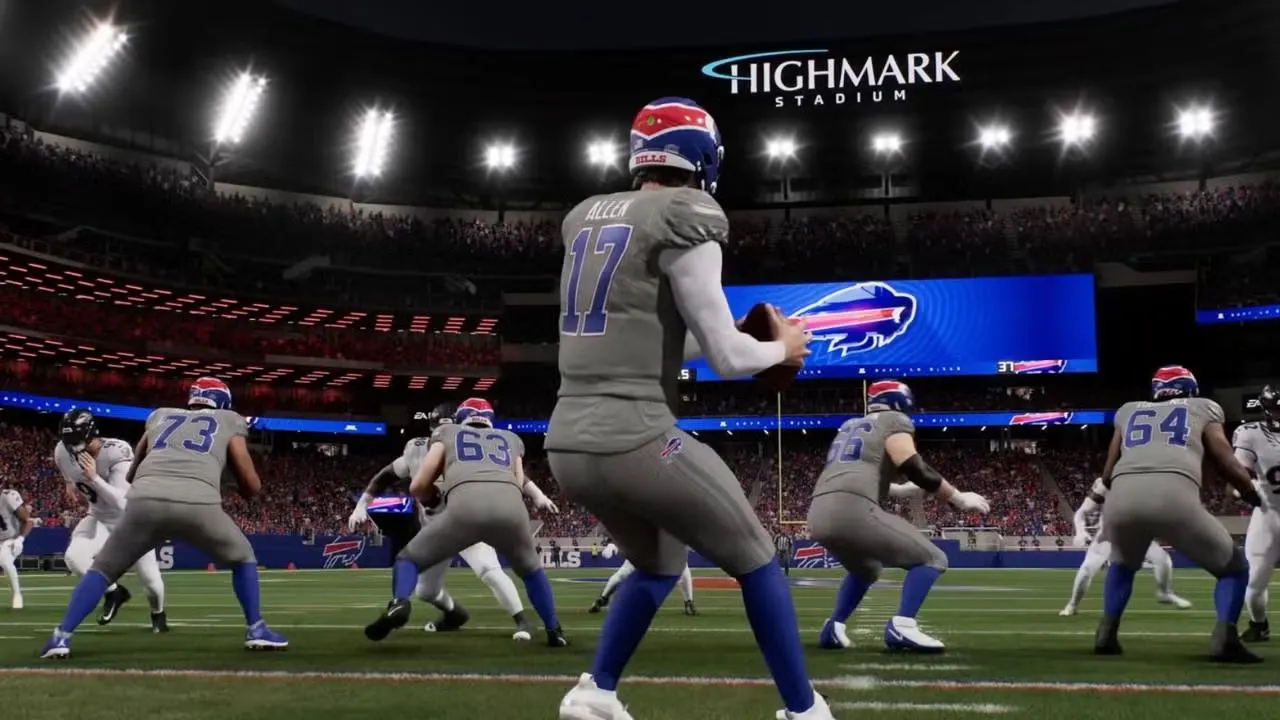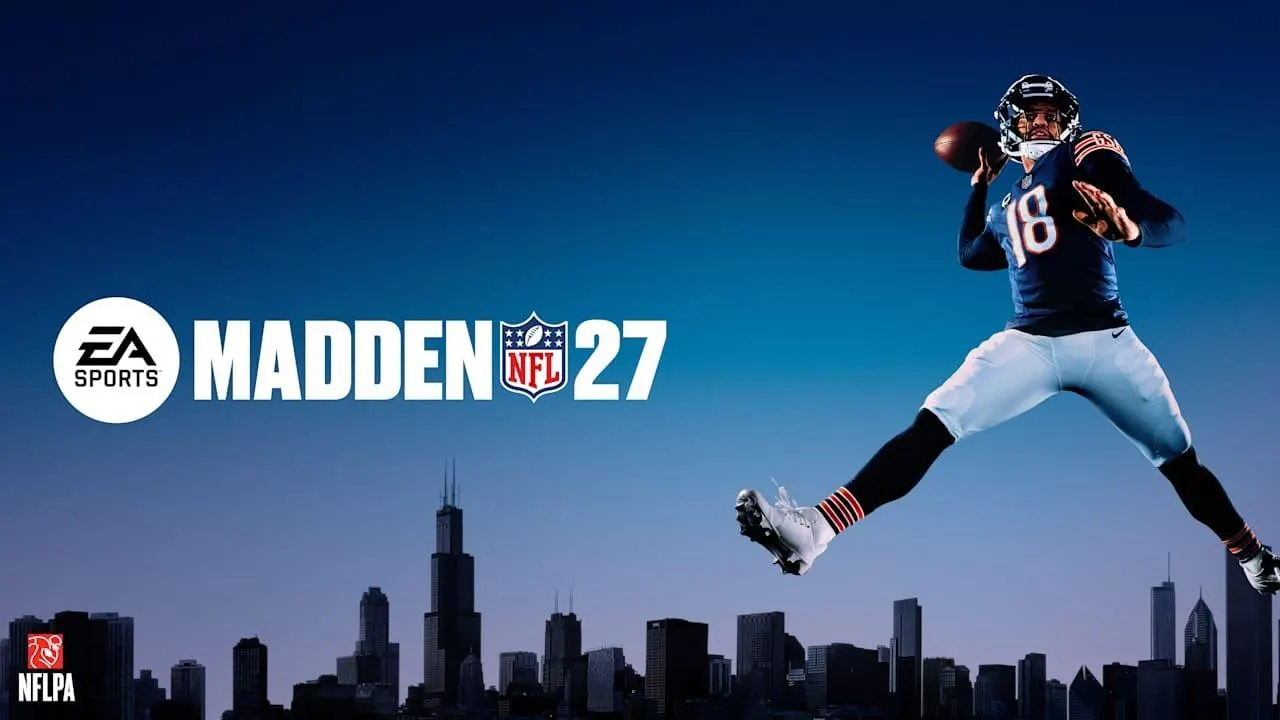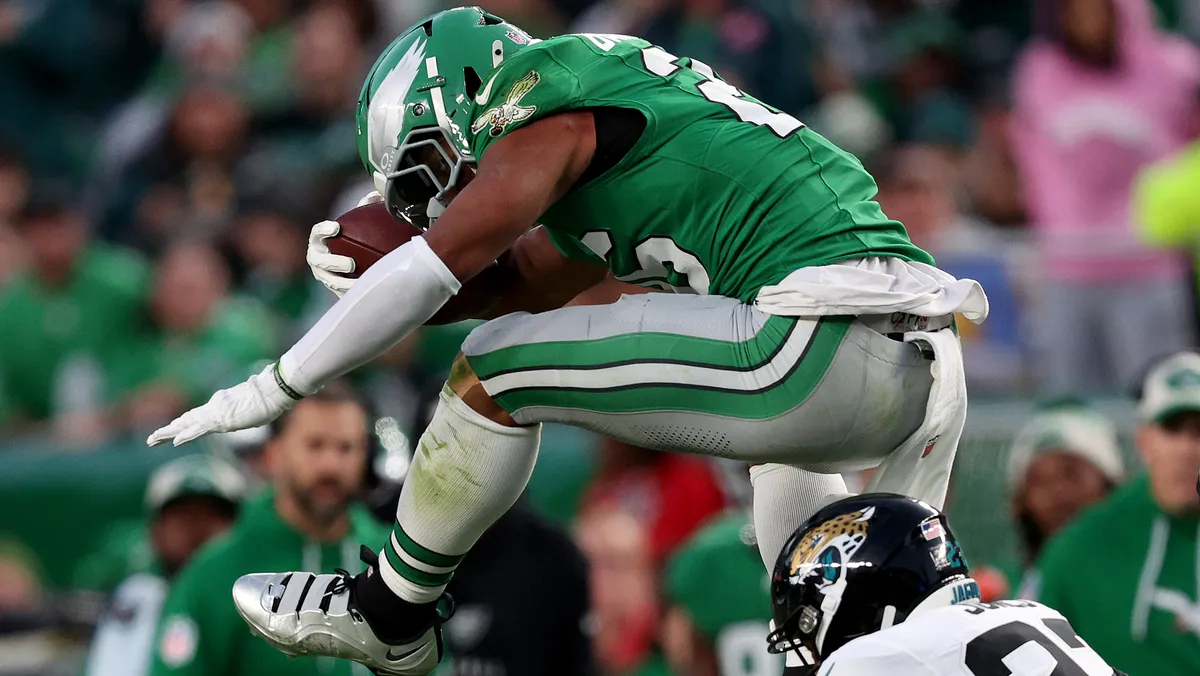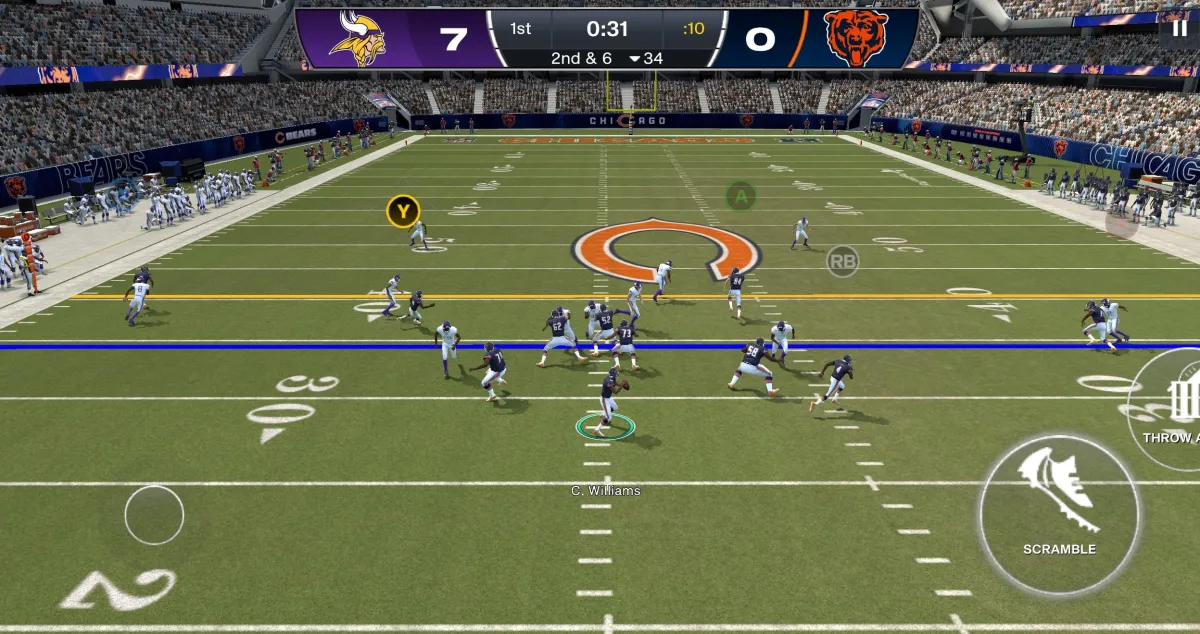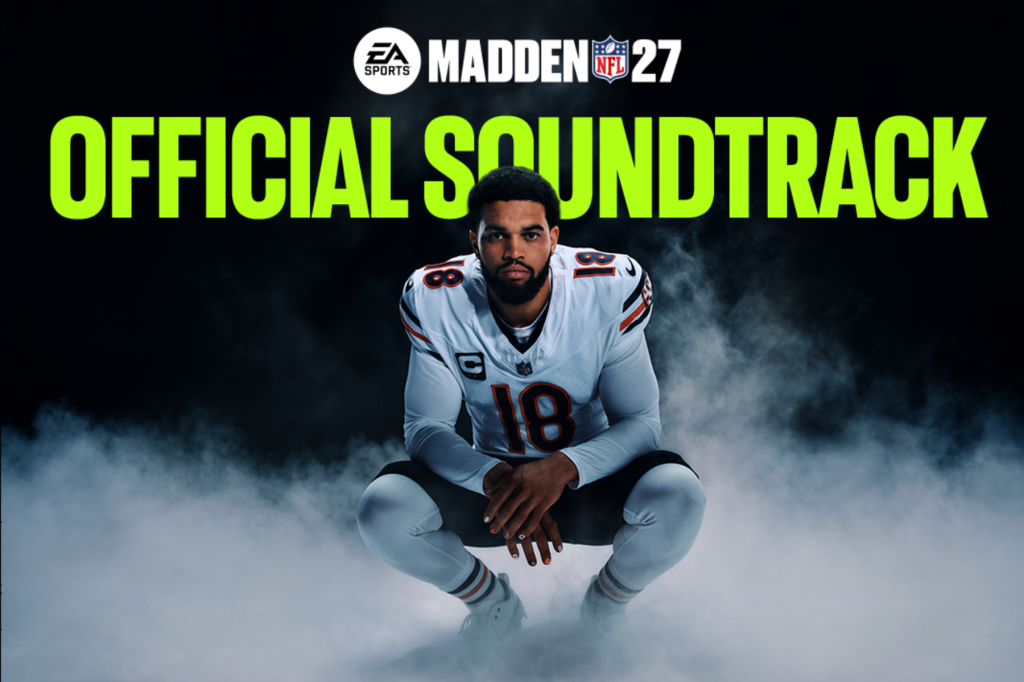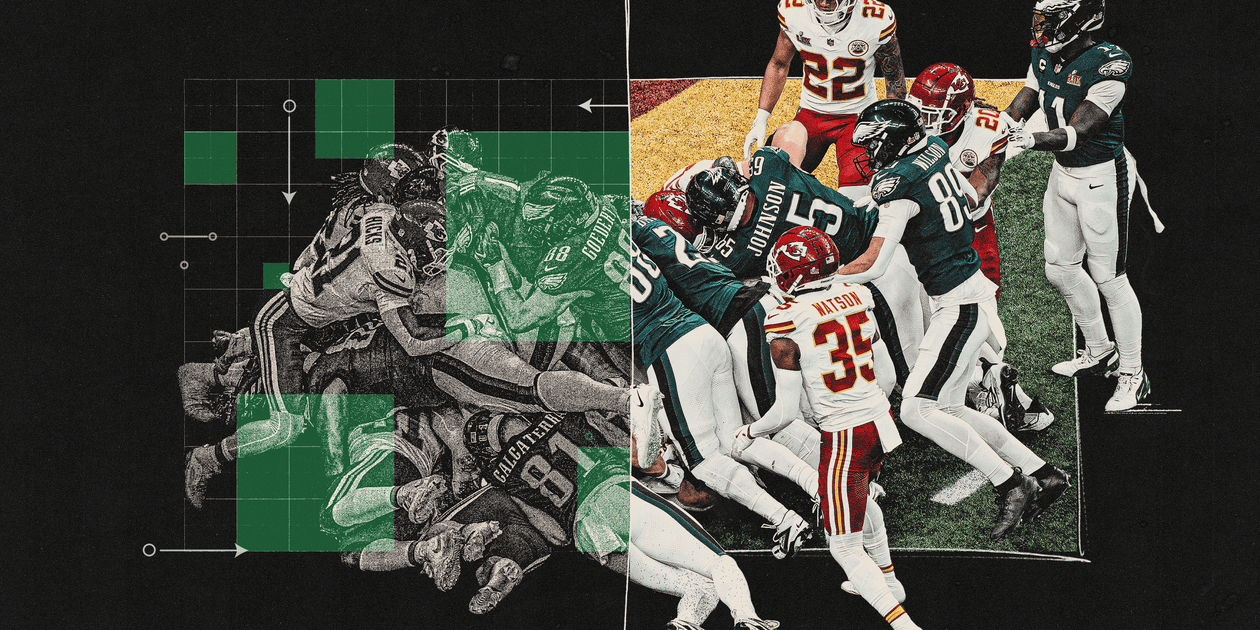
Eyebrows furrowed, muscles tensed and hands gripped the field in anticipation. As the quarterback’s bark broke the tension, linemen sprang out of their stances into brutal collisions, fighting over mere inches.Again. Again. Again.Offense and defense clashed for hours over the same few blades of turf in an exhausting cycle of pre-snap pauses and sweat-soaked pileups.But this was no NFL practice, or even a college or high school scrimmage. There was no scoreboard. These were takes, not reps. This trench battle, held at EA Sports’ facilities in Los Angeles, had one goal: transport one of the NFL’s most infamous plays into one of the world’s most popular video games.“It almost turned into just a live practice,” said former NFL defensive end and EA Sports technical designer Ken Boatright. “Let’s get at it … and see if you guys can give us some good, quality animations to put in the game.”Yes, the tush push — the quarterback sneak that the Eagles popularized and a majority of NFL teams fought to ban — is coming to “Madden.” A year after Philadelphia won the Super Bowl and Saquon Barkley hurdled his way onto the game’s cover, the Eagles’ signature play will be a key addition to this year’s game, “Madden NFL 27,” which will be released Thursday.Tush push in EA Sports' 'Madden NFL 27'Typically, installing new plays or features in “Madden” requires two or three players to simulate the action while wearing motion-capture equipment. But to imitate the nuances of the tush push — which is distinguished from a regular QB sneak by teammates shoving the ball carrier forward — EA needed a bigger production and an extra level of intensity, including motion-capture sessions that Boatright described with the enthusiasm of a coach in the heat of training camp.“(It was) a mindset of, ‘I have to wreak havoc,’ if I’m on defense,” Boatright said, “or, if I’m on the offensive side, ‘I’ve got to put this guy in the dirt.’“We want to make sure we mimic everything that happens in real life as often as we possibly can.”EA Sports’ slogan, “If it’s in the game, it’s in the game,” reflects efforts to make the game realistic. The “Madden” franchise, which debuted in the late 1980s, has innovated over time to capture the NFL experience, including alternate gameplay modes, evolving on-field features and adjustments for rule changes like the dynamic kickoff.The emphasis on authenticity prompted gamers to make a push of their own for a “Madden” version of the tush push.The Eagles first ran the play (also called the “Brotherly Shove”) in 2021, and before long, it became their go-to short-yardage weapon. With a dominant offensive line and a strong ball carrier in quarterback Jalen Hurts, Philadelphia converted 83.8 percent of tush pushes in 2022 and 92.2 percent in 2023. In the Super Bowl-winning season in 2024, the Eagles scored 15 touchdowns with the play.The Buffalo Bills’ version with quarterback Josh Allen, dubbed “The Snowplow,” has been even more effective, with a 92.3 percent success rate in 2025.Samuel Brown, who runs the YouTube channel RBT and tested the early release of “Madden NFL 27,” said adding the tush push was important to fans of the game.“You want to replicate the real-life NFL as much as possible,” Brown said. “When you see something like the tush push that has been such a talking point over the years, you would like to see that replicated in the big football game that is supposed to simulate the NFL.“I definitely think these little additions add up over time.”The play has ignited flames of debate in NFL circles. During the 2025 offseason, the Green Bay Packers proposed a rule that would effectively ban the tush push, citing player safety. More than half of the league’s teams supported them, with some calling the play ugly or unwatchable.The Packers’ measure fell short, receiving 22 of the necessary 24 votes to enact the change, but the uncertainty of the play’s future informed EA’s approach to including it in “Madden,” because any addition requires months of planning.“(We had) to wait and see if the NFL’s going to cancel this play or not,” Boatright said. “We can’t do all this work for it also to be kicked out of the game.”The NFL communicates regularly with EA, but the league did not issue a formal green light on the play, Boatright said. Once the tush push survived and returned for the 2025 season, EA decided it was time. (The NFL discussed revisiting the rule in 2026, but no proposals were made, maintaining the status quo.)“After we got to a point where it felt like the NFL was not going to touch this thing, it was like, ‘Yeah, let’s get it in the game,’” Boatright said.Boatright, 36, led the charge in implementing the feature.After spending parts of three seasons with the Seattle Seahawks and Dallas Cowboys in the mid-2010s, Boatright joined EA Sports through one of the NFL’s post-career networking programs. He was plenty familiar with the franchise, growing up playing the game with 11 siblings, and he turned a yearlong contract into a full-time role as a technical designer and blocking specialist.Ken Boatright (left) played in one NFL regular-season game, in 2014 with the Cowboys. (Patrick Smith / Getty Images)Recreating the tush push virtually presented significant challenges, including those that jeopardized its real-life future. The perception of the play as automatic (which has also been a persistent complaint about “Madden’s” version of the QB sneak) was a considerable hurdle. Likewise, the debate about entertainment value was as relevant for a video game feature as a TV product.EA wanted to make it as fun and interactive as it was authentic. The solution? A moving, red-and-green meter, similar to the game’s kicking and punting mechanics, was installed for all quarterback sneaks. As a white cursor moves left and right (at varying speeds, depending on the difficulty setting), users try to stop it in the green center of the meter. The closer to the middle, the better the chances of success, though a well-timed button push does not ensure a conversion.“It’s not a 100 percent guarantee,” Boatright said. “In previous years, the current QB sneak felt like, to some people, that every time it was run, there was nothing to do about it. Others felt like they had a way to stop it. It’s in a much more balanced place.”The meter changes based on the game situation and players involved. The cursor speeds up in more difficult scenarios — like when the line to gain is farther away, or when tied or trailing late in the game — and slows in lower-pressure scenarios.QB sneak meter in 'Madden NFL 27'Player ratings determine the size of the meter’s green window, with the three interior offensive linemen, the ball carrier, the ball carrier’s weight, the defense and the defensive formation (as shown in the video above) factoring into the equation. This setup mirrors and rewards another phenomenon at the NFL level — the use of a tight end as the sneaking “quarterback,” a strategy the Baltimore Ravens (Mark Andrews), Seattle Seahawks (AJ Barner) and others have employed.“The scenario in which you put yourself in at the time of the play helps to determine the outcome,” Boatright said.If anything, some users find the virtual tush push to be more difficult than the real-life version. Brown said he tested the tush push and a regular QB sneak with the Eagles’ offense in practice and game modes, assuming the former would be superior. It was not.“That’s my worry, is that it is more effective in real life than a regular quarterback sneak, but I think it’s vice versa in ‘Madden,’” Brown said. “I don’t know how often you’ll see people running it in an online game.”Beyond the mechanics, the EA team needed realistic animations to bring the play to life. Boatright said this step was the most difficult part of the process.Motion-capture work in September and January allowed animators to emulate how players move in different outcomes. Designers did not script wins for the offense or defense; instead, they simply challenged the players — many of whom still play the sport, at various levels — to compete. Afterward, they labeled the take as “offense win” or “defense win.” Boatright was all over the field, coaching up the nuances of a block or yelling at his left tackle, “I need a little more juice out of you!”The approach paid off. Boatright said he was blown away when an animator showed him a side-by-side comparison of the virtual version and the Eagles running the real thing, calling it “spot on.”“Those guys really, really did a good job of providing some high intensity,” he said.For now, the play is featured in the virtual playbooks of only seven teams — the Eagles, Bills, Ravens and Seahawks, plus the Los Angeles Chargers, New England Patriots and Pittsburgh Steelers — but it could be added or removed from some depending on which teams use the real thing this season. Ahead of the game’s public release, the early feedback is encouraging.“The main thing is it’s not overpowered, it’s not cheesy,” said Eric Cunningham, who played a beta build of the game for his YouTube channel (under the name Eric Rayweather). He sees the play as a major appeal for Eagles fans but more of an incremental upgrade for most users, even if the virtual version isn’t as effective as the actual one.“People’s biggest fear is they put this in the game, and people are going to run this over and over, and it’s going to be annoying,” he said. “I haven’t encountered it in that way in the little time that I’ve played.“It’s a cool authenticity feature. It works, but it won’t annoy you as much as it does in real life.”
The tush push meets ‘Madden’: How EA Sports added the notorious play to the video game
Twenty-two NFL teams tried to ban the Eagles' signature play. Not only did it survive, but now it's going digital.
1,630 words~7 min read