The father of a boy with Friedreich’s ataxia has spoken of their family’s devastation at a decision by the HSE Drugs Group to recommend a treatment for the rare genetic disorder should not be reimbursed. In February 2023, the drug omaveloxolone, branded as Skyclarys, was approved in the US for the treatment of the disease. Europe followed suit 12 months later.Skyclarys is not a cure, but patients and advocates say it has the ability to slow the progression of Friedreich’s ataxia by up to 55 per cent.The recommendation will now go to a meeting of the HSE senior management team on August 25th for a final decision.Around 200 people in Ireland are living with the rare neurological disease and have been campaigning for the drug to be made available by the HSE. The disease causes progressive damage to the nervous system, with individuals who have the condition having a shorter than average life expectancy.Craig Coady lost his son Rory (13) to the disease last September. His other son Paudie (16) also has the condition and had been hoping to benefit from the drug.“We had been hoping the HSE would do the right thing and reimburse the cost for the drug. When I told Paudie his face just dropped and I feel I’ve let him down. He’s already said to me before, ‘it’s okay Dad, if I do die, I’ll be with Rory,’” he told RTÉ Radio 1’s Morning Ireland.“The HSE are there to save people’s lives, children’s lives, adults, whatever. There’s still hope there I believe. I’m hoping [Taoiseach] Micheál Martin and Jennifer [Carroll MacNeill], the Minister for Health, will step in now and get this overturned because the drug works.” Coady acknowledged that it was not a cure, but it “really slows down” the condition. Michael Barry, clinical director of the National Centre for Pharmacoeconomics, explained that the recommendation by the HSE Drugs Group had been made not just on economic assessment, but also on the effectiveness of the drug.“They’ve not only considered our economic assessment, but they’ve also considered the Rare Diseases Technology Review Committee and their input and of course input into that was provided by patients, patient representatives and clinical experts.“I witnessed the challenges that the drugs group had in coming to this recommendation. I guess it’s trying to balance all things. There’s huge demands on the HSE in relation to cancer therapies and other drugs for rare diseases which in fairness they have reimbursed.“I think it’s balancing the effectiveness of the drug versus the cost and that’s the real challenge here and I suppose the issue is and I know people might not want to hear about this opportunity cost but if you do spend a lot of money and we’re talking about a lot of money here.”[ Treatment for Friedreich’s ataxia should not be reimbursed by HSE, drug group recommendsOpens in new window ]Barry added that people’s view on the evidence of the efficacy of the drug would differ, but that the Rare Disease Technology Review Committee recommended this drug. “There were many factors that came into their consideration including unmet need and the severity of the condition, the fact that there were no other treatments available and the fact that it may be reimbursed in other countries.“These were all factors that came into their reasoning.”Barry said the decision had not been his and there would have to be a significant price reduction on Skyclarys “to bring it anywhere near the cost-effectiveness levels that we have and indeed that we’ve reimbursed in the past because we have reimbursed drugs in the past that have been over the threshold in Ireland.“The HSE doesn’t set the price. Biogen set the price and the HSE doesn’t provide the evidence. Biogen provides the evidence. I think that there is certainly scope but I would have liked to have seen them approach this in a more proactive way.”[ Woman says time running out for her as HSE delays decision on Friedreich’s ataxia drugOpens in new window ]
Father of boy with Friedreich’s ataxia devastated as HSE recommends against drug funding
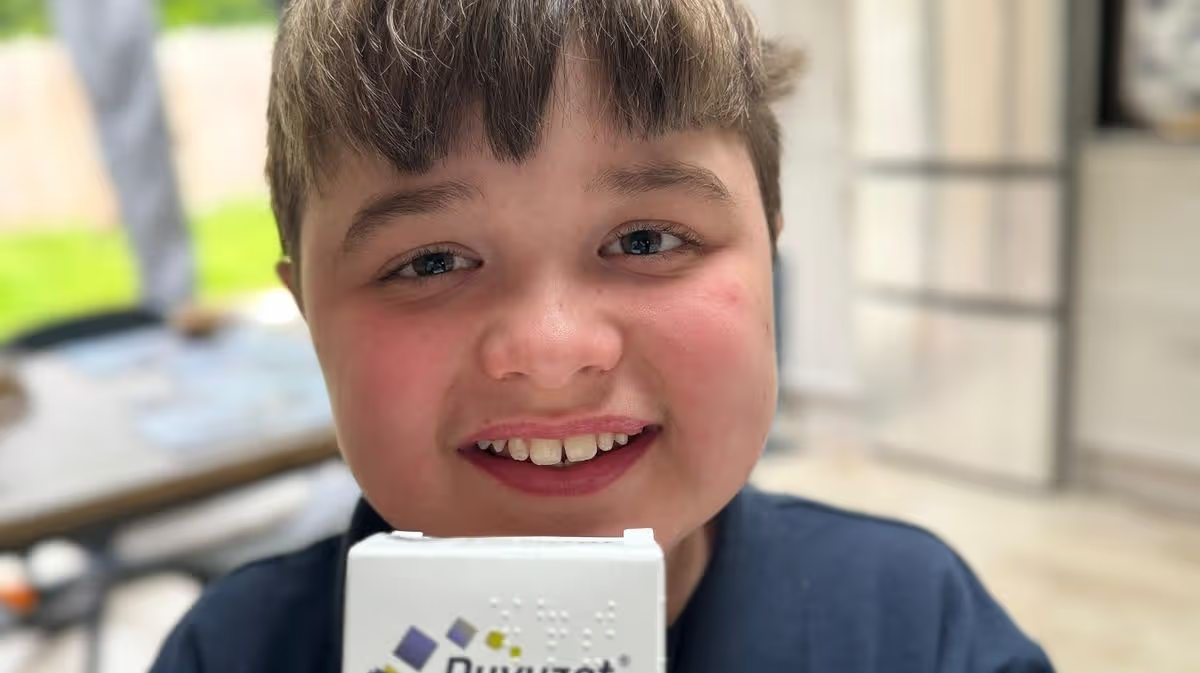
Craig Coady lost his 13-year-old son Rory to the disease last year and says his other son Paudie had hoped to benefit from the drug
668 words~3 min read