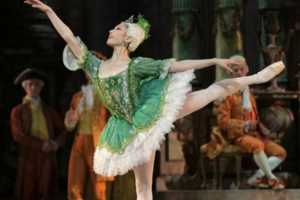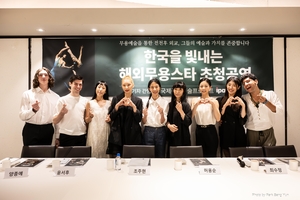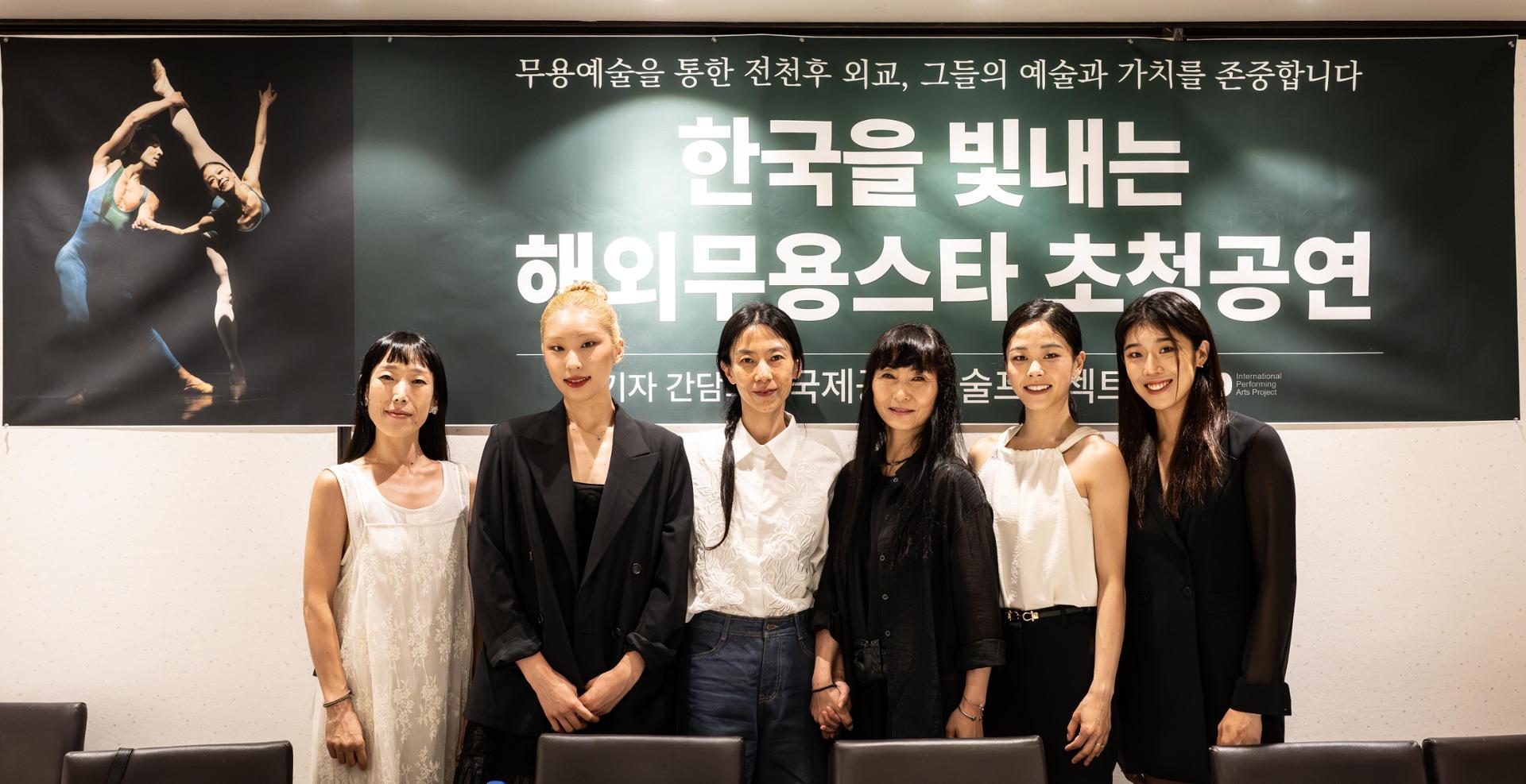
K-Arts School of Dance celebrates 30th anniversary Kim Ki-min speaks during a press conference marking the 30th anniversary of the School of Dance at the Korea National University of Arts in Seoul on Tuesday. (Yonhap) Korean ballet dancers have achieved world-class technical standards, but the country's dance education should now move beyond technical mastery and place greater emphasis on artistry and individuality, ballet star Kim Ki-min said Tuesday."Korean dancers have incredibly strong fundamentals, and I always tell my colleagues that the Korea National University of Arts offers the best dance training," Kim told reporters at a press conference marking the 30th anniversary of his alma mater's School of Dance. "But I think we've reached the point where dancers need to go beyond technique."Founded in 1991 under the Ministry of Culture, Sports and Tourism, the Korea National University of Arts was established to provide specialized professional education in the arts. Its School of Dance, celebrating its 30th anniversary this year, has become one of Korea's leading training grounds for professional dancers.A member of the school's 13th graduating class, Kim, a principal dancer with the Mariinsky Ballet and one of Korea's most internationally acclaimed ballet stars, is among its most distinguished alumni. Other graduates include Mariinsky Ballet first soloist Jeon Min-chul, Paris Opera Ballet star Park Sae-eun, American Ballet Theatre principal dancer Park Sun-mi and Monte Carlo Ballet principal dancer An Jae-yong.Kim said that technical excellence should serve as a means to artistic expression rather than an end in itself."We develop our technique in order to create art -- not simply for the sake of technique," he said. "Without a solid foundation, true artistry is difficult to achieve. But K-Arts has already established that foundation. Now I hope it becomes a place where dancers can develop a broader artistic vision and express their individuality."School of Dance Dean Na Kyung-ah said the institution transformed dance education in Korea by moving beyond the practice-oriented, single-major model that had dominated universities three decades ago."The school established a specialized education system that integrated performance, choreography and theory," Na said. "It helped usher in an era in which Korean dancers could compete at the international level and has played a leading role in the globalization of Korean dance."Faculty members also stressed that the school's future should not be measured solely by competition results but by its success in nurturing creative artists.Asked about concerns that Korea has produced many successful dancers but relatively few internationally recognized choreographers or creative collectives, the professors said choreography cannot be judged through competitions alone."There are truly remarkable independent choreographers and artists working quietly outside the spotlight," said Na. "If we continue to pay attention to these independent creators as they grow, they will flourish over the next 30 years."Professor Shin Chang-ho, a member of the school's inaugural class, said the next chapter for Korean dance would depend on greater collaboration across genres."The past 30 years have laid the groundwork for the next 20 or 30," he said. "The key question will be how ballet, contemporary dance and Korean dance interact, embrace one another and build stronger artistic networks."To mark the anniversary, current students, alumni and faculty will present "Re: Move Era," a three-day commemorative performance series from Aug. 21 to 23 featuring ballet, Korean dance and contemporary dance. Kim will perform in the opening night's second program, "Don Quixote Suite." Alumni and faculty members pose for a photo after a press conference marking the 30th anniversary of the School of Dance at the Korea National University of Arts in Seoul on Tuesday. (Yonhap) Kim Ki-min (right) performs "Don Quixote." (The Mariinsky Theatre)
Korean ballet's next challenge: Moving beyond technique
Korean ballet dancers have achieved world-class technical standards, but the country's dance education should now move beyond technical mastery and place greate
601 words~3 min read