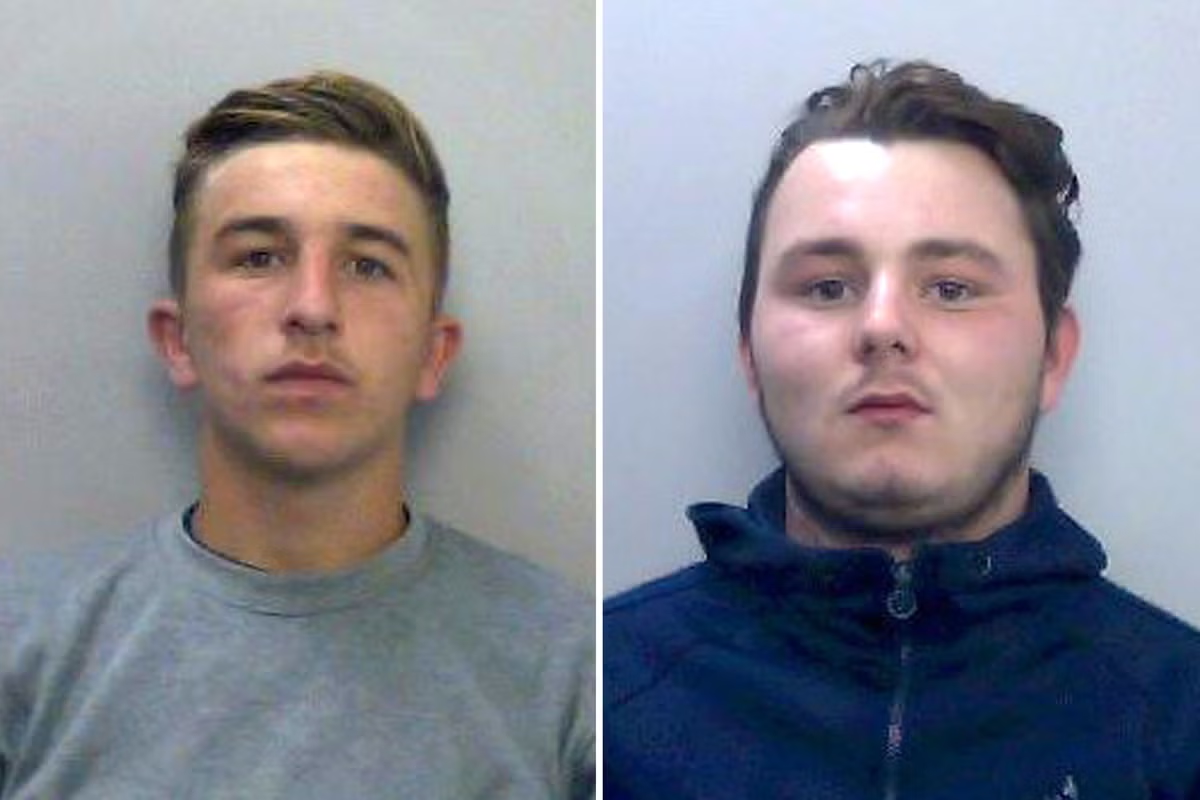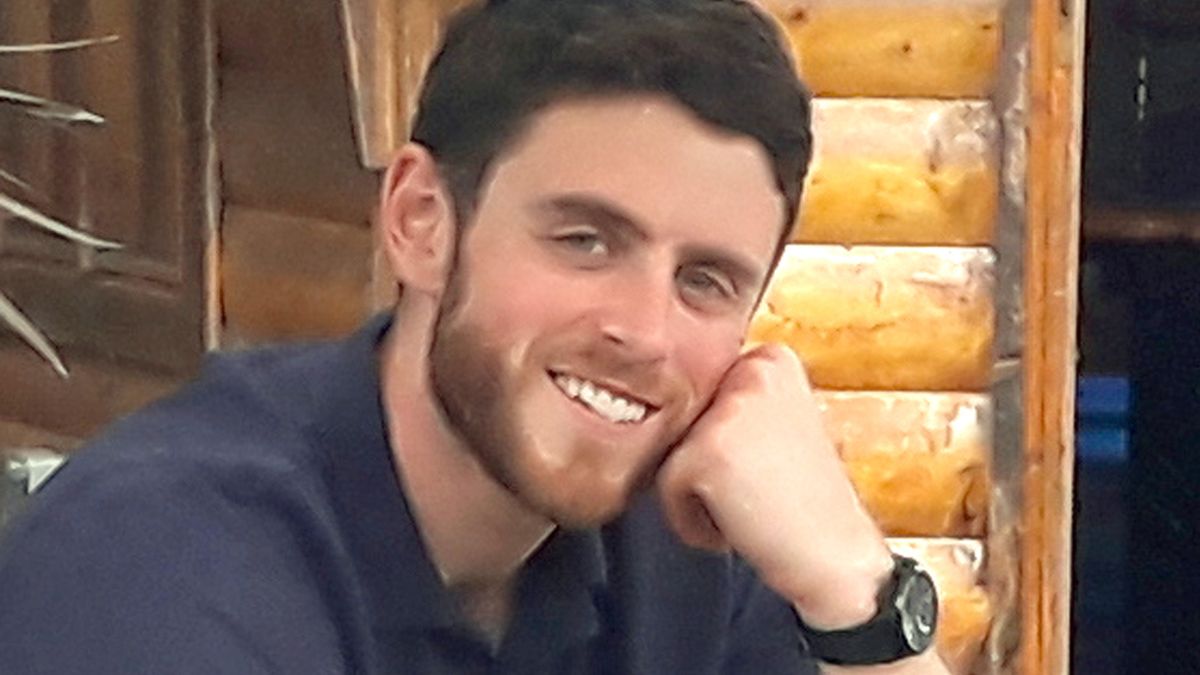
Every police chief in the country has urged Andy Burnham to prevent the early release of PC Andrew Harper's killers.In an unprecedented intervention, 50 police leaders - representing every force in the UK - united to condemn Labour's soft justice reforms, calling on the Prime Minister to scrap plans to set free Jessie Cole, Albert Bowers and thousands of other dangerous prisoners.The National Police Chiefs Council released an extraordinary joint letter from heads of 48 UK police forces, the National Crime Agency and Jersey Police, condemning the plans, warning it 'risks undermining public safety, victim confidence and wider confidence in the criminal justice system'.The signatories want Mr Burnham to explore 'every lawful option' to stop PC Harper's killers being freed, suggesting Government's plans to early release offenders are a betrayal of a law brought in his memory.The 28-year-old newlywed was killed in the line of duty in 2019 when he was dragged behind a car for more than a mile as he tried to stop three teenagers from stealing a quad bike in Sulhamstead, Berkshire.His widow, Lissie, fought for Harper's Law - a mandatory life sentence for anyone who kills an emergency worker in the line of duty following outrage over the sentencing of his killers.Cole and Bowers, who were 17-year-old passengers in the getaway car at the time, were sentenced to 13 years for manslaughter in 2020.The two thugs are among a wave of killers, rapists and violent criminals set to go free from September under Labour's soft justice prisoner release scheme. Every police chief in the country has urged Andy Burnham to prevent the early release of PC Andrew Harper's killers. Pictured: The late officer with his wife Lissie Jessie Cole and Albert Bowers, pictured in 2020, are set to be freed from prison under Labour's early release scheme Fifty top officers have now pleaded with Burnham, pictured, to stop the release The driver, Henry Long, was handed an extended sentence of 16 years for manslaughter and so is not eligible for early release.In the letter, police chiefs said: 'When someone is sentenced for an exceptionally serious offence, how much confidence can victims, bereaved families and the public place in that sentence if subsequent changes to release arrangements result in an offender being released significantly earlier than originally anticipated?'We do not suggest that the grief of a police family is greater than that of any other bereaved family, nor that the life of an emergency worker has greater value.'Our concern is for all victims and families affected by serious offending sentencing changes.'Chief constables fear that the early release scheme will endanger the public, warning: 'This is not simply a question of punishment. It is a question of ensuring that public protection, victim confidence and community safety remain central to decisions that may substantially reduce the time an offender spends in custody.'Now they want release decisions to consider 'the impact that significant changes to release policy may have on victims, public protection, policing and confidence in the justice system'.In the excoriating missive, chief constables warned the release of the two killers would undermine policing, saying: 'Officers and staff understand that the law must be applied as it stands. But they will question what message this sends about the value placed on their service and sacrifice when they put themselves in harm's way to protect others.'The letter to the Prime Minister concludes by saying: 'We make this request in memory of PC Andrew Harper, in support of his family, friends, colleagues and the communities he served and on behalf of all victims of serious offending.'The public should be able to trust that when a court passes sentence for the most serious crimes, victims, public protection and confidence in the justice system remain at the heart of any subsequent decisions about release.'It comes as the Government is considering an extraordinary plan to empty women's jails to free up cell space for male inmates as Mr Burnham faces a mounting backlash over the early release of the two killers.Hundreds of female inmates would be allowed out or moved elsewhere as an alternative to letting dangerous male offenders out early.Also on the table are proposals to deport more foreign criminals and release inmates given open-ended sentences long ago.Mr Burnham has ordered Justice Secretary Alex Norris to 'fast-track' a plan for when Parliament returns next month, overriding the Ministry of Justice's claims that nothing more could be done.However, there were growing suggestions of a rift between No10 and the MoJ on Tuesday, with Downing Street officials said to see their opposite numbers as 'weak' after weeks of conflicting messages on the crisis.Meanwhile, it was reported that allies of Mr Norris felt the PM was making 'promises that aren't possible'.Mr Burnham insisted on Tuesday: 'I am increasingly confident that a more focused approach along these lines will allow us to reduce the number of people released early and, in the case of the most serious offenders like those convicted of the killing of PC Harper, prevent their early release altogether. How feasible are the three options? 1. Using the female estate to house male prisonersThe 12 women's jails across England and Wales hold about 3,500 inmates – just 4 per cent of the total prison population. An entire prison would have to be repurposed to hold men instead of women to avoid putting females at risk. Few of the sites are as secure as those in the male estate and staff would require additional training. Dangerous women would have to be moved to other jails rather than set free. But experts say this could be the least bad option for creating extra cells.2. Releasing inmates given indefinite terms long agoImprisonment for Public Protection (IPP) sentences were scrapped in 2012 and some have been quashed by the courts – but more than 2,000 people given the controversial open-ended terms many years ago remain locked up. Andy Burnham said he wanted 'an early resolution to the long-running injustice of IPP sentences' that would 'allow for the release of lower-risk prisoners'. But many have become more dangerous during their years behind bars and could not be freed to make space for others.3. Speeding up the deportation of foreign criminalsThere are more than 10,000 foreign national offenders in jail – some 12 per cent of the prison population. Their large number and the cost of their incarceration to British taxpayers makes them an obvious target for removal. However, there are many obstacles to deportation. Inmates' home countries may not agree to take them, and they could also refuse to say where they are from. Victims may feel offenders have cheated justice if they are allowed to walk free when removed from the UK. 'I've not accepted it's impossible to do more.'There are doubts, however, over the feasibility of his latest suggestions.Mark Fairhurst, National Chairman of the Prison Officers Association, said: 'Repurposing women's prisons to accommodate male prisoners is not something that can simply be achieved by changing the sign above the door.'There would inevitably be additional staffing, training, security and operational requirements. The physical design and facilities of women's prisons are not necessarily suitable for a male population, and those differences would need to be properly assessed before any decision was taken.'You cannot create safe prison places simply by finding additional buildings. You need the staff, training, infrastructure and resources to operate them safely.'He said that extra capacity should be found instead by reducing the remand population of people locked up awaiting trial, as well as the early release of those in open prisons at the end of their sentences.Sources also pointed out that one of the country's few purpose-built women's jails, HMP Bronzefield in Surrey, which houses the likes of convicted baby killer Lucy Letby and St Paul's bomb plotter Safiyya Amira Shaikh, is used for remand prisoners so its removal would make it difficult for defendants to be brought to courts in London on time.Tom Wheatley, President of the Prison Governors' Association, told the Daily Mail: 'Carrying out the kind of detailed work required to make these changes increases the risk that mistakes will be made. But we are assured that the Ministry of Justice has briefed ministers as to this increased probability.'Downing Street finally contacted PC Harper's grieving mother after she said she had been kept in the dark over the planned early release of Cole and Bowers.Debbie Adlam said No 10 had been in touch just hours after she told ITV News she was 'really angry' about having 'heard nothing from the Government'.She told Sky News on Tuesday night: 'I'm hopeful, but I've got to be careful with how much hope I have, really.'Fifty police chiefs call on Prime Minister to prevent PC Harper killers' release - full letter belowDear Prime Minister,We welcome your intervention regarding the potential earlier release of those responsible for the death of PC Andrew Harper, and your instruction to the Justice Secretary to examine what can lawfully be done.When the state asks people to run towards danger on behalf of the public, they should be able to trust that the justice system will stand behind them when the worst happens.PC Andrew Harper's case also raises a wider question.When someone is sentenced for an exceptionally serious offence, how much confidence can victims, bereaved families and the public place in that sentence if subsequent changes to release arrangements result in an offender being released significantly earlier than originally anticipated?This question extends far beyond policing.Families across the country are now facing the distress of learning that offenders may be released earlier than they understood when sentence was passed. We do not suggest that the grief of a police family is greater than that of any other bereaved family, nor that the life of an emergency worker has greater value.Our concern is for all victims and families affected by serious offending sentencing changes.PC Andrew Harper lost his life while protecting the public and serving his community. Following his death, Lissie Harper campaigned for a change in the law, leading Parliament to establish Harper's Law, recognising the exceptional risks emergency workers take while protecting others.While Harper's Law cannot retrospectively alter the sentences imposed following PC Andrew Harper's death, the principle behind it remains important. Those who serve and protect the public should know that the justice system recognises the risks they take on society's behalf. Victims and bereaved families should be confident that sentences imposed for the most serious offences retain meaning and that public protection remains a central consideration when release decisions are made.There is a profound strength of feeling across policing about those responsible for PC Andrew Harper's death benefiting from arrangements that could see them released substantially earlier than expected.Officers and staff understand that the law must be applied as it stands. But they will question what message this sends about the value placed on their service and sacrifice when they put themselves in harm's way to protect others.Police officers and staff see first-hand the impact serious crime has on victims and their families. They support people through some of the most difficult moments of their lives and ask them to place their trust in the justice system. That trust is vital and should not be weakened. We are also collectively concerned that an approach to early release which does not sufficiently distinguish the most serious offending risks undermining public safety, victim confidence and wider confidence in the criminal justice system.We therefore ask Government to consider three measures.First, we ask that every lawful option is examined to determine whether the earlier release of those responsible for PC Andrew Harper's death can be prevented.We recognise that Government must act within the law. Nevertheless, given the significance of this case, it is right that every available lawful avenue is explored.Second, we ask Government to establish an additional public protection safeguard in cases involving the most serious offenders whenever future changes to sentencing on release arrangements are considered.Where an offender has caused a death, committed exceptionally serious violence, or presents an ongoing risk to individuals or communities, there should be explicit consideration of public protection, victim impact and community safety before release arrangements are amended.This principle should also apply to serious offences where there is a continuing risk of harm to victims or the public, including serious violence against women and girls, stalking and harassment.This is not simply a question of punishment. It is a question of ensuring that public protection, victim confidence and community safety remain central to decisions that may substantially reduce the time an offender spends in custody.Third, victims and bereaved families must be properly considered whenever significant changes are made to sentencing or release arrangements.There should also be consideration of the impact that significant changes to release policy may have on victims, public protection, policing and confidence in the justice system.Prime Minister, we welcome your intervention and the direction you have given to the Justice Secretary. This provides an opportunity not only to examine every lawful avenue in PC Andrew Harper's case, but to ensure similar concerns do not arise again.We make this request in memory of PC Andrew Harper, in support of his family, friends, colleagues and the communities he served and on behalf of all victims of serious offending.The public should be able to trust that when a court passes sentence for the most serious crimes, victims, public protection and confidence in the justice system remain at the heart of any subsequent decisions about release.We stand ready to continue working with Government on safeguards needed to protect victims, the public and confidence in the justice system.We look forward to further conversations.Yours sincerely,With the collective agreement and support of Chief Constables and Commissioners across the United KingdomSignatories:Chief Constable Sarah Crew - Avon and Somerset PoliceChief Constable Trevor Rodenhurst - Bedfordshire PoliceChief Constable Simon Megicks - Cambridgeshire ConstabularyChief Constable Mark Roberts - Cheshire ConstabularyCommissioner Pete O'Doherty - City of London PoliceChief Constable Victoria Fuller - Cleveland PoliceChief Constable Darren Martland - Cumbria ConstabularyActing Chief Constable Simon Blatchly - Derbyshire ConstabularyChief Constable James Vaughan - Devon & Cornwall PoliceChief Constable Rachel Farrell - Dorset PoliceChief Constable Rachel Bacon - Durham ConstabularyChief Constable Ifan Charles - Dyfed-Powys PoliceChief Constable Rachel Nolan - Essex PoliceTemporary Chief Constable Maggie Blyth - Gloucestershire ConstabularyChief Constable Stephen Watson - Greater Manchester PoliceChief Constable Mark Hobrough - Gwent PoliceChief Constable Alexis Boon - Hampshire & Isle of Wight ConstabularyChief Constable Andy Prophet - Hertfordshire ConstabularyChief Constable Chris Todd - Humberside PoliceChief Constable Tim Smith - Kent PoliceChief Constable Sacha Hatchett - Lancashire ConstabularyChief Constable David Sandall - Leicestershire PoliceChief Constable Paul Gibson - Lincolnshire PoliceChief Constable Rob Carden - Merseyside PoliceCommissioner Mark Rowley - Metropolitan Police ServiceChief Constable Paul Sanford - Norfolk ConstabularyChief Constable Amanda Blakeman - North Wales PoliceChief Constable Tim Forber - North Yorkshire PoliceChief Constable Ivan Balhatchet - Northamptonshire PoliceChief Constable Vanessa Jardine - Northumbria PoliceTemporary Chief Constable Steven Cooper - Nottinghamshire PoliceChief Constable Jo Farrell - Police ScotlandChief Constable Jeremy Vaughan - South Wales PoliceChief Constable Lauren Poultney - South Yorkshire PoliceActing Chief Constable Rebecca Riggs - Staffordshire PoliceChief Constable Rachel Kearton - Suffolk ConstabularyChief Constable Tim De Meyer - Surrey PoliceChief Constable Jo Shiner - Sussex PoliceChief Constable Jason Hogg - Thames Valley PoliceActing Chief Constable David Gardner - Warwickshire PoliceChief Constable Richard Cooper - West Mercia PoliceActing Chief Constable Scott Green - West Midlands PoliceChief Constable John Robins - West Yorkshire PoliceChief Constable Catherine Roper - Wiltshire PoliceChief Constable Jon Boutcher - Police Service of Northern Ireland (PSNI)Chief Constable Lucy D'Orsi - British Transport PoliceChief Constable Simon Chesterman - Civil Nuclear ConstabularyActing Chief Constable Keir Pritchard - Ministry of Defence PoliceDirector General Graeme Biggar - National Crime AgencyChief Officer Robin Smith - State of Jersey Police
EVERY chief constable calls for PC Harper's killers not to be freed
In an unprecedented intervention, 50 police leaders representing every force in the UK united to condemn Labour's soft justice reforms.
2,614 words~12 min read