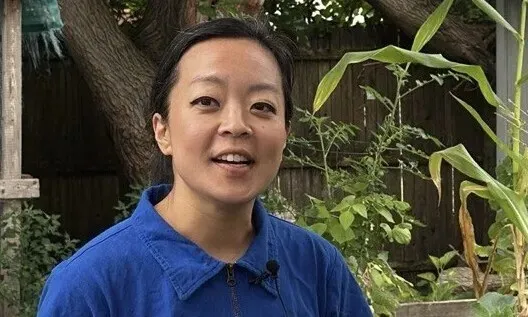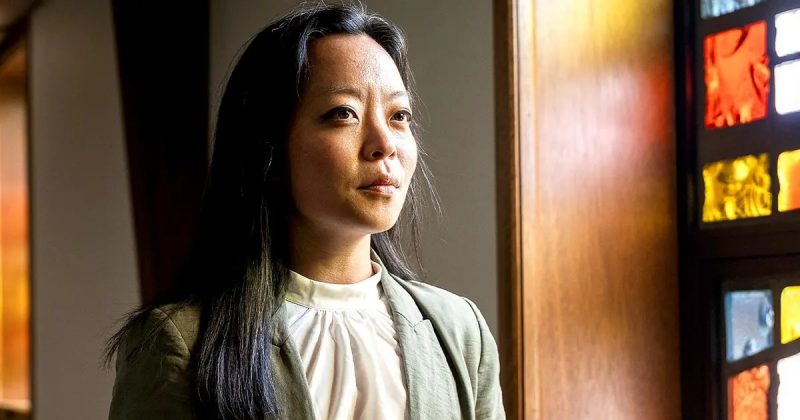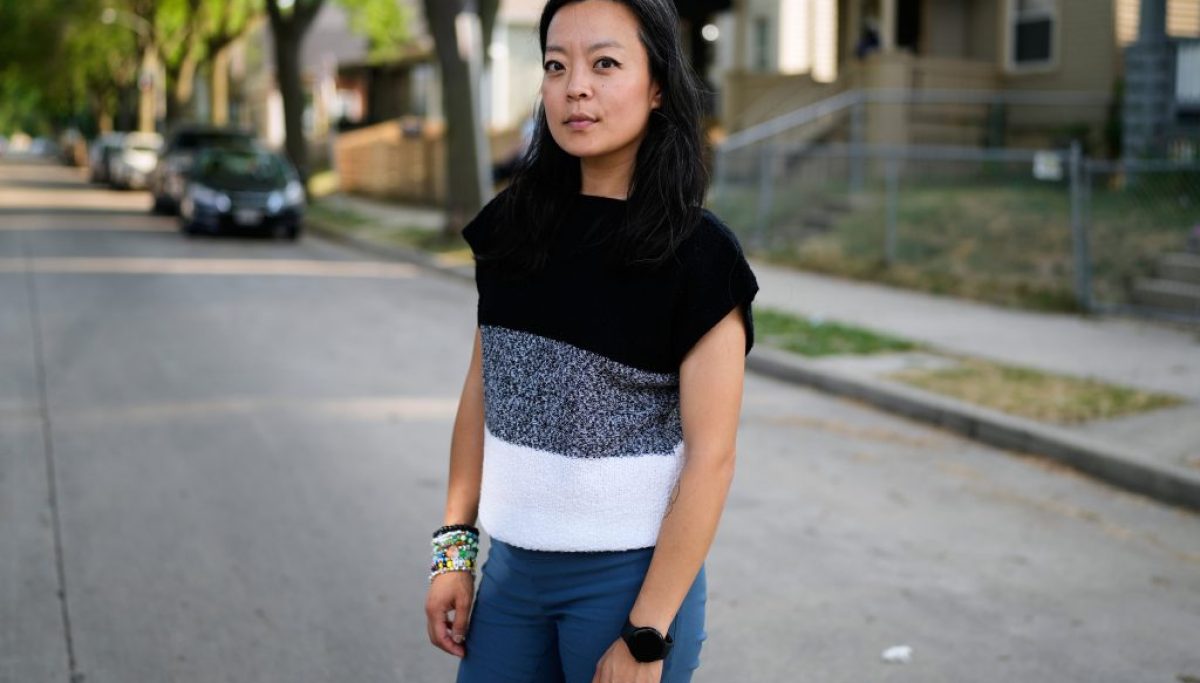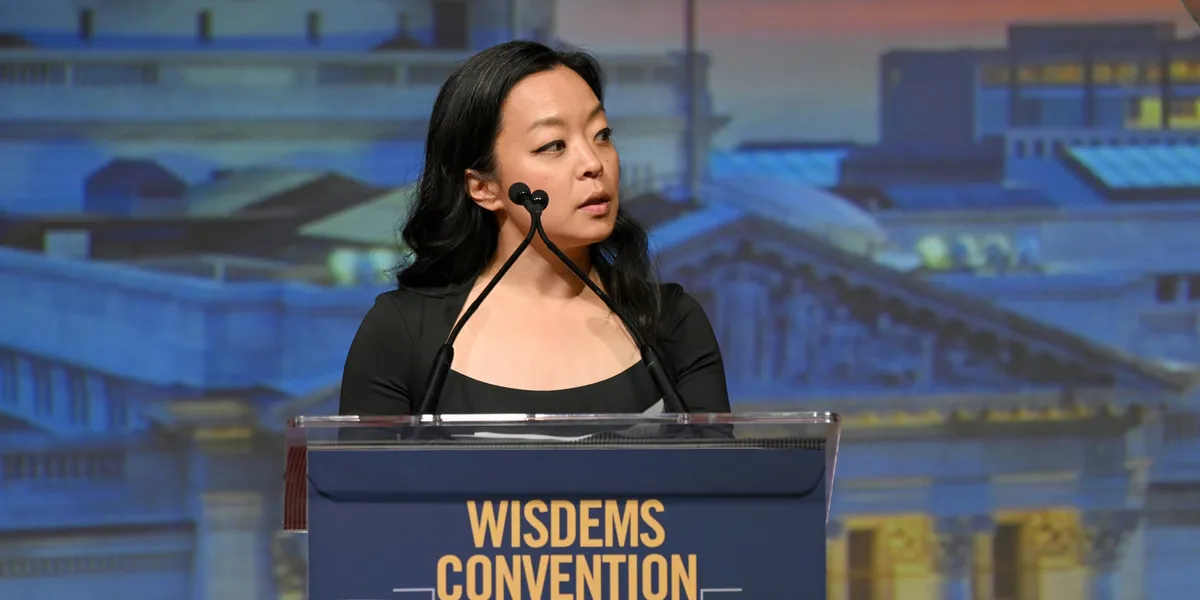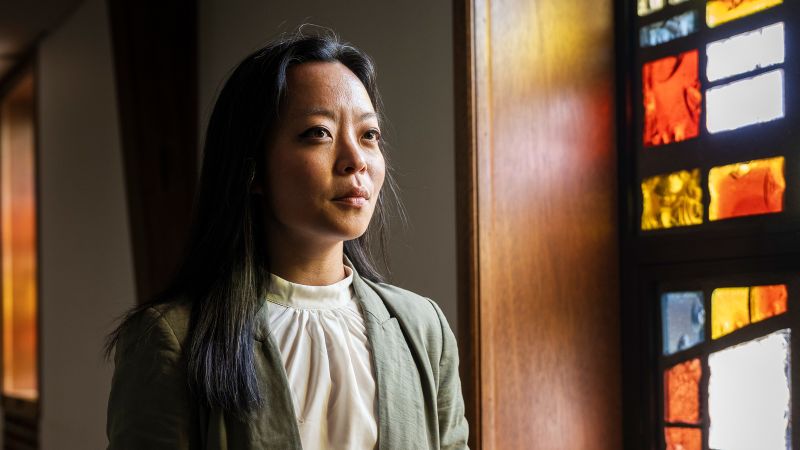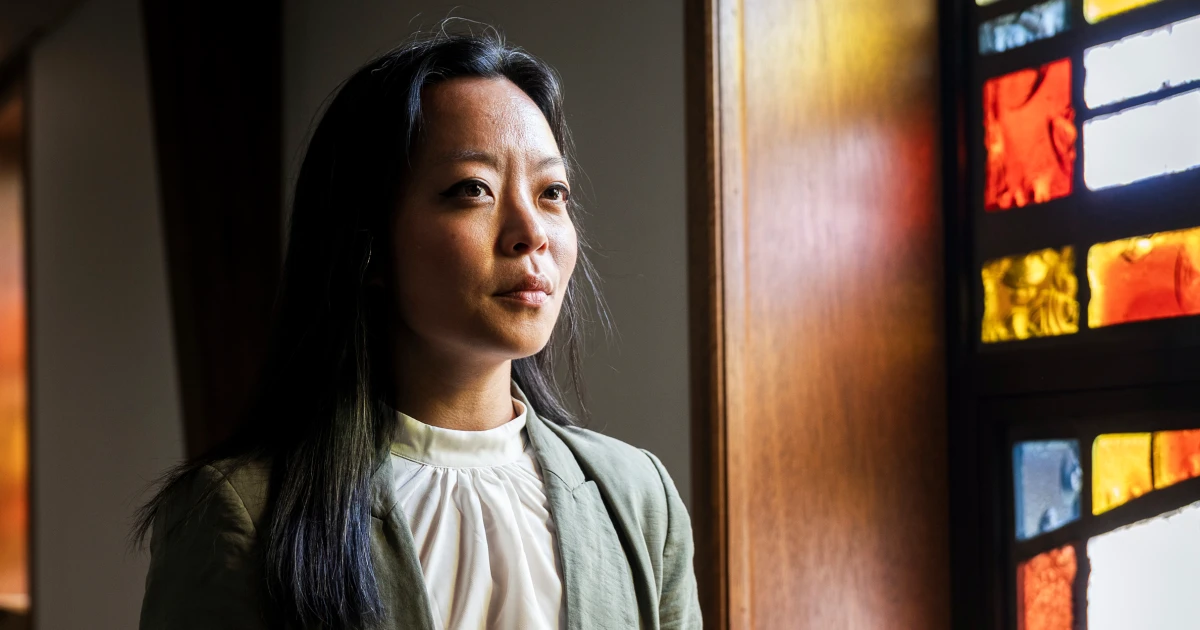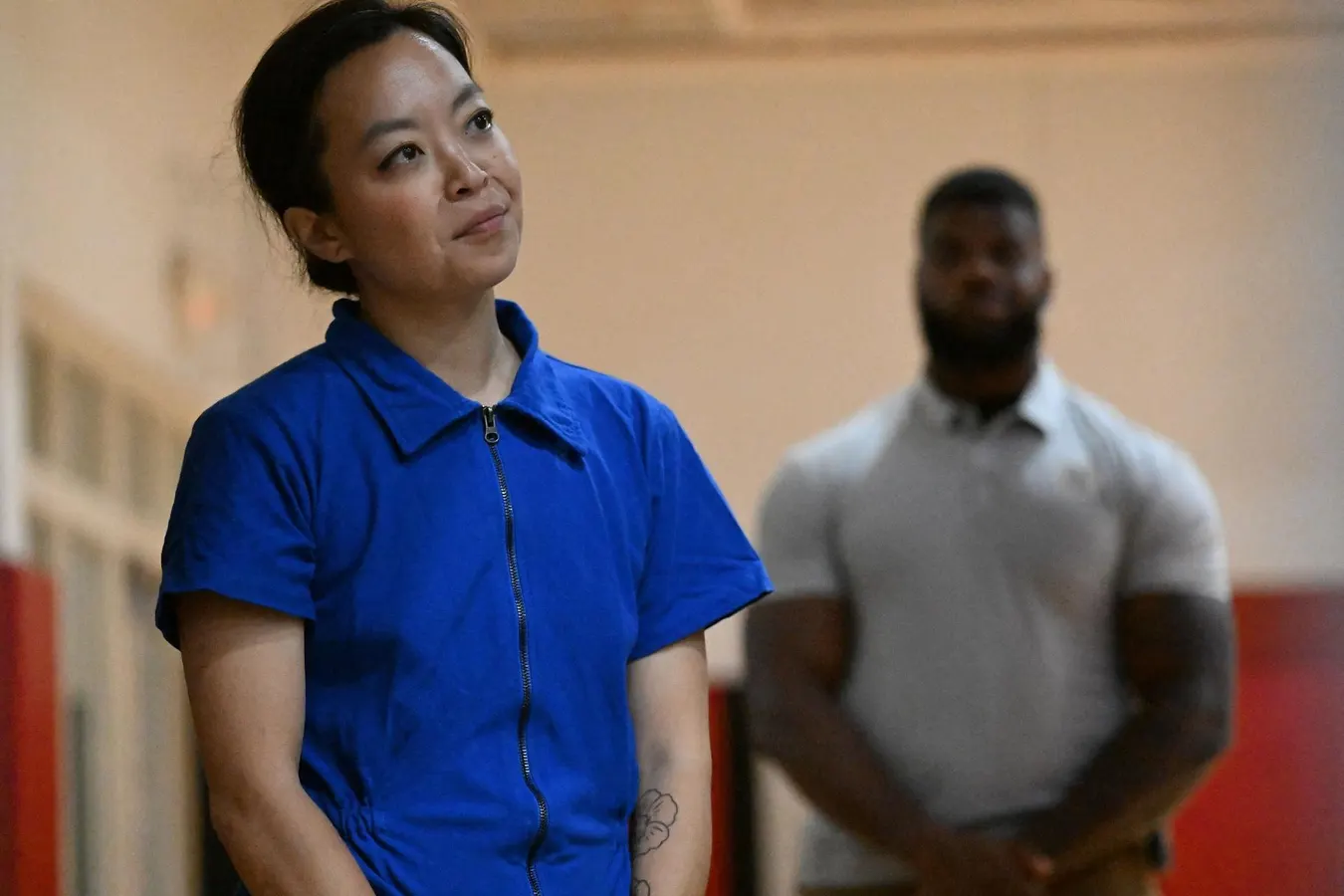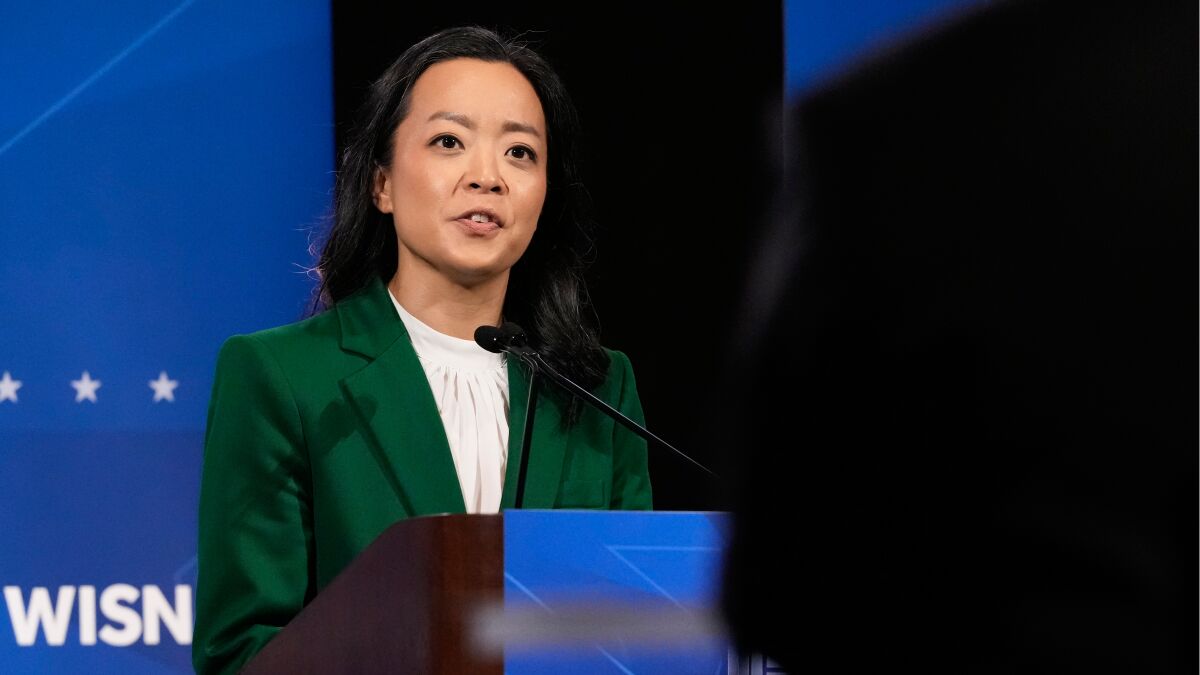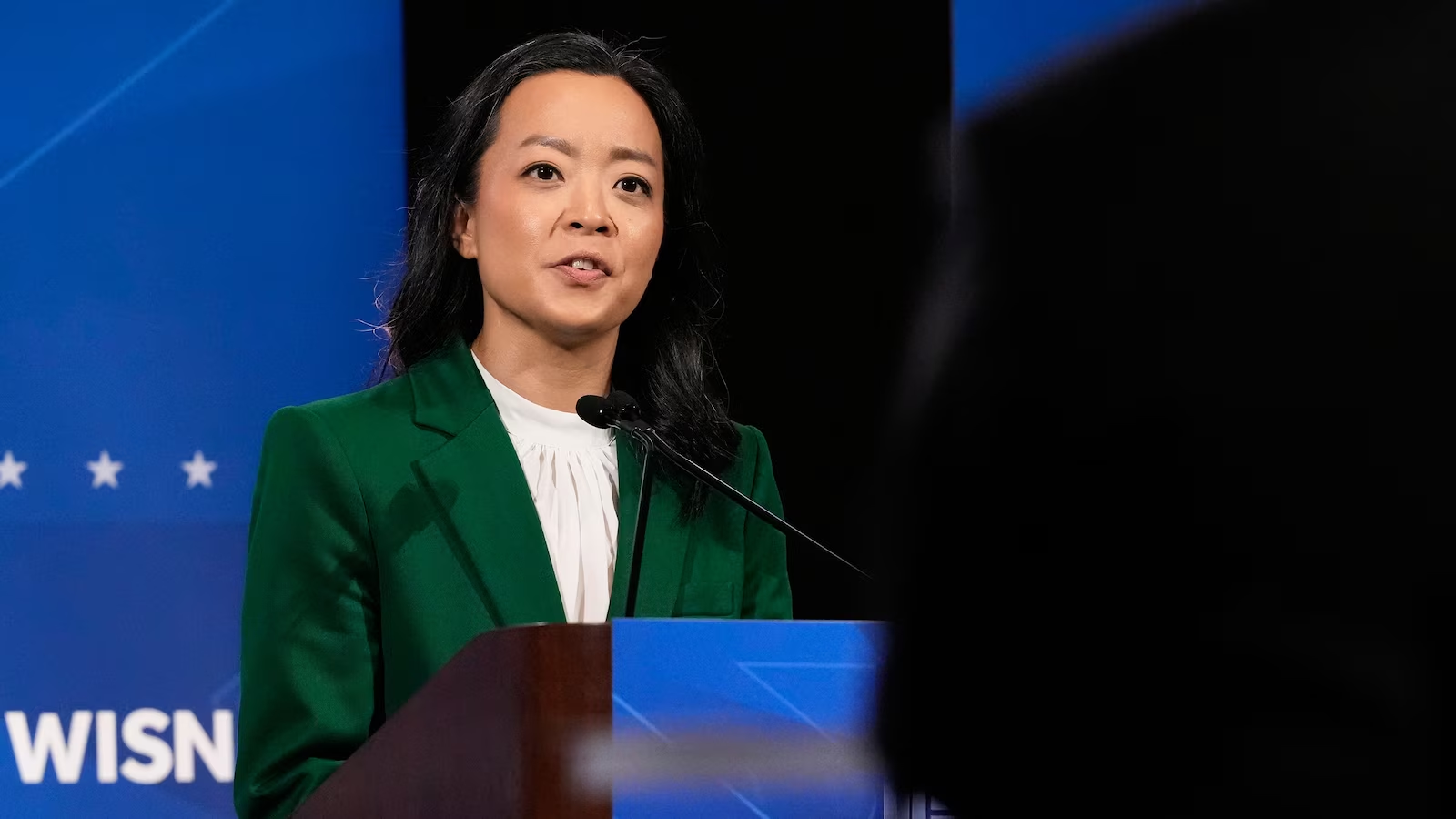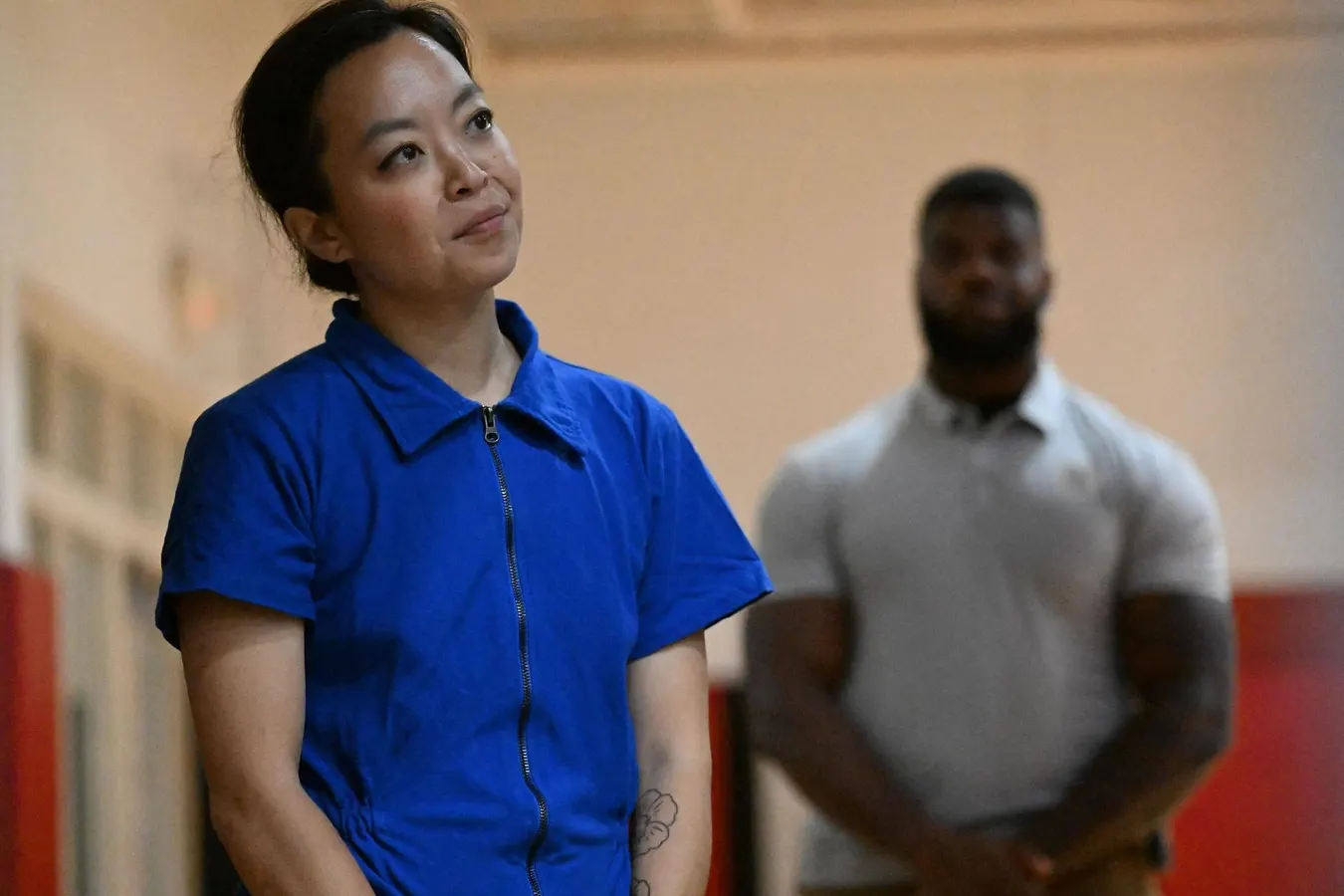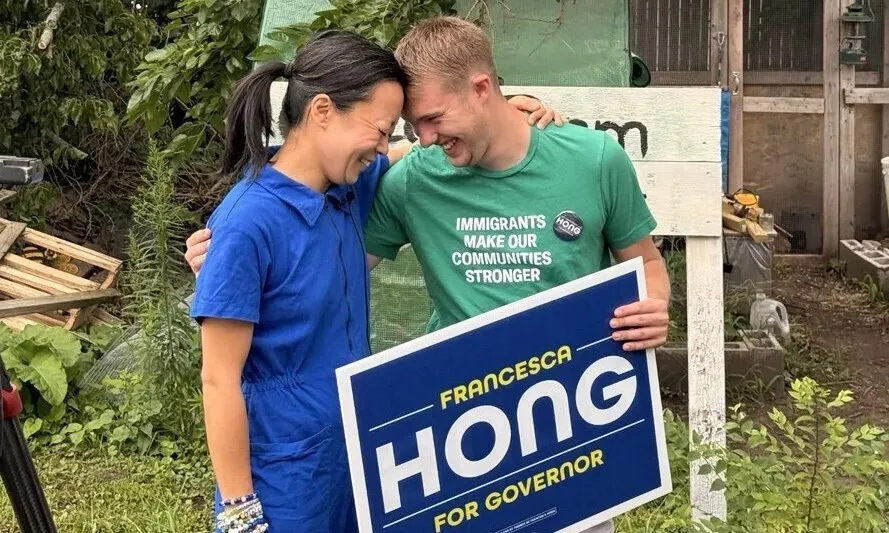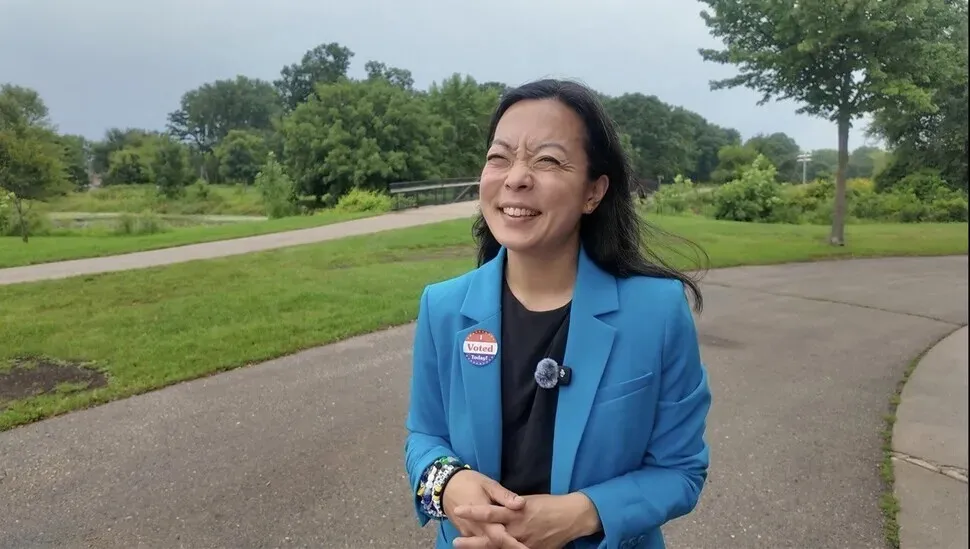
Francesca Hong, a candidate in the Democratic Party primary for Wisconsin’s gubernatorial election in November, speaks to the Hankyoreh in Madison, Wisconsin, on Aug. 11, 2026, as voters head to the polls. (Kim Won-chul/Hankyoreh)
On her right arm is a tattoo displaying three roses of Sharon, the national flower of Korea, where they are known as mugunghwa. The petals of one of those flowers cradle the map of Wisconsin.That tattoo captures in miniature the identity of this Korean American, who was born and bred in the state of Wisconsin. Francesca Hong, aged 37, had the tattoo inked this year, in the middle of her candidacy in the Democratic Party’s gubernatorial primary.“I’ve come to really love and honor and be proud of my Korean American identity and heritage,” Hong told the Hankyoreh on Tuesday.Victory in the general election this November would make her the first female governor of Wisconsin, as well as the US’ first governor of Korean heritage. Hong said that “would be the biggest honor of my life and a great responsibility.”Voting in the Democratic gubernatorial primary began at 7 am on Tuesday and concludes at 8 pm.The latest polls gave Hong a comfortable lead over the No. 2 contender, but if the vote ends up being close, the winner may not be announced until the following day.Hankyoreh: You’ve met a lot of people across Wisconsin over the past year. What have they been telling you, and what do they want you to speak up on for them?Francesca Hong: They’re telling me that they’re scared, they’re tired, and they want government to work as hard as they do to make things better. We talk about the things that they care about — making sure we’re funding our public schools, that we’re getting our local governments the funding they need for essential programs and services like EMS, and fixing the roads and potholes and funding our public libraries. People are worried as healthcare is getting more expensive, as childcare is getting more expensive. And it doesn’t ever seem to be enough. People deserve better than to just be getting by. Hankyoreh: A lot of the policies that you mention — universal childcare, funding public schools, and Medicare for All — were actually implemented by conservative administrations in Korea. What do you make of that?Hong: (Laughs.) A lot of what we’re finding, and what we’ve known, is many people want so many of the same things. They want to be able to take care of themselves, their loved ones and their families, and to be able to have more control and economic security. If there is more affordable childcare and we’re funding our schools and we actually have fair taxes, more money goes into fixing the things that we all use, like the roads and our libraries. Lives will slowly improve for everyone. So it’s very frustrating when even conservative countries can have these things, and yet we haven’t been able to figure out how to have them here. It takes fighting back and holding accountable a lot of that corporate welfare and a lot of the corporate exemptions and a government that’s serving billionaires first.Hankyoreh: If you win the nomination and win the election in November, what do you think that will mean for the Democrats’ strategy when it comes to swing states, especially in the 2028 presidential election?Hong: Wisconsin has deep progressive roots. Let’s remember that Senator [Bernie] Sanders won 71 out of 72 counties here in 2016 [in the Democratic primary]. Working class people across this state, regardless of zip code, come to agree on the things that we know will help make lives better and easier. The strategy is to make sure that you have someone who deeply cares and relates to these issues right now. I’ve stressed that I’m a renter and I’m a single mom, because that helps me see and understand the struggles of what is going on with folks even better. I hope the strategy really is about investing in listening and being accessible to more voters. That’s why we have such a strong ground game that we’ve invested in organizing. So much of this is about how you treat the voters.Hankyoreh: Obviously, you will need to win over some voters who previously voted for Trump in the general election. What is your strategy for doing that?Hong: It’s a good thing we’re already doing it. We’ve seen so much bipartisan support. Especially in the smallest towns, where our schools are some of their largest employers, [they] know what happens when the heart of [their] communities, that is, public schools, is defunded. People are being pitted against one another. So when we talk about fully funding public schools, about a moratorium on data centers, on taxing the ultra-wealthy and the mega corporations — even to those who voted for Trump, these are issues that we are having conversations about, because they care about them. I’m here with a firm stance and a plan, and that’s what is helping people. What’s bringing folks into our movement is that they see themselves in our vision.Hankyoreh: Some people say you need to move toward the center if you win the nomination. What do you say to them?Hong: Well, the center keeps moving, right? (Laughs.) So it’s less about left and right, right now, and more about looking out for our dishwashers, our moms, our nurses, our farmers — everyday folks who are getting screwed and squeezed out from a very unfair, rigged economic system. This is about making sure that our state is not controlled by billionaires and mega corporations and politicians like [Tom] Tiffany [the Republican frontrunner for governor], who answer to billionaires and corporations and not to the people.