Here's something that blew my mind recently: compression and language modeling are, at their core, trying to solve the exact same problem. Once you understand this connection, large language models stop feeling like magic and start feeling inevitable — like a mathematical truth that was always there, waiting to be scaled up.
The Compression-Prediction Equivalence
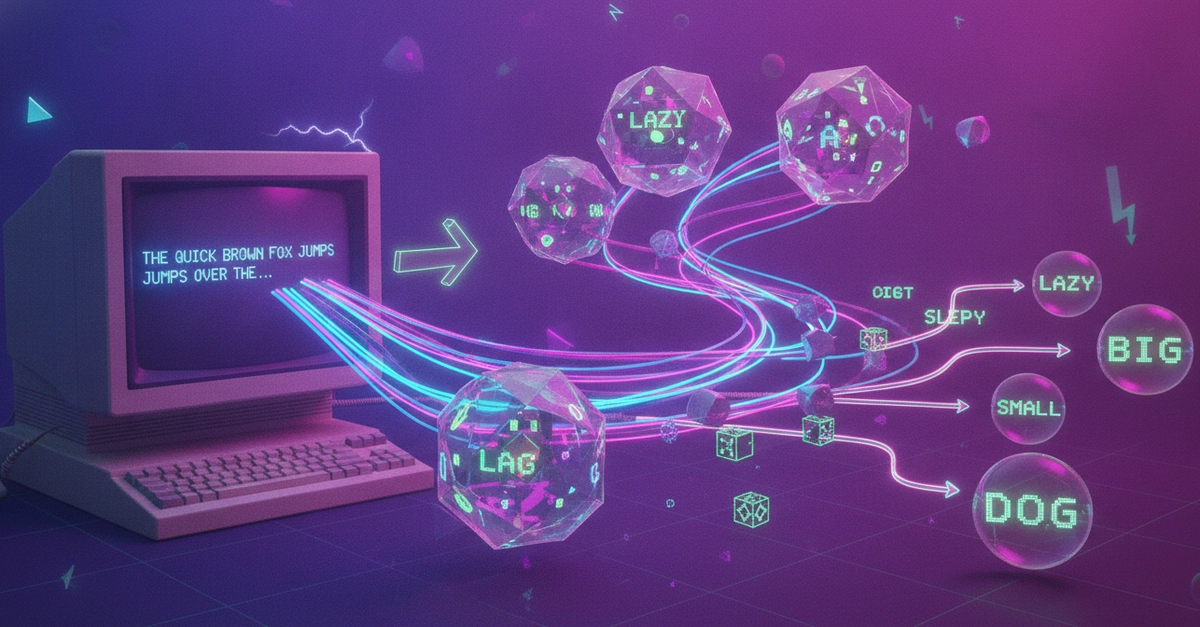
At its most fundamental level, compression is about finding patterns. If you can predict what comes next in a sequence, you can compress it — because you don't need to store the parts you can predict. The better your prediction, the smaller your compressed output.
This isn't a new insight. Claude Shannon figured this out in 1948 when he founded information theory. The optimal compression of a sequence is directly tied to how well you can model the probability distribution that generated it. But the practical implications for AI are profound.
How Compression Works