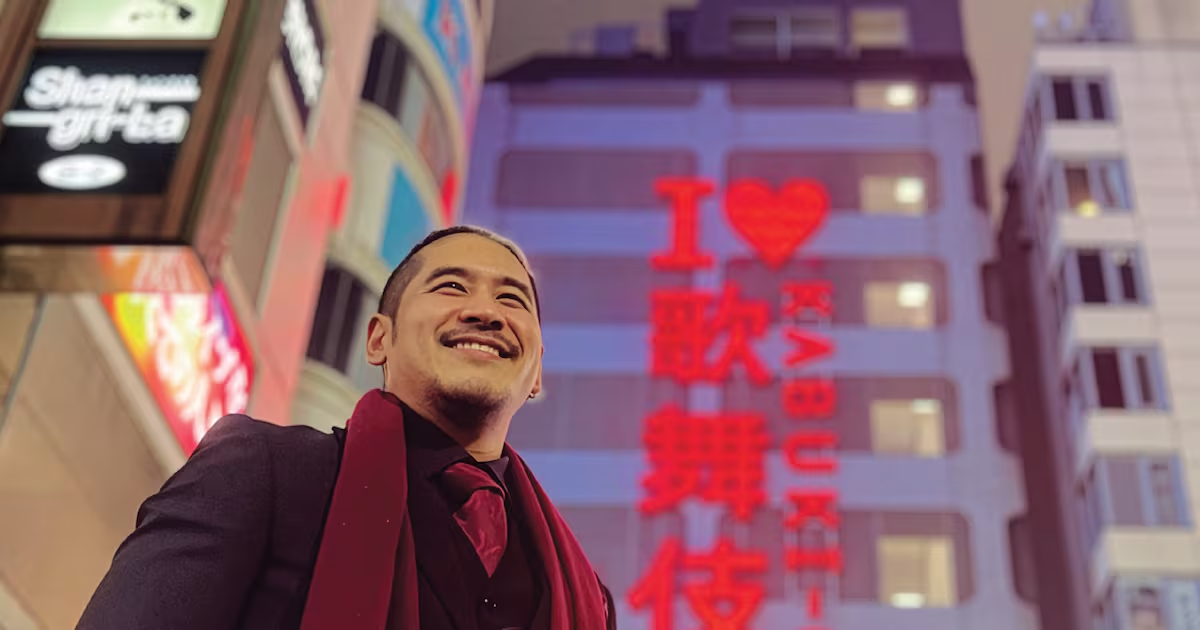
A Japanese travel blogger knows a side of Japan that not many people realise exists. Takashii is a popular content creator and social media personality known for exploring life, local perspectives and cultural differences in Japan.Since launching his YouTube channel in 2021, Takashii has gained over 4.5 million followers across his social platforms including TikTok and Instagram.In one of his most recent videos, Takashii takes his followers on a journey through danchi – the Japanese word for large public housing/apartment complexes built in the outskirts of major cities such as Tokyo, Saitama, Osaka and Nagoya.Takashii said he has fond childhood memories of danchi as his grandmother used to live in one of the complexes. “My grandma used to live in this kind of building,” he said as he pointed to a complex behind him.“I remember when I was a kid my mum used to take me here. There was no elevator or anything so we [had to climb] eight floors.”The complexes, fit with hundreds of units, were built during Japan’s post-war economic boom of the 1950s to 1970s.While danchi still exist in Japan, building companies have reportedly revamped many of them to keep up with living standards and building codes. “Today many are home to low-income elderly residents with cheap rent,” the content creator explained.He explained monthly rent costs around 20,000 to 60,000 Yen per month which is about AUD $180 to $535.“It’s originally built for families so it has at least three bedrooms and if your income rises, you may have to move out due to long waitlists.”Takashii said it’s a side of Japan not many tourists know exists.“This is the type of Japan you never see on the internet,” he said. “As someone who grew up in this kind of environment I’ve always felt like there’s a gap between the Japan that people see in the world and the actual Japan, you know?“I just wanted to show another side of Japan.”Takashii’s video has attracted hundreds of comments including people who shared their own experiences living in a danchi.“I lived in a danchi for 4.5 years when I did my phd there. I was the last resident of my building, it was going to be demolished after I left. I am grateful to be able to live at a danchi, helped me to save a lot of money as a broke student,” one person wrote.Another wrote: “I loved my danchi when I lived in Saga-ken, it was so well kept by the residents and it felt so safe.”One woman said it’s not just for the elderly, with her young family also living in a danchi.“We lived in a danchi in Saitama with our eldest child. It’s affordable when you are on low income,” she wrote.“My husband was a truck driver at the time and it was all we could afford. Low income families do live in danchi even now.”A former expat said she also previously called a danchi home, with some complexes experiencing a boom in foreigners.“I am a Filipina but I used to lived in danchi for almost two years. I really had a good memories with other foreign workers and Japanese too,” she said.According to the The Japan News, about half of the residents at housing complexes are 65 or older.However, the government-run Icho Danchi housing complex located in Yamato and Yokohama – south of Tokyo, has seen a rise in non locals. The complex comprises about 3,600 units and the outlet reported as of April last year, about 20 per cent of the 2,824 households living there were foreign residents.According to the 2020 national census, about 84,000 foreign households reside in danchi housing complexes or similar facilities run by the local government or the Urban Renaissance Agency (UR), an incorporated administrative agency. Over the past decade, the number of foreign households in the complexes has increased by about 11,000, the publication added.
‘Real Japan’: Side of hotspot tourists don’t see
A Japanese travel blogger knows a side of Japan that not many people realise exists.
646 words~3 min read