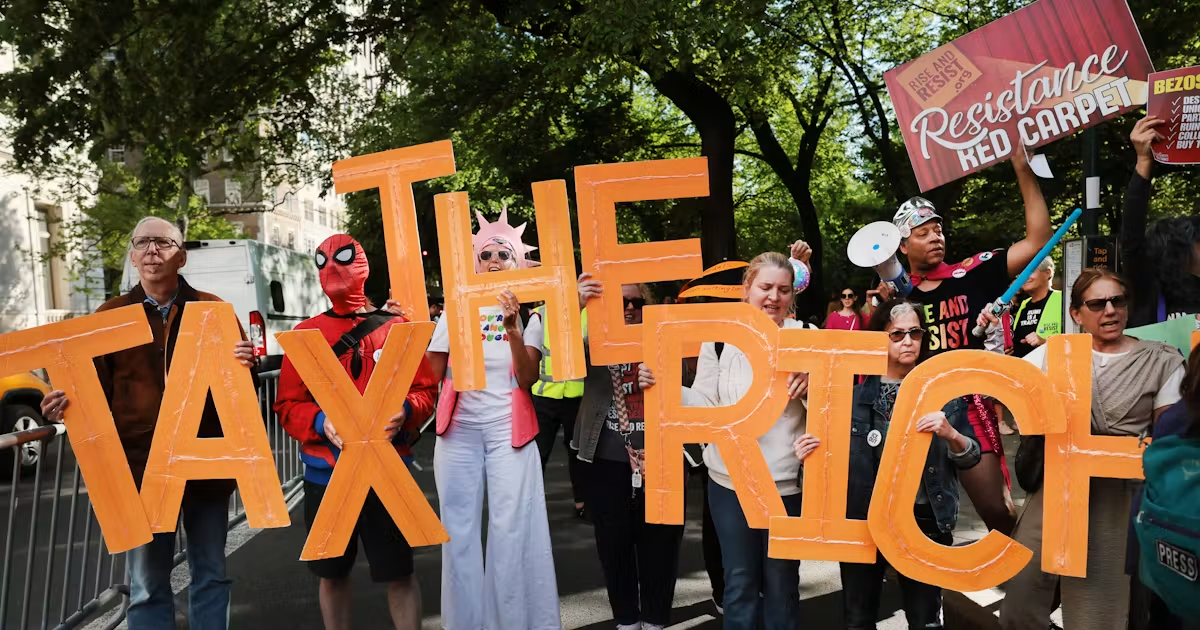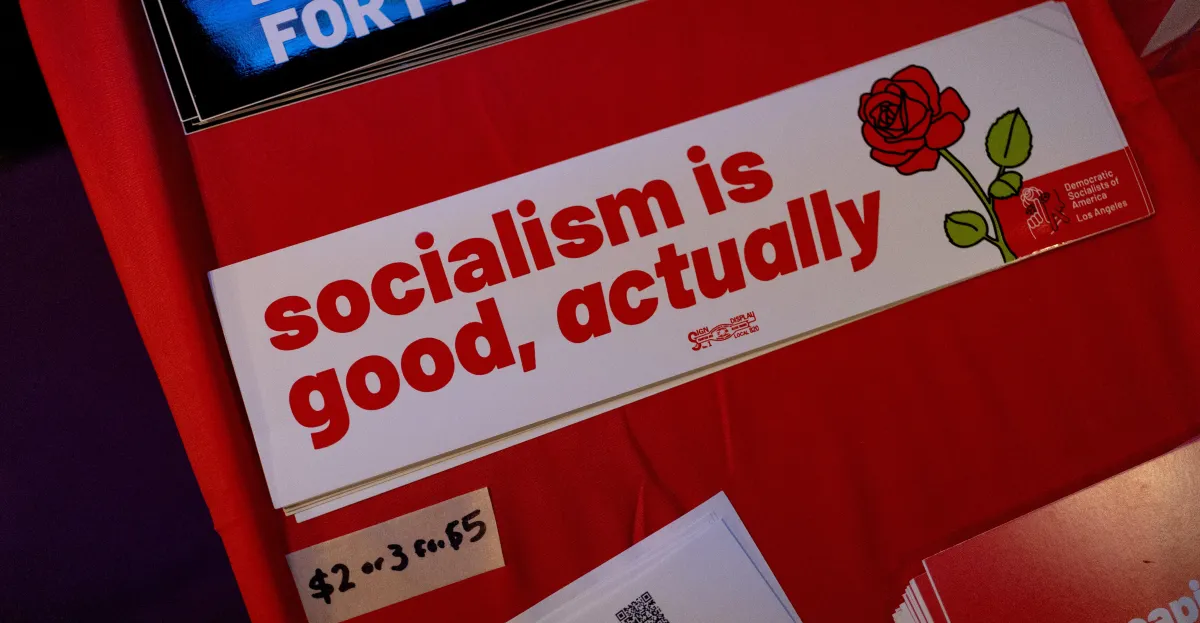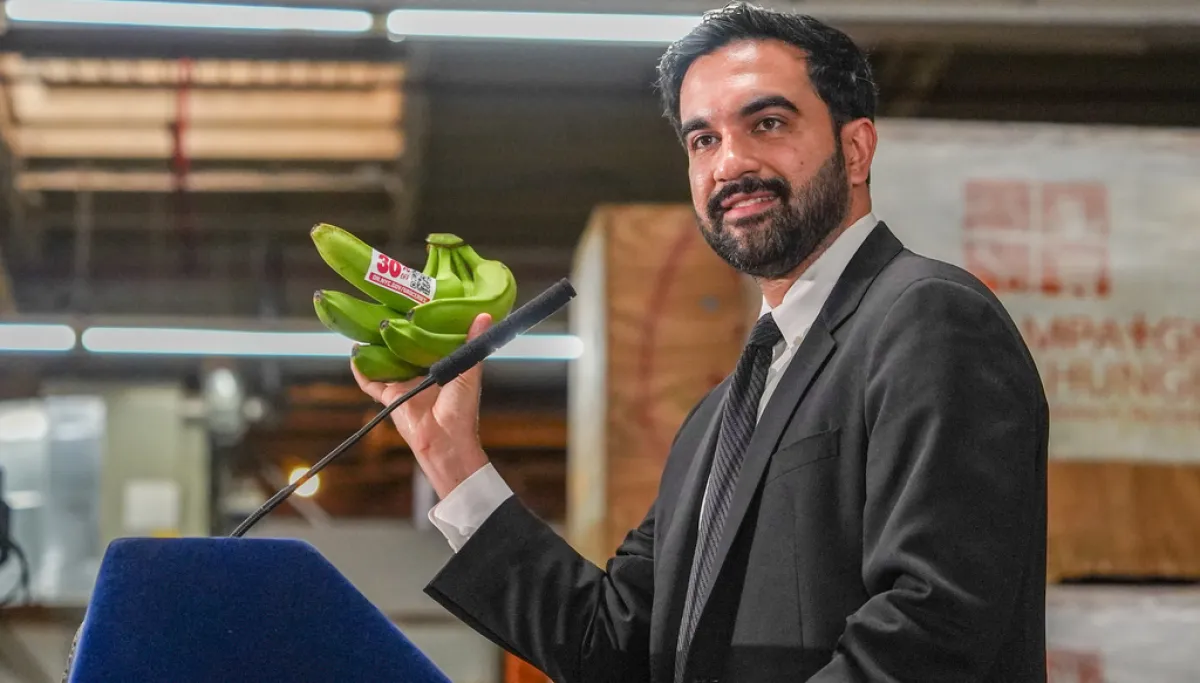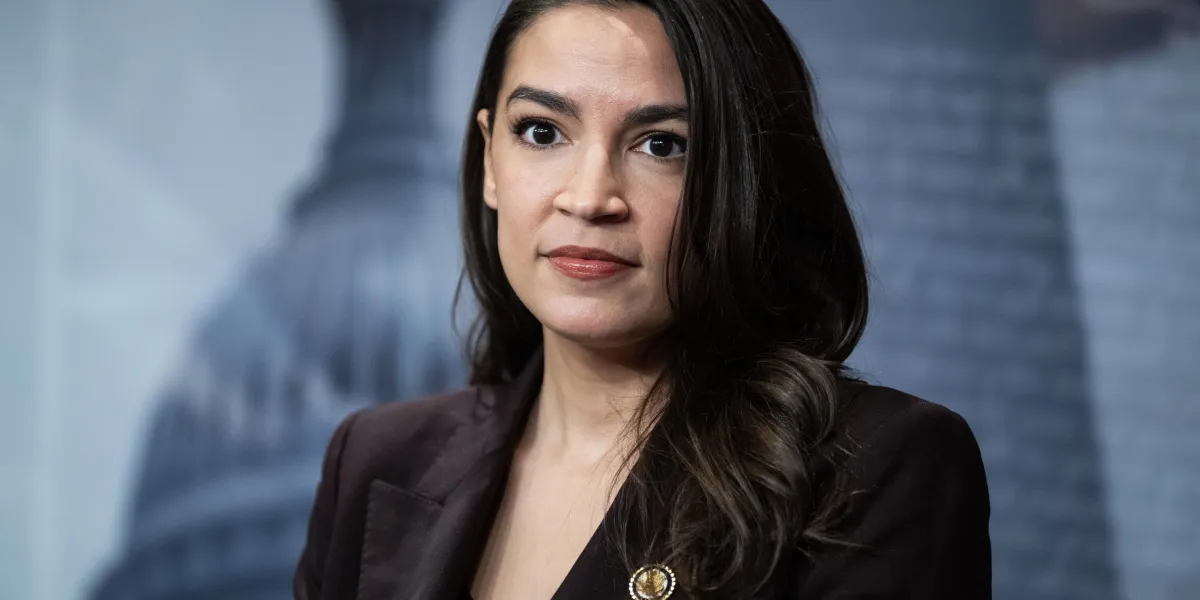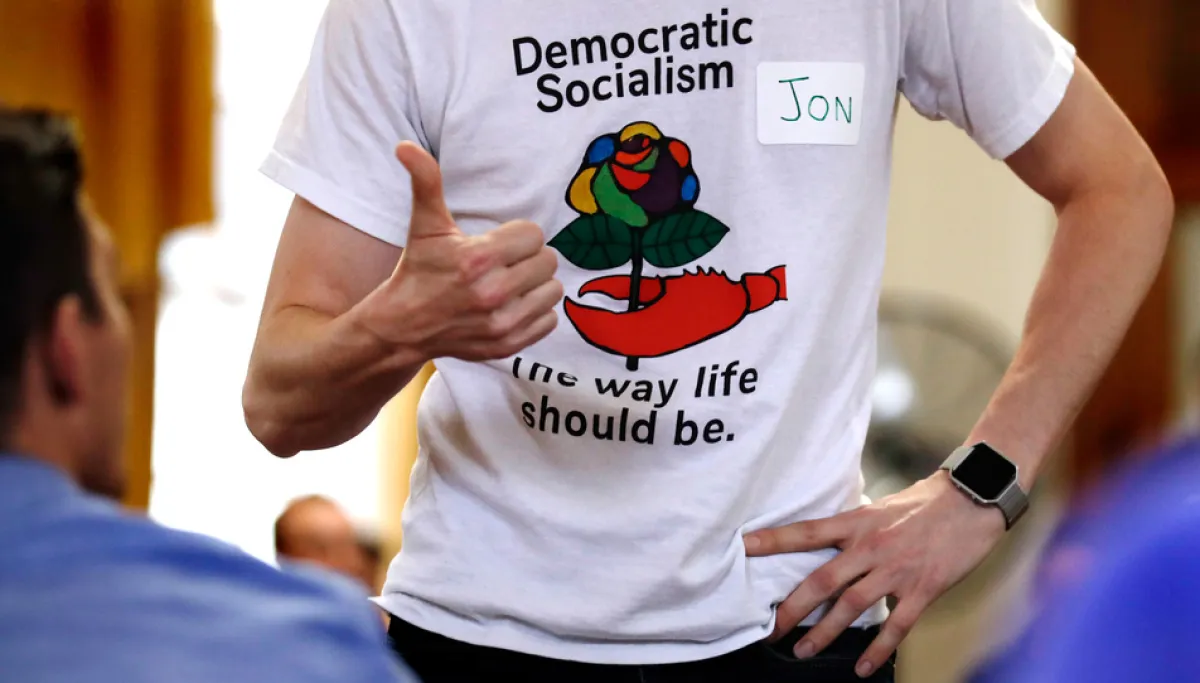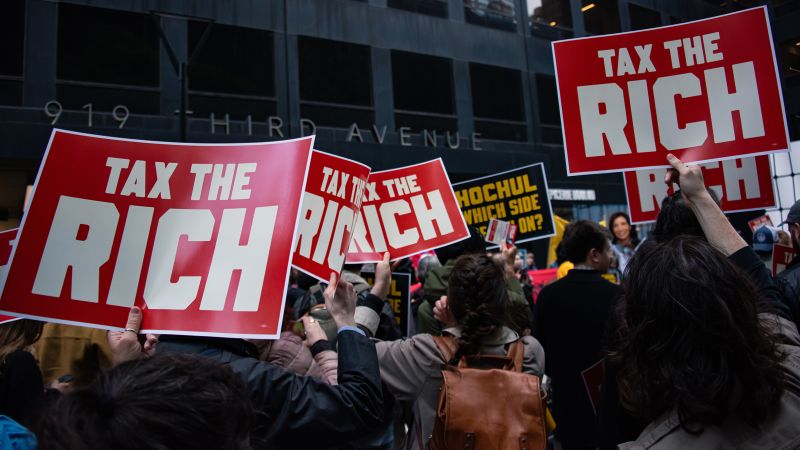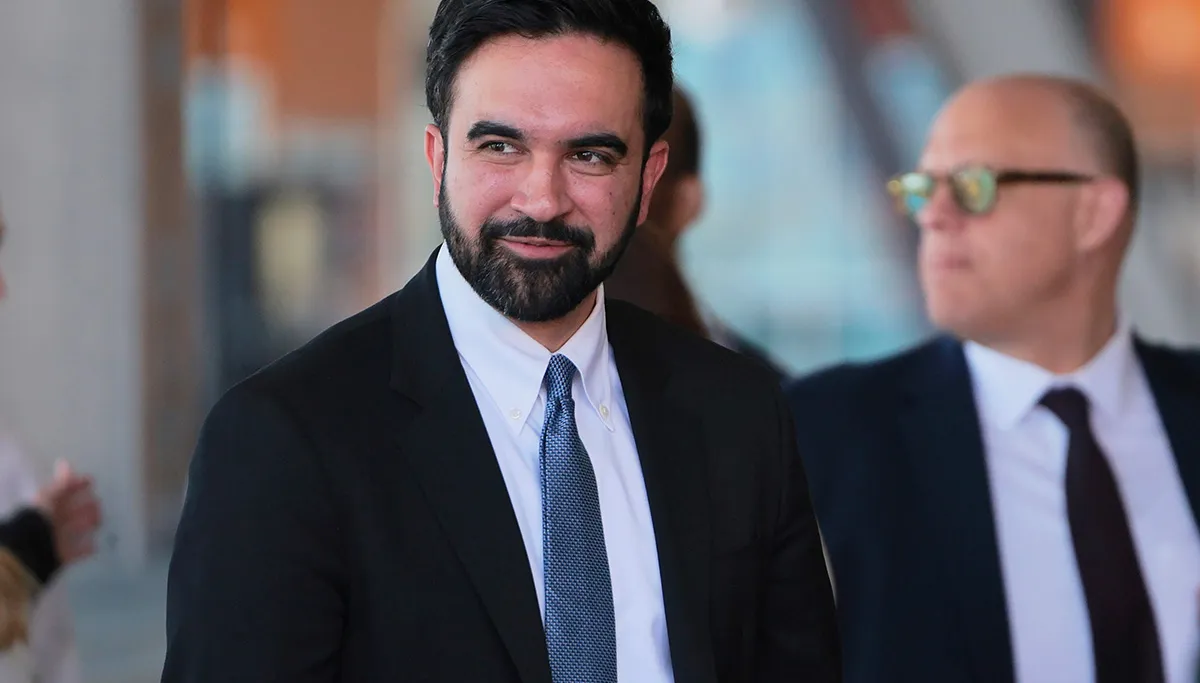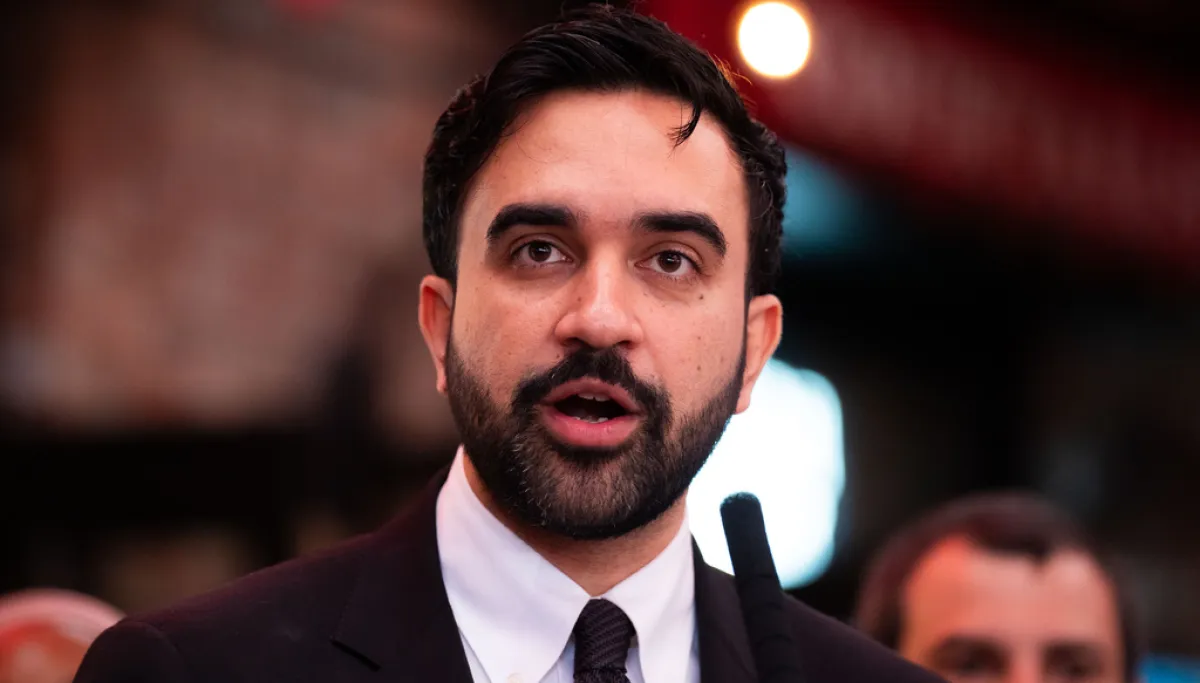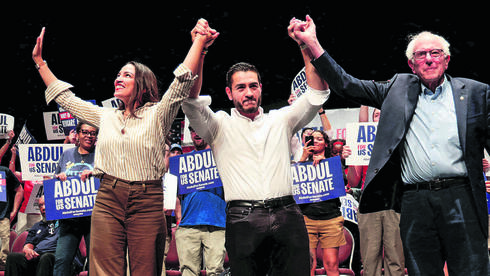
More than half of young Americans now view socialism favorably, driven by housing costs, student debt and health care anger, as figures like Zohran Mamdani, Alexandria Ocasio-Cortez and Abdul El-Sayed channel that frustration into politics with a sharper anti-Israel edgeBreaking up monopolies, treating health care as a basic right, providing free education at every age, imposing rent controls and sharply increasing taxes on the very wealthy and major corporations: ideas once dismissed outright as socialist now enjoy substantial public support in the United States, often across party lines.The primary season ahead of November’s midterm elections is not yet over, but seven candidates who openly identify as democratic socialists are currently set to run for the House of Representatives.GalleryUS President Donald Trump (Photo: Anna Moneymaker/Getty Images)That is still a small number, but it represents a notable revival for a political label that for decades functioned as one of the most effective weapons against Democrats.Any Democrat seeking national office could once be branded a socialist. Bill Clinton was called one. So were Al Gore and John Kerry. Barack Obama was labeled both socialist and communist, and even Joe Biden acquired the label in his 80s.But the political sting of the word is no longer what it once was.Polls show that more than 50% of young Americans now hold a favorable view of socialism.Many of them came of age through the 2008 financial crisis and the COVID pandemic, watching the government rescue banks and giant corporations while feeling that little comparable help reached them.Federal Reserve research has shown that millennials became the first generation in modern American history to be economically worse off than their parents were at the same age. Many carry enormous student debt, while housing prices have pushed homeownership beyond reach.When politicians offer free education, housing-price controls and broader public benefits, the appeal is not difficult to understand.These voters were not born into the Cold War. They do not remember the Soviet Union, and for many of them socialism is associated less with communism than with fighting hunger, climate change and the cost-of-living crisis.That frustration also creates an opening for another kind of political message: Why send billions of dollars to fund the military of a country thousands of miles away that is accused of genocide, the argument goes, when the money could instead repair collapsing schools at home?A growing number of Americans are receptive to that framing.The decade since Donald Trump defeated Hillary Clinton in 2016 has been especially difficult for the Democratic Party. It has struggled with a deep identity crisis, a badly weakened national brand and a persistent search for the kind of leader it has lacked since Barack Obama.Every so often, that search produces a new candidate billed as the next Obama.At the national level, that figure is now Jewish Georgia Sen. Jon Ossoff. But the politician who most closely echoes Obama’s early profile may be Abdul El-Sayed, who won the Democratic Senate primary in Michigan last week.El-Sayed, 41, is the charismatic son of Egyptian immigrants, a physician and graduate of elite universities including Columbia and Oxford. In many ways, he embodies the classic American success story.Like Obama, El-Sayed faces a major barrier unrelated to his personality or policies. In Obama’s case it was race; in El-Sayed’s, religion.But perhaps the strongest resemblance is political pragmatism.El-Sayed holds economic and social positions that differ little from those of politicians who openly call themselves democratic socialists. Yet he is not part of that movement, and when asked whether he is a socialist, his answer is consistent: “No, I’m a capitalist.”That distinction illustrates two realities. Calling oneself a socialist remains an electoral liability in many parts of the United States. Holding almost identical positions, however, increasingly does not.In some places, it is becoming an advantage.Millions of Americans cross the border into Mexico each year for dental care and cheaper prescription drugs. In that environment, fear of the word socialism can be far weaker than fear of being unable to afford blood-pressure medication.Alexandria Ocasio-Cortez, Abdul El-Sayed and Bernie Sanders (Photo: Rebecca Cook/Reuters)The history of American socialism has moved from significant political influence in the early 20th century to marginalization during the Cold War, followed by a revival over the past decade.The first two decades of the 20th century marked the high point of the Socialist Party of America. Its leader, Eugene Debs, ran for president five times and won 6% of the vote in 1912, an extraordinary result at the time. Hundreds of socialists were elected to various public offices.World War I changed the picture dramatically.The Bolshevik Revolution intensified fears of communism, the U.S. government arrested and deported socialist activists, and Debs himself was imprisoned.During the 1930s, Franklin D. Roosevelt adopted large parts of the socialist agenda, including Social Security, welfare protections, the eight-hour workday and restrictions on child labor. By bringing working-class voters into the Democratic coalition, he weakened the independent socialist movement.McCarthyism in the 1950s pushed it even further to the margins.The Democratic Socialists of America, or DSA, in its current form was founded in 1982. It remained relatively marginal for more than 30 years until Bernie Sanders’ 2016 presidential campaign returned the term “democratic socialism” to mainstream political debate.Sanders mobilized millions of young voters who felt excluded even from the possibility of achieving the American dream.Then came the rapid rise of Alexandria Ocasio-Cortez and the equally striking victory of Zohran Mamdani in New York City’s mayoral election.Unlike Trump, DSA members promote a genuinely isolationist foreign policy. They broadly oppose U.S. intervention in international conflicts and the supply of weapons abroad, and they have made the Israeli-Palestinian conflict and American support for Israel central issues in electoral campaigns.The DSA is explicitly anti-Zionist and formally supports the boycott, divestment and sanctions movement against Israel.It also expects politicians seeking its backing to align with those positions. Those who do not are excluded from the movement.Among the most extreme examples of candidates running in November is Darializa Avila Chevalier, who won the Democratic primary in New York’s 13th Congressional District, which includes Harlem and parts of the Bronx.Chevalier took part in pro-Palestinian demonstrations at Columbia University as early as October 8 and spent months in campus encampments.She argued that demands to condemn October 7 “ignore 75 years of occupation that the Palestinian people have been subjected to,” adding that Palestinians live under “dispossession, exile and apartheid.”Old posts that she deleted after formally entering politics included jokes about erasing Israel.During the campaign, she moderated some of her rhetoric, saying: “Our campaign opposes giving unlimited funds for warfare while American citizens struggle with housing, health care and education. Yes, I condemn Hamas, but as far as I know, the U.S. does not send a cent to Hamas. What we fund is the Israeli military.”Economically, America’s democratic socialists are not really socialists in the traditional sense.When Sanders, who has described himself as a socialist throughout his career, explains his worldview, he usually points to the Scandinavian welfare model: capitalism combined with high taxation and a powerful social safety net.Zohran Mamdani (Photo: Angelina Katsanis/AP)The American version, however, tends to concentrate the tax burden far more heavily on the wealthy.Mamdani said several weeks ago that anyone earning less than $1 million a year should be considered middle class, a definition perhaps only plausible from the perspective of someone living in New York.Under that standard, almost everyone in the United States is middle class.Around 152 million U.S. taxpayers report annual income below $1 million, more than 99.5% of adults who file tax returns. Only around 800,000 people nationwide, roughly 0.5%, report seven-figure annual incomes.In other words, even reaching the top 1% of earners does not necessarily mean making $1 million a year.Megan Romer, a senior DSA figure, told The New Yorker that the organization is far more concerned with billionaires than millionaires.“Most billionaires got their wealth because they exploited the working class,” she said. “The goal is to stop their power, but we certainly believe in aggressively taxing millionaires too. People see that capitalism is not working for them and they don’t care whether you quote Karl Marx to them or not. They want the walls in their home not to rot because the corporation that owns the building does nothing.”So far, the only tax on billionaires that Mamdani has successfully advanced is a pied-à-terre tax, a levy on luxury properties that are not used as primary residences, such as vacation homes or second apartments owned by the wealthy.The tax is expected to raise around $500 million annually for New York City and would be directed toward free child care, kindergartens and public transportation.His attempt to pass more significant tax increases, including a higher city income tax on people earning more than $1 million a year and a higher corporate tax on major companies, has so far encountered resistance in the New York State Legislature.But the sense among supporters is that it may only be a matter of time.Democrats are broadly united behind higher taxes on the wealthy, even if not all of them embrace slogans such as “Eat the Rich.”Support for such taxation also crosses party lines.It may be one of the few issues on which Mamdani voters and many Trump voters agree.Many Trump supporters expected him to take on economic elites. Instead, they watched him reduce taxes for people in his own income brackets while their own economic lives became increasingly difficult.The issue that now most clearly unites Democrats is health care.Democrats remain proud of the Affordable Care Act, or Obamacare, which passed in 2010, helped around 30 million Americans obtain health insurance and significantly reduced costs for millions more.Under Trump, much of that system has been weakened, and by next January tens of millions could be left without health coverage.That prospect has pushed even centrist Democrats substantially to the left on health policy, including toward support for Medicare for All, which would expand the federal Medicare program currently available to people aged 65 and older to the entire population.Such a move would cost the federal government an estimated $2.5 trillion to $3.5 trillion annually.Supporters propose financing it through major tax increases on the wealthy.Even Americans who already have insurance spend an average of about $5,300 a year out of pocket on doctors and medications.Most Americans receive health coverage through their employers, which can force people to remain in jobs they dislike because leaving would mean losing insurance.Buying coverage without an employer can cost around $9,000 a year for an individual and more than $25,000 for a family.Few countries come close to such levels of personal health spending.That helps explain why the United States has developed an entire medical-tourism industry, with millions of Americans traveling to Mexico each year for dental work and cheaper prescription drugs.In that reality, the word socialism can sound much less frightening than the prospect of being unable to afford essential medicine.
Under Trump, socialism is no longer a political boogeyman
More than half of young Americans now view socialism favorably, driven by housing costs, student debt and health care anger, as figures like Zohran Mamdani, Alexandria Ocasio-Cortez and Abdul El-Sayed channel that frustration into politics with a sharper anti-Israel edge
1,800 words~8 min read