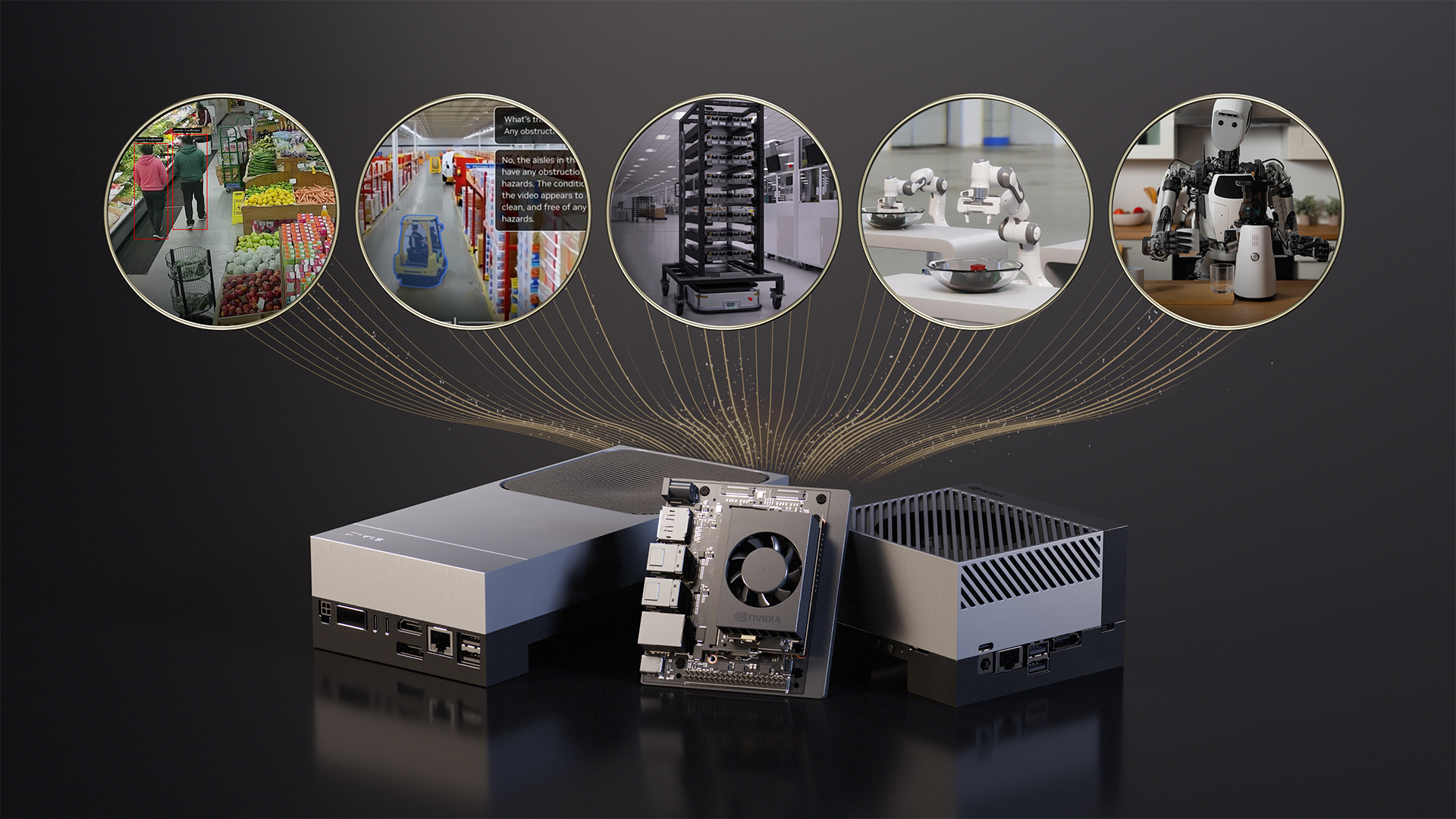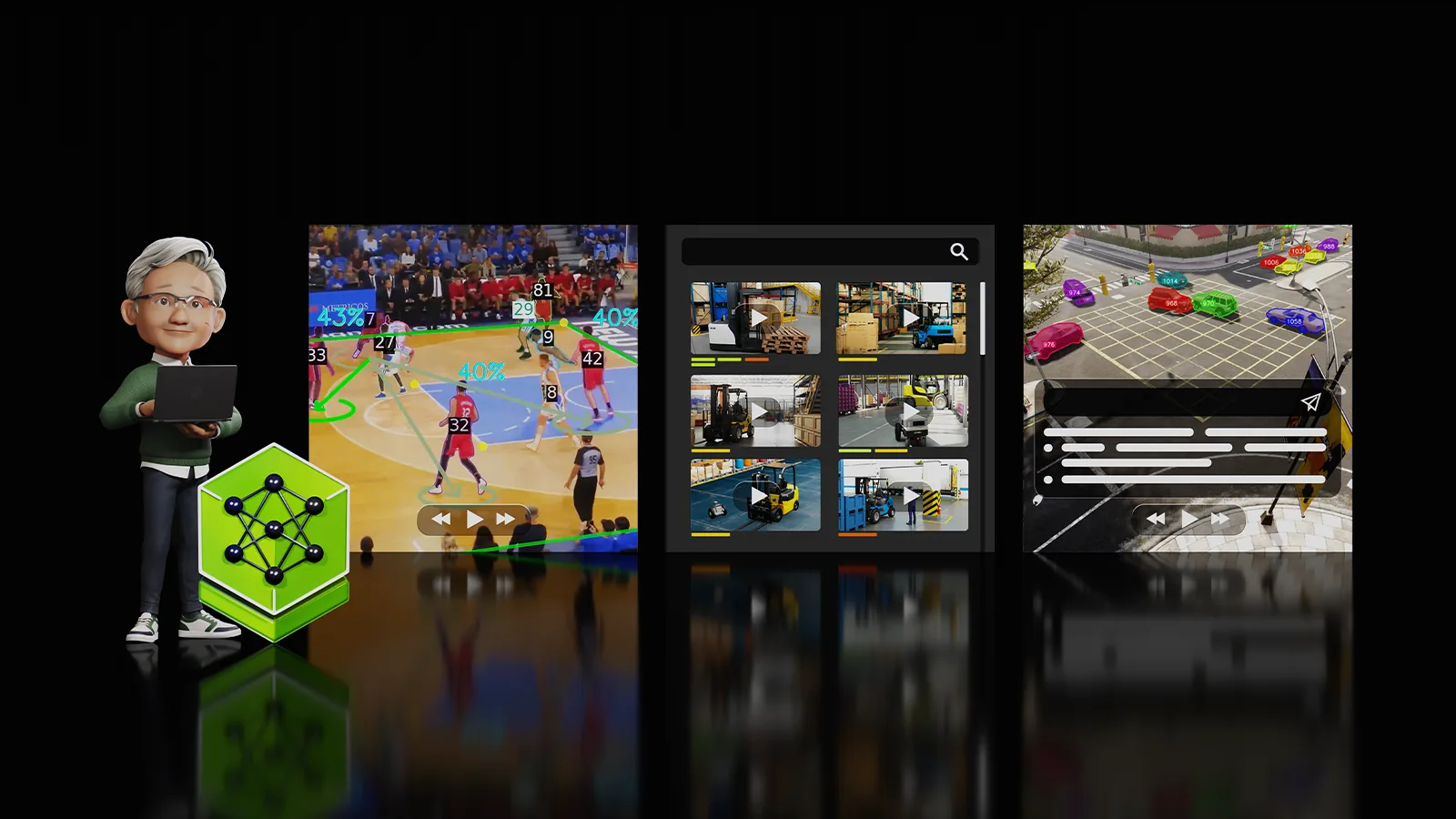
Video is a core data path across NVIDIA Jetson applications, from robotics and intelligent video analytics to industrial automation, healthcare, media processing, and remote operations. A system may capture several cameras, decode network streams, run AI inference or conventional vision processing, draw results, and encode video for storage or delivery.
The individual calls are straightforward; the engineering work lies in choosing the right interface, codec, pixel format, memory path, rate control, and buffering for the Jetson device and proving that the complete path meets latency, throughput, and quality goals.
NVIDIA JetPack 7.1 introduced NVIDIA Video Codec SDK support on Jetson Thor, giving C and C++ developers direct, fine-grained access to NVIDIA Video Encoder (NVENC) and NVIDIA Video Decoder (NVDEC).
For the first time on Jetson, JetPack 7.2.1 adds support for PyNvVideoCodec 2.2, which is the NVIDIA Python library for hardware-accelerated video encoding and decoding on NVIDIA GPUs. PyNvVideoCodec produces and consumes video frames as GPU-resident device memory, exposed through the DLPack protocol and CUDA device buffers. It includes AI-pipeline-friendly features such as multi-mode frame sampling, ThreadedDecoder that strengthens pipeline efficiency by pre-decoding frames in background thread, decoupling decode latency from inference latency.