No Offseason Newsletter 🏀 | This is The Athletic’s women’s basketball newsletter. Sign up here to receive No Offseason directly in your inbox.Good morning! Coming up today:
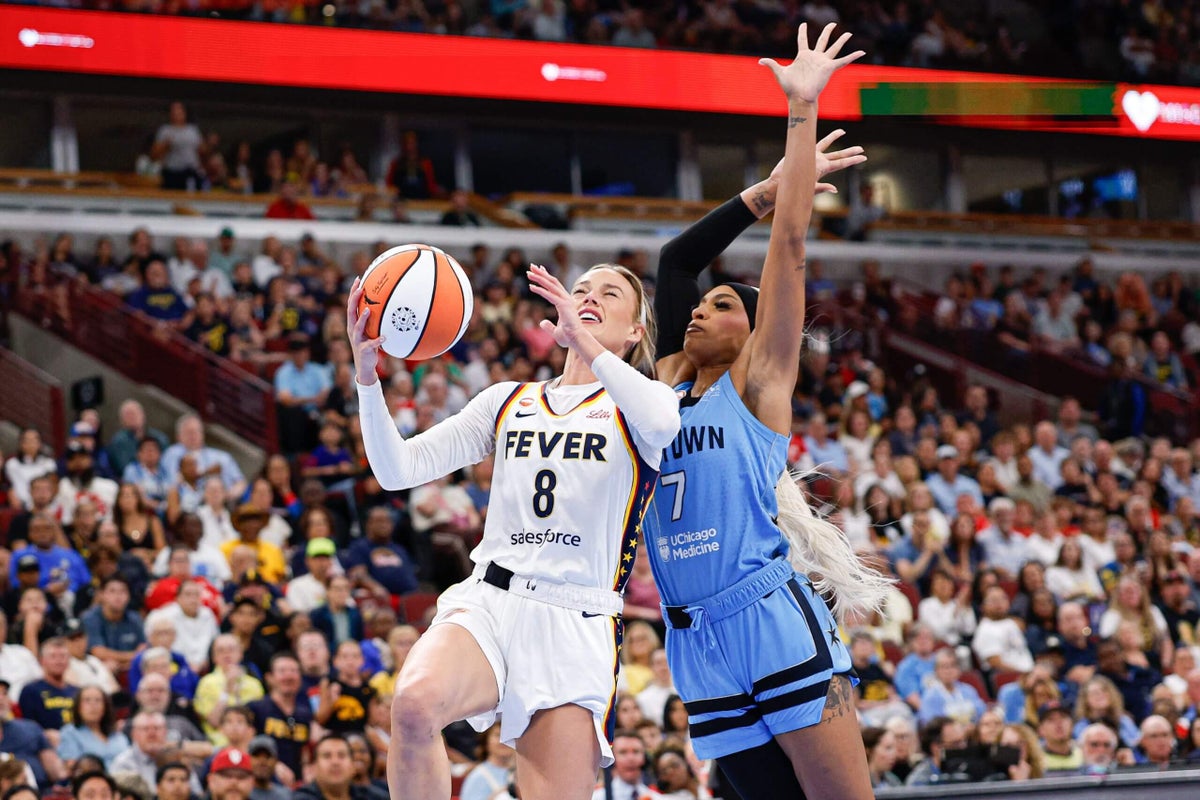
Fever vs. Sky … and all that ensuedBlink, and the play was over. But we’re still talking about it.In the final two minutes of the first quarter of Saturday’s Fever-Sky matchup, Sophie Cunningham and Tyasha Harris trapped Sky center Elizabeth Williams in the corner and forced a turnover. Monique Billings made an outlet pass to Cunningham in the fastbreak with an open lane to the rim, but as she elevated, the Sky’s DiJonai Carrington attempted to block her shot and instead took her out by her head and neck.From purely a basketball standpoint, this foul was exactly what officials said it was: a Flagrant 2. Carrington was subsequently ejected, and what followed was another politicized moment in the WNBA.Minutes after heading to the locker room, Carrington posted on Threads, saying, “White Privilege” and tagged the Fever.The fact is, this was simply a bad basketball play, and should be treated as such. Allow me to cite the NBA for a moment. Charlotte Hornets guard Grayson Allen has a reputation in the league as being a dirty player after countless examples of making overly physical plays on the ball. But there was one example from the 2021-22 season in which he took out then-Bulls guard Alex Caruso, who was midair on a fastbreak layup, that is somewhat similar to Carrington’s play on Cunningham. Allen was called for a Flagrant 2, ejected and subsequently suspended one game. In the weeks that followed, Allen received a smattering of public scrutiny because many believed he broke an unspoken code that you don’t make an overly aggressive play on the ball with a player in midair, because of the risk of injury.Why is this relevant now? Because unlike Allen’s play in the NBA, Carrington’s has become about everything but basketball. Many WNBA players continue to ask that the league not get politicized, and that the discussion centers around the game itself. Cunningham herself said, “The WNBA media, all we ever do is cover everything except basketball,” in response to a heightened level of reporting on transgender women in sports that followed her public comments on the topic.However, when these athletes use their platforms to highlight non-basketball related topics, the news cycle will reflect that. Since its inception, the WNBA has been a league that embraces advocacy of social issues. But it’s only in recent years that players are experiencing what it means to be part of the mainstream sports landscape.To be a public figure that takes a public stance means there will be a public response, and that’s what players in the W need to reconcile.