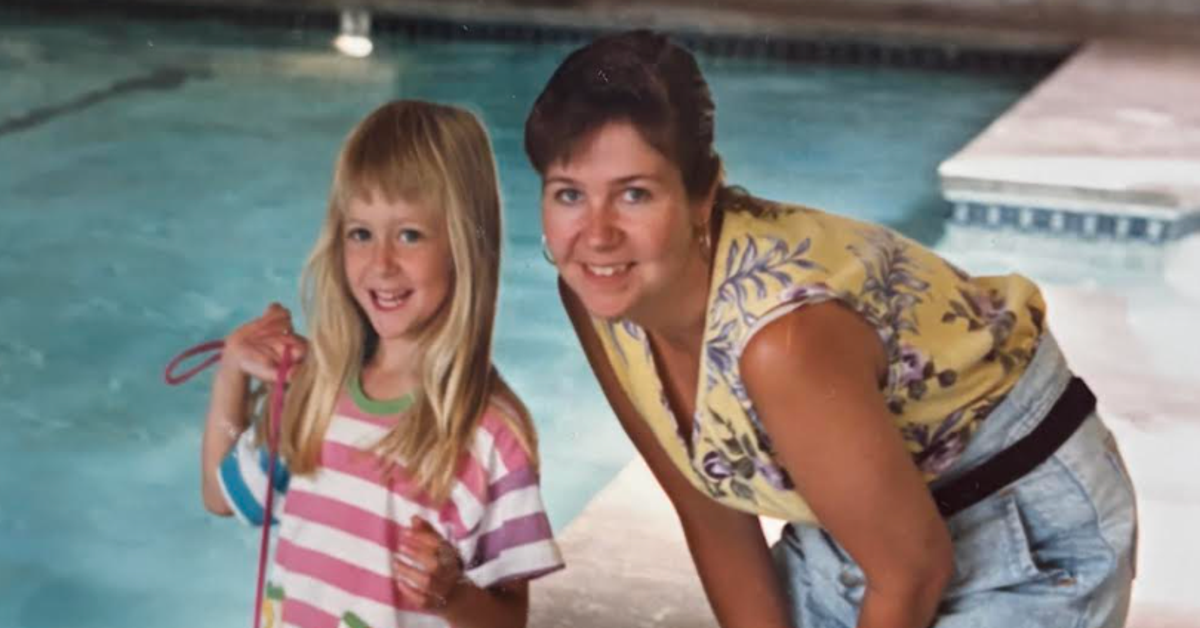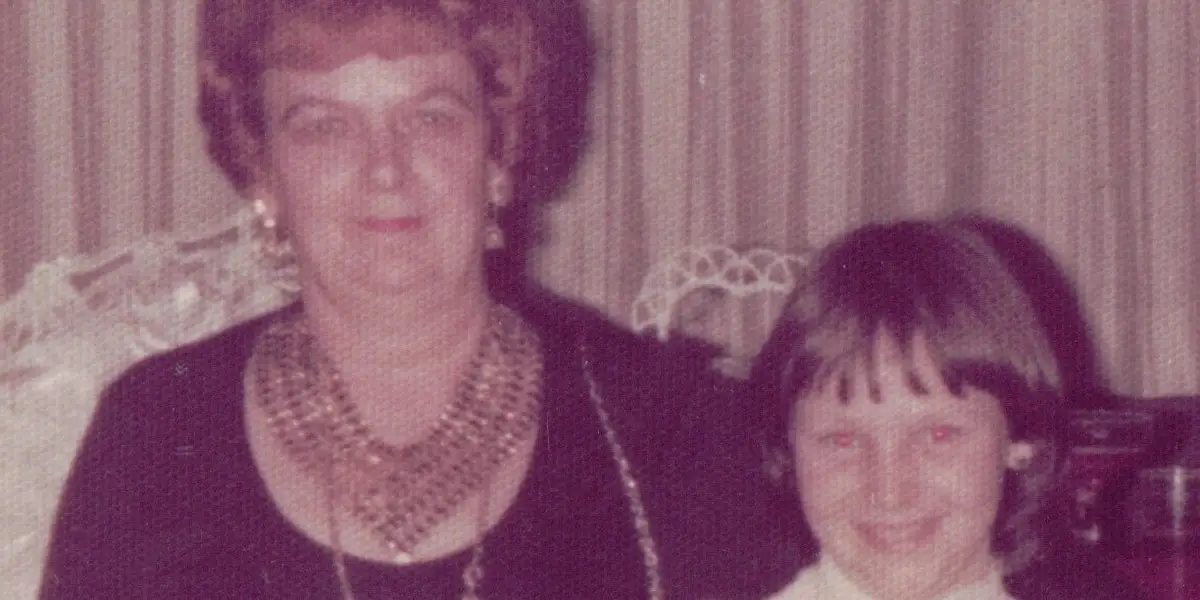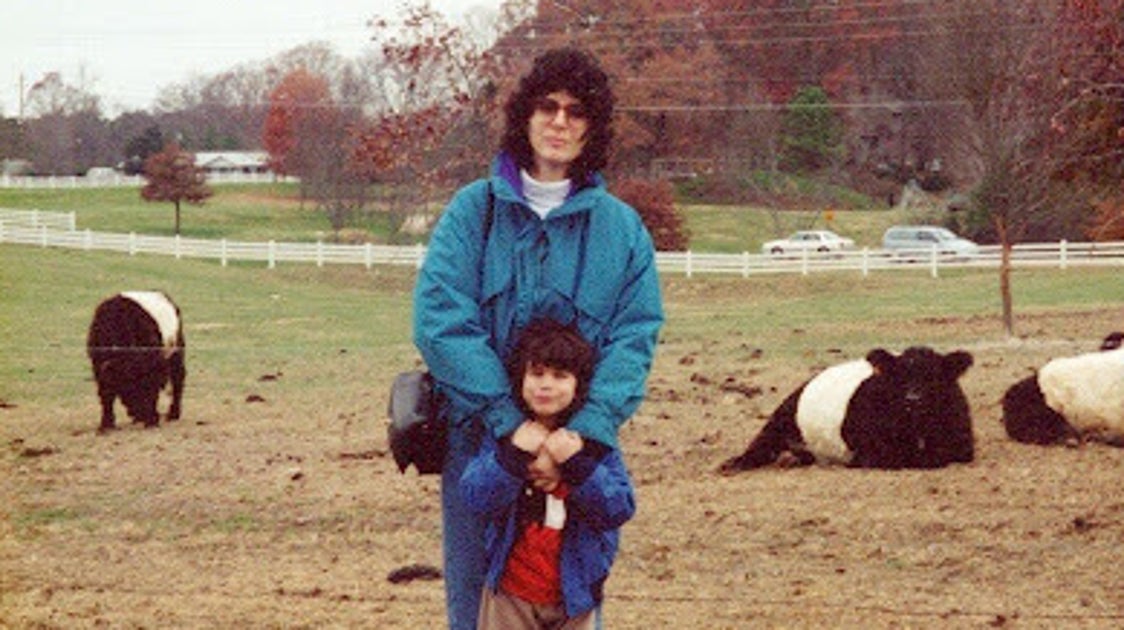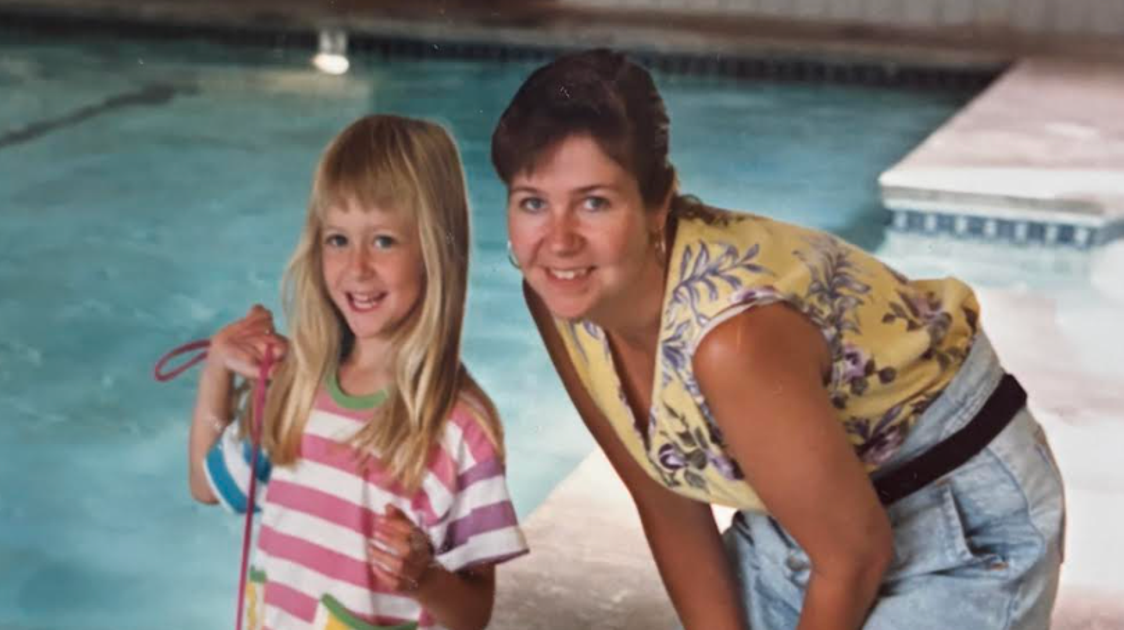
The bottle of Oil of Olay lotion sat on my dresser for months. My mom had given it to me when I was just 8 years old, saying it was a free sample she didn’t want. From a young age, I got used to my mom gifting me belongings she no longer needed or never cared for in the first place — free makeup samples, old costume jewelry, time-worn purses.I usually loved playing dress-up with these hand-me-downs, but I was afraid of the lotion.The label on the back of the bottle advised me to “smooth it on twice each day,” with the promise of making my skin “soft, smooth, and younger looking.” I wanted to look older, like a big kid, and feared I’d look even younger if I followed the bottle’s directions. At the time, I couldn’t understand why youth was desirable.That changed in the years that followed. Not long after my mother gave me the lotion, she was diagnosed with breast cancer. It later spread to her liver, bone marrow and brain, aging my mother to the point where I barely recognized her. I secretly wished I could give her back the lotion. Maybe if she smoothed it on her own face, I thought, she would look more like her old self. I longed for the way things used to be.After three years of sickness, my mother died. She was 40, and I was 11. The more time that passed, the more I found myself wanting to stay young. If growing up meant living without my mother, then I wanted to stay little forever. The author's mother, Robin Jo Tenore, when she was in her 20s.Courtesy of Mallary Tenore TarpleyJust a few weeks after her passing, I took the Oil of Olay bottle off my dresser and applied the lotion all over my face. I used every last drop of it over the coming week, hoping it would work. But the lotion broke its promise.In search of other efforts to stay little, I started restricting my food intake — first slowly, then drastically. By age 12, I developed anorexia nervosa, a life-threatening disorder that led to numerous hospitalizations. The sicker I got, the more I believed I needed to be skinny in order to be lovable and worthy of care. I fell for diet culture, and looking back, I can see the many ways in which it fueled my eating disorder. Now, as a woman in ongoing recovery, I’m trying to protect myself from falling for another harmful norm: anti-aging culture. It’s challenging, though, when I see people my age turning to Botox, fillers, serums, wands and red-light masks. Advertisements for anti-aging cosmetic interventions flood my social media feeds. Nearly every day, I’m lured into buying “dermatologist-approved,” “science-backed” products that will remove my fine lines, diminish my wrinkles, and reduce my inflammation. One ad, which I’ve now seen multiple times, shows a woman wearing a red-light mask that renders her faceless and resembles Kylo Ren (if he were deeply committed to boosting his collagen production).The messaging in these ads is rooted in removal — it suggests that women need to erase parts of themselves if they want to even come close to achieving society’s unrealistic beauty standards, which prize youth and the thin ideal.For years, cosmetic intervention ads have illustrated what scholar Laura Hurd Clarke calls “the moral imperative to modify the aging face.” They’ve conditioned women into believing that any wrinkle is a degradation, any flab a disgrace. They encourage women to fight for the attainment of beauty rather than acknowledge the beauty they already behold. A classic example is a 1980s Oil of Olay commercial for the same anti-aging lotion my mother gave me. In the ad, a flawless actor lathers the lotion onto her face, then declares in a velvety voice, “I don’t intend to grow old gracefully. I’m fighting it every step of the way.”The ad reminds me of something my mother told me after she accidentally burned my scalp with a curling iron.“It hurts to be beautiful,” she said while styling my hair for school picture day. “Beauty is pain.”As a child, I didn’t understand what she meant, but I never forgot what she said.The author and her mother in the mid-1990s.Courtesy of Mallary Tenore TarpleyBeauty shouldn’t be painful, but the pursuit of it often is; when products don’t work as intended or wear off too quickly, feelings of inadequacy surface. This sense of inadequacy is so prevalent it has a name: “normative discontent.” The term, which emerged in 1984, stems from research showing that most women in the U.S. have some level of discontent with their body to the point where it’s more the norm than the exception. More recent research suggests this discontent is pervasive among men, too.Ruth Striegel Weissman, the scholar who coined the term normative discontent, told me, “There are all these industries that profit from the discontent. In other businesses, if the product doesn’t work, we blame the product. But in the beauty business, if you don’t become beautiful, we blame you. It’s not the cream or the diet or the exercise equipment; it’s you. We internalize this so readily rather than pushing back.”It’s hard to push back when cosmetic intervention and surgical procedures are becoming increasingly normalized. According to the American Society of Plastic Surgeons’ latest annual report, over 10 million Americans opted for Botox-like injections in 2024, while over 5.3 million turned to fillers.I don’t disparage anyone for undergoing anti-aging cosmetic interventions. Everyone must make the choice that feels right for them. I know some people consider them a form of self-care or even self-preservation. Such interventions have become so revered that women who opt out of them can feel even more susceptible to criticism. Providence College professor Abigail Brooks speaks to this in her book “The Ways Women Age,” in which she writes: “As more women practice age avoidance by taking advantage of an ever-growing stockpile of new cosmetic anti-aging products and procedures, women who are aging naturally are increasingly penalized for looking old and for failing to do anything about it.” I’m sure some may read this and pity me for not recognizing the value in anti-aging interventions. Some may say I’m too young to understand. I know the older I get, the more pronounced my wrinkles will be and the more they may perturb me.The author and her two children, Madelyn and Tucker.Courtesy of Mallary Tenore TarpleyI’d be lying if I said I didn’t care about looking youthful and attractive, and I’m not above buying beauty products. I wear makeup almost every day, and, in recent years, I’ve transitioned to face moisturizers that contain hyaluronic acid and retinol. This may seem hypocritical for me to admit as someone who purports to resist anti-aging culture, but it shows how hard it is to avoid it completely. I limit myself to makeup and moisturizers because I know that anything more could undermine the body-acceptance work I’ve done in eating disorder recovery. For me, acceptance isn’t about loving the way my body looks; it’s about accepting it as is, wrinkles and all, and recognizing that my looks don’t determine my worth. I was reminded of this recently when talking to Deb Benfield, a registered dietitian nutritionist who wrote the book “Unapologetic Aging.” Aging, she told me, is “a collision point with a culture that profits from our fear of becoming less visible, less valued and never ‘enough.’”“You don’t have to opt out of every beauty practice to resist that culture; what matters is staying rooted in a relationship with your body that isn’t contingent on fixing it,” she continued.She encourages women to ask, “Is this choice expanding my life or narrowing it? Is it allowing me to grow and evolve, or keeping me attached to a body from my past?” As I enter the early stages of midlife, I want to expand my life in honor of my mother. I just turned 41, and I’ve now officially outlived her. Entering this next phase of life that she never got to experience has forced me to grapple with the kinds of questions that arise when you start thinking about how the past has shaped your aging self. "I bought this bottle of Oil of Olay on eBay," the author writes. "It's from the same time period as the one my mother gave me when I was a child."Courtesy of Mallary Tenore TarpleyLately I’ve wondered, Why was my mother so quick to give me that Oil of Olay? And why didn’t she want to keep it for herself? I like to think that, as someone who didn’t follow any fad diets, she similarly didn’t feel the need to engage in anti-aging trends. It’s possible my mom instinctively knew what I’m now learning: Aging into midlife is a privilege not afforded to everyone. If we’re lucky enough to experience it, maybe we should stop trying to prevent it.Mallary Tenore Tarpley is a journalism professor at the University of Texas at Austin and author of the memoir “SLIP: Life in the Middle of Eating Disorder Recovery,” which offers a groundbreaking framework for understanding eating disorder recovery and interweaves poignant personal stories, immersive reporting, and cutting-edge science. “SLIP” won the Association of American Publishers’ 2026 PROSE Award for Excellence in Biological and Life Sciences. Her writing has appeared in major publications, including The New York Times, The Washington Post, The Wall Street Journal, and Time magazine. She maintains a weekly newsletter featuring writing-related tips, and she can be found on Instagram at @mallarytenoretarpley. Check out her new book project here.Do you have a compelling personal story you’d like to see published on HuffPost? Find out what we’re looking for here and send us a pitch at pitch@huffpost.com.
My Mom Gave Me A Strange Gift When I Was 8. Thirty Years After Her Death, I Think I Finally Understand Why.
“As a child, I didn’t understand what she meant, but I never forgot what she said.”
1,626 words~7 min read