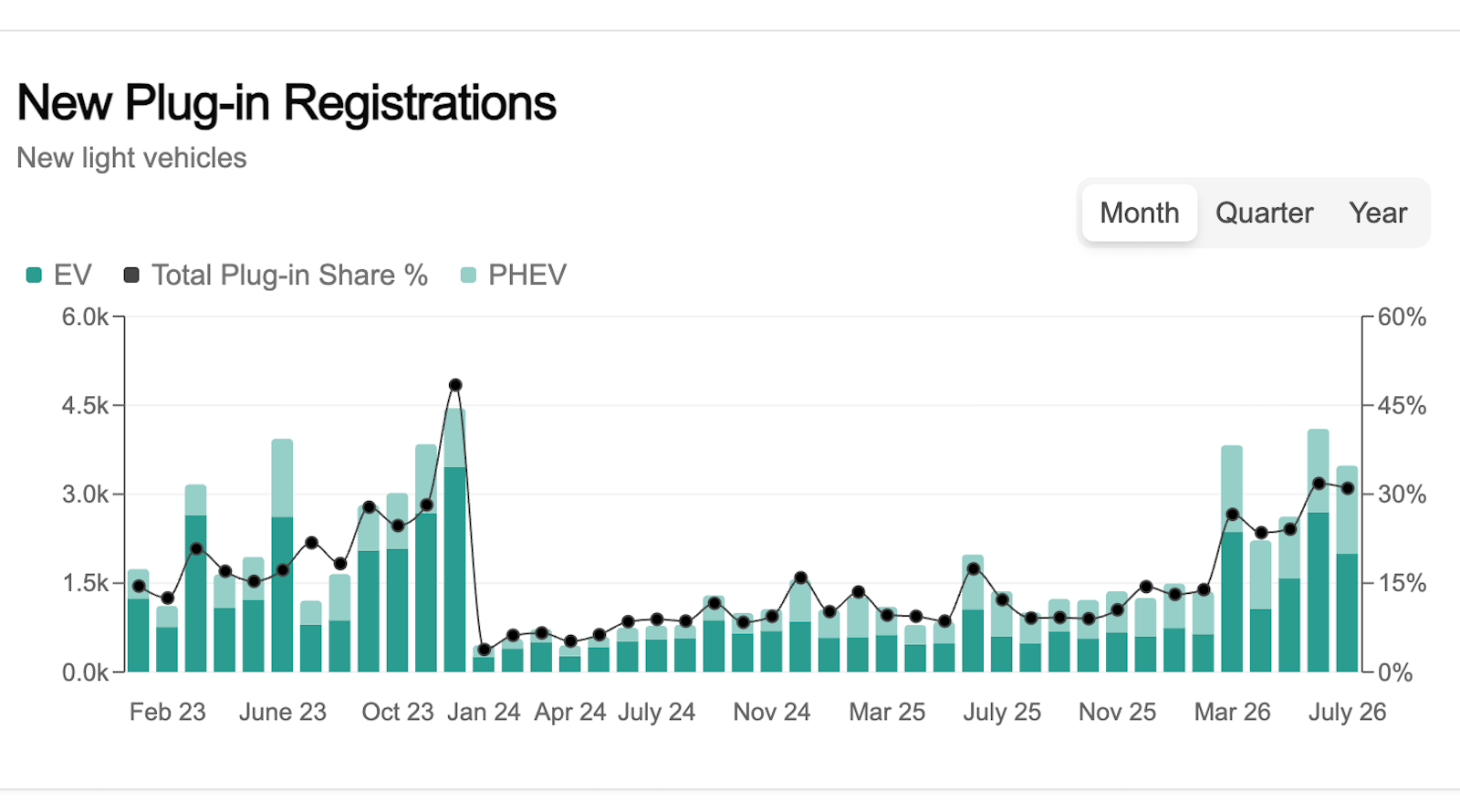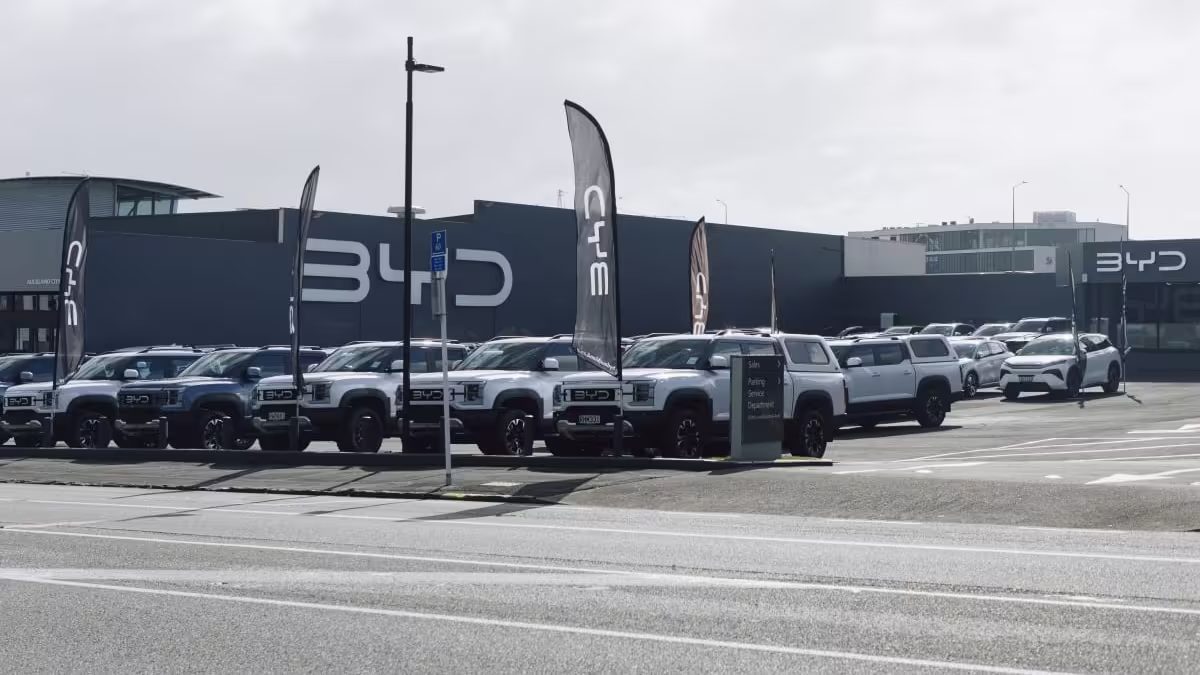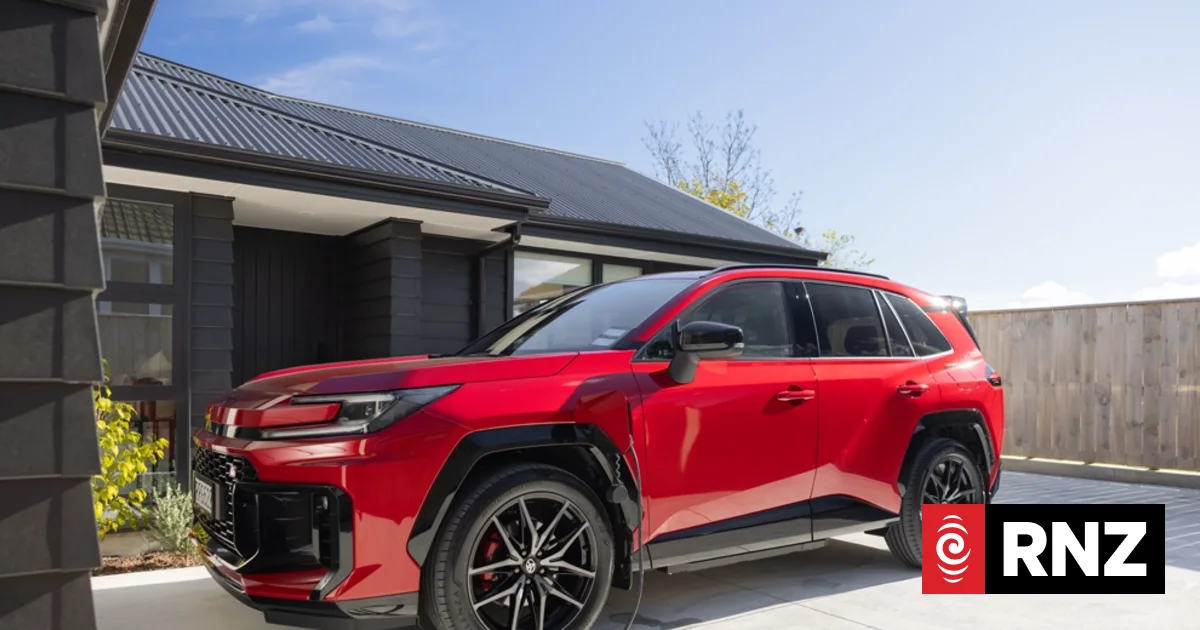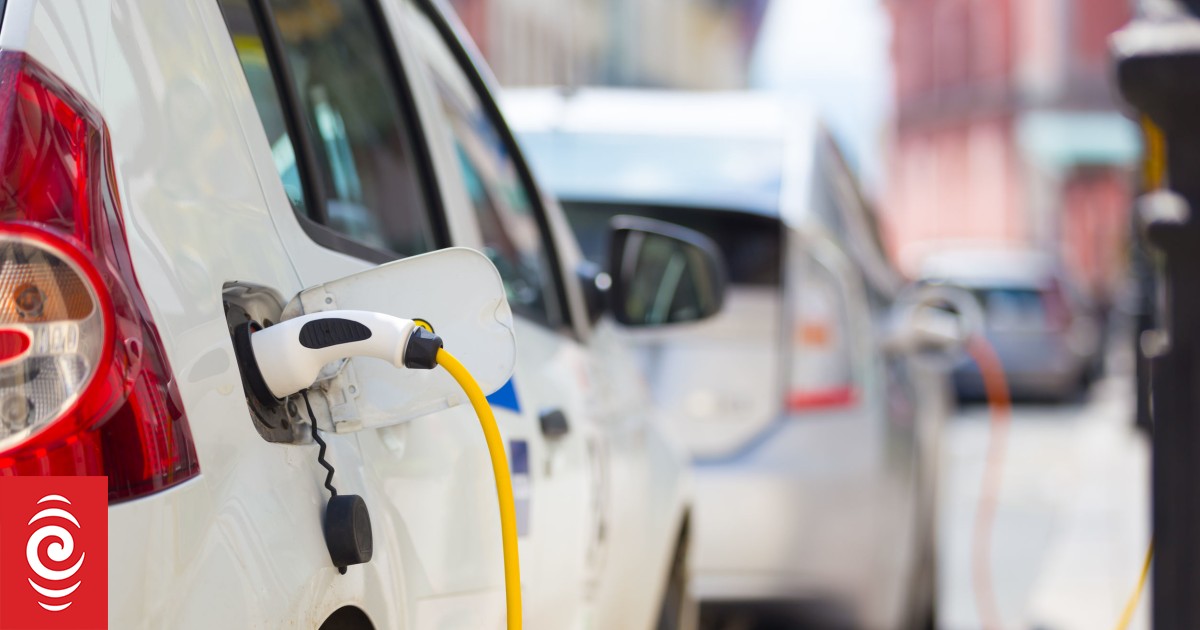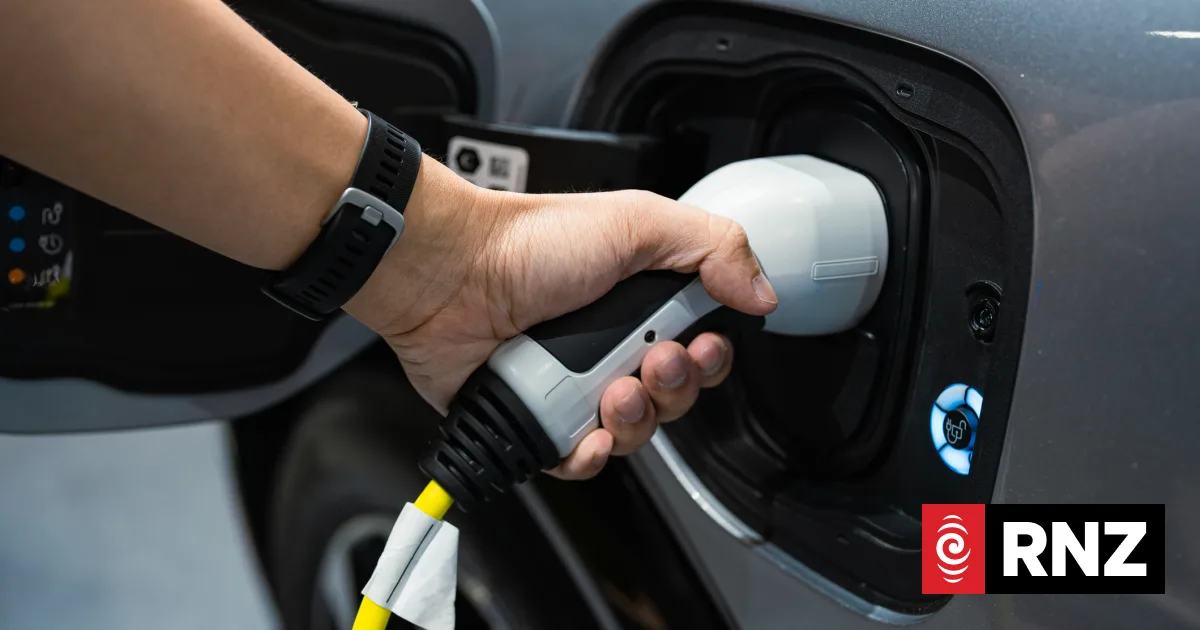
One in three new cars sold in NZ now an EV, according to new research.ChargeNet calls for NZ to copy Australia's payroll-lease scheme to help families into EVs.2026 is shaping up as a standout year for sales of electric vehicles and plug-in hybrid electric vehicles in New Zealand.In a new research note, global market analyst BMI - which is a part of the Fitch Group - forecasts New Zealand sales of passenger EVs will jump from about 11,726 units in 2025 to more than 37,445 in 2026.That would amount to growth of nearly 220 percent year-on-year.BMI said that would lift EV market penetration in New Zealand to 35.2 percent.Based on its forecast for overall passenger vehicle sales of 106,378 units, EVs would then account for roughly one in three new cars sold in New Zealand.The recent surge in petrol prices as a result of the Iran war is believed to have sparked more interest in EVs this year.However BMI said the big jump reflected a structural improvement in accessibility rather than a temporary demand spike.It said more affordable models, especially Chinese brands such as BYD, MG and Zeekr, were entering the market at prices that were broadening the buyer base.Local EV infrastructure company ChargeNet's chief executive, Danusia Wypych, said it was also forecasting strong growth in sales.ChargeNet's chief executive, Danusia Wypych.Supplied / ChargeNet"In the middle of last year, we were looking at 15 percent EV growth and now we're sort of seeing 20 percent year-on-year EV growth, and I'm sure it will go higher than that in the coming months," Wypych said.ChargeNet is one of the leading providers of fast charging sites around the country.Wypych was confident ChargeNet would be ready to meet the growing demand for EVs."If you think about the sites that we were putting in back in the day when we started in the 2010s, we'd put in one charging unit. Now a base install for a site host will be three or five charging units, and those units will be able to deliver a lot more energy. So, we're confident that if we continue to invest, we'll be able to continue to meet the demand."Politicians urged to help low- and middle-income families access EVsWypych said she would like to see more done to help lower-income New Zealanders into EVs, particularly families struggling with the upfront costs.She is calling for politicians to adopt a government-backed EV scheme used in Australia, which incentivises families to lease EVs with the option to buy."In Australia, middle income earners get to own or get to drive around new cars because they lease them. "And at the end of the lease, they can decide whether or not they want to own them."So I think that would be a real benefit to everyday families in New Zealand if they could be driving electric, saving money every week while things are tight, and then long term, they can make a decision about whether or not they keep the car."The scheme, known as a novated lease, sees an employer take money out of an employee's gross, or before-tax, salary in order to pay a finance company for the car lease and running costs.That lowers the employee's taxable income and avoids the need for a large upfront payment.The lease scheme has been credited with helping drive an increase in EV sales in Australia.Most New Zealand families were already buying second-hand cars on finance, Wypych said."So, we reckon EV leasing costs would sort of be in the ballpark of $130 to $200 a week, and that compares very favourably to having to buy a car on finance," Wypych said.The scheme would need government backing and minor law changes, and Wypych said it would be important to include parameters and safeguards.She hoped all political parties would be open to the idea as they headed into the election."We think it'd be a really good idea for them to consider what they can do for New Zealand families and New Zealand fuel security."
Surging EV sales in 2026 not just temporary - market analyst
2026 is shaping up as a standout year for sales of electric vehicles and plug-in hybrid electric vehicles in New Zealand.
663 words~3 min read