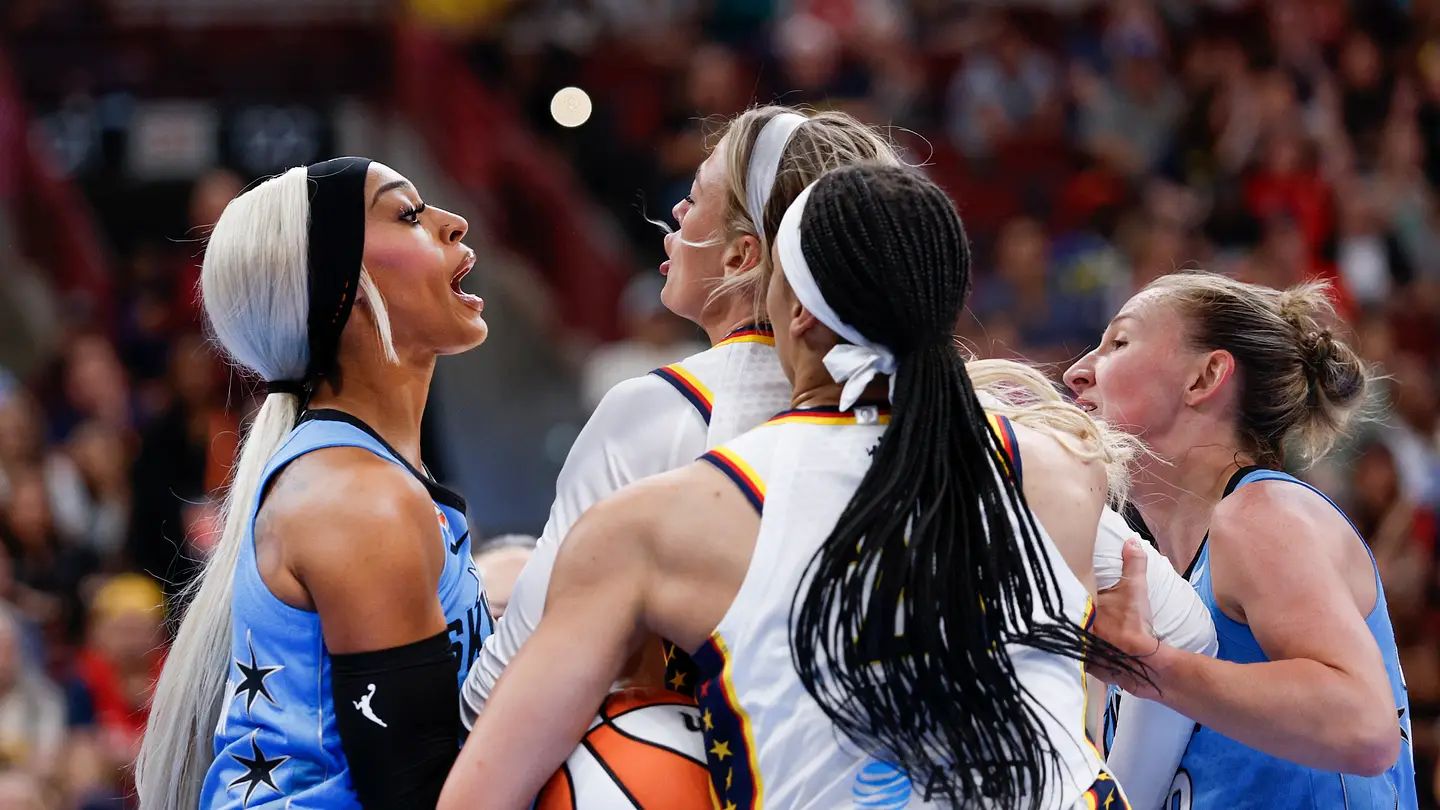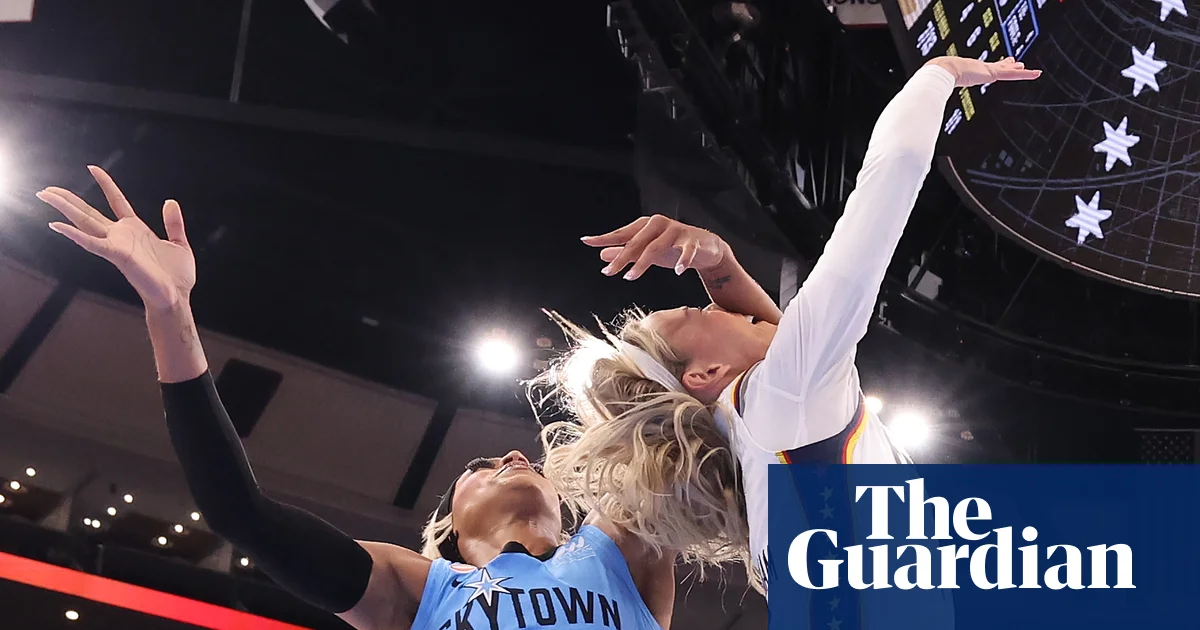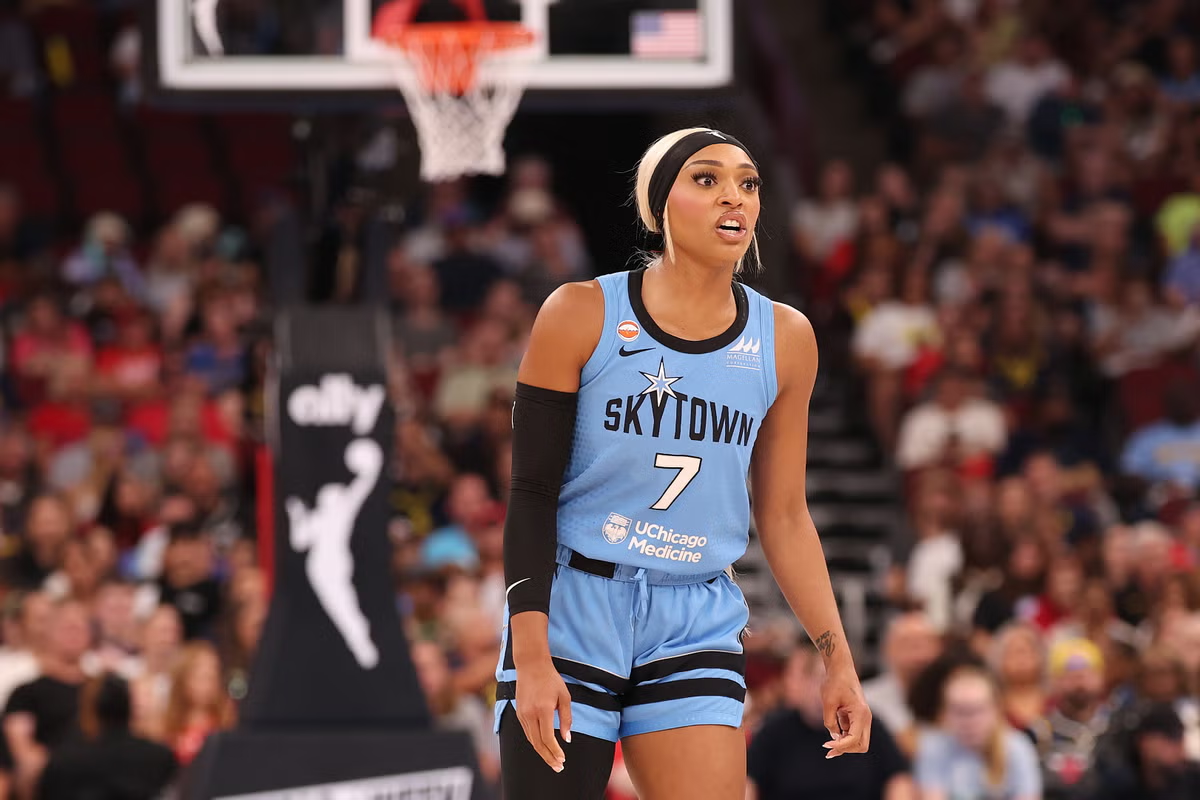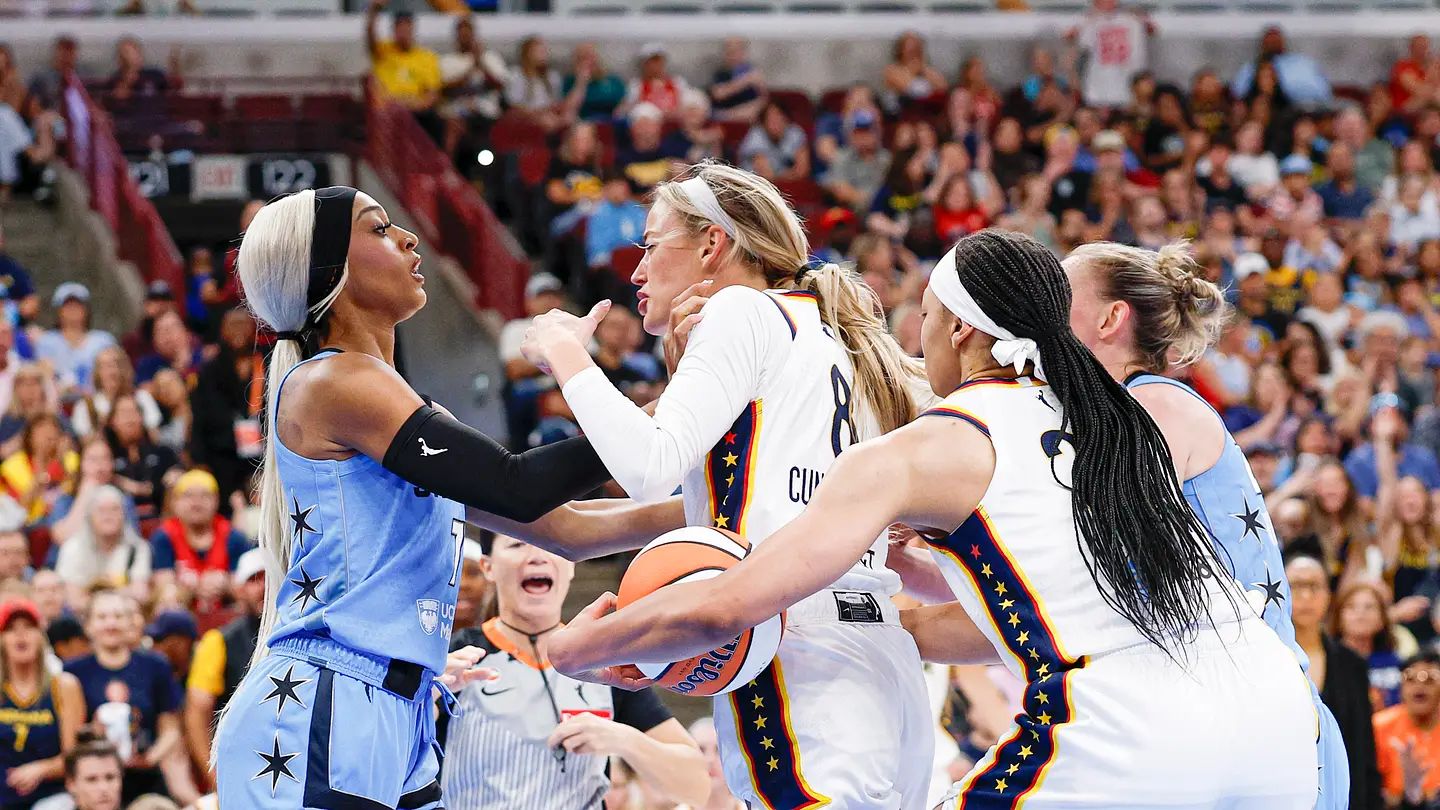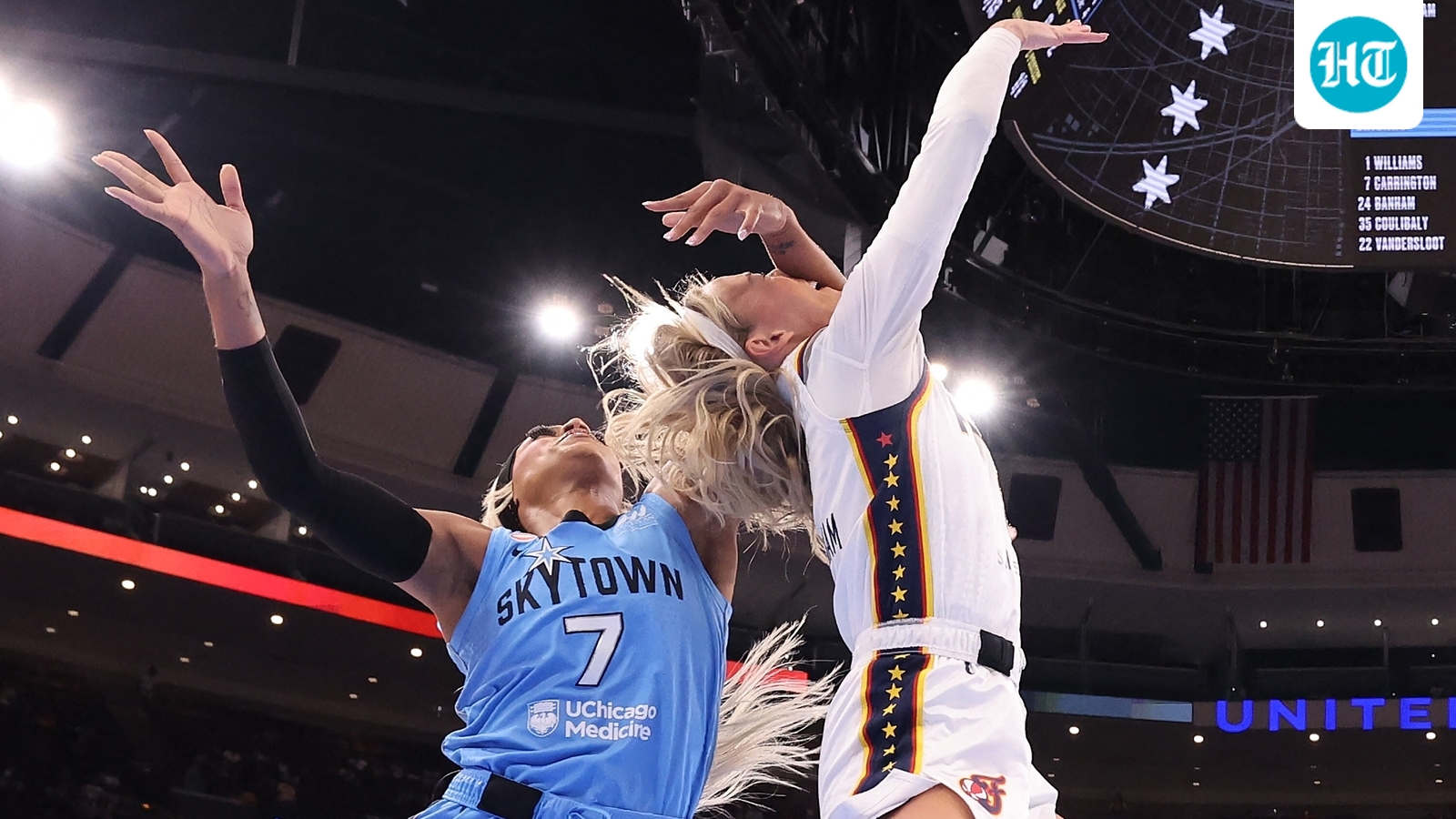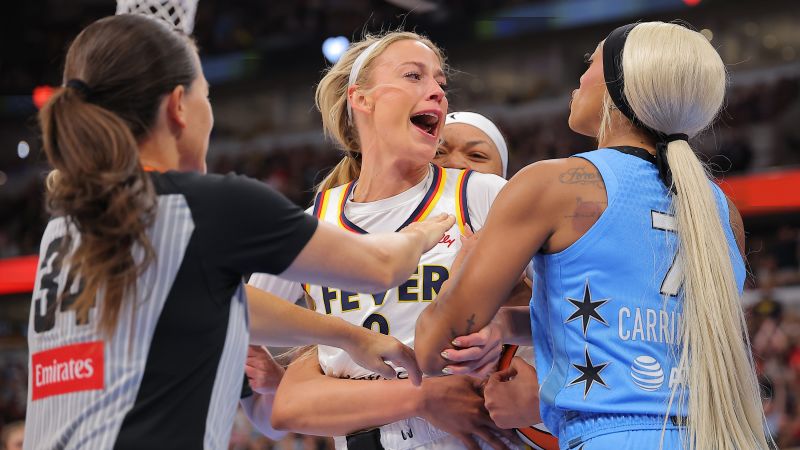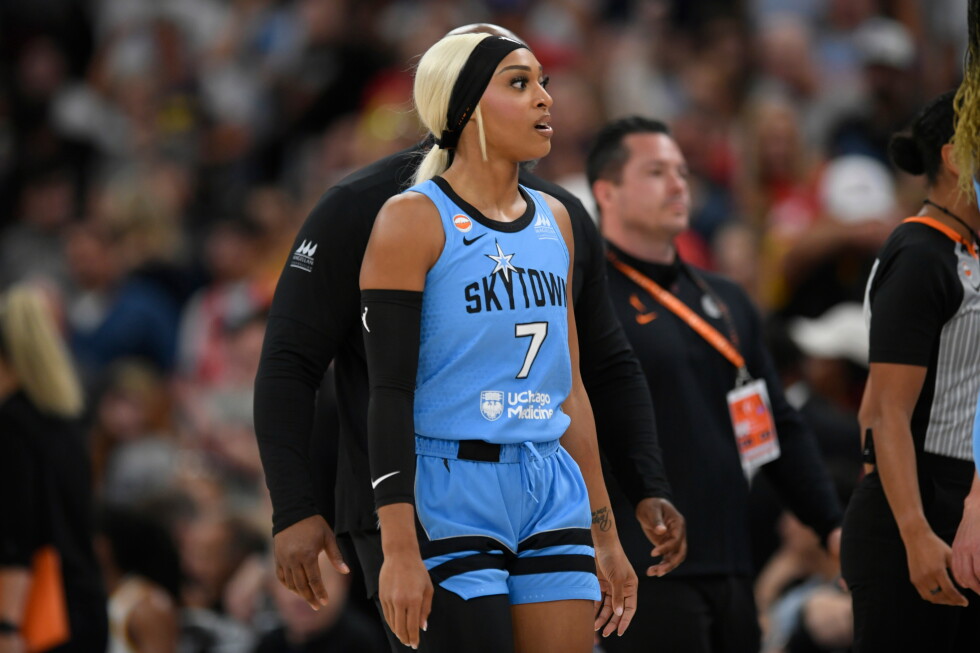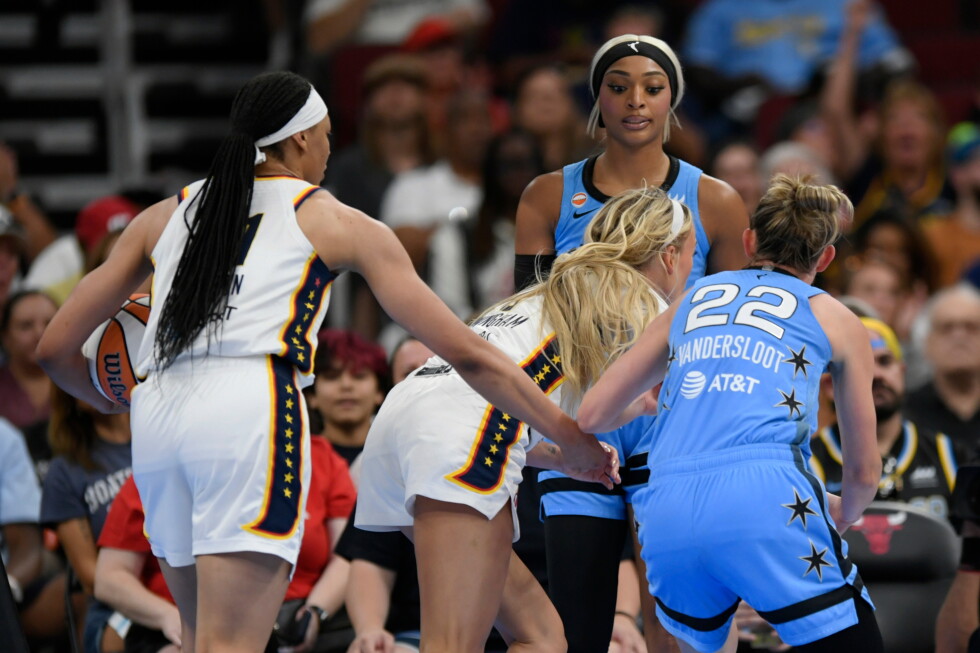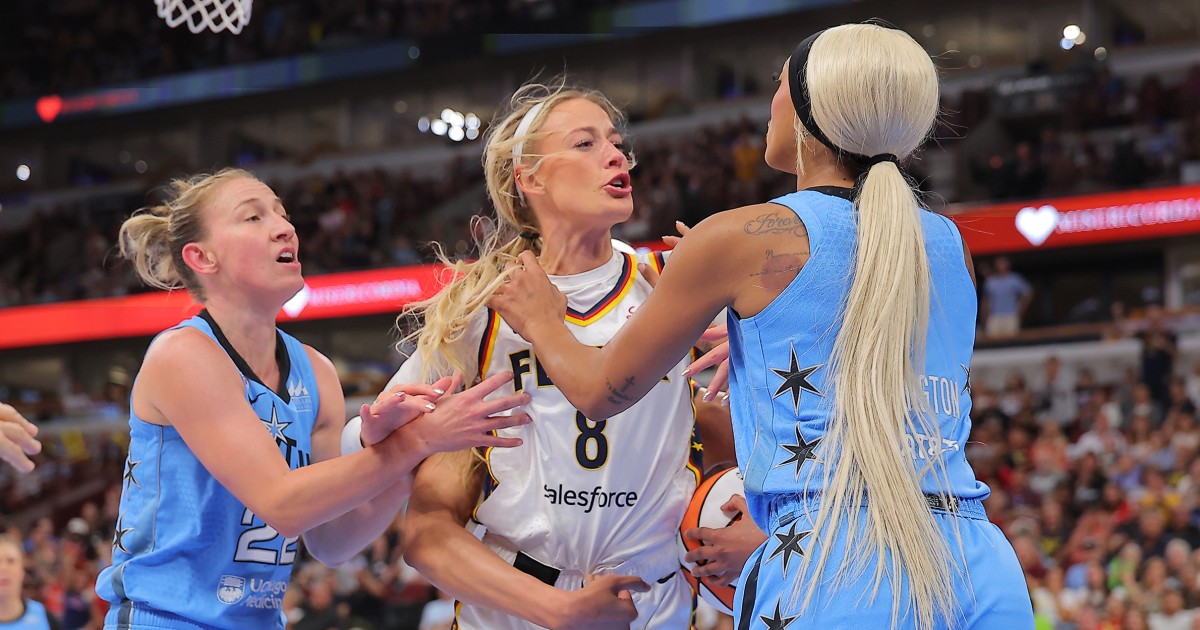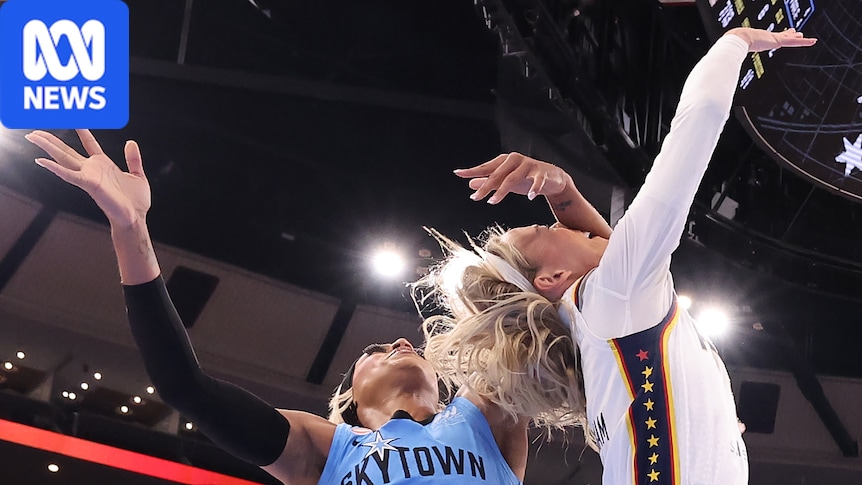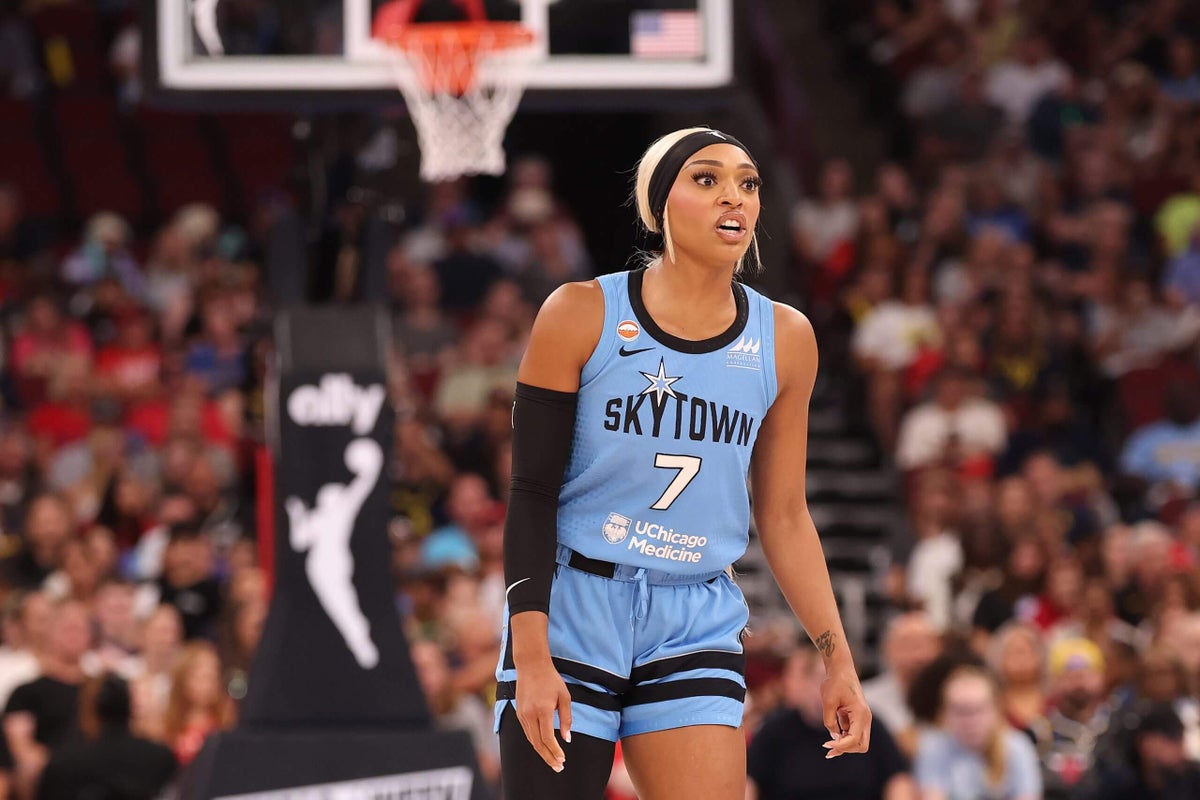
Chicago Sky guard DiJonai Carrington said that her social media post about White privilege was not about her flagrant 2 foul on Indiana Fever guard Sophie Cunningham on Saturday, but about a desire for “consistency across the board” in officiating, an issue that has sparked controversy throughout the WNBA season.Carrington had posted “WHITE PRIVILEGE” on her Threads account and tagged the Indiana Fever shortly after her ejection from the game. She was whistled for a flagrant 2 foul after her left arm connected with Cunningham’s head and jaw as Cunningham was midair attempting a layup. The blow knocked Cunningham to the floor, but she quickly got up to confront Carrington before her Fever teammate Makayla Timpson pulled her away.“I’ve never once claimed that the assessment of the foul was White privilege (that was your assumption),” Carrington posted Monday on X, in response to commentary from sports analyst Emmanuel Acho, who said that the flagrant 2 decision was accurate. He also called her post “ignorant” and “asinine.”“Furthermore, I’m the LAST thing from ignorant or asinine when it comes to speaking on ‘white privilege’, do ya research on that one,” Carrington continued. “I actually went to school, one of the top universities might I add, to educate myself on this exact subject. I would never use that term as a rhetorical weapon knowing the historical and social weight it holds without having the proper evidence to substantiate it.”Carrington, who played four years in college at Stanford before transferring to Baylor, told reporters before the Sky’s game against the Seattle Storm Monday night that her post was aimed at the league more broadly. She did not address why she tagged the Fever in her post.“I would say that I would just love consistency across the board when it comes to things like that,” Carrington said when asked if Cunningham also should have received a technical by officials for her reaction to the foul.“Whether it’s the foul that I committed, whether it’s the reaction, the retaliation, I would just love it to be consistent across the board regardless of the name on your jersey or your skin color or the score of the game, the stakes whatever, I would love there to just be consistency when it comes to all of that,” Carrington continued. “I don’t think we’re there yet. That’s something that I’ve talked to the league about as well. I think that will eliminate a lot of frustrations that we all have.”Criticism of officiating has been a growing issue for years in the WNBA, with complaints from players prompting the league to create a task force at the end of the 2025 season to examine areas for improvement. But frequent officiating controversies have continued in this season.In her pregame comments, Carrington said she talked with the league about the situation.“No, I don’t feel encouraged,” Carrington said about those discussions. “But that doesn’t mean you’re going to stop fighting for what I believe is right and that’s just consistency. I think everyone would benefit from that. We’re all here to play our hardest and win games. There is never mal-intent with any of these things. So I think it would be fair to be consistent across the board when it comes to things like that.”The WNBA did not immediately respond to a request for comment.After Saturday’s game, Cunningham said she thought Carrington’s foul was in response to Cunningham’s 2025 flagrant foul and ejection on Sky guard Jacy Sheldon, who then played for the Connecticut Sun. At the time, Sheldon and Carrington were not teammates. On Monday, Carrington said her foul was not intentional.“Obviously I’m just coming back from injury so maybe my timing or my lift wasn’t where it needs to get to but I mean it was unfortunate I made contact with her in the way that I did, but it was never intentional,” she said. “Look, it might happen again. That’s just how I play, I’m always going to go all out and try to get a stop. I’m not just going to let an open layup happen. But like I said I’m never intending to hurt somebody regardless of anything outside noise or whatever the situation may be.”Cunningham has been in the spotlight since the publication of an ESPN story last month in she spoke in favor of excluding trans athletes from women’s sports. She was quoted as saying that she wants to “protect young girls in a locker room” and that they “shouldn’t have to go against biological men.” There have since been demonstrations and counterdemonstrations outside Fever games and teammates and opposing players and coaches have consistently been asked about the issue.On Friday, the Women’s National Basketball Players Association released a statement denouncing “hate, abuse, and demonization” of the transgender community, but did not mention Cunningham specifically.
DiJonai Carrington says White privilege post wasn’t about Sophie Cunningham
The Chicago Sky guard said she was seeking “consistency across the board” in WNBA officiating.
815 words~4 min read