Insider Brief
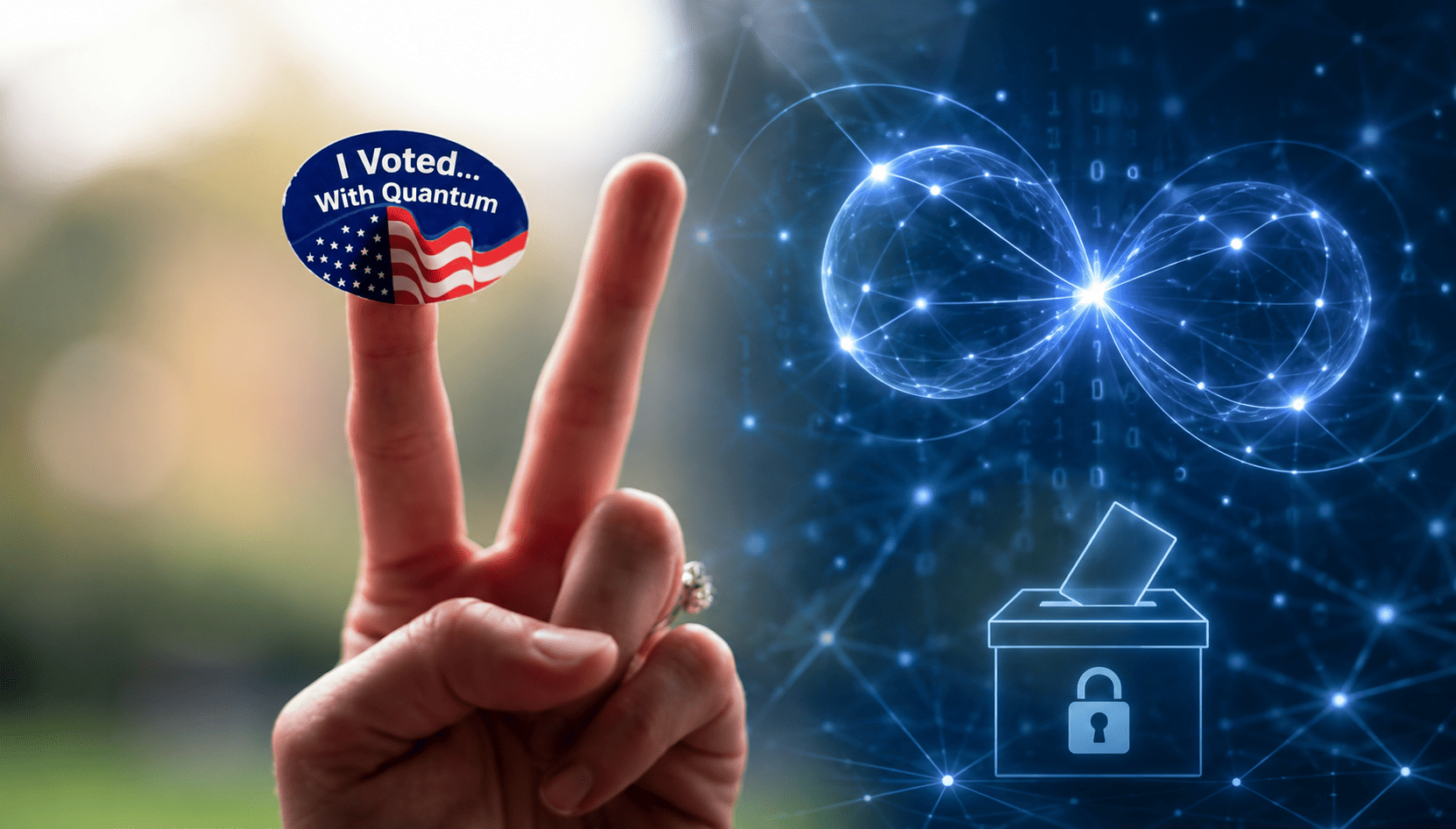
Three recent experiments show how quantum technology could protect ballot secrecy and help verify election integrity, moving quantum voting from theoretical protocols into laboratory demonstrations.
Two experiments used entangled photons for elections involving up to eight voters, while a third demonstrated a two-voter quantum voting system across 50 kilometers of optical fiber.
Major challenges including scalability, noise, hardware reliability, voter authentication and coercion resistance remain before quantum voting could be practical for real-world elections.
Teams of scientists are voting yes on moving proposals for quantum-secured elections out of the lab and into actual experiments to test whether the laws of physics can protect ballot secrecy while also helping voters verify that an election was conducted correctly.