Building an AI agent does not end with choosing a single model. Each model has its own strengths, weaknesses, and cost profile, which can shift from one workload to another—or even within the same workload. For example, an agentic task may need classification for one step, reasoning for the next, and a smaller model for routine follow-up tasks. Sending every request to the largest model can increase cost and latency, while sending every request to a smaller model can reduce quality on complex tasks.
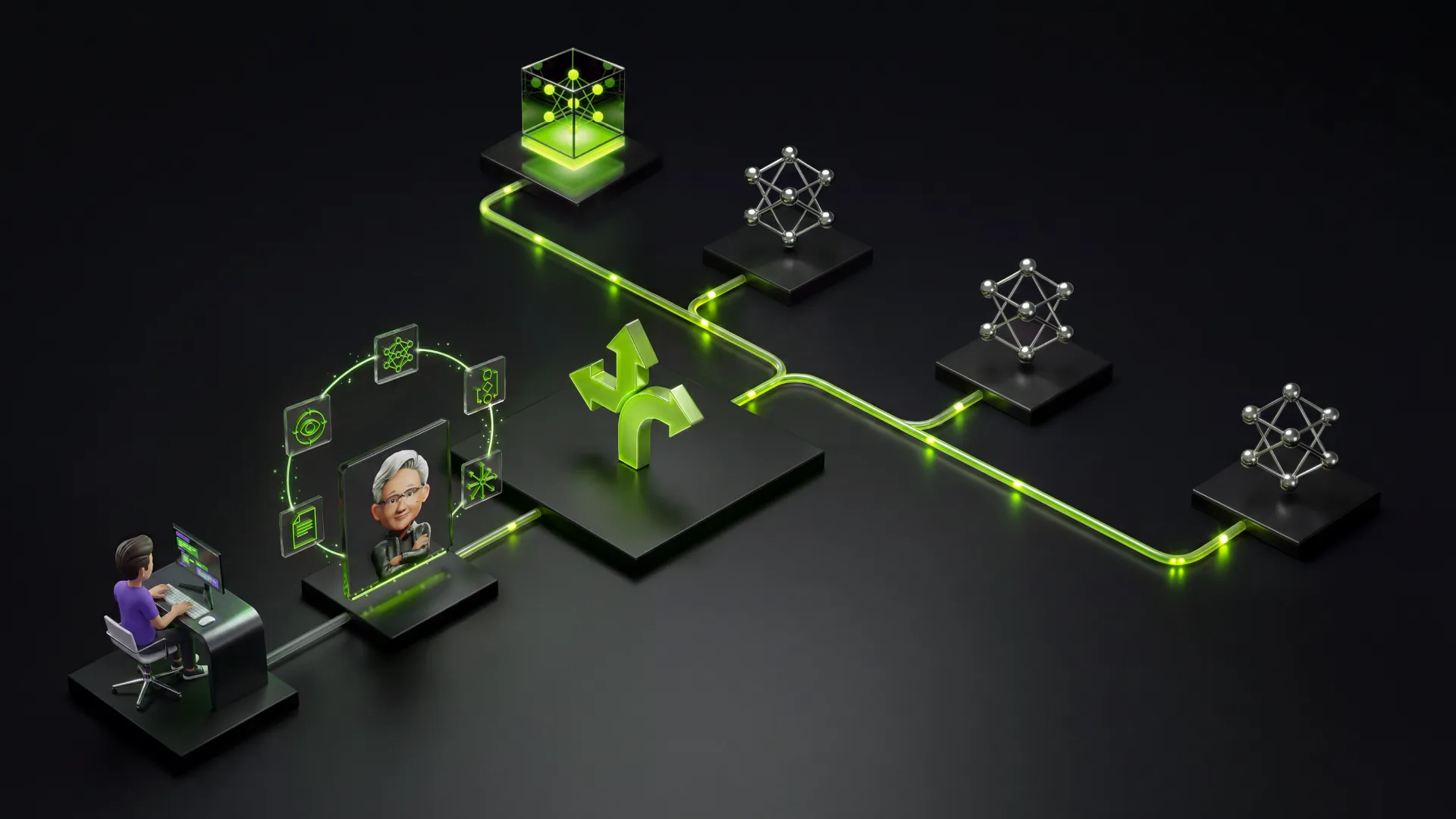
Model routing addresses this challenge by orchestrating specialized and frontier models so that each task uses the model best suited to each task. NVIDIA NeMo Switchyard makes this complex engineering problem practical for agent workloads, so developers can route work across models without rebuilding their applications around each provider or model choice.
At runtime, a router evaluates each request and its available context, then sends the work to the model that best suits the task’s requirements, constraints, and policies. Depending on the workload, this system of models may improve accuracy and reduce cost compared with using the most capable model for every request.
NeMo Switchyard provides a library for applying multiple routing approaches. This post explores how NeMo Switchyard enables developers to apply a system-of-models approach and build more efficient, controllable agents better suited for real AI workflows.