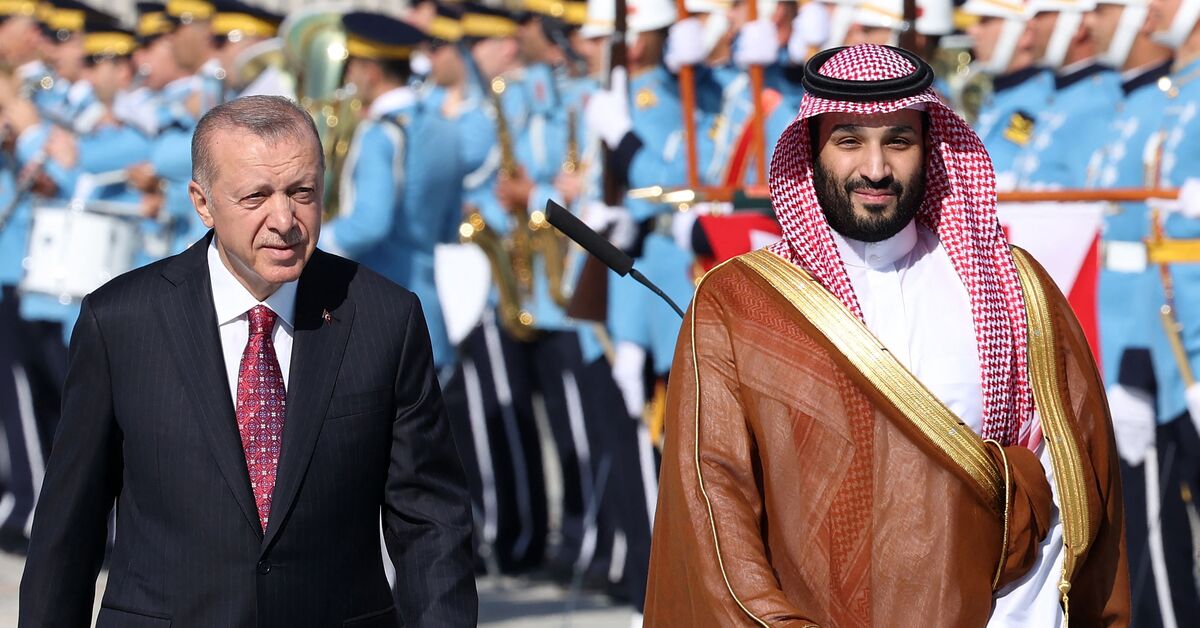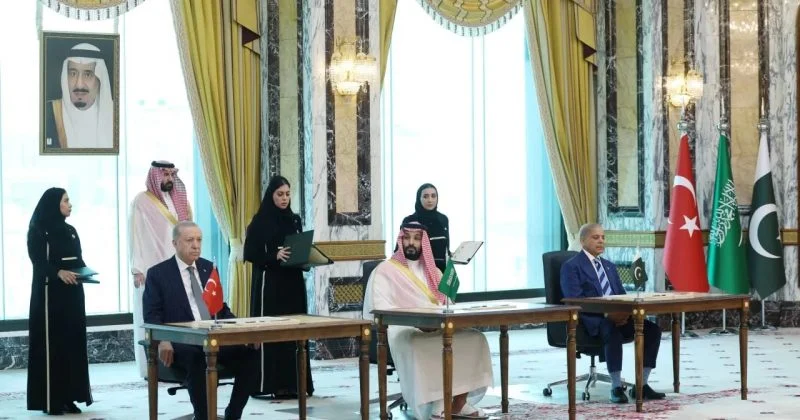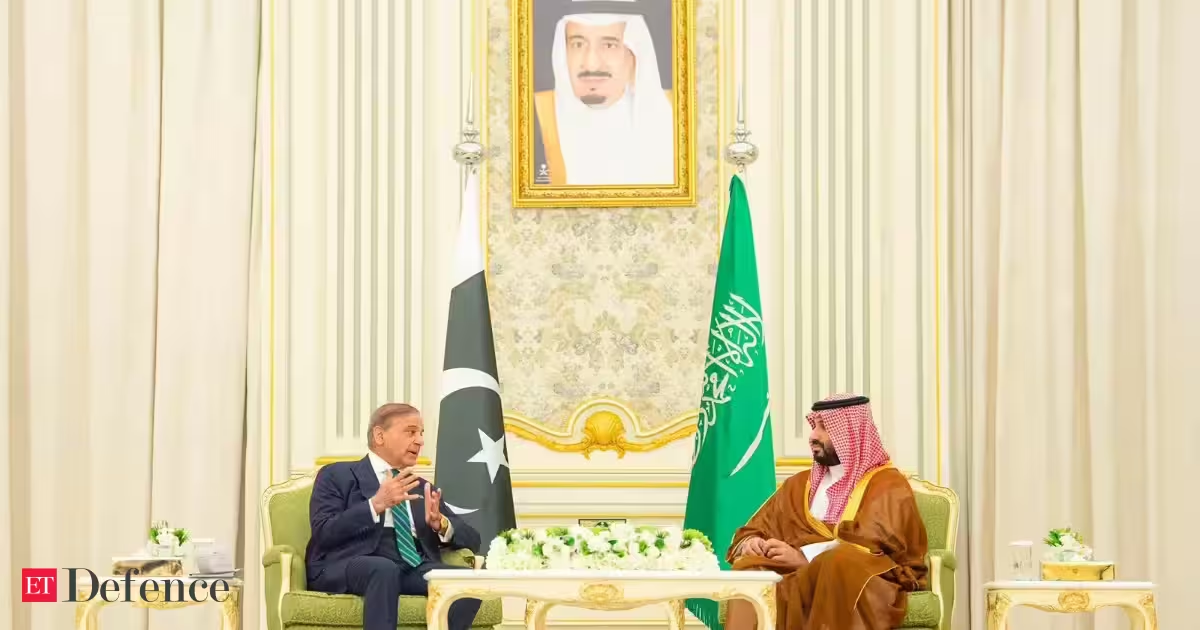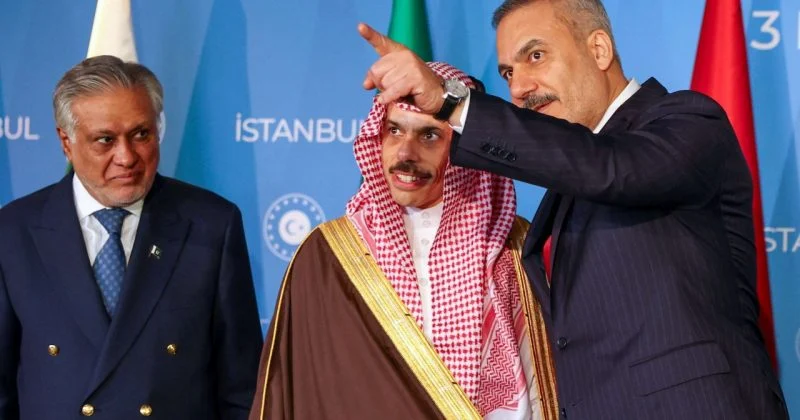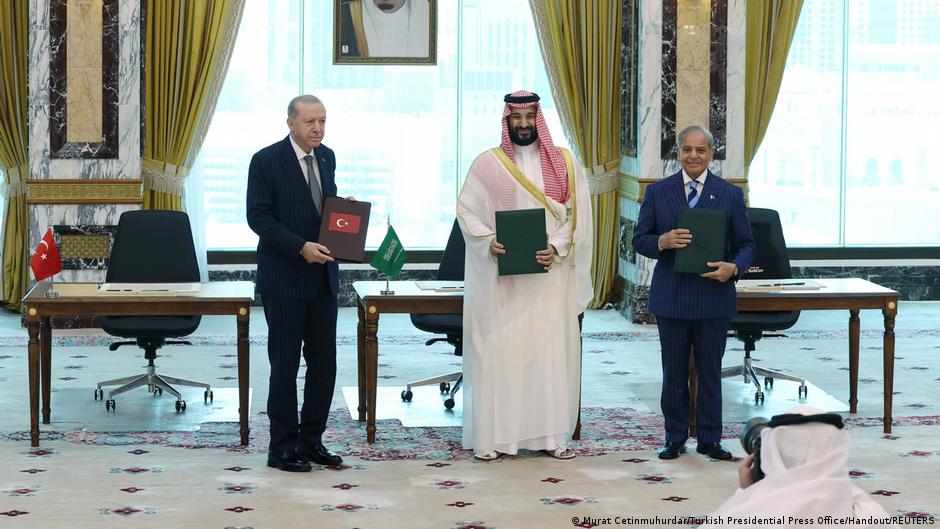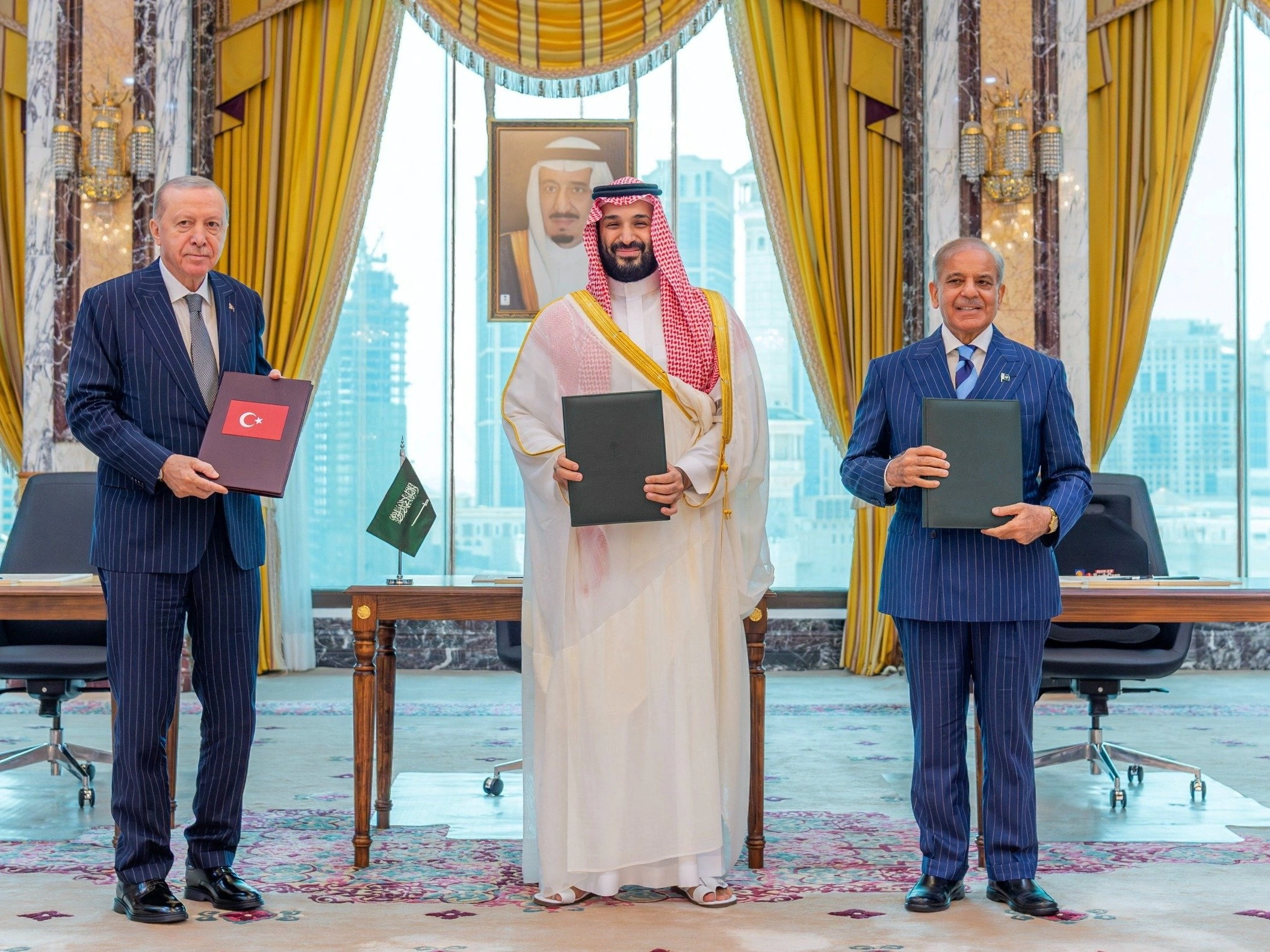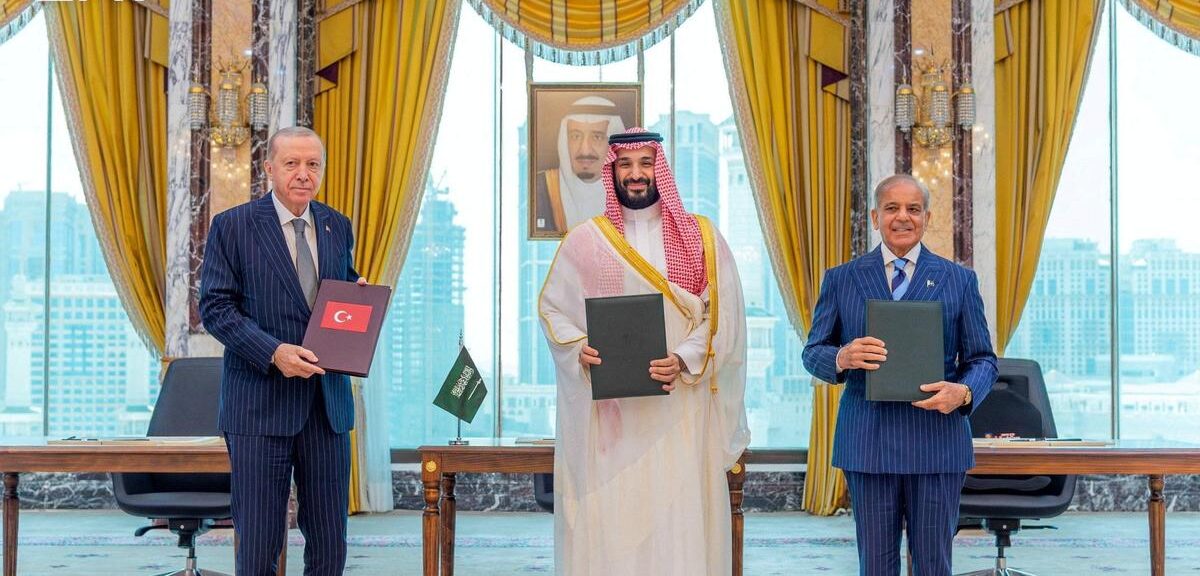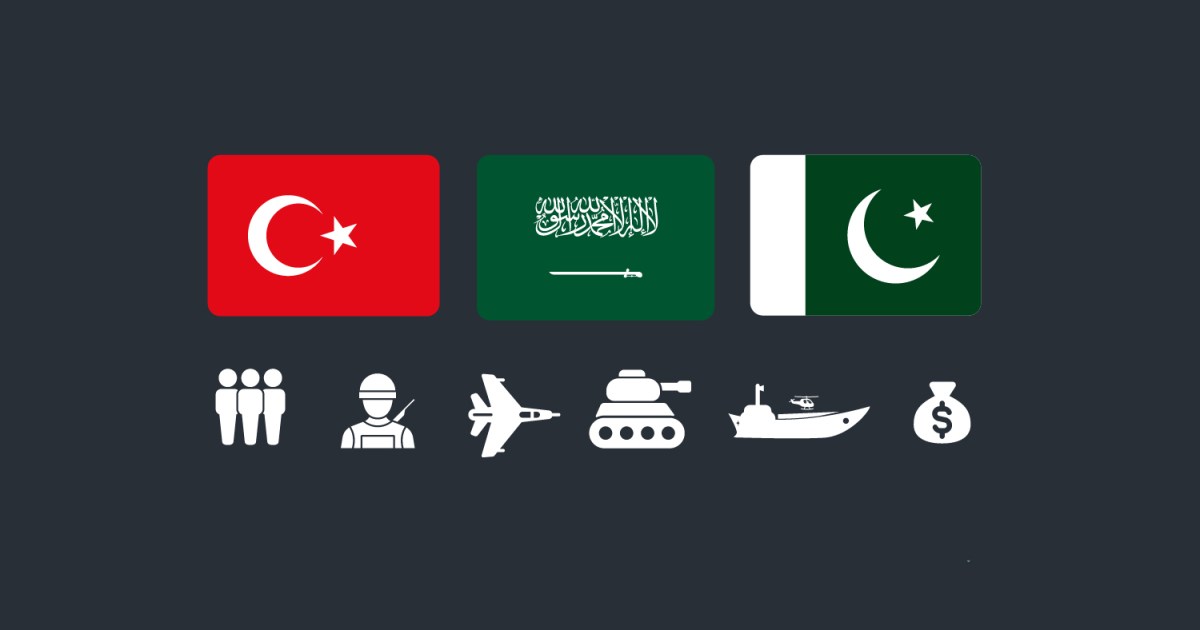
Leaders of Saudi Arabia, Turkiye and Pakistan signed the Mecca Joint Defence Agreement last Friday, pledging to strengthen collective deterrence against any act of aggression and stating that an armed attack on any one of the three would be regarded as an attack on all.The pact comes as the three countries navigate growing regional tensions, including concerns over Israel’s expanding military reach and Iran’s regional influence.Recommended Stories list of 4 itemslist 1 of 4Which other countries could join the Turkiye-Saudi-Pakistan defence pact?list 2 of 4The Mecca pact is not just another regional alliancelist 3 of 4Where does Iran stand on Saudi-Pakistan-Turkiye pact?list 4 of 4Iran changed the rules in Hormuz. The Gulf is changing the rules for Iranend of listTogether, these countries form a sizeable military bloc. Riyadh is a top oil exporter, Ankara has NATO’s second-largest military, and Islamabad is the only nuclear-armed Muslim country.In this explainer, Al Jazeera breaks down their combined land, air and naval strength.Saudi Arabia’s Crown Prince Mohammed bin Salman, flanked by Turkiye’s President Recep Tayyip Erdogan, left, and Pakistan’s Prime Minister Shehbaz Sharif, right, signing a joint defence agreement in Mecca, on August 7, 2026 [Handout/Turkish Presidency Press Office via AFP]Joint land, air and naval strengthTogether, the three countries combine nearly 1.4 million active military personnel, 3,400 aircraft, 6,000 tanks and more than 340 naval assets according to the 2026 Global Firepower Index, which ranks the defence capabilities of 145 countries.The index scores each country’s potential war-making capability across land, air and sea, drawing on factors including manpower, equipment, natural resources, finances and geography.
What are Saudi Arabia, Turkiye and Pakistan’s joint military capabilities?
The Mecca defence pact combines a top oil exporter, NATO's second-largest army and the only Muslim nuclear arsenal.
989 words~4 min read