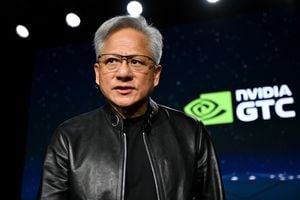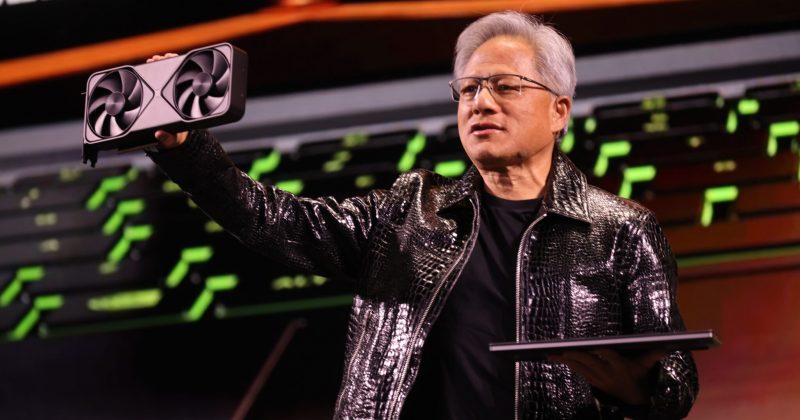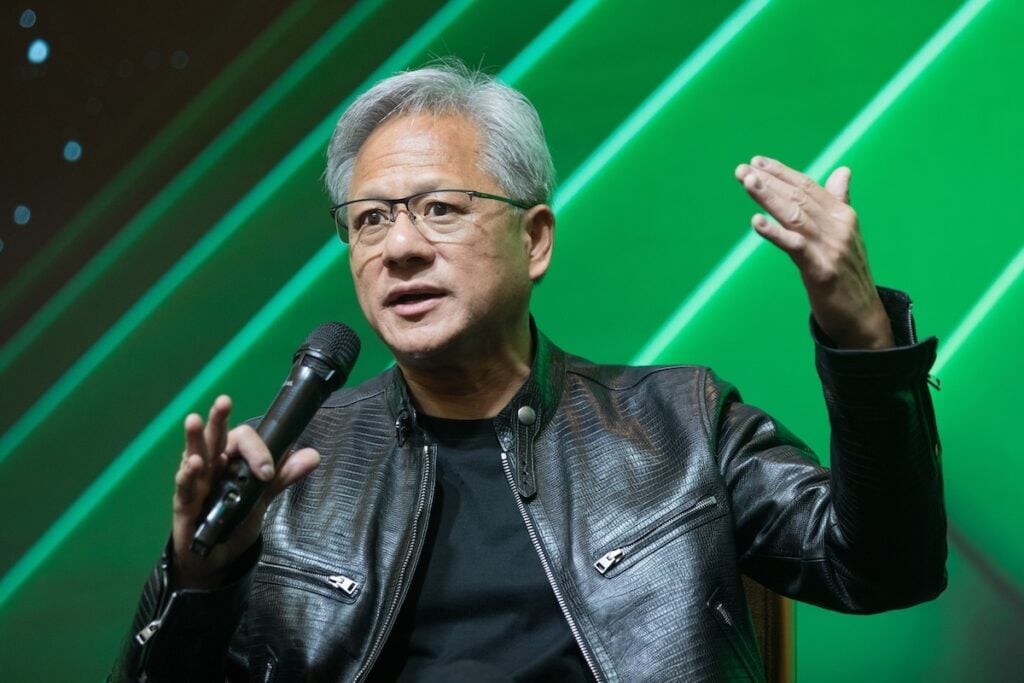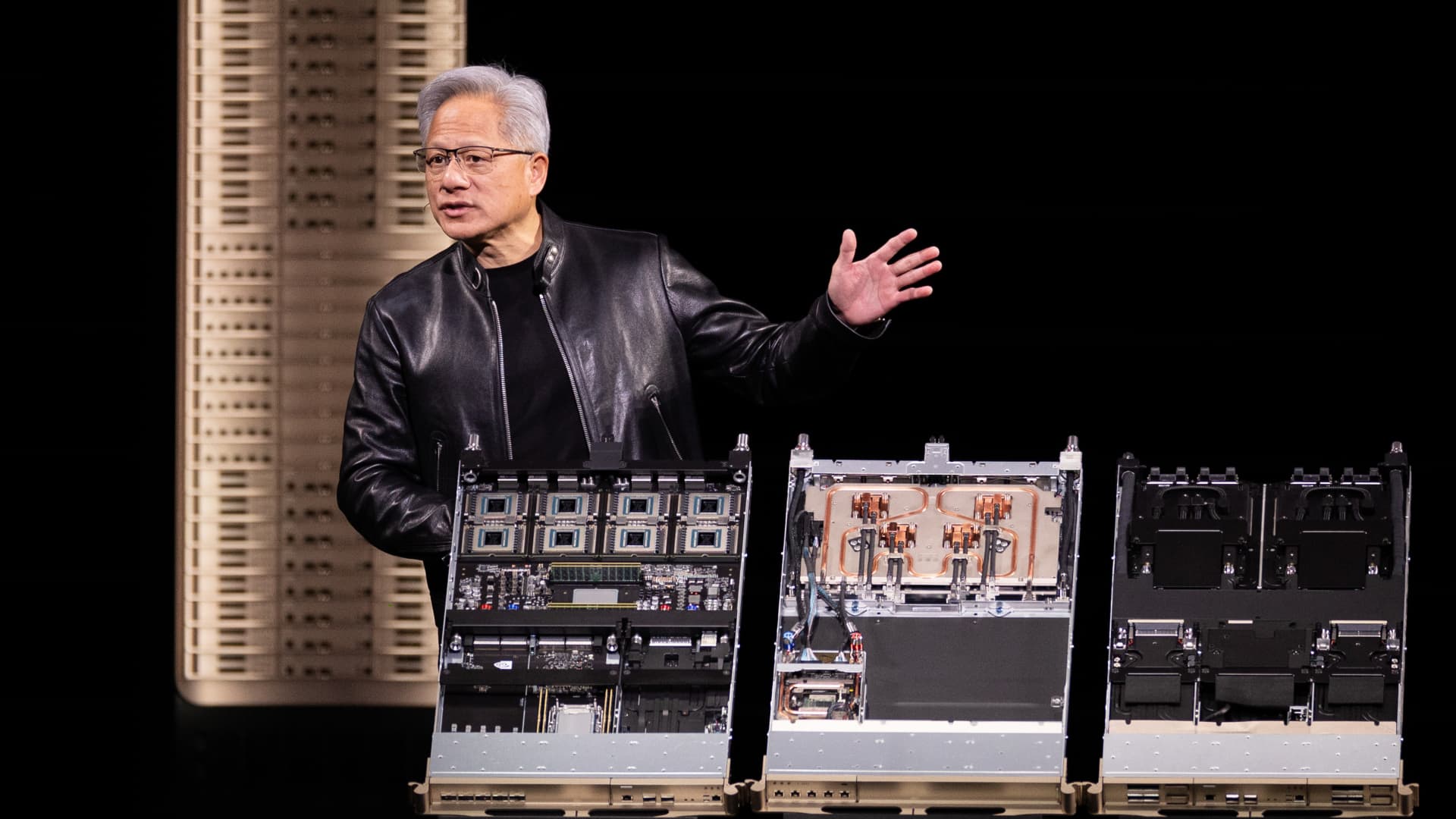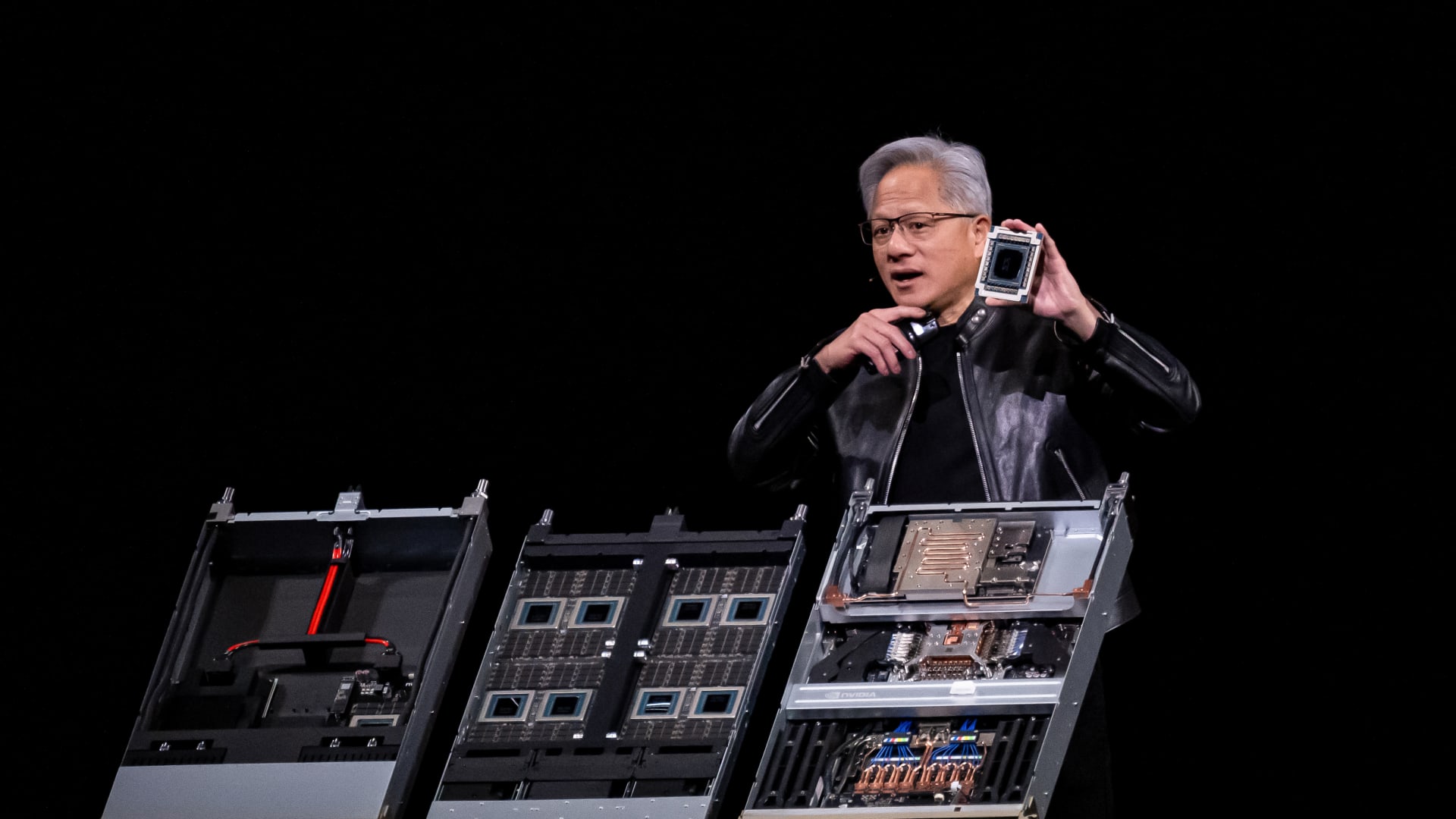
Jensen Huang, chief executive officer of Nvidia Corp., speaks next to a BlueField-4 STX Storage tray, from left, Vera CPU compute tray, and Spectrum-X Ethernet Photonics Switch System while holding a Spectrum-X Ethernet Photonics chip during a keynote address at the Nvidia GTC conference in San Jose, California, US, on Monday, March 16, 2026. Bloomberg | Bloomberg | Getty ImagesIn late July, Nvidia CEO Jensen Huang posted on X for the first time to defend open-source models in artificial intelligence, inserting himself into a debate that was raging across the industry.Less than three weeks later, Nvidia is releasing Nemotron 3.5 Lightning, which the company says is "lightweight" and can run on a single graphics processing unit on a PC. It's Nvidia's first open-source model since Huang joined most of his tech peers in urging the U.S. government to support open models while "avoiding premature restrictions" that could push innovation overseas. The new Nemotron offering is free for companies to download, use and modify without getting permission or paying Nvidia. For Nvidia, open-source AI is a boon for chip sales, because the models still need to run on GPUs, and the lower prices can serve to boost usage over proprietary models from the likes of OpenAI and Anthropic. "Free AI should be great for hardware," Huang told Axios in an interview last month. "Free AI should be great for chips." Huang jumped headfirst into a debate that had sprung up in Washington following the announcement of Kimi K3, a model developed by China's Moonshot AI that narrowed the gap with the most powerful American models. Politicians worried that Kimi K3 was potentially troublesome for national security, and that it represented intellectual property theft via a technique called distillation, which involves the use of answers from an advanced AI model's service to train a lighter model. watch nowPolicymakers questioned whether Chinese model developers could be subject to sanctions or other restrictions, similar to the rules placed on chip sales. Huang posted an open letter, which argued that open-weight models allow companies greater control over their future, spur competition and bring down pricing. "Open models strengthen safety and cybersecurity, accelerate innovation and diffusion, and enable sovereignty," Huang wrote in his debut X post. Days later, Nvidia launched an AI safety consortium with companies including Microsoft that would focus on using open models and open-source software for cybersecurity. Open-source AI is one of the hottest topics in Silicon Valley. On Monday, Meta CEO Mark Zuckerberg published a lengthy manifesto arguing for open-source AI, as his company released a coding model called Muse Spark. "Our goal should be for American open source models to be the best globally," Zuckerberg wrote. Nvidia said companies including CrowdStrike, CodeRabbit and Harvey have tested and customized its latest model. The chipmaker said it was developed particularly for agents, or AI programs that can run autonomously in the background. Nemotron 3.5 Lightning will also be available on HuggingFace and Nvidia's website. Additionally, Nvidia released software called NeMo Switchyard that can determine the cheapest and most appropriate AI model for any given task. Nvidia representatives said Monday that the company had used distillation to give Nemotron 3.5 Lightning similar capabilities to its larger Nemotron models.WATCH: Sen. Warner on open-source AIwatch now
Nvidia unveils first open-source AI model since CEO Jensen Huang entered the chat
Nemotron 3.5 Lightning is free for companies to download, use and modify without getting permission or paying Nvidia.
540 words~2 min read