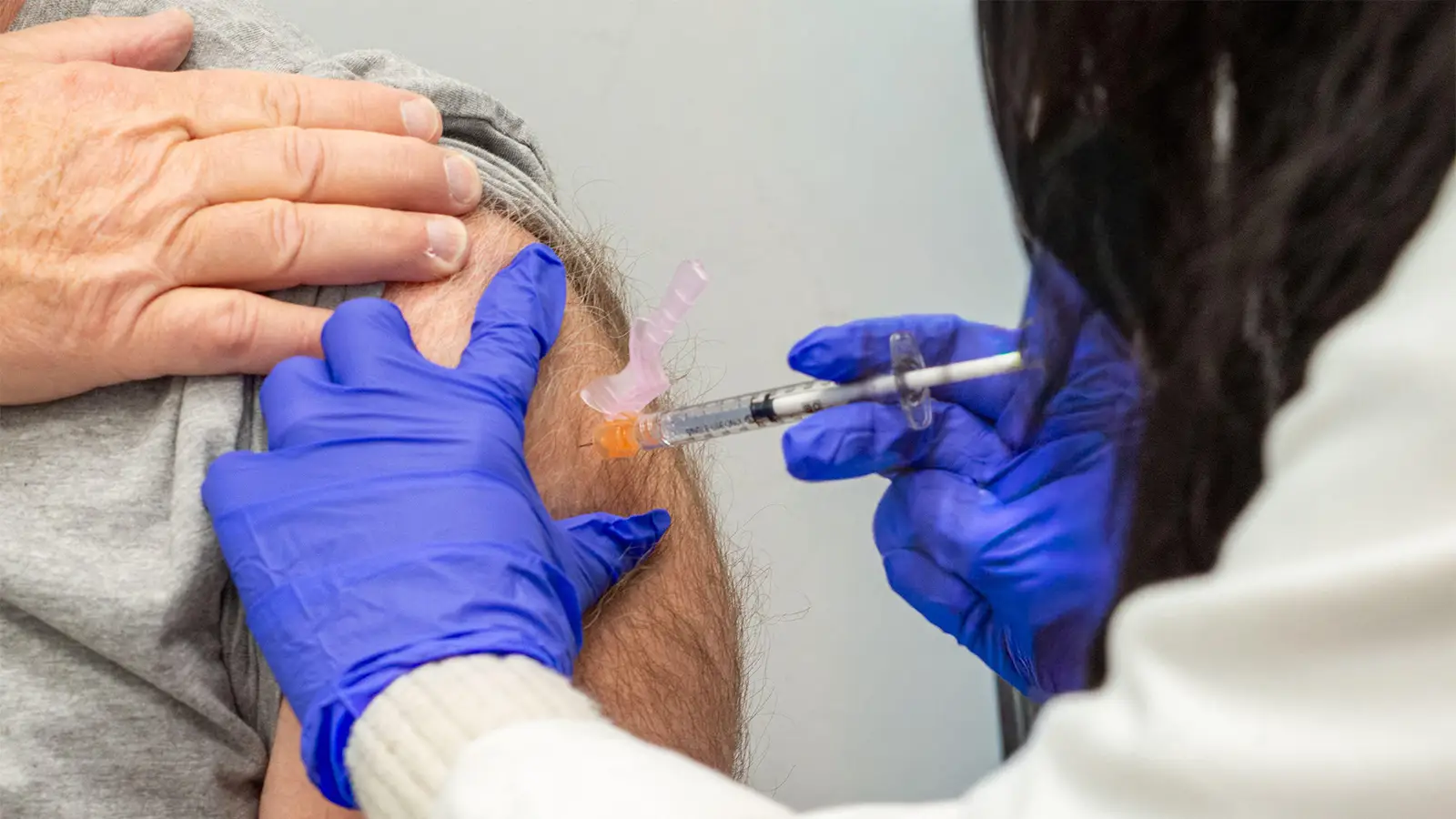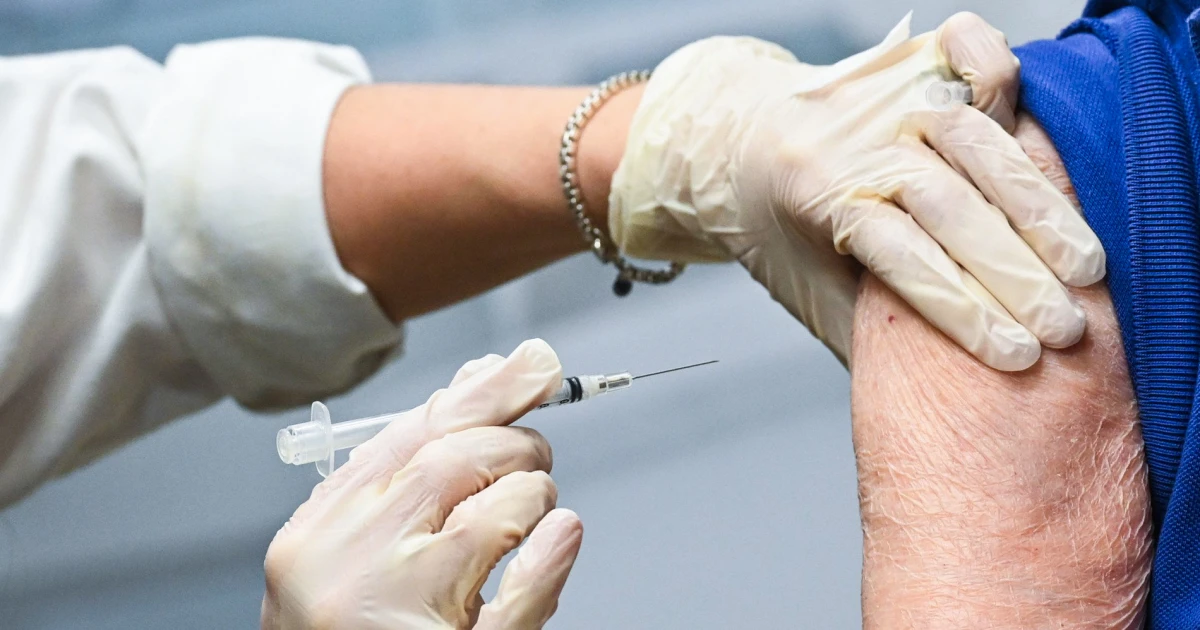
After several disastrous flu seasons, there is some good news: The U.S. Food and Drug Administration approved a new, more effective flu vaccine for older adults that should be available in time for the fall.The new shot, mFlusiva, is made by Moderna and was shown to be 27% more effective than the standard flu shot in clinical trials. The shot is fully approved for adults ages 50 to 64 and has temporary accelerated approval in adults 65 and older as Moderna conducts an additional trial that compares the new vaccine to the current high-dose flu shot given to adults over 65. The new vaccine is expected to be available in time for the upcoming respiratory virus season, but it’s not clear whether it will be covered by insurance.Here’s what to know about the new vaccine:The new flu shot uses mRNA technology — and that’s a good thing.The new shot is a messenger RNA, or mRNA, vaccine, which likely sounds familiar ― the new shot is based on the same technology Moderna used for the COVID-19 vaccines, according to Dr. S. Wesley Long, the medical director of diagnostic microbiology at Houston Methodist Hospital.There are a few reasons an mRNA flu vaccine is needed, noted Dr. Onyema Ogbuagu, a professor of medicine and pharmacology at Yale School of Medicine in Connecticut. First, the flu virus “changes all the time,” Ogbuagu said. “It has a way of changing its genome, which now allows it to evade immunity, including vaccine immunity or natural immunity.”This is why there is a new flu shot formulation targeting a different strain every fall. On years when there’s a good match between the flu shot and the circulating strain, you have good protection, Ogbuagu explained. But in a year when there is a poor match, “you have very poor efficacy, and that poor efficacy eventually equates to more illnesses, more hospitalizations and more deaths in that year,” he said. This was the case last year, when the United States had its worst flu season in 25 years.This mRNA technology also allows for vaccines to be produced faster, according to Ogbuagu. This “now gives us this opportunity to not just be able to produce vaccines quickly, but you could potentially see if the prediction tools we use are wrong, that within the same season you could be able to even produce another iteration of the vaccine to address the mismatch. So I think there’s enormous potential there in regards to mRNA,” Ogbuagu said.While mRNA vaccines are highly politicized and have been a target of Health and Human Services Secretary Robert F. Kennedy Jr., they’re well-studied and safe; mFlusiva was tested in a trial of about 40,000 people.When you adjust an mRNA vaccine to match a new circulating variant, you aren’t changing the entire vaccine, explained Dr. Cynthia Leifer, a professor in the department of microbiology and immunology at Cornell University in New York.. Instead, you’re just adjusting a small part of it.“Why they say this mRNA platform is more nimble is because you’re only giving the blueprints ... we can make the mRNA quickly, so when we [figure out] which strain of virus is now going to be dominant, they can go change that quickly in the manufacturing process and get that out,” Leifer said. FatCamera via Getty ImagesA new and more effective flu shot will be available this fall. This is a more powerful and effective vaccine, so side effects were stronger in the clinical trials.As with any vaccination, certain temporary mild side effects may occur, such as fatigue, injection site pain, headache and a low-grade fever. These are expected and normal.If you’ve gotten the regular flu vaccine year over year, you may notice more side effects with this mRNA vaccine, according to Long, “because the mRNA vaccines do generate a stronger immune response as seen in the clinical trials than the traditional flu vaccines.”Leifer added, “with this mRNA vaccine, which is the same technology as [the COVID vaccine], if you had a little bit more of a reaction with a COVID vaccine, you might have more reaction with this vaccine because it’s the same kind of technology.”For example, if you had a bad headache after your last COVID shot, it is reasonable to expect a similar reaction with this mRNA flu shot.“Most of the side effects really are the mild injection site soreness, a little bit of fever or a little bit of flu-like feelings, but in the clinical trials that they did, those were mostly mild and mostly lasted maybe one to two days,” Leifer said.If you’re used to getting the high-dose flu vaccine, it’s “a little bit harder to say how it will compare to that,” Long said. This is because the high-dose flu shot also generates a stronger immune response, he said.In the trials, mFlusiva was tested against the standard flu shot, not the high-dose options, according to Ogbuagu.mFlusiva should be available this fall, along with the regular flu shot — both are great options for protection.The best flu shot is the one you get, Leifer stressed. If mFlusiva isn’t available when you go in for your shot, you shouldn’t wait for it “because you may actually be missing an opportunity to protect yourself during the beginning of flu season,” she said.“If you have a doctor’s appointment earlier in the fall, just get the flu vaccine that’s available to you,” Leifer added.Either way, this technology is exciting and can help prevent serious outcomes from the flu such as hospitalization and death. (This is also true for the standard flu shot.)“Contrary to all the misinformation around how mRNA vaccines performed in COVID, I think those of us who are experts in the field ... I was involved in clinical trials for the mRNA vaccines, I took the mRNA vaccine myself. I gave the vaccine to my kids and my parents, and I offer it to my patients every day,” Ogbuagu said.“We know how transformational this technology has been and could be for infectious diseases ... and it’s nice to see ... a second mRNA vaccine be approved,” he added.
There's A New, More Effective Flu Shot For Adults 50 And Over. Here's What To Know.
The new mRNA vaccine provides more protection than the standard flu shot.
1,013 words~5 min read