In late 2025, nearly five years after the February 2021 coup, the military junta held a multi-phase election. The polls, which were heavily skewed in favor of the military, produced the expected outcome: the military proxy Union Solidarity and Development Party won 232 of 263 seats in the lower house of the Union Parliament and 109 of 157 seats in the upper house. The election was intended to put a thin veneer of legitimacy on the military dictatorship in order to gain partial re-entry into the international community while continuing its war against the country’s resistance elements. Following the military-administered election, Min Aung Hlaing officially assumed the presidency in April 2026, framing the transition as the constitutional fulfillment of a return to civilian governance.
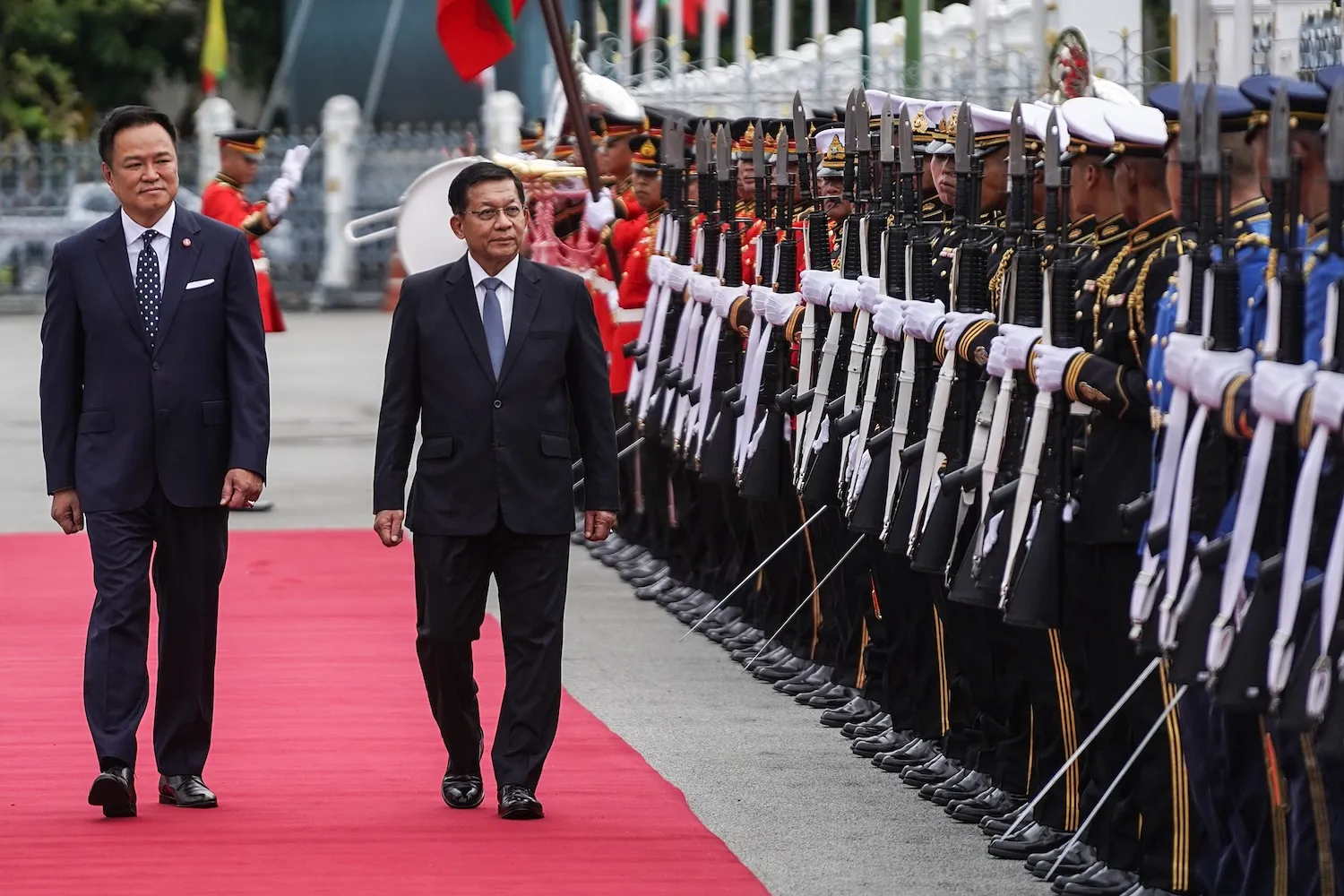
This domestic political shift inaugurated a carefully orchestrated diplomatic campaign across key neighboring states, which took Min Aung Hlaing to India, Laos, China, and Thailand, designed to launder regime legitimacy, secure critical border trade, and hedge against Western sanctions. Rather than signaling a complete resolution of domestic conflicts, this regional pivot reflects a strategic calibration by neighboring Asian powers that prioritize border stability, maritime security, and economic corridors over concerns about Myanmar’s internal affairs.