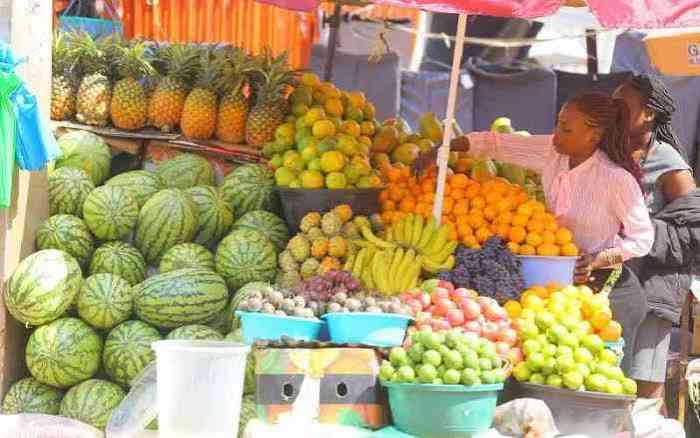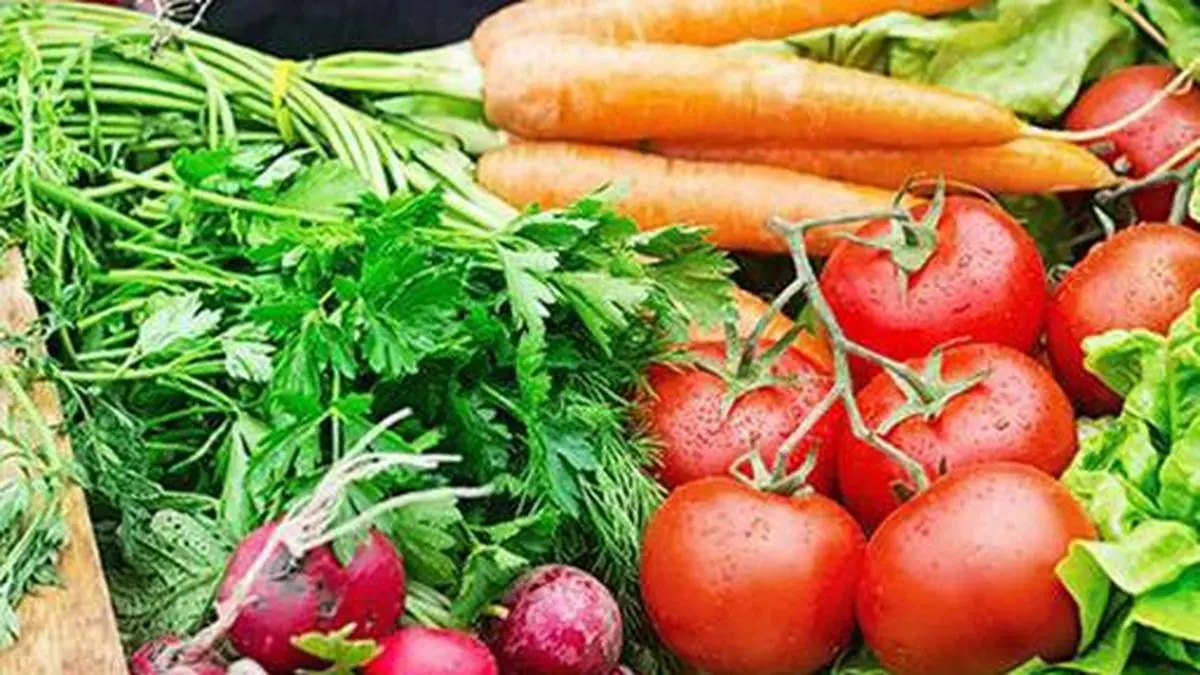
The government has said that pesticide residues above the Maximum Residue Limit (MRL) fixed by the FSSAI were detected in 3.1 per cent samples of fruits and vegetables in the last three years.In a reply in the Lok Sabha on Tuesday, Shivraj Singh Chouhan, Union Agriculture and Farmers’ Welfare Minister, said a total of 70,652 samples of fruits and vegetables were collected from 23 states and union territories under ‘Monitoring of Pesticide Residues at National Level’ (MPRNL) project from 23 states and union territories during 2023-26.Pesticide residues above the MRL fixed by the Food Safety and Standards Authority of India (FSSAI) were detected in 2,223 (3.1 per cent) samples only, he said.To ensure traceability under the MPRNL project, GPS coordinates of the sample collection point are recorded by the laboratories. In case of the farm-gate samples, traceability of the growing area is established.MPRNL project, which was launched in 2005-06, is implemented through 40 participating laboratory (including five new laboratories) covering 22 States. Continuation of the project has been approved till 2028-29.He said 21 states have constituted committees at the state-level for monitoring of pesticide residue and effective implementation of good agricultural practices and integrated pest management among all stakeholders to reduce / avoid pesticide residue issue in various agricultural commodities.Draft Sugarcane order withdrawnMeanwhile, Ramnath Thakur, Union Minister of State for Agriculture and Farmers’ Welfare, has said that the Government has withdrawn the Draft Sugarcane (Control) Order, 2026.In a written reply on Tuesday, he said the Department of Food and Public Distribution published Draft Sugarcane (Control) Order, 2026, on April 20, seeking comments and suggestions from the stakeholders.However, based on the comments / suggestions received from the State governments and other stakeholders, it was considered necessary to revisit the Draft Sugarcane (Control) Order, 2026, hence, the same was withdrawn on May 29, 2026, he said.Digital crop surveyTo a query on the implementation of the Digital General Crop Estimation Survey (DGCES), Thakur said it was initially launched as a pilot during the kharif 2023-24 season in selected districts of 10 states. Following the successful pilot, the programme was expanded during the rabi 2023-24 season to 22 states/UTs. At present, DGCES is being implemented across 23 states/Uts.“This phased expansion has significantly strengthened the digital ecosystem for crop estimation by improving the coverage, transparency, timeliness, and quality of crop yield estimation across the country,” he said.DGCES offers several significant advantages in the conduct of crop cutting experiments. It enables a fully digital and paperless workflow with real-time data capture through a mobile application. The system incorporates geo-tagging, time-stamping, and authenticated photographic evidence to enhance transparency and accountability.It standardises data collection and validation procedures across states, thereby improving the accuracy, reliability, consistency, and timeliness of crop yield estimates. Through web-based dashboards, DGCES facilitates online monitoring and supervision, enabling faster processing and compilation of crop yield estimation, he said.F&V importsTo a question on the import of fruits and vegetables, Jitin Prasada, Union Minister of State for Commerce and Industry, said in a written reply that India’s trade in fruits and vegetables has remained robust over the years, reflecting strong domestic production capabilities and growing integration with global agricultural markets. India has consistently been a net exporter of fruits and vegetables.India’s fruits and vegetables exports increased from $2.45 billion in 2016-17 to $3.93 billion in 2025-26. Export volumes increased from 4.95 million tonnes (mt) in 2016-17 to 5.82 mt in 2025-26, indicating sustained global demand for Indian horticultural products.Imports of fruits and vegetables increased from $1.78 billion in 2016-17 to $3.82 billion in 2025-26, reflecting rising domestic consumption. Import volumes also increased from 1.12 mt in 2016-17 to 2.07 mt in 2025-26.NMEO implementationReplying to a question on National Mission on Edible Oils (NMEO), Shivraj Singh Chouhan said the Government is implementing the NMEO, comprising the NMEO-Oil Palm and the NMEO-Oilseeds, with the objective of increasing domestic production of edible oils and reducing import dependence.NMEO-Oil Palm was launched in 2021-22 with a target of 6.5 lakh hectares (lh) oil palm cultivation from 2021-22 to 2025-26. He said the mission is being implemented in Andhra Pradesh, Arunachal Pradesh, Assam, Chhattisgarh, Goa, Gujarat, Karnataka, Kerala, Manipur, Mizoram, Nagaland, Odisha, Tamil Nadu, Telangana and Tripura.To a separate query, Ramnath Thakur said 2.98 lh has been brought under oil palm cultivation under NMEO-Oil Plam since 2021-22. As oil palm is a perennial crop with a gestation period of about four-five years, most of the area planted under the Mission is yet to attain full bearing. From 2021-22 to 2025-26, the crude palm oil production was 20.10 lakh tonnes (lt).He said the ICAR-Indian Institute of Oil Palm Research (ICAR-IIOPR) Reassessment Committee report of 2020 identified 27.99 lh as potential area for oil palm cultivation in the country based on scientific evaluation of agro-climatic suitability and land suitability parameters.Natural rubber importsTo a question on the import of natural rubber, Jitin Prasada said India produced 9.05 lt of natural rubber in 2025-26 and imported 4.59 lt. Giving provisional figures up to June of 2026-27, he said India India produced 1.49 lt and imported 1.14 lt.Stating that the prices of natural rubber are determined in the open market based on demand and supply, he said international prices also influence domestic prices. The average price of natural rubber (RSS 4 grade) in Kottayam, Kerala, was ₹253.21 per kg during April-June 2026-27. The price was ₹197.32 per kg in Kottayam during 2025-26.Published on August 11, 2026
3% fruit and vegetables samples tested by FSSAI had pesticide residues above permitted limits during 2023-26
FSSAI reports 3.1% of fruit and vegetable samples exceeded pesticide residue limits from 2023-26, based on 70,652 tests.
898 words~4 min read