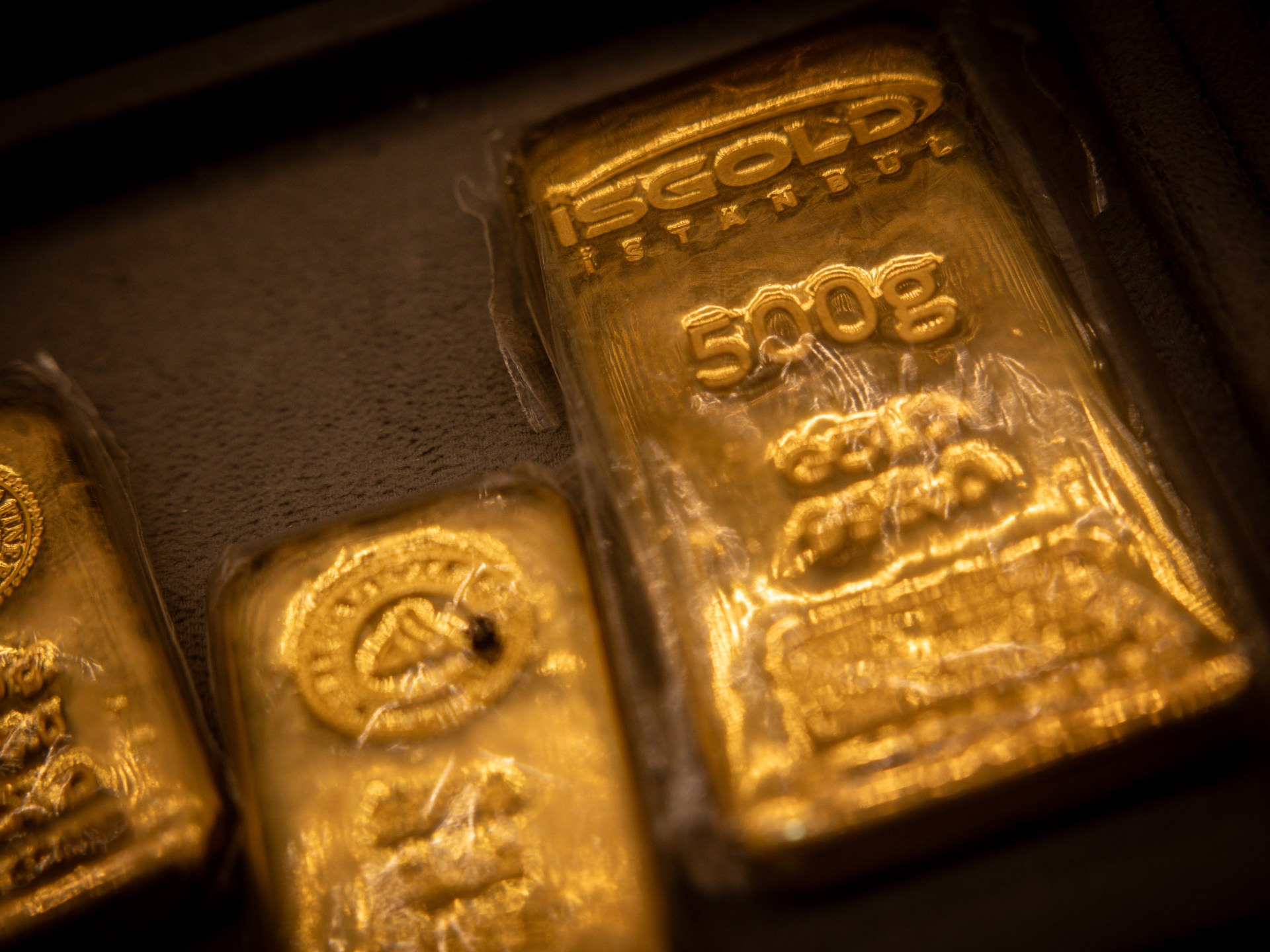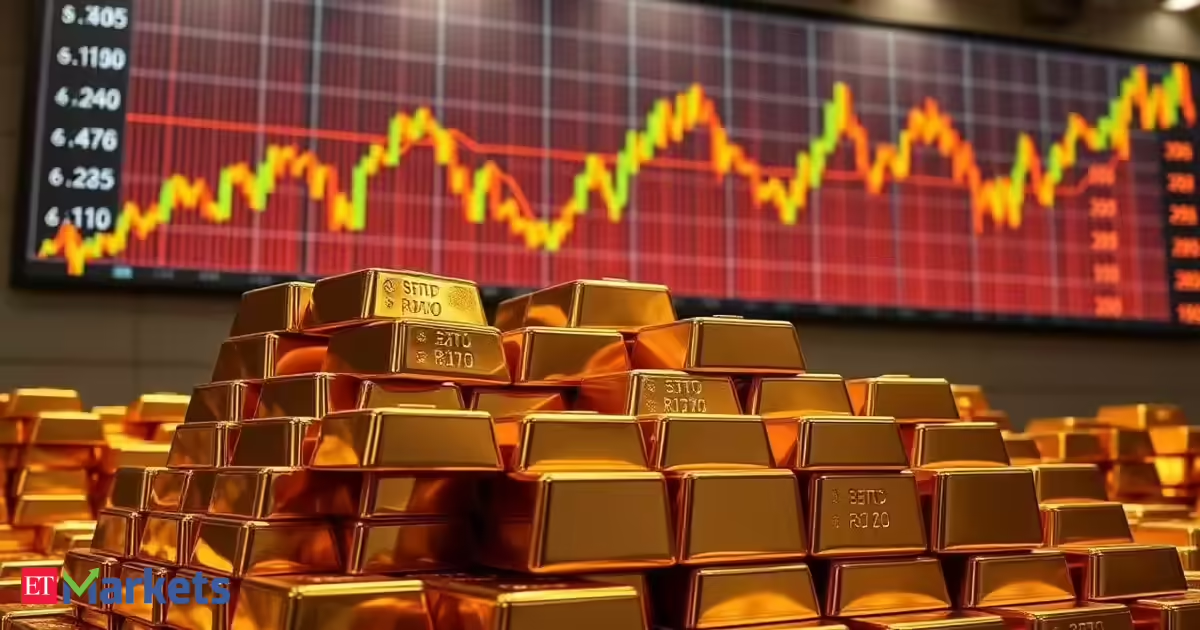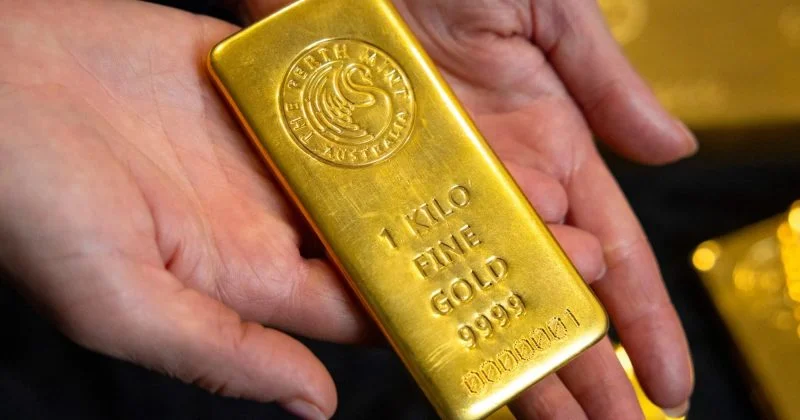
1. The article discusses the impact of the outbreak of war in the Persian Gulf on investor behavior and global financial markets. Traditionally, during such geopolitical crises, markets have favored classic safe-haven assets like gold and silver. However, in this conflict, these assets have experienced unusual volatility, and investors have increasingly sought shelter in the U.S. dollar instead. This shift highlights a broader trend where liquidity, rather than a strict adherence to traditional safe-haven logic, now plays a central role in shaping investor decisions during times of turmoil.[para. 1][para. 2][para. 3]2. The trigger for recent market volatility was the military action by the U.S. and Israel against Iran on February 28. Gold and silver initially spiked, with gold futures reaching nearly $5,400 per ounce and silver about $97 per ounce. However, these gains were quickly wiped out by profit-taking and liquidity concerns, leading to dramatic price swings. By March 6, gold had dropped approximately $300 from its weekly high, and silver had fallen roughly $13. These chaotic price movements suggest that the “safe-haven” status of gold may be overstated or overplayed in current market conditions.[para. 4][para. 5][para. 6][para. 7][para. 8]3. The instability in traditional havens is partly due to evolving market structures. Analysts point to the influence of quantitative trading, globally mobile capital, and complex derivatives strategies as factors that have amplified volatility in commodities markets. In particular, quant funds have increased their activity in gold and silver exchange-traded funds (ETFs), which tends to magnify both upward and downward price movements. Additionally, options market structures like “negative gamma” force dealers to hedge positions aggressively, creating procyclical behaviors—buying as prices rise and selling as they fall.[para. 9][para. 10][para. 11][para. 12]4. With high risk aversion in markets, gold and silver can be indiscriminately sold off alongside stocks due to liquidity squeezes. Increasingly, gold is behaving less like a traditional safe haven and more like a risk asset susceptible to speculative behavior. Investors tend to liquidate a variety of holdings to access cash, particularly U.S. dollars, in moments of acute crisis.[para. 13][para. 14][para. 15]5. Meanwhile, the U.S. dollar has outperformed other traditional safe-haven currencies such as the Japanese yen and euro in response to the Gulf crisis. Following the Feb. 28 strikes, the U.S. dollar index rose about 1.7%, reaching 99.3 by March 3. The yen and euro, meanwhile, weakened significantly, partly due to the energy import dependence of Japan and the Eurozone, which leaves them vulnerable to spikes in oil prices and inflation. Analysis from Barclays and other firms attributes the weakness of these currencies to such vulnerabilities.[para. 16][para. 17][para. 18][para. 19][para. 20][para. 21]6. Oil prices, already sensitive to Middle Eastern developments, shot up to nearly $120 per barrel by March 9 as fears about disrupted supply grew. Prices later fell after comments from U.S. President Donald Trump downplayed the duration and scope of the conflict. Still, rating agencies like Moody’s warn that any sustained disruption in shipping through the Strait of Hormuz could drive oil prices higher, fuel inflation, boost safe-haven demand, and complicate central banks’ policy choices.[para. 22][para. 23][para. 24][para. 25]7. Geopolitics is now recognized as a permanent fixture in investment strategy, driving inflation, currency movements, and asset dispersion. U.S. monetary policy expectations have shifted, with markets now anticipating the Federal Reserve may delay its first rate cut until September 2026. If rates remain elevated, dollar liquidity will tighten further, increasing the cost of holding non-yielding assets like gold. The article concludes by noting that geopolitical risk has become an enduring feature of the global financial environment, rather than an occasional “black swan” event, fundamentally reshaping investor perspectives and strategies.[para. 26][para. 27][para. 28][para. 29][para. 30]AI generated, for reference only
Analysis: Iran War Cements Dollar’s Safe-Haven Status as Gold Loses Luster
An evaporating rally in precious metals shows it’s hard to beat the greenback in times of crisis
609 words~3 min read