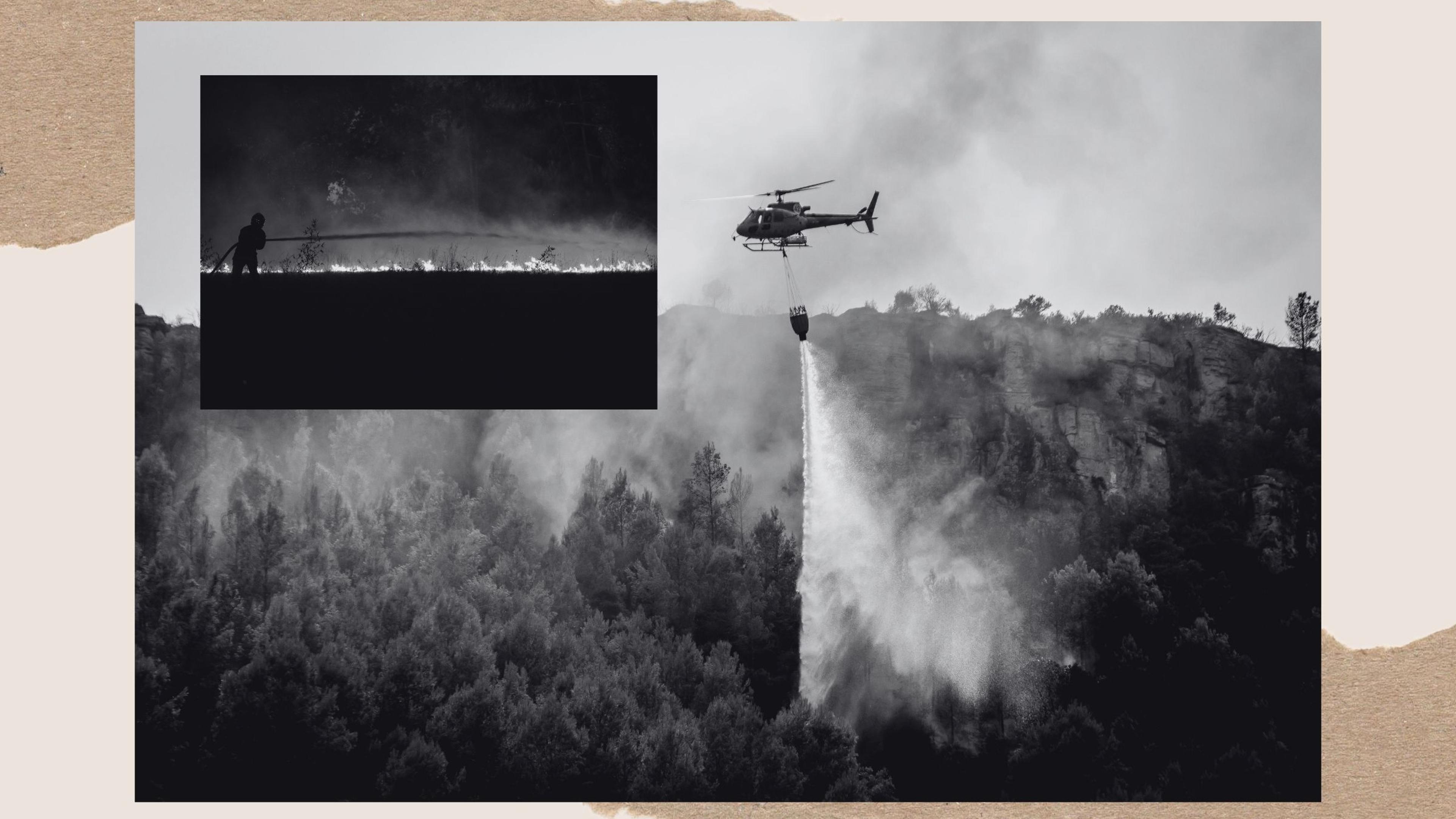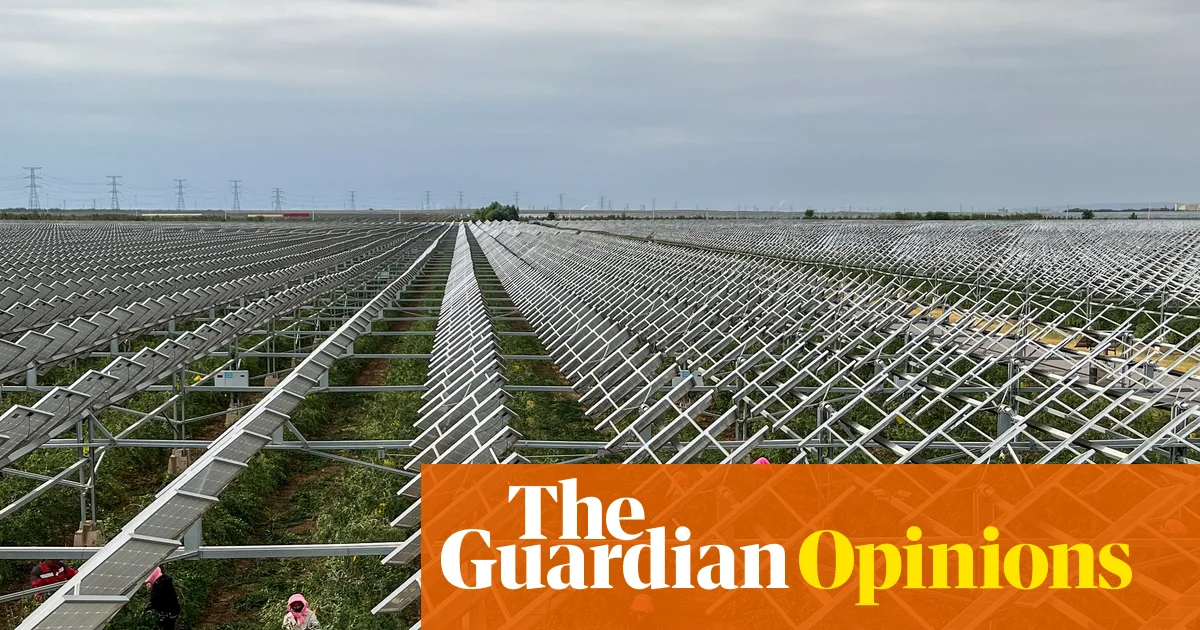
There are many reasons to despair: our green and pleasant land is parched and brown, reservoirs are depleted, and wildfires are wracking the UK, Europe and the US. But there are many more reasons not to despair: despair is self-fulfilling; despair is disempowering; despair is what the bastards want you to feel. But above all, despair is irrational. Let me explain why.However sophisticated our forecasting tools may be, we simply have no means of knowing what comes next. Like the climate, like every ecosystem, society is a complex system. Its properties and adaptive responses cannot be predicted by studying its components in isolation, regardless of the brilliance of social scientists and futurologists. Things happen - unexpected things - sometimes at astonishing speed. In other words, society has tipping points. It can quickly flip from one equilibrium state to another.Take Ireland, to give just one example. Until a few decades ago, the Republic of Ireland was a Catholic theocracy. It had been that way for centuries. If anything, during the first 70 or 80 years of the 20th century, the Catholic church seemed to tighten its grip. Breaking that grip was almost unimaginable. But then a number of events combined in unexpected ways. A series of appalling scandals came to light: systematic sexual violence, the kidnapping of women and children, slave labour and mass mortality in church institutions. Travel and mass media allowed Irish people to see what social and sexual liberation looked like in other countries. The media and international forums allowed brave activists, whose voices had long been suppressed, to be heard more widely. The walls fell faster than anyone could have guessed. Before long, equal marriage and the right to abortion were both legally sanctioned: a shift that had been almost unimaginable.The same can be said for the collapse of state communism, and the end of just about every empire and monarchy that once looked unassailable. The fossil fuel empire is not exempt.The complex system we call society has two equilibrium states: impossible and inevitable. The change we want always looks impossible. Votes for women? You must be off your rocker. Independence for India? Britain will never let it go. Civil rights? Ridiculous! But with sustained pressure, a bit of luck, a change in circumstance, bang!, the impossible happens. Then everyone says, “Well, that was inevitable, wasn’t it?”I think we could be approaching a tipping point on climate breakdown. For years we’ve been told, “You’re asking for the moon. Fossil fuels are here to stay.” Part of me has believed it. But now, as the Guardian’s reporting has shown, suddenly fossil fuels are far more expensive than renewables. Suddenly it is green technologies that are generating vast employment and income. Suddenly, technological barriers that looked insuperable have come tumbling down. Suddenly, fossil-funded politicians look outmoded, ridiculous, corrupt. Suddenly, we are waking up to the need for urgent action, as heat shocks hammer the message home.
Don’t despair about what’s happening to our planet. That’s what they want you to feel
There are social tipping points when the seemingly impossible suddenly becomes inevitable. Good journalism plays an essential role in helping drive these shifts and shows us how real change can happen
774 words~4 min read