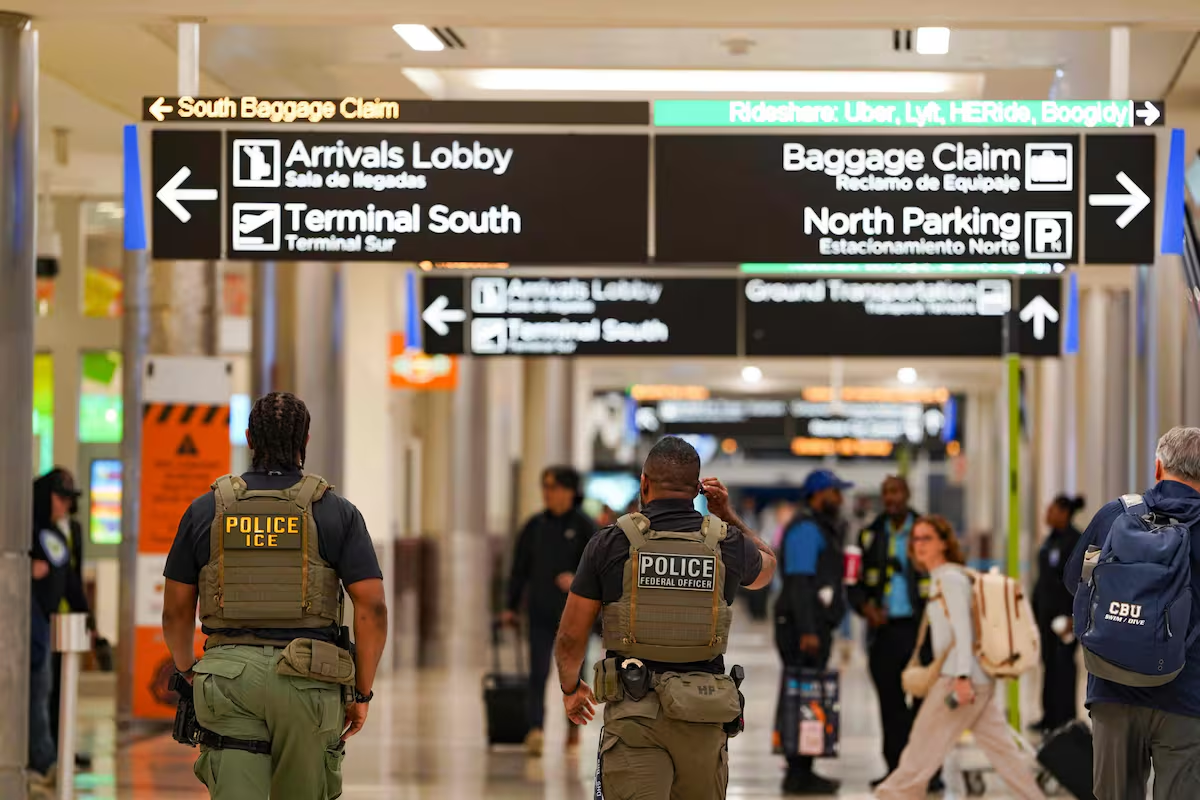
ICE agents walk outside the Ventura County Government Center in Ventura, California, on July 27, 2026. (AFP/Yonhap)
Emboldened by Donald Trump’s anti-immigration policies, US Immigration and Customs Enforcement, or ICE, has intensified its crackdown on immigrants, arresting more than 10,000 people in June alone. With more than 2 million Koreans residing in the US, there’s no reason to think that they will be immune to the crackdowns. In order to learn what to do when an ICE agent comes knocking at your door, the Hankyoreh spoke to Charlotte Weiss, a staff attorney with the Texas Civil Rights Project. Weiss advises not to open the door to ICE agents or police officers who may be accompanying them.“If officers knock on their door at home, the individual can ask through the door if the officer has a warrant and, if so, ask the officer to slip the warrant under the door,” she said. “The warrant must be a judicial warrant signed by a judge, not an administrative warrant, for the officer to enter and search the home,” Weiss said, noting that there have been many cases in which ICE has presented administrative warrants issued by the US Department of Homeland Security rather than judicial ones. An administrative warrant is a document issued by an immigration official that does not authorize forced entry into or a search of a home. For that reason, Weiss said, it is important to check what kind of warrant is being presented, who issued it (a court or the Department of Homeland Security), whether it bears the signature of a federal judge, and the scope of the search. Weiss said that there is no obligation to open the door to officers who present administrative warrants. According to the ACLU, if ICE agents force their way into your home, say you don’t consent, but don’t try to physically stop them. The attorney also recommended remaining silent when police or ICE agents question you, as your responses could be used against you in a court of law. “Under the US Constitution, individuals have a right to remain silent if officers stop or question them. They can assert this right by stating they are exercising their right to remain silent and wish to speak with an attorney,” she said. Weiss cautioned against turning encounters with immigration agents into a confrontation, as well as attempts to avoid the situation by lying about who you are or submitting false documentation, as these could lead to criminal charges. Should you feel that your rights have been violated in the process of arrest, Weiss recommended documenting as much as possible: badge numbers, license plate numbers, what agency they work for, and what was said during the interaction. She also recommended getting contact information for witnesses to the arrest. For those already in detention after being arrested by ICE, Weiss said that filing a habeas petition is often the fastest way to be released. “A habeas petition is filed in federal court where an individual states that their detention is unlawful under a federal statute or the US Constitution. Habeas petitions are emergency filings that have risen sharply in federal courts because so many people are being arrested and detained. The rate at which habeas petitions are decided often depends on the judge and their workload,” she said. By Kwak Jin-san, staff reporterPlease direct questions or comments to [english@hani.co.kr]