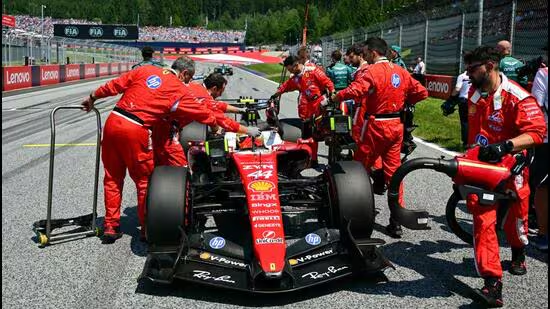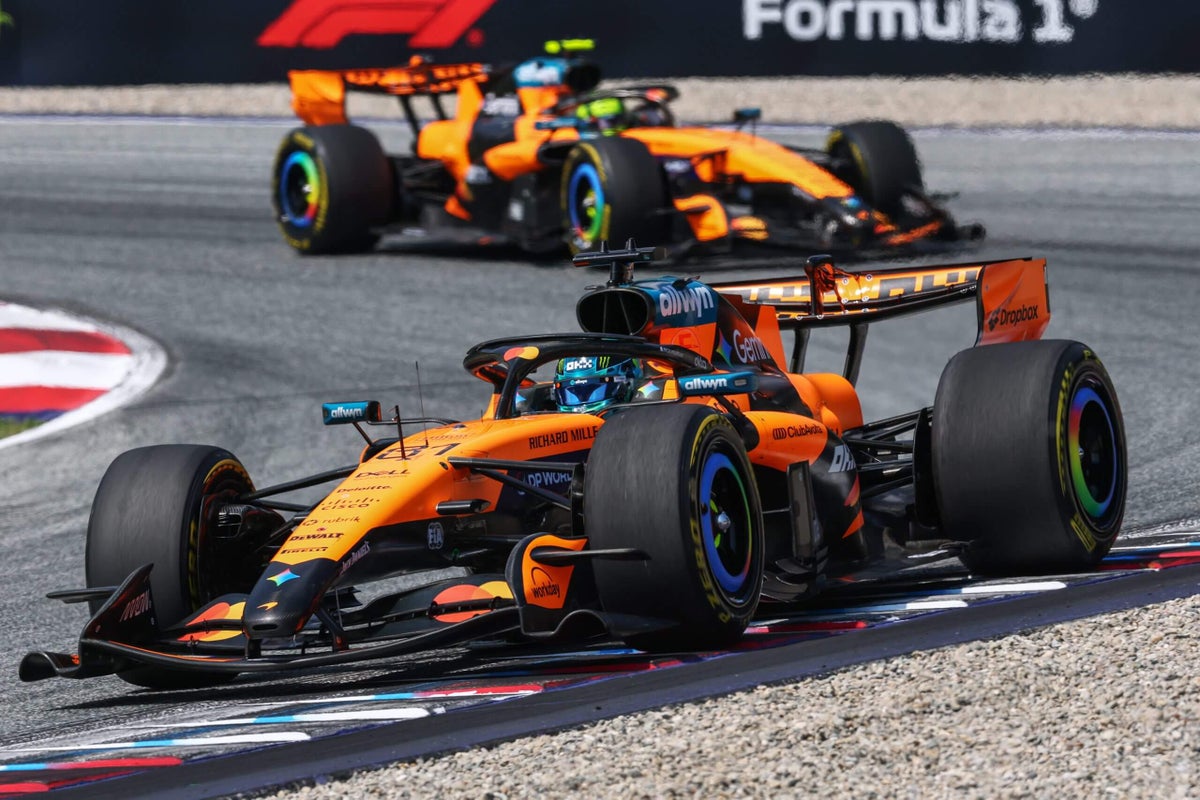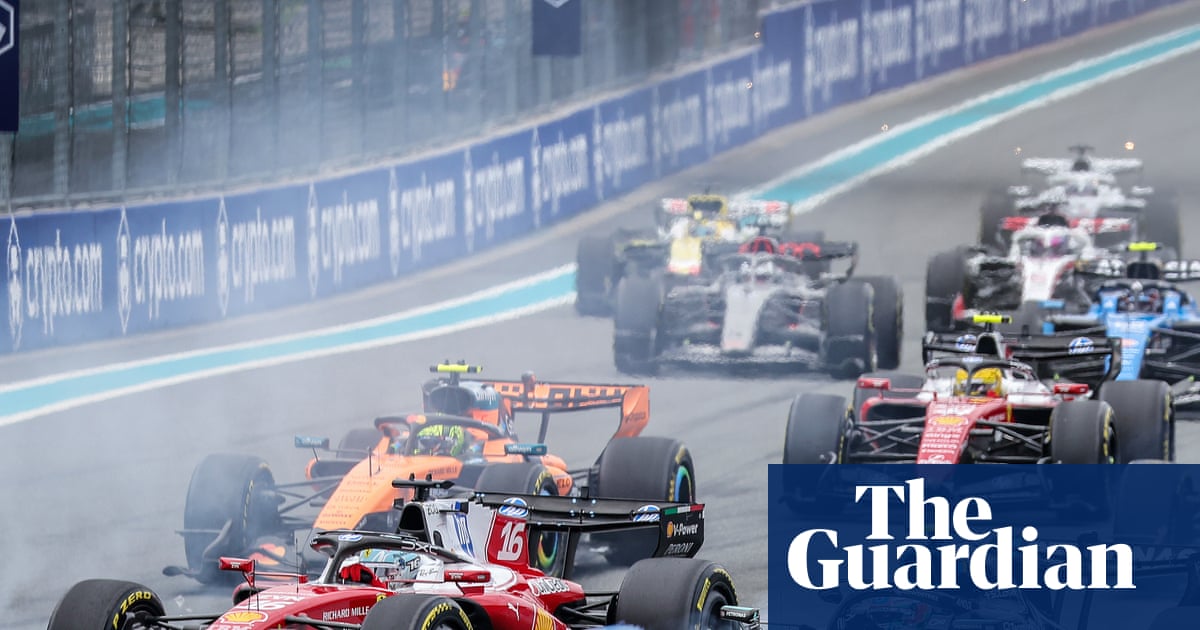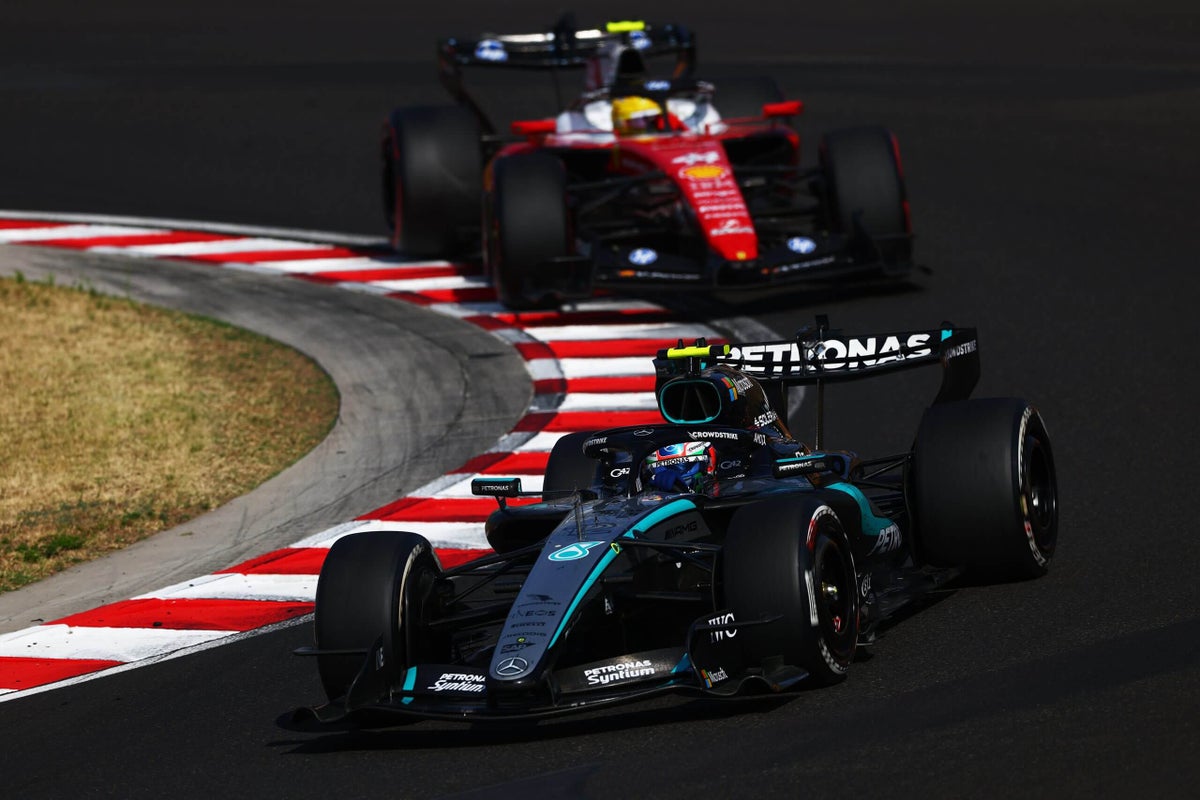
Across the opening 11 rounds of the 2026 Formula 1 season, the pecking order among most of the teams has fluctuated.Mercedes has been the only consistently strong squad, coming out of the gates fast in this new technical-regulation era in terms of both car package and engine. But the performance edge it held in those early rounds has slowly dissipated as its closest rivals introduced regular upgrades.That developmental race will be one of the main factors that determines if any of the other teams can stop Mercedes winning the 2026 constructors’ championship.The gains being achieved with these update packages aren’t minor improvements; it’s chunks of a second at a time, putting those teams into contention for podiums and even wins.Take Ferrari in Barcelona in June, Red Bull in Austria a couple of weeks later or McLaren in Hungary last month. All three brought upgrade packages to those weekends that pushed their drivers back into the top mix with Mercedes.This is normal for the start of a new-regulations era in F1. Performance naturally starts to converge as the rules age and the teams settle on the best design concepts, which are then only further refined by ever-smaller degrees.But coming into the 2026 campaign, nearly everything changed on the cars, from chassis aerodynamics to the hybrid engines, and when teams started fully focusing on developing their cars for this year also varied. The latter point then had a knock-on impact on early-season upgrade plans.“(But) what we’re seeing in 2026 is Formula 1 operating at a level that has never been the case before,” McLaren team principal Andrea Stella said in Austria. “The overall gain in terms of pure performance development (is there again), but performance delivery to track is to a higher level than I’ve ever seen before.”There is one element shared between all 11 teams: they face the same cost-cap restraint.This controls a team’s annual budget, and largely pertains to car development. It was increased by $80million to $215m for this season, to reflect the additional development work the new rules required, and the goal is to create a more level playing field by limiting spending overall.Looking across the grid, a few strategies have emerged: race-by-race incremental upgrades, waiting to add a big package all at once, and a hybrid of the first two approaches.Some teams opted to make an early push on their upgrades, including Ferrari and Red Bull. Ferrari brought 32 upgrades across eight races, with its largest package coming during the Miami Grand Prix at the start of May, with 11 components changed there, followed by an eight-component upgrade in Barcelona.The most upgraded car area for Ferrari is the floor and underbody, with 11 developments. McLaren, meanwhile, has focused on its car corners and suspension parts, with 10 such upgrades. Red Bull has done significant work on its rear wing and main bodywork, with eight upgrades for each.Ferrari has brought several early-season upgrade packages over the first 11 races. (Ben Stansall / AFP / Getty Images)Ferrari’s aggressive upgrade strategy through the first half of the season was enough for Mercedes team principal Toto Wolff to raise questions about the Italian team’s spending. By contrast, Mercedes has introduced just one major upgrade package, which arrived in Canada in late May.“We’re a little bit surprised that Ferrari can throw these huge updates at the car in the way they do,” Wolff said in Austria. “In my opinion, they need to be running out of cost-cap money soon, because we can’t do that. We simply lack the buffer in the cost cap to be able to bring so many parts in the way they do.“Hopefully, that’s going to change towards the end of the season. They won’t be able to bring any more parts. The logic would say that, and then we’re going to come with more.”Ferrari counterpart Fred Vasseur shared his thoughts on Wolff’s comments during the subsequent British GP weekend. He said he “found it quite ironic, coming from Toto and Mercedes. When Red Bull is developing or when Mercedes is developing, they are geniuses. When we are developing, we are cheating.”For Ferrari, it’s all about getting upgrades onto the car as fast as it can. “It’s better to have a couple of tenths for five races than a couple of tenths for the last two,” Vasseur said.But sometimes, he added, such upgrades aren’t part of a big package of new components but rather “a modification of some parts, nothing else.” This can mean remaking existing ones from lighter metal, which brings significant lap-time gains even if the aerodynamic benefit may be small.Some other teams are taking a different approach, out of differing necessities.Aston Martin, for example, has been essentially making a B-spec car (a major mid-season overhaul that acts as an almost entirely new car concept) after starting the season badly. Aston brought 16 developments to Hungary for its big chassis upgrade ahead of F1’s ongoing summer break, which will be paired with a Honda engine update once the season resumes at Zandvoort in the Netherlands in a couple of weeks.Williams, which Aston moved ahead of in Hungary thanks to its upgrade work, is targeting the Azerbaijan GP (in late September, three races after Zandvoort) for its big upgrade.Lance Stroll in the upgraded Aston Martin at the 2026 Hungarian GP. (Clive Rose/Getty Images)The car development battle carries a bit of mystery for the teams as well.It’s only when the car hits the tarmac during a race weekend that they can see if on-track performance correlates with the data gathered back in the factories when it comes to selecting new parts. Complicating the picture for each team is whether its work will suit one circuit or setting more than another.“You never know what someone’s going to bring, and those upgrades can change,” Cadillac CEO Dan Towriss said at the British GP just over a month ago. “As the season goes on, in theory, the change is going to become more incremental.”The one thing that is clearer in the development battle for the grid’s midfield, at least to Cadillac from its position right at the back, Towriss said, is that it knows “what our development trajectories look like relative to some of the other teams. We know which teams are within reach, and which ones are just doing something different (ahead)”.Ferrari has shown the power of a strong development trajectory, steadily closing the gap to just 72 points between it and Mercedes with around half the 23-event season to go. Then there’s the case of Racing Bulls, which overtook Alpine to head the midfield with a series of successful upgrades before the summer break.But whether the rate of development for this season will slow down depends on where teams are within their cost-cap restraints and when they’ll have to start focusing more on their 2027 car. Then, a fresh development race will begin.“Let’s see who is investing early on next year,” Red Bull team boss Laurent Mekies said in Austria, “and who is investing a bit more this year, and who has managed to somehow unlock a bit more capacity (to do both).”
Mercedes appears dominant in F1 2026 but could yet lose via a vital, off-track, race
As F1's new rules era develops, teams are finding regular big gains via upgraded parts for their cars - it may yet change the title picture
1,183 words~5 min read