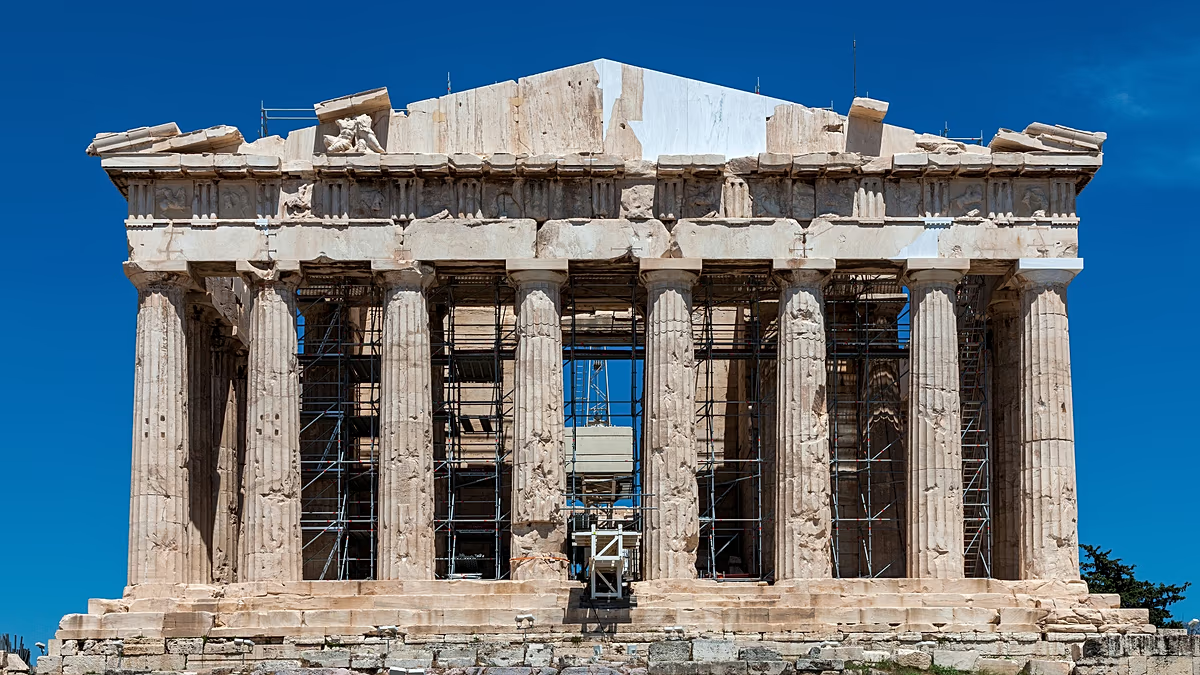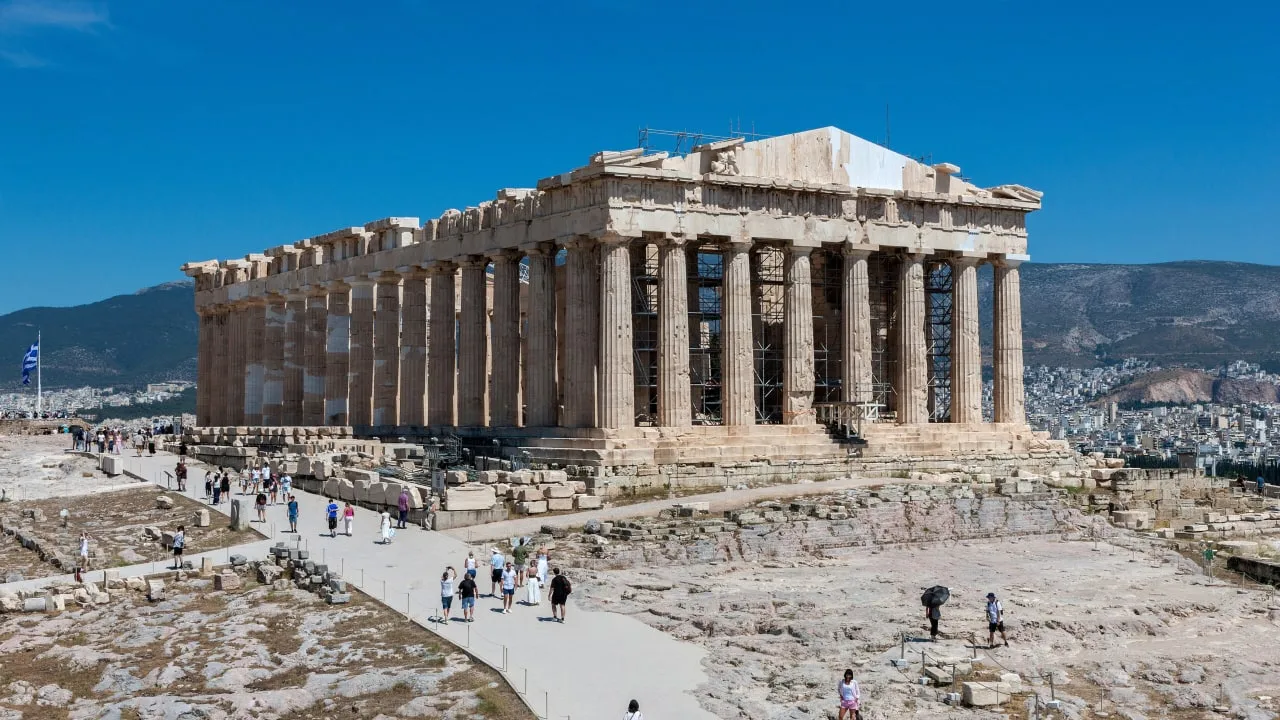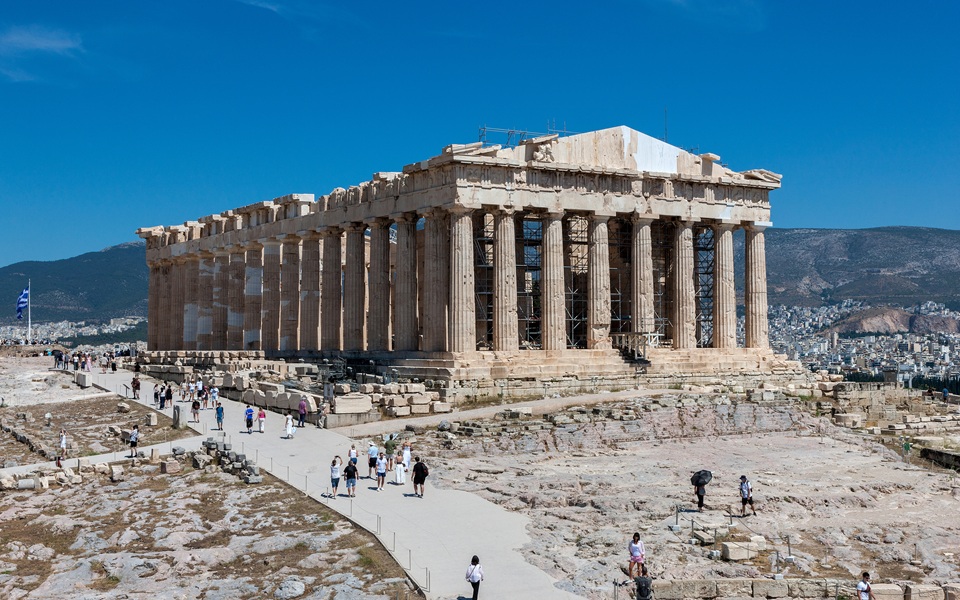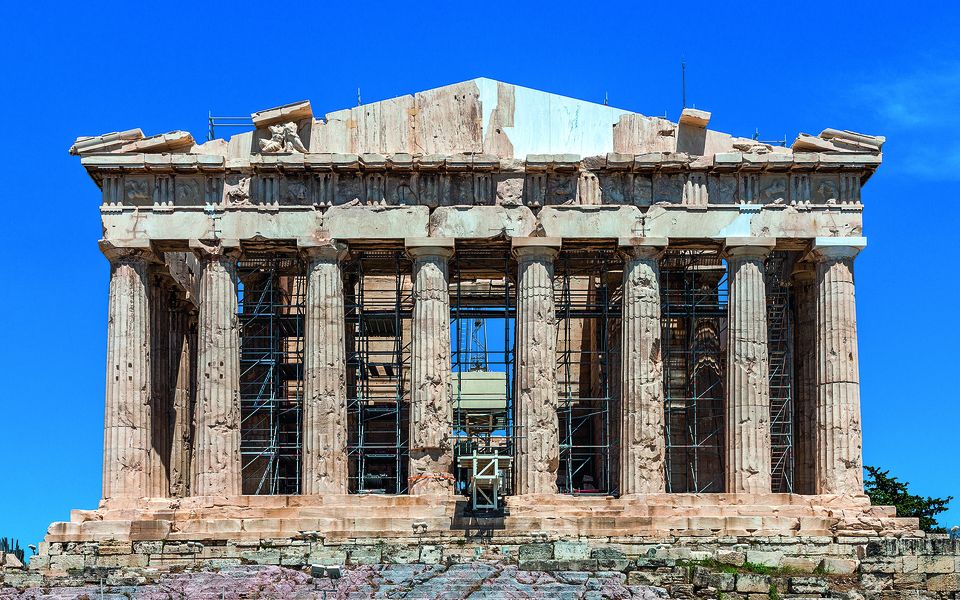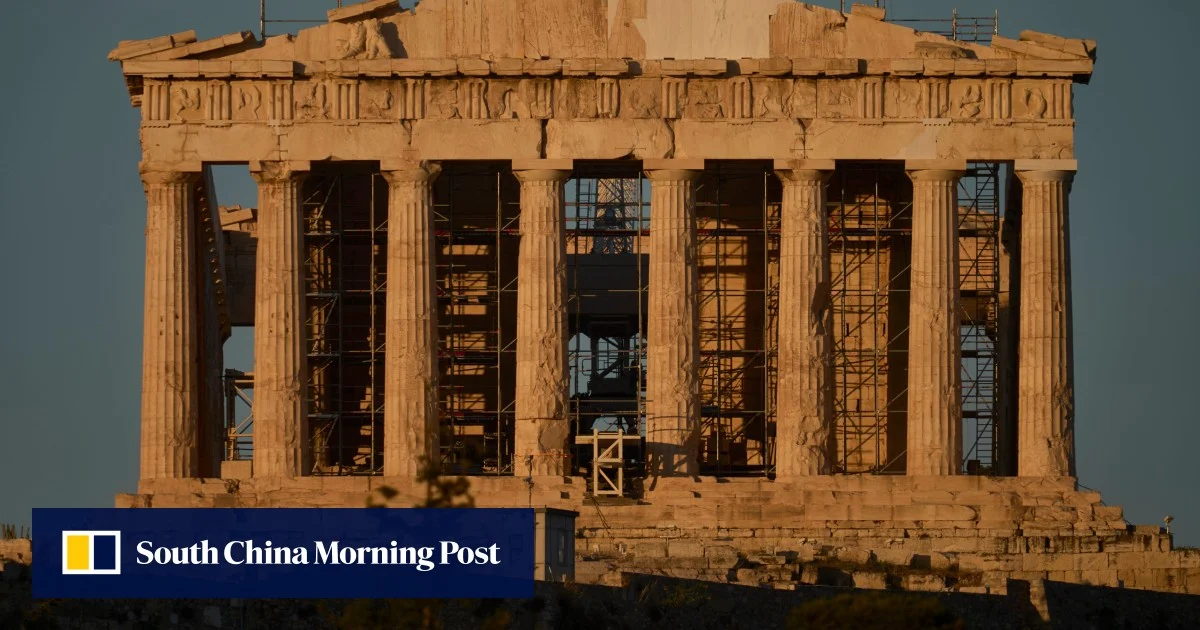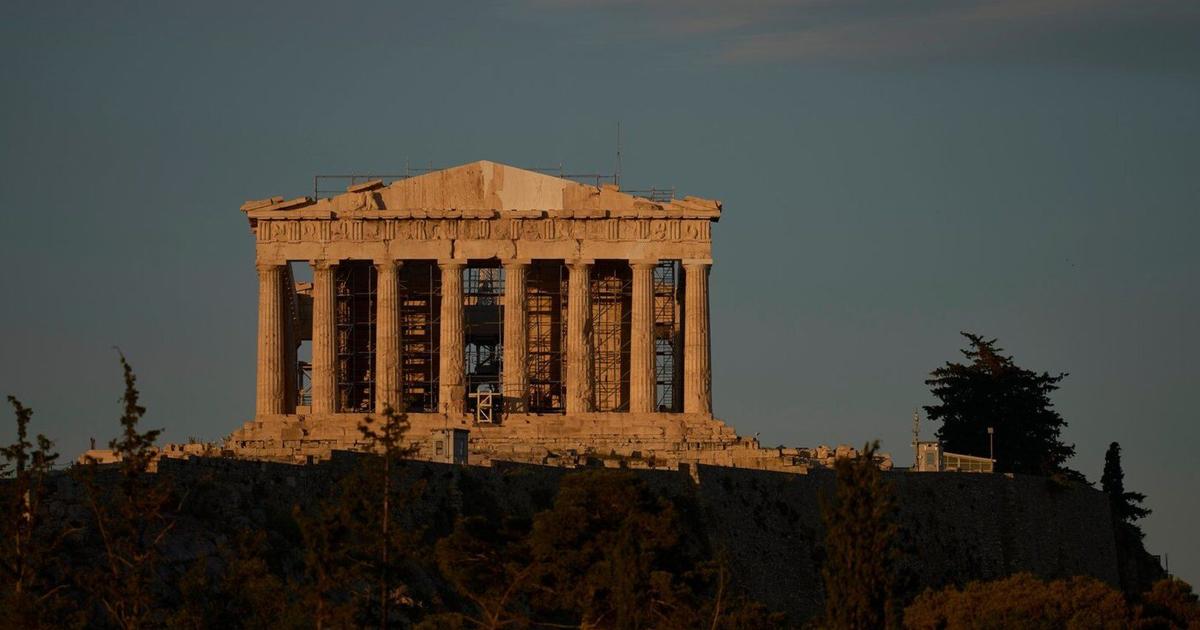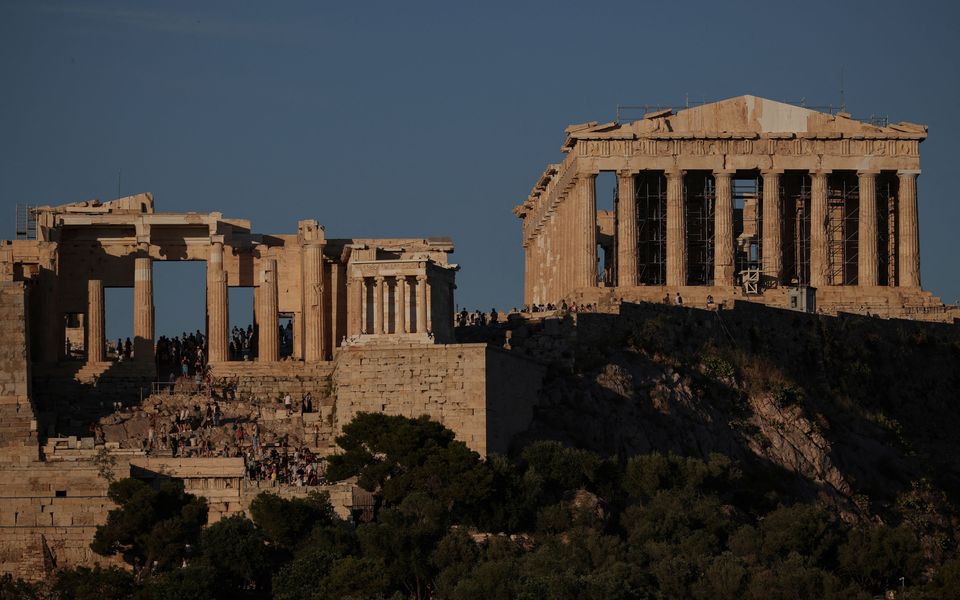
For the first time in roughly 220 years, the Parthenon’s west pediment once again appears complete. On June 15, the Acropolis Restoration Service permanently removed the scaffolding from the temple’s western facade, revealing two new orthostates and a fully restored backing wall behind them.
The moment marked the end of a rescue operation that began with a restoration study in 2011 and turned into, over more than a decade, one of the most demanding conservation efforts on the Acropolis. It was carried out largely out of sight, behind the sculpted stones tourists photograph from the hill below.
Architect Kosmas Skaris supervised the restoration of that hidden structure – the backing wall – from 2018 through 2025. He first worked on the west pediment in 2012, when the Committee for the Conservation of the Acropolis Monuments (ESMA) appointed him to prepare the restoration study.
“It was a happy coincidence to be at the monument again in 2018 and be assigned the supervision of the restoration work of the backing wall that I had studied in the past,” Skaris said. “It is important for an architect to be involved in the execution of the work he studied, let alone be the supervisor himself.” The pediment’s triangular facade is made of two parts: the orthostates, the upright stones visible from outside, and the backing wall behind them, which holds the roof beams and supports the sculptures. Skaris’ colleague, Vasileia Manidaki, now head of the construction site, studied the orthostates. Skaris took over the backing wall.