The lasting legacy of the Iran war will likely be a renewed impetus for energy-importing nations to lessen their dependence on fossil fuels. The big question for these countries is how to accomplish this in a cost-effective, politically acceptable way that does not create new vulnerabilities. This is no easy feat.The debate is often framed along left- and right-wing political fault lines. Progressives typically say the conflict underscores the need to accelerate the transition to renewables and electric vehicles (EVs), while conservatives argue it shows the need to develop more fossil fuel production outside the Middle East.
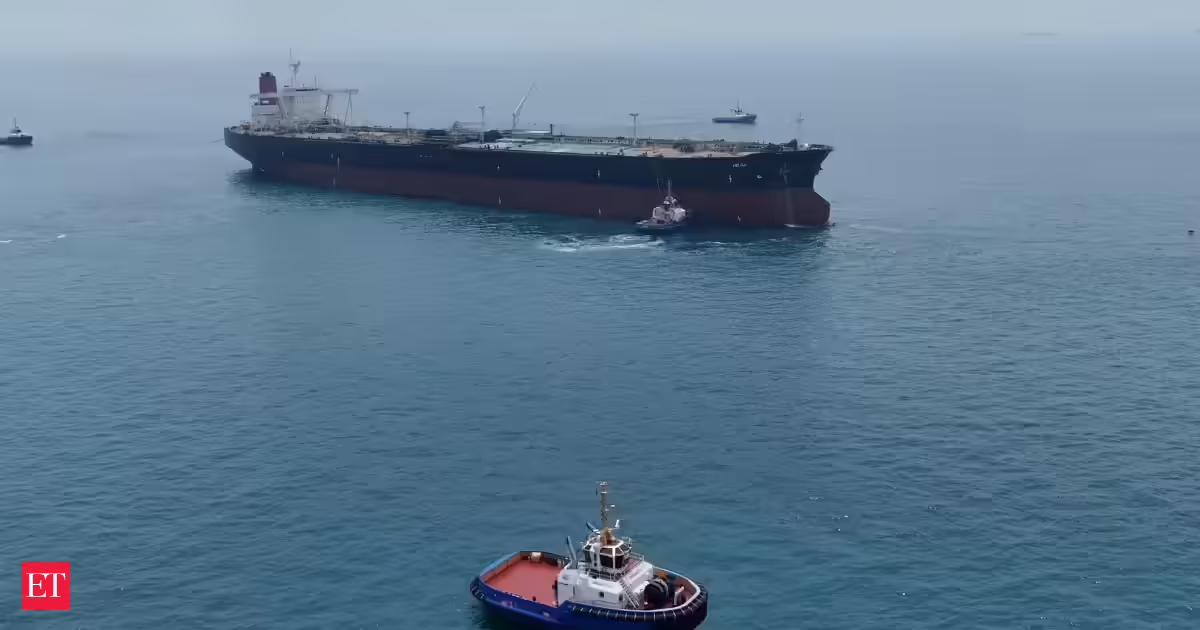
The Iran war, launched by the United States and Israel on Feb. 28, has effectively closed the Strait of Hormuz. The narrow waterway previously carried close to 20 percent of global crude, refined products and liquefied natural gas (LNG).
Markets are still pricing in an eventual reopening of the strait, but the risks around the movement of crude and fuel from the Gulf have shifted in the past five months, as Iran is likely to end up with some form of control over vessel movements through the choke point.
For fuel-importing nations, the Iran war is the second crisis in four years. Russia's 2022 invasion of Ukraine caused prices for crude, fuel, LNG and thermal coal to spike globally amid fears that exports from Russia would be curtailed.