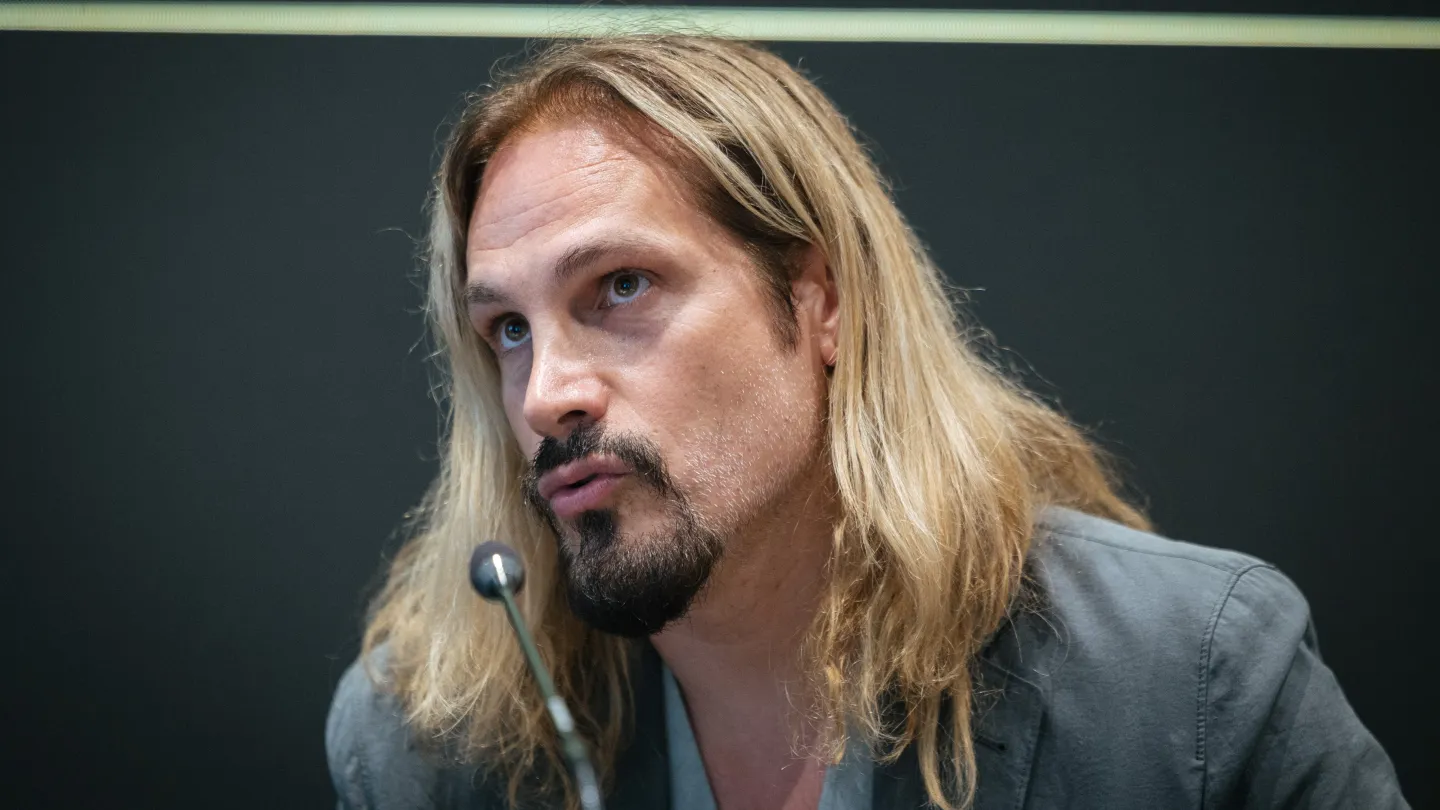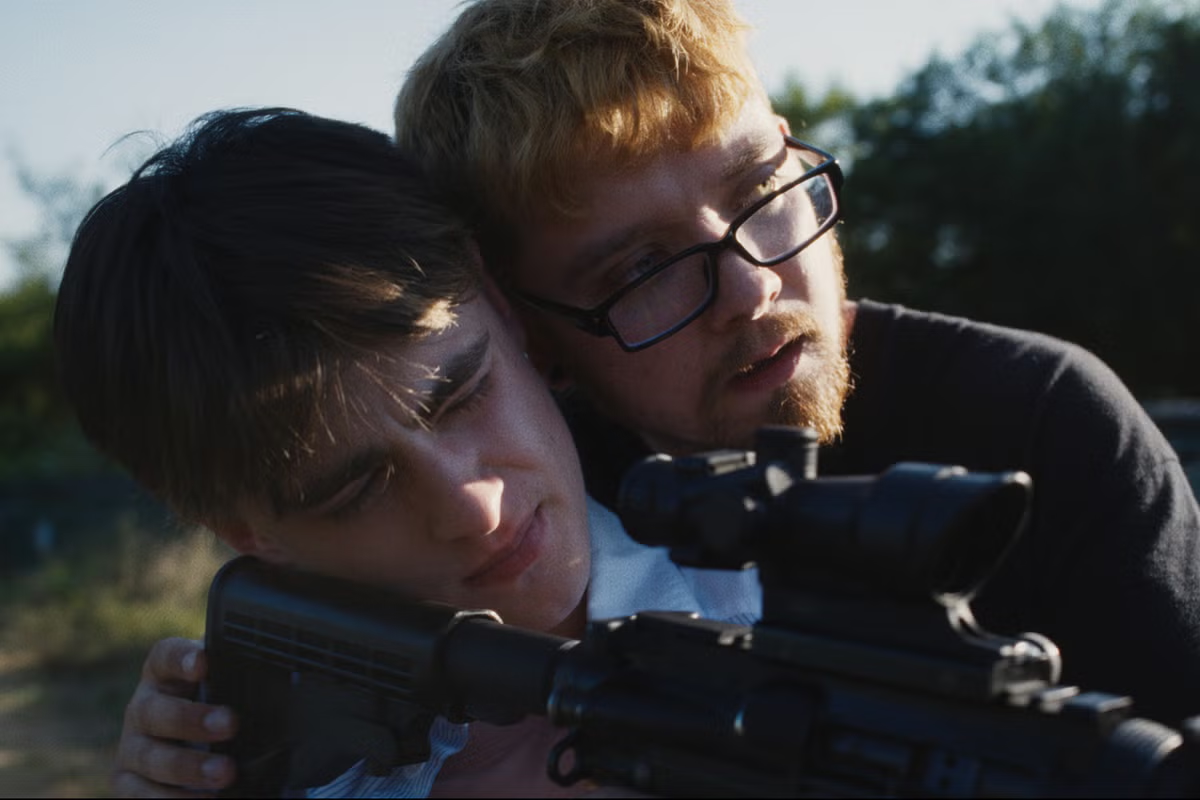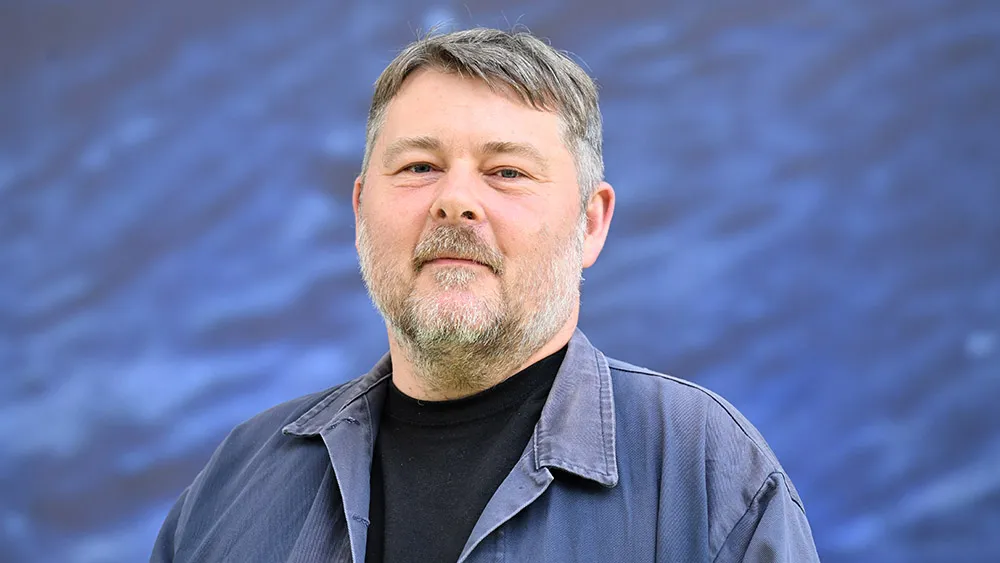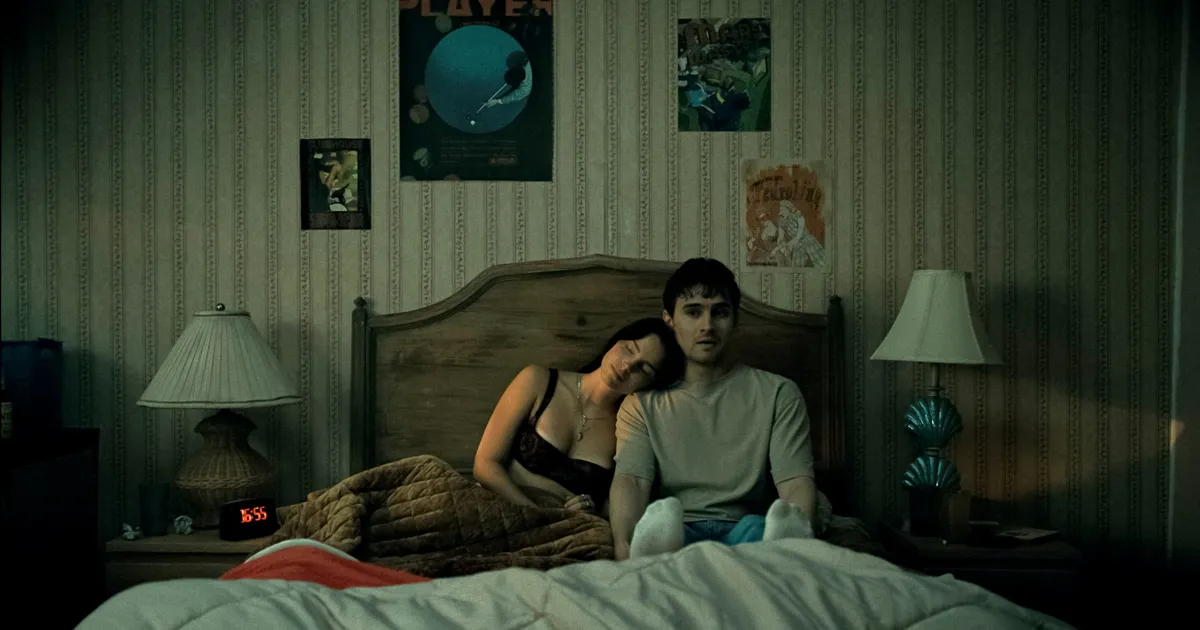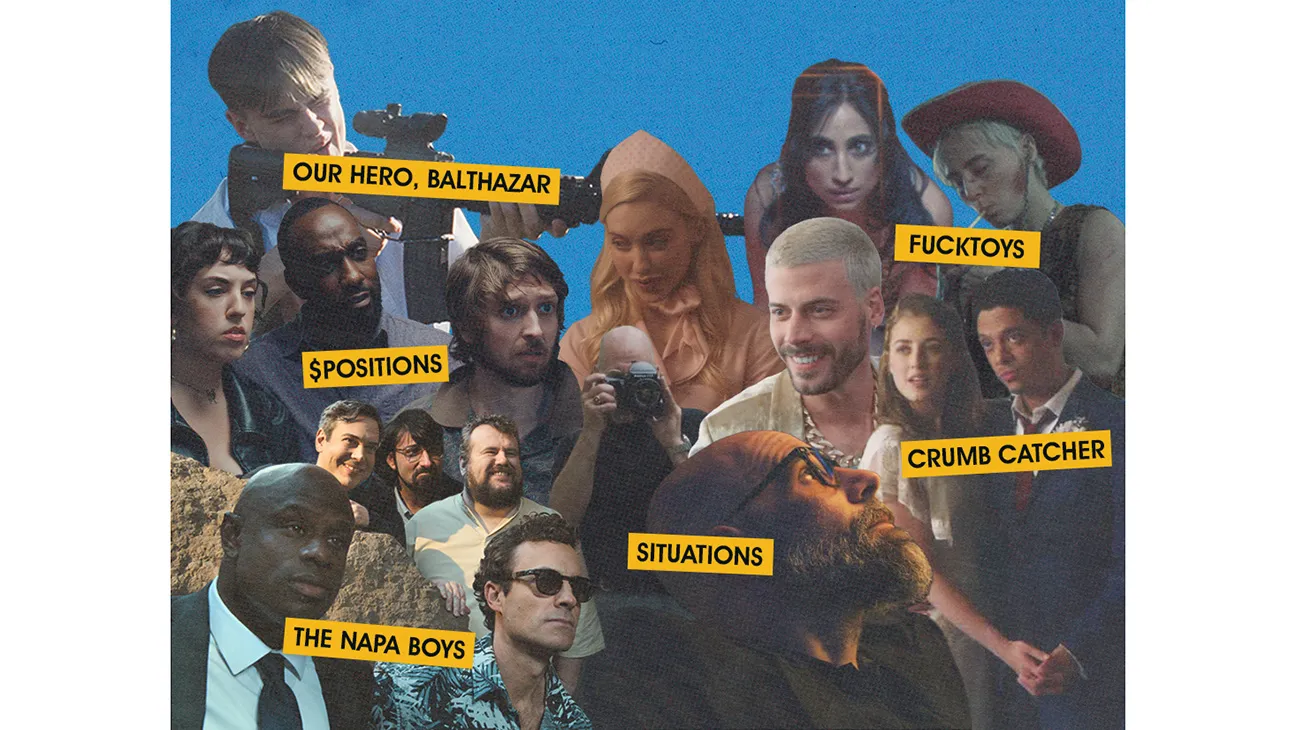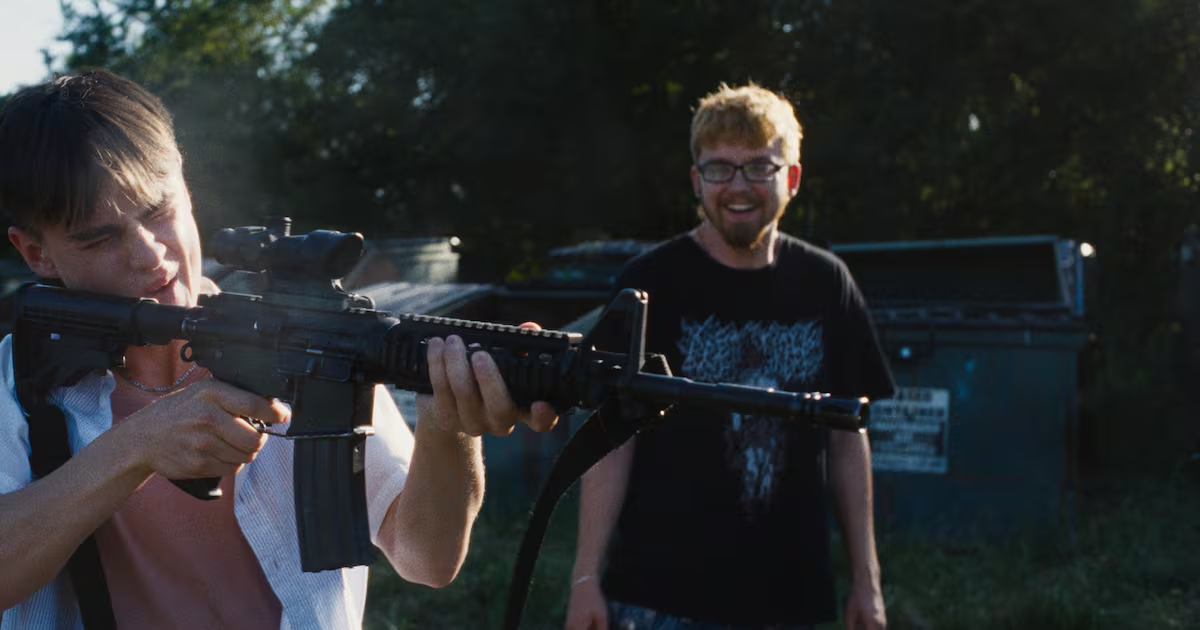
For more than a decade, Oscar Boyson has helped shape contemporary American independent cinema. As a producer, he has collaborated with such filmmakers as Noah Baumbach, Greta Gerwig and the Safdie brothers, establishing himself as one of the key behind-the-scenes figures in New York’s vanguard filmmaking community.In recent years Boyson has gradually migrated behind the camera. After directing a string of short films and music videos, notably the Sundance-selected Power Signal, he makes his hotly anticipated feature debut with Our Hero, Balthazar, a project he also cowrote and coproduced.“Nobody was trying to produce this movie and get me to direct it except me,” says Boyson. “I don’t have a big sci-fi, genre-type imagination. So ideas that I can get really excited about don’t come that often. When people started saying no – all the people you usually go to for financing – I thought: okay, this has something. This is going to stand out.”The film, starring Jaeden Martell and Asa Butterfield, centres on a ridiculously affluent New York teenager who becomes convinced he can impress a female classmate by preventing a mass shooting. After reaching out to a lonely young man named Solomon, the misguided title character jets off to Texas, kick-starting a chain of events often best watched between the fingers, as it shifts between comedy and deliriously queasy moral ambiguity. Even the title is a sideswipe. Buoyed by unlimited resources and a gullible chum, Balthazar might, at best, be described as an antihero.“It was hard to resist the temptation to make Balthazar more consciously manipulative,” says Boyson. “It would have been very easy to turn him into a master manipulator, sociopath guy. We had to keep going back and saying: ‘Hey, he’s just a kid.’ He is just 17. There’s something really bad that’s brewing in him, but he doesn’t exactly know what it is yet. Ricky [Camilleri, who wrote the screenplay with Boyson] and I talked about how, a lot of times when you see sociopaths in movies, they’re geniuses, and that’s not the way most of them are.”Oscar Boyson In common with such recent anxious fare as If I Had Legs, I’d Kick You or indeed many of the frantic, stressful films produced by Boyson, Our Hero, Balthazar is not short on ideas. Underpinned by barbed observations on class, online identity, and masculinity, Balthazar’s journey is as clueless as it is narcissistic. When Solomon explains that his disabled grandmother is about to lose her trailer, Balthazar imagines this is a good news story as now she can leave for better accommodation.“I definitely have a fear of boring the audience,” says the director. “Especially with my first movie, it was really important to grab people’s attention and not let go.”At its most angular moments, the film equally takes aim at a generation shaped by social media, where activism, trauma and even violence are increasingly filtered through performance. The result is a provocative and loaded satire, daringly rooted in the US’s relationship with gun violence.“For me, it’s really not about school shootings,” he says. “It’s almost about how school shootings, mass shootings, and even political assassinations in this country have become performances in themselves. They’ve become memes. You see people like the guy who shot Charlie Kirk or the guy who attempted to kill Trump, and they feel completely disassociated from the online mummification of the act versus the individual themselves.”Making the movie is one thing that’s a challenge. But getting people to see it is really a challenge tooBoyson grew up in a small town in Maine, where as a youngster he was already roping his peers into helping out with his film productions. He got his industry start at 368 Broadway, an incubator for a generation of indie filmmakers in the late 2000s. The low-rent loft building, known among its tenants as the Diane Fink School of Filmmaking (named for the landlord), housed an informal creative community that included Lena Dunham, Casey and Van Neistat, and Catfish’s Ariel and Nev Schulman. Sharing office and production space, the group wrote, shot and edited many of the projects that would launch their careers. Boyson has spent more than a decade helping his Diane Fink colleagues realise their films. As a producer, he worked across some of the defining titles of the post-Weinstein independent cinema revival, collaborating with Noah Baumbach and Greta Gerwig on Frances Ha and Mistress America, and with Josh and Benny Safdie on Heaven Knows What, Good Time and Uncut Gems.“When I moved to New York, I met Casey and Van Neistat because I applied for a job at their little studio that I saw on Craigslist,” recalls Boyson. “I really didn’t know anybody. Craigslist is not necessarily where I’d suggest anybody start. But it worked for me. Josh and Benny Safdie were right down the hall, so they were among the first people I met in that building. Lena Dunham was there. Greta Gerwig was there. That’s how I met her. I think those were some of the first people I met who were my age where I thought: whoa, you’re way further along than I am. They were very ambitious and motivated people who were just like: ‘I’ve got a movie. I’m going to go make it.’ When you have the opportunity to support someone’s vision, like I did with Greta, and with Josh and Benny, you can learn so much. I’m not surprised at all by where they’ve ended up.”While racking up production credits, Boyson fashioned a parallel career directing television and documentary portraits of Jeff Koons, Katharine Hepburn, Grace Jones and Cristóbal Balenciaga. Our Hero, Balthazar arrives after years spent solving creative and practical problems, while attempting, unsuccessfully, to get projects he himself initiated into production. “I’ve tried to make movies before. This was not the first one I attempted as a director, and it’s really hard,” he says. “I’ve had the experience of failing a few times. Because this one was designed from the start as ‘I’m going to do it with whatever money we have’. That was empowering.”If Our Hero, Balthazar reflects Boyson’s interests as a writer, its production reflects his years as a producer. He assembled an impossibly hip cast including Jennifer Ehle, Becky Ann Baker, Chris Bauer and Danny McCarthy alongside Martell and Butterfield.“These are all people I just revere and love,” says Boyson. “Whenever I see them pop up in a movie, whether it’s a big role or a small role, I get really excited. To have them all assembled in the movie was a dream. One of the advantages of living in New York is that if you can be flexible, you write something good, and you’re willing to make it work for an actor, there are just so many good ones.”He approached his first narrative from the perspective of someone who had spent years watching from the sidelines while other filmmakers worked. Producing, he says, taught him how films were built. But directing was still something of a baptism of fire. “The number of decisions you have to make and take responsibility for is astronomically larger than when you’re producing. That’s a great privilege. The really new part is that making the movie is one thing that’s a challenge. But getting people to see it is really a challenge too. We put so much thought and energy into making it a theatrical experience: something where you’re laughing, then you’re scared, then you’re gasping, then maybe you’re a little turned on, or maybe you’re even crying. That’s what I expect when I pay 15 bucks and go to the movies.”Boyson’s recent visit to the Galway Film Fleadh made an impression: “Whatever you guys are doing in Ireland is remarkable because you’ve managed to produce so many great filmmakers and actors for such a small country.” But the film industry, as a whole, has much work to do. Younger audiences, Boyson notes, often associate any film that isn’t a superhero franchise or directed by Christopher Nolan as something inaccessible or dutiful. Our Hero, Balthazar, conversely, already has a devoted following, with fans returning for repeat viewings during the film’s theatrical run in the US.“We need to make movies that teach a new audience that an indie film can actually be a lot more fun than a big Marvel movie,” he says. “For a lot of young people who missed those formative moviegoing years during the pandemic, when they hear ‘indie film’ they think boring. They think vanity project. They think artsy, masturbatory. They think: what does that have to do with me? Or they think it was made by a boomer trying to make a Gen Z story, and it feels fake. It’s fine if you make something that’s not for everyone. But the people greenlighting movies are more concerned about not pissing anybody off than they are about making something good.”That argument is hard to dispute.“There are so many movies coming out where I’m just thinking: Who is this for?” Boyson sighs. “This is nobody’s favourite movie.”Our Hero, Balthazar is available on digital platforms from August 11th
Director Oscar Boyson: ‘An indie film can be a lot more fun than a big Marvel movie’
The provocative satire Our Hero, Balthazar is the debut feature of a filmmaker who has ‘a fear of boring the audience’
1,511 words~7 min read