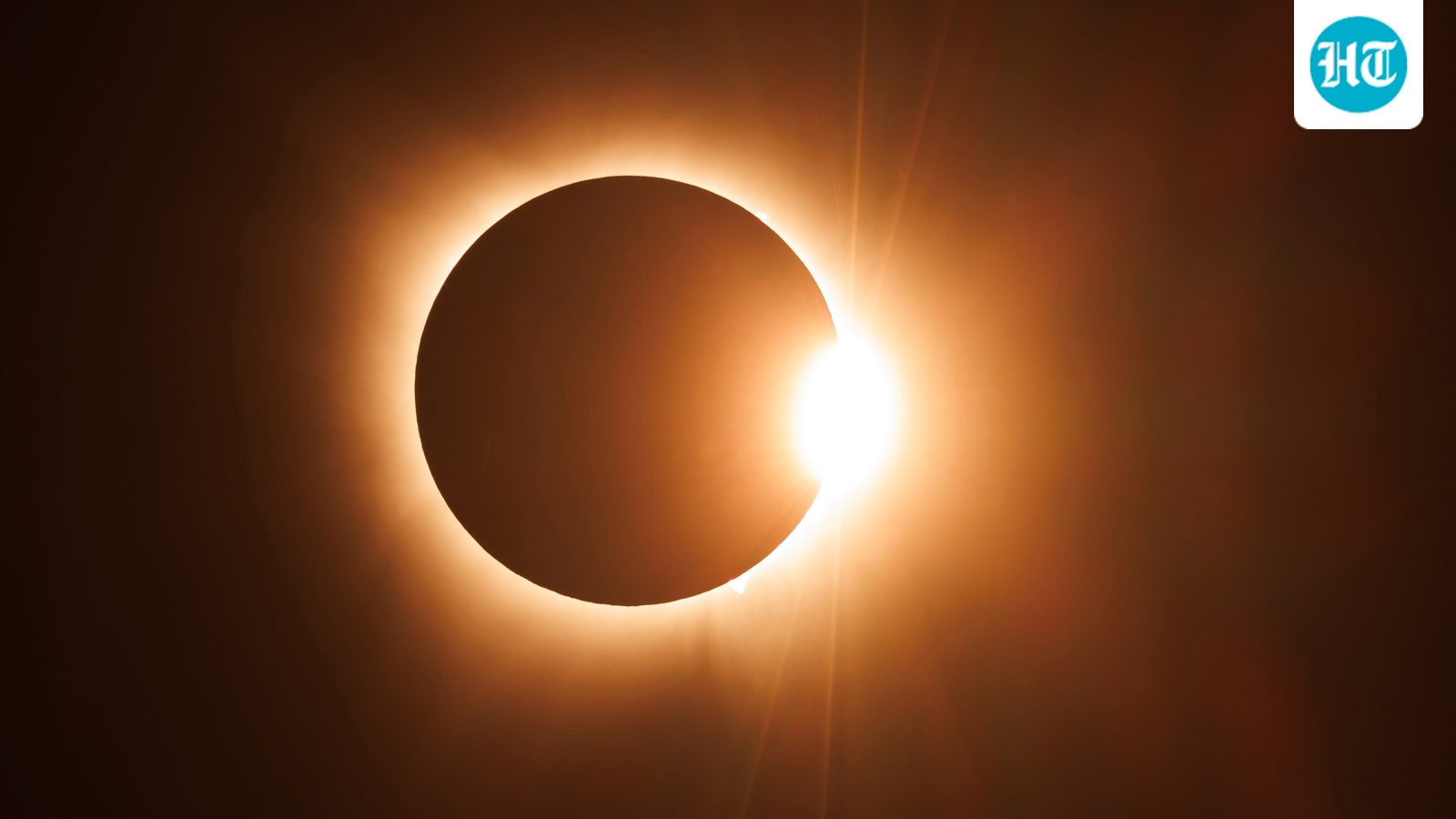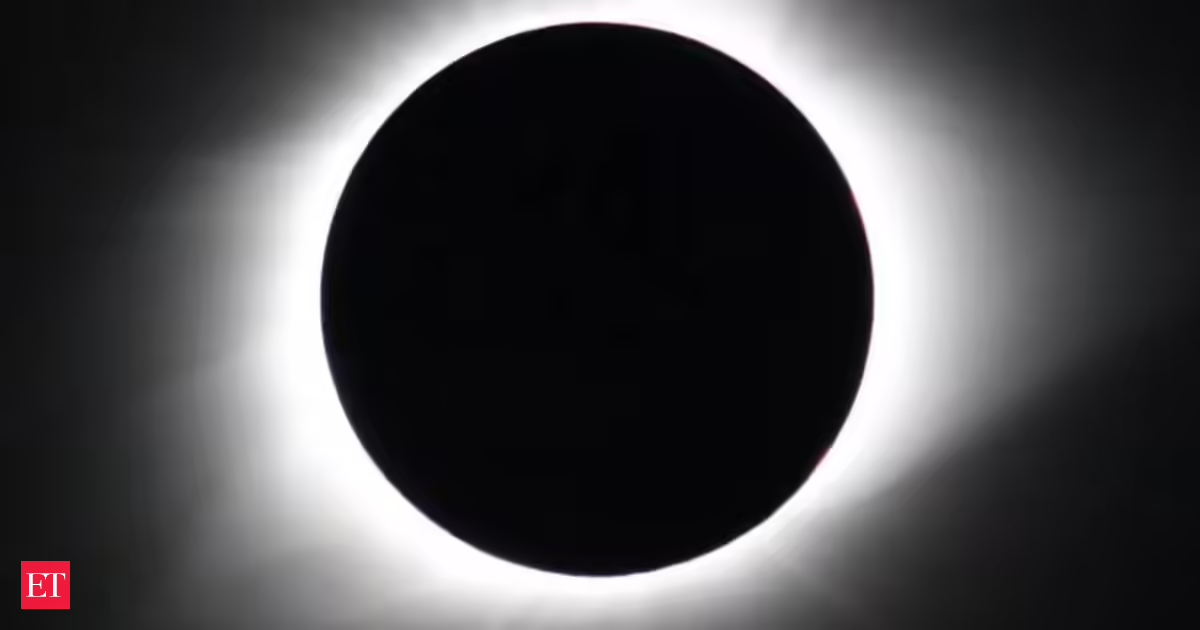
Surya Grahan 2026 Sutak time India: The second solar eclipse of 2026 will take place on August 12, bringing a total solar eclipse to parts of the world. However, people in India will not be able to see the eclipse because it will occur when the Sun is below the horizon in the country. NASA has listed Greenland, Iceland, Spain, Russia and a small part of Portugal among the places where the total eclipse will be visible. A partial eclipse will be seen across wider parts of Europe, Africa and North America.Also Read: Hariyali Amavasya 2026 Date: Is it on August 11 or 12? Check shubh muhurat, snan-daan time and why this Savan Amawas is specialThe August 12 solar eclipse is also drawing attention in India because of questions around Surya Grahan 2026 time in India, Sutak Kaal and traditional rules associated with the celestial event.12 August 2026 Surya Grahan time in IndiaThe eclipse will take place on Wednesday, August 12, 2026. According to global eclipse calculations, the partial phase will begin at 3:34:15 pm UTC and end at 7:57:57 pm UTC. The maximum eclipse will occur at 5:46:06 pm UTC.Converted to Indian Standard Time, the global eclipse window falls approximately between 9:04 pm on August 12 and 1:28 am on August 13, with the maximum phase around 11:16 pm on August 12.However, these are global timings rather than timings for an eclipse visible from a particular Indian city. Since the Sun will not be above the horizon in India during the event, the eclipse cannot be observed from Indian locations.Is 12 August Surya Grahan 2026 visible in India?No. The August 12, 2026 solar eclipse will not be visible from India.The eclipse's path of totality will cross parts of Greenland, Iceland, northern Russia, Spain and a small area of Portugal. Partial phases will be visible from a much larger area, including parts of Europe, Africa and North America.For Indian viewers, this means there will be no direct view of the Sun being covered by the Moon. People interested in the event can instead follow coverage or livestreams from astronomy organisations and observatories.What is special about the August 12 solar eclipse?The August 12 event is a total solar eclipse, meaning the Moon will completely cover the Sun for observers located along the narrow path of totality.NASA's eclipse map shows the path crossing Greenland, Iceland and Spain, with the totality path also extending through northern Russia and a small portion of Portugal. Areas outside this narrow path can experience a partial solar eclipse if the Sun is above the horizon.The exact experience will therefore depend on where a person is located. A total eclipse is visible only from the path of totality, while observers farther away may see only part of the solar disc covered.Surya Grahan 2026 Sutak time in IndiaFor India, Sutak Kaal is not applicable for the August 12 solar eclipse because the eclipse is not visible here. Drik Panchang's calculations ist the eclipse as not visible and Sutak as not applicable.In traditional Hindu practice, Sutak is generally associated with a period before an eclipse during which certain religious and food-related restrictions are observed. The specific rules can vary by tradition and location.Therefore, people in India should not confuse the global eclipse timings with a locally visible eclipse. The fact that the eclipse occurs on August 12 does not automatically mean that a Sutak period has to be observed in every part of the country.Surya Grahan do's and don'tsSolar eclipses have both scientific viewing guidelines and traditional religious practices. These should be understood separately.Do's during Surya GrahanUse certified eclipse glasses if you are in a location where the eclipse is visible. Ordinary sunglasses do not provide adequate protection for looking directly at the Sun.Follow instructions from recognised astronomy organisations when viewing or photographing the eclipse.Use proper solar filters with cameras, telescopes or binoculars. Looking at the Sun through an unfiltered optical device can cause serious eye injury.If you are in India, you can simply follow the eclipse through reliable livestreams or official astronomy coverage, as it will not be visible from the country.Those who follow religious traditions may continue their usual prayers or other practices according to their personal beliefs.Don'ts during Surya GrahanDo not look directly at the Sun with bare eyes, even for a short period, when the eclipse is visible in your location.Do not use ordinary sunglasses, smoked glass, exposed film, CDs or other makeshift filters to watch an eclipse.Do not look at the Sun through binoculars or a telescope without a suitable solar filter fitted correctly.Do not assume that an eclipse is safe to look at simply because the sky becomes darker.Do not treat traditional beliefs about food, pregnancy or routine activities as established scientific facts. Such practices belong to cultural and religious traditions rather than established astronomy or medical science.Will temples close in India on August 12?Since the August 12 solar eclipse will not be visible in India, there is no locally applicable Sutak period according to the commonly followed location-based traditional practice. Drik Panchang specifically lists Sutak as not applicable for Delhi and other Indian locations where the eclipse cannot be seen.Individual temples and religious institutions may nevertheless follow their own traditions or calendars. Their specific arrangements can therefore differ.Surya Grahan 2026: Key details at a glanceDetailInformationDateAugust 12, 2026DayWednesdayTypeTotal solar eclipseVisible in IndiaNoSutak in IndiaNot applicableTotality visibleGreenland, Iceland, Spain, northern Russia and a small part of PortugalPartial eclipseParts of Europe, Africa and North America, among other regionsGlobal eclipse begins3:34 pm UTCGlobal maximum5:46 pm UTCGlobal eclipse ends7:58 pm UTCApprox. IST window9:04 pm Aug 12 to 1:28 am Aug 13The global timings are not Indian viewing timings; they indicate the overall progression of the eclipse across different parts of Earth.FAQsIs there a Surya Grahan on August 12, 2026?Yes. A total solar eclipse will occur on August 12, 2026.Will the August 12, 2026 solar eclipse be visible in India?No. The eclipse will not be visible from India because the event occurs when the Sun is below the horizon there.What is the Surya Grahan 2026 time in India?In terms of the global eclipse timeline converted to IST, the eclipse runs approximately from 9:04 pm on August 12 to 1:28 am on August 13, with maximum eclipse around 11:16 pm. These are not local Indian viewing times because the eclipse is not visible in India.Is Sutak applicable in India for the August 12 eclipse?No. Since the eclipse is not visible in India, Sutak is listed as not applicable for Indian locations such as Delhi.Where will the August 12, 2026 solar eclipse be visible?Totality will be visible along a narrow path covering parts of Greenland, Iceland, northern Russia, Spain and Portugal. A partial eclipse will be visible over a broader region.Can people in India watch the solar eclipse?Not directly from India. They can follow official livestreams or coverage from observatories and space agencies. If viewing any solar eclipse from a location where it is visible, proper certified solar viewing protection is essential.
Surya Grahan 2026 August 12 solar eclipse time in India: Check sutak time, where it will be visibile and do’s and don’ts
Surya Grahan 2026 Time in India: Surya Grahan 2026 will occur on August 12, but the total solar eclipse will not be visible in India. Check the eclipse timing in IST, visibility across the world, Sutak Kaal status in India and the key dos and donts for safely viewing a solar eclipse.
1,161 words~5 min read