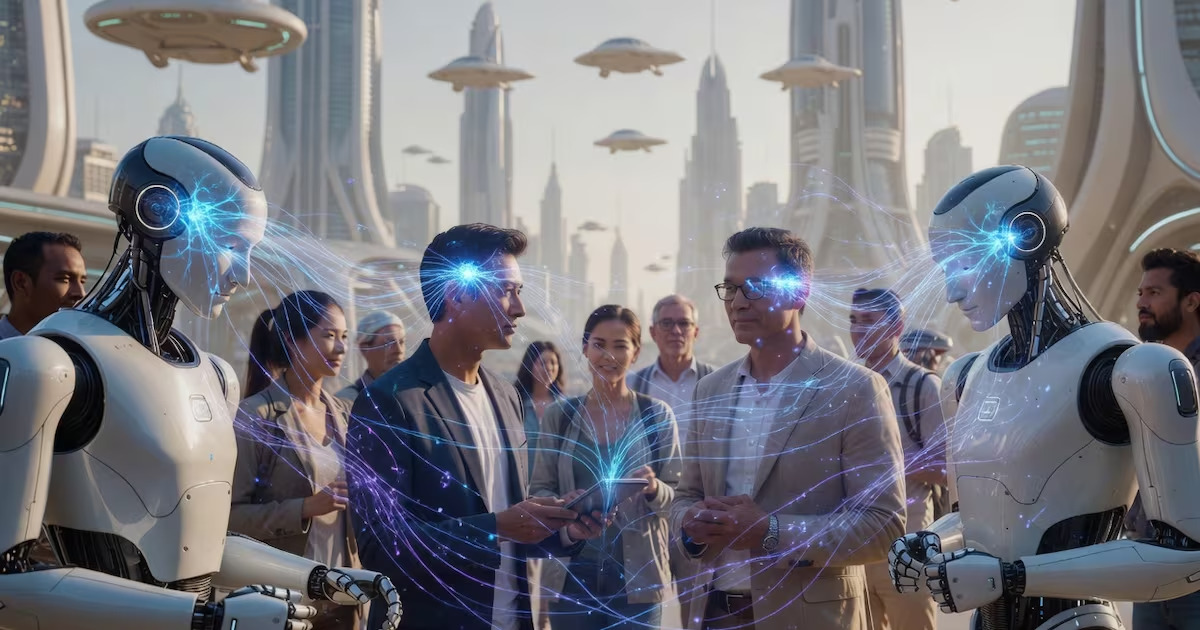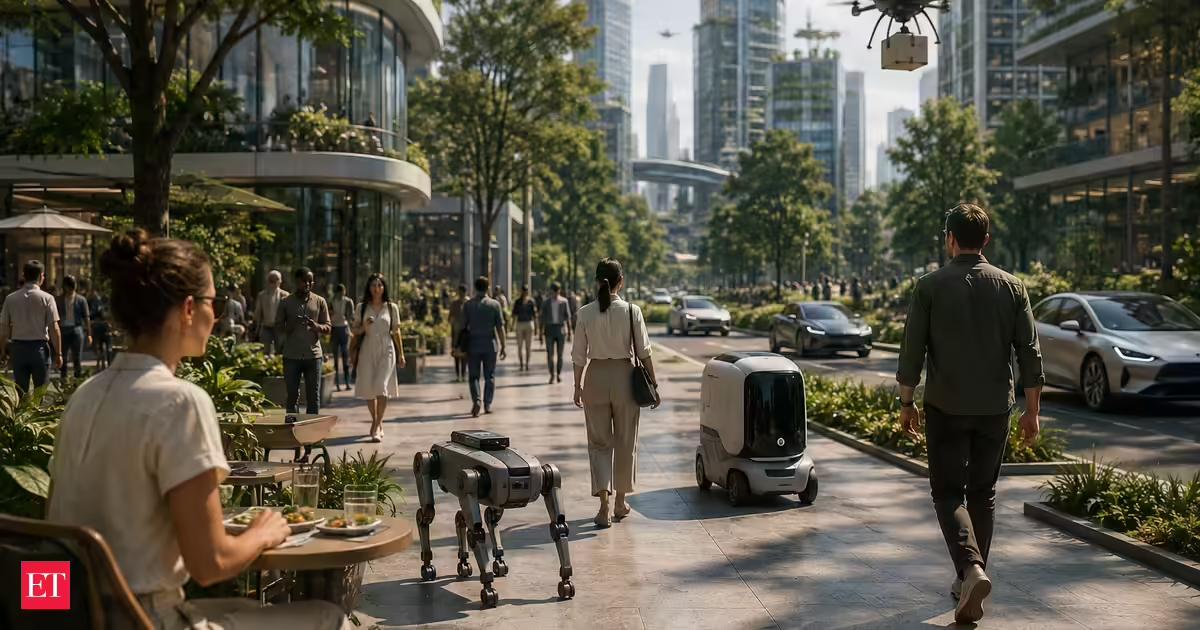
Dateline: July 30 2029 There was a time when the AI wars dominated every dinner table conversation. Back in 2026 no-one could agree on where AI would take us. Some predicted the end of work, others imagined limitless creativity. What we underestimated was what people crave most. By 2028 AI had become as unremarkable as electricity. Boardrooms were virtual by default. Every brand had its own AI creative director. Presentations, proposals and strategies were generated in seconds. Reality was negotiable. As one columnist described it, AI was “like a drunken genius”. Brilliant, unpredictable and everywhere. Everything was “maxxed”, but something was missing. The first signs appeared in 2026, when more than 60% of knowledge workers reported recurring digital burnout. Some called it “AI brain fry”. It wasn’t the technology they rejected, it was the constant mediation of life through screens and algorithms. Then came the tipping point. The 2028 global human connection index revealed companies investing in face-to-face experiences, employee communities and local culture consistently outperformed their digital-first peers. Its headline became the quote of the year: “In a world where intelligence is free, authenticity is priceless.” That started the revolution. Brands stopped competing for attention online and started earning it in real life. Luxury stores became destinations, tennis courts became experience spaces, and people queued to taste wine straight from the barrel while chatting to the winemaker, instead of watching another perfectly edited tasting reel. Then, as we always do, we overdid it. Experiences became so curated they felt more like movie sets than moments. Every photo was engineered. Every guest became a content creator. Authenticity had become another performance. The answer wasn’t another technological breakthrough. It was simplicity. Campfires instead of conference stages. Conversations instead of content. Communities over followers. Scratched vinyls, blurry old photos and moments that are lived without needing to be captured. Even social media adapted: filters faded, raw videos outperformed polished productions. Maybe it was the first generation of Facebook users rediscovering what the internet once felt like. The lesson wasn’t to reject AI. It was to remember what only humans can create. Connection. In 2029 the brands that stand out aren’t the ones creating the most AI-generated content. They’re the ones creating more moments that technology can support, but never replace. The future doesn’t become less digital. It becomes more human. Get real. /First published on Mindbullets July 30 2026. Vinyl cars make a comeback Like vinyl records of old, retro automobiles are suddenly back in fashion Dateline: April 27 2029 It’s been a while since manually-driven internal combustion engine cars gave way to electric vehicles with autopilot. Just as horses and buggies gave way to motor cars, the transition wasn’t easy, but it was inevitable. And, just as owning a horse became a costly luxury, an expensive hobby for those who truly enjoyed riding, so owning a car that you have to fill up with fuel and drive yourself has become an anachronistic occupation for those with time and money to spare. In Europe and the Americas it’s rare to find a city that allows self-piloted cars on its highways. It’s just too dangerous to allow human drivers to venture into the high-speed real-time computerised traffic flow, managed by the network of connected vehicles and intelligent infrastructure. There are no stoplights, and combustion engines are banned. Why would you want to own a car when you can summon a ride on demand, any time, that is guaranteed to get you somewhere safely at the lowest cost? Imagine the nightmare of insurance, parking and legal compliance, to say nothing of an idle asset rusting away while you’re asleep or working. But the modern version of the hipster — those guys who rode fixed-cog bicycles and played vinyl records — has a new fad: petrolheading. Finding and maintaining a fuel burner isn’t easy, and as for getting a driver’s licence, that’s often out of the question. As a result, most petrolheads gather in places beyond the city limits at abandoned racetracks and parking lots or in the desert, where they can indulge their amusement without breaking the law. Whatever they call it, it’s not driving. /First published on Mindbullets April 27 2016.Despite appearances to the contrary, Futureworld cannot and does not predict the future. The Mindbullets scenarios are fictitious and designed purely to explore possible futures, and challenge and stimulate strategic thinking.
NEWS FROM THE FUTURE: The return of real
Brands rediscover the value of human connection in an AI-saturated world
TL;DRAI
2028 data showed community-focused, face-to-face companies outperformed digital-first competitors as authenticity became the key differentiator. Tech leaders: as AI commoditizes intelligence, human connection becomes critical; enable real moments instead of replacing them.
728 words~3 min read