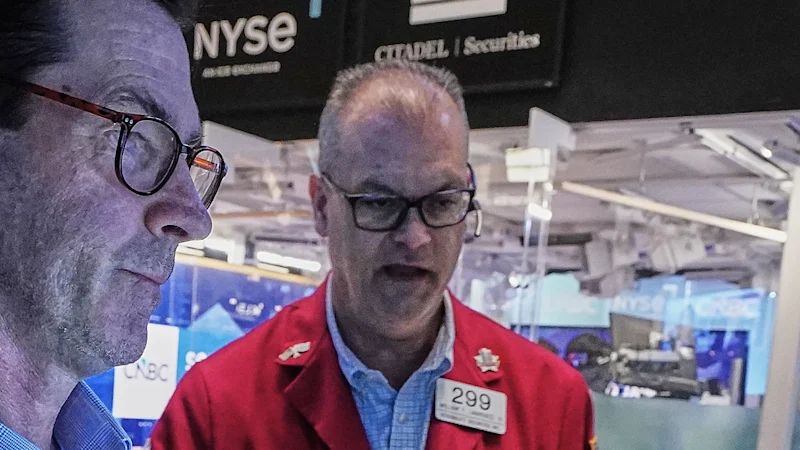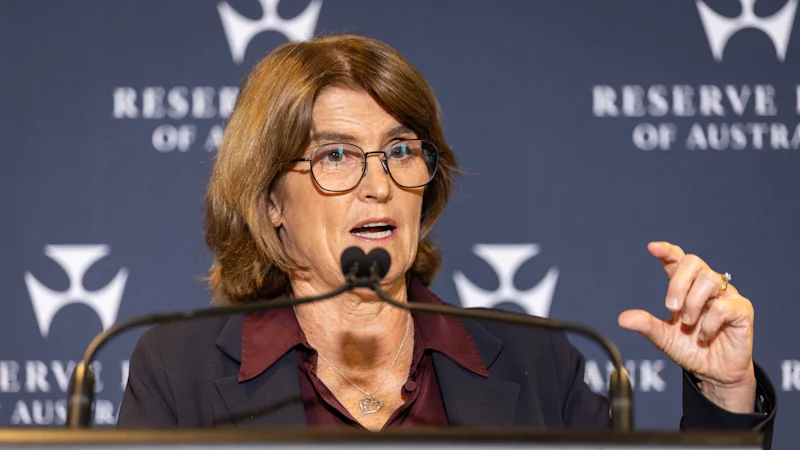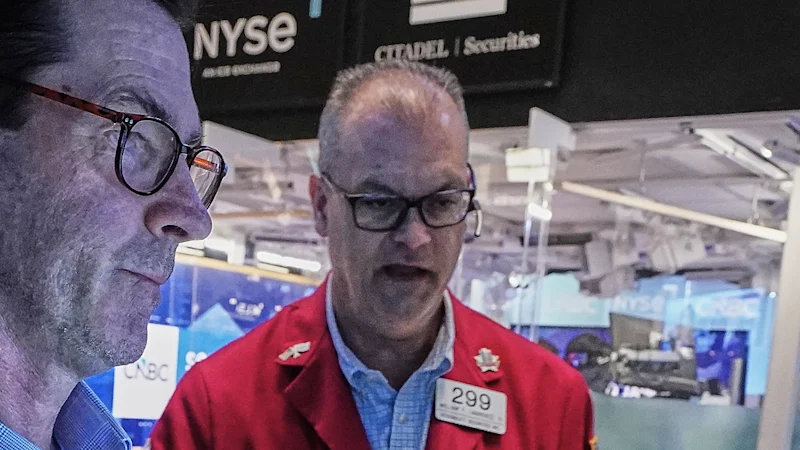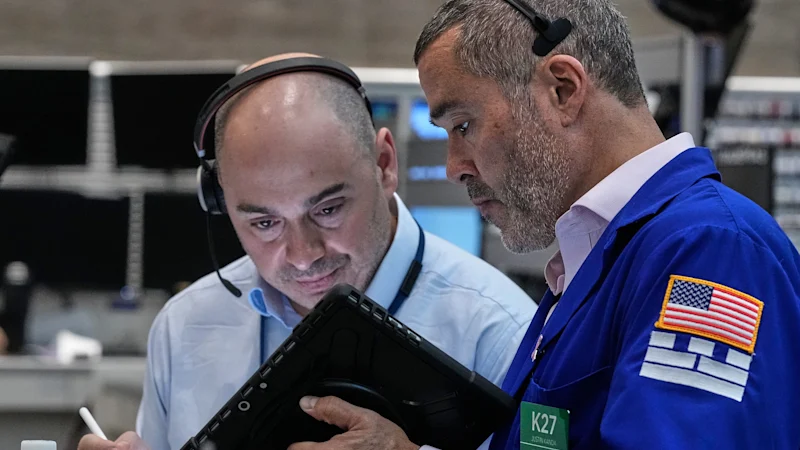
Staff writersUpdated August 11, 2026 — 10:22am,first published August 11, 2026 — 5:18amThe Australian sharemarket was little changed in early trade as investors assessed the latest developments on the US-Iranian stalemate over the Strait of Hormuz and awaited the interest rate decision by the Reserve Bank this afternoon.The S&P/ASX 200 added 3.80 points, or less than 0.1 per cent, to 9236.40 as of 10.13am AEST, having slid 0.3 per cent on Monday. The Australian dollar was trading at US70.56¢.The Reserve Bank announces its interest rates decision at 2.30pm AEST, with money markets and economists in near-unanimous agreement that the central bank’s monetary policy board will hold the cash rate steady at 4.35 per cent when it wraps up its latest two-day meeting.Wall Street has kicked off its week with a steady session.APReporting season is starting to heat up, with Southern Cross Media Group and Life360 both having reported results before the start of trading.Southern Cross Media, the business created from the merger of Kerry Stokes’ Seven West and radio group Southern Cross, announced a $13 million loss for the 2025 financial year due to deteriorating market conditions. The group, which owns the Seven Network, West Australian newspaper and Triple M network, said revenue dropped across television, newspapers and radio.On Wall Street overnight, the US stock market edged down from its all-time high on Monday, while oil prices rose on uncertainty about when the Strait of Hormuz could reopen and get the global flow of crude going again.The S&P 500 slipped 0.1 per cent from its record set on Friday. The Dow Jones Industrial Average dipped 60 points, or 0.1 per cent, and the Nasdaq composite fell 0.3 per cent.Momentum slowed for Wall Street stocks following a rally powered by soaring profits for big US companies. Reports are on track to show earnings per share leaped 50 per cent in the spring from a year earlier for companies in the S&P 500, according to FactSet. That would be the best growth since five years ago, when the economy was roaring out of the chasm created by COVID.Berkshire Hathaway is one of the latest companies to deliver a stronger profit for the last quarter than analysts expected, and the company built by legendary investor Warren Buffett said over the weekend that it’s also invested some of its massive pile of cash into stocks under its new CEO, Greg Abel.Berkshire Hathaway has been famous for buying stocks at what it considers low prices, and criticism has been high that US stocks generally look too expensive. But when they report strong profits, it helps them look less pricey. Berkshire Hathaway’s stock rose 1.5 per cent.MarineMax jumped 46.1 per cent after the retailer, marina operator and superyacht services provider said it agreed to sell itself for about $US1.5 billion in cash to a portfolio company of Blackstone.Varex Imaging leaped 48.8 per cent after Teledyne Technologies said it would buy the maker of X-ray imaging components for $US18.90 per share in cash.But Intel helped offset such gains and fell 4.1 per cent after saying it may sell $US15 billion of its stock. Such a move would dilute the ownership stakes of shareholders, and Intel said it would likely use the cash for investments to take advantage of the huge spending underway on artificial-intelligence technology.In the oil market, the price for a barrel of Brent crude rose 5 per cent to $US87.72. It had swung between $US72 and $US102 last month as hopes rose and fell that the United States and Iran could reach an agreement that would allow oil tankers to freely exit the Middle East again to deliver crude worldwide.But hopes are turning toward caution again, and the price of Brent is back to where it was earlier this month, as well as in mid-July, mid-June and in the first week of the war in March.Higher oil prices push inflation upward, and the main event for Wall Street this week will likely be Wednesday’s update on how bad inflation was last month. Economists expect it to show inflation slowed to 3.4 per cent from 3.5 per cent in June.A slowdown would mean less pressure on the Federal Reserve to raise interest rates.Higher rates would help keep a lid on inflation, but they would also slow the economy by making it more expensive for US households and companies to borrow money. They would also undercut prices for stocks and other investments.A report on Friday showing unexpectedly weak hiring across the USs lowered Wall Street’s expectations for an upcoming hike to interest rates. But traders still see a nearly 52 per cent chance the Fed will raise its main interest rate at its next meeting in September, according to data from CME Group.The yield on the 10-year Treasury rose to 4.70 per cent from 4.65 per cent late Friday. That’s up from 3.97 per cent before the war with Iran, and the climb has already sent rates for mortgages and other kinds of loans significantly higher.In other international markets, indexes were mixed in Europe after rising in much of Asia. Japan’s Nikkei 225 jumped 2.1 per cent for one of the world’s bigger moves.with AP, BloombergThe Market Recap newsletter is a wrap of the day’s trading. Get it each weekday afternoon.From our partners
ASX treads water ahead of RBA rate call; Oil rises on Hormuz concerns
The Australian sharemarket was little changed in early trade as investors assessed the latest developments on the Strait of Hormuz and awaited the interest rate decision by the Reserve Bank this afternoon.
TL;DRAI
Intel will sell $15B in stock to fund AI investments, signaling the urgency of catching up in AI capex. The dilutive move signals AI spending is now the primary valuation driver for tech; IT leaders must accelerate AI stack decisions.
876 words~4 min read