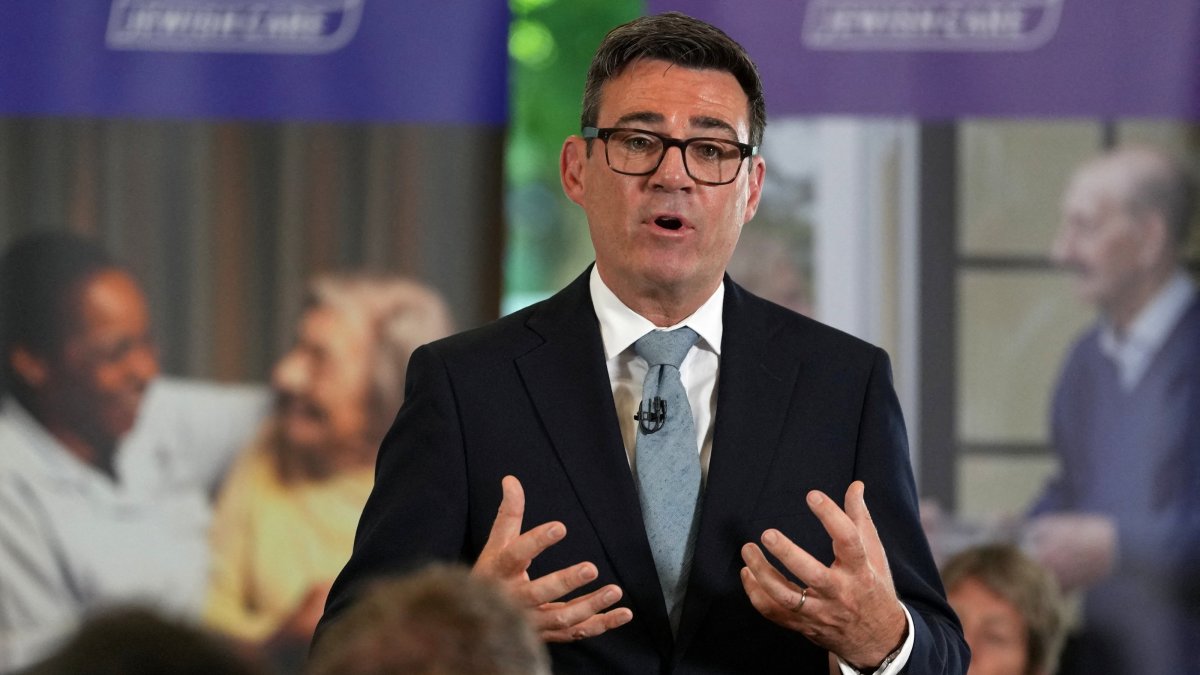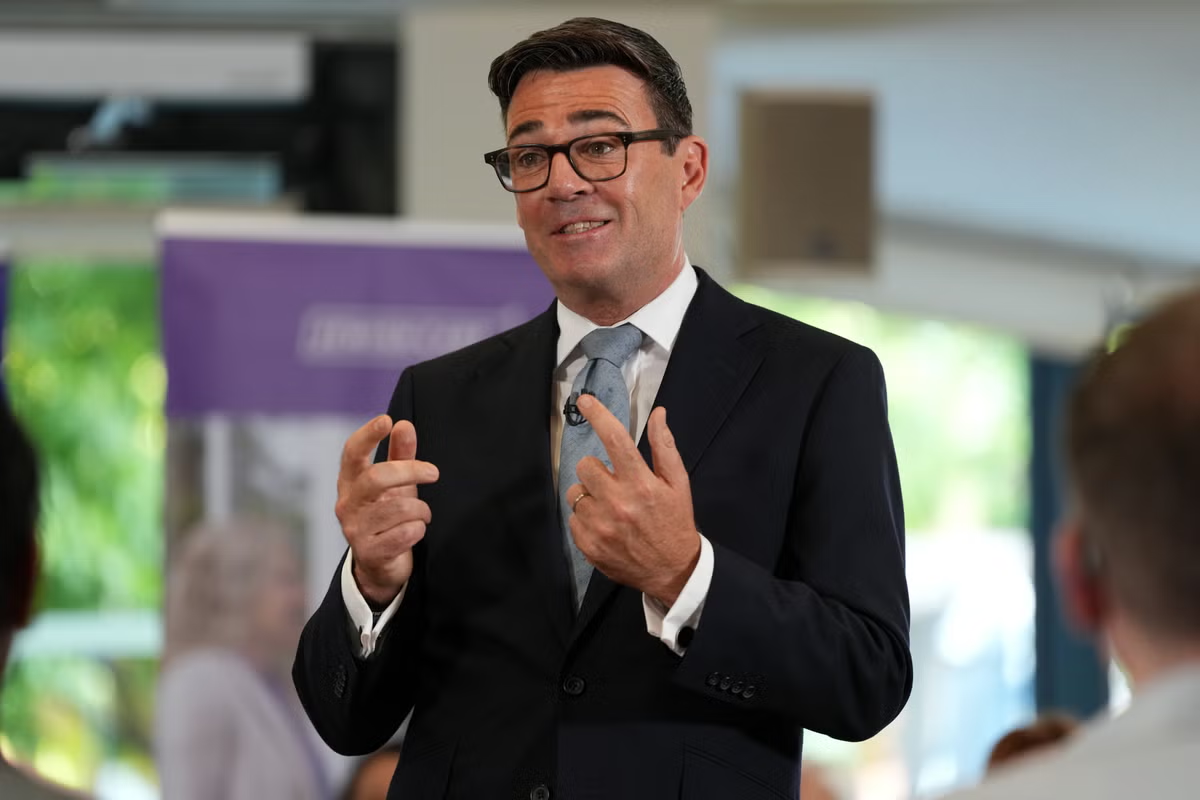
Councils are three-times more likely to deny people social care in some areas of England than in others amid a brutal postcode lottery.A coalition of charities said its analysis exposes the 'unfairness' of the current system and underlines the need for long-term reform.With Prime Minister Andy Burnham having vowed to use 'whatever political capital I have' to fix it, the Care and Support Alliance (CSA) has written to council leaders telling them they must capitalise on the opportunity.The CSA said its analysis of official data on requests to local authorities for adult social care support - such as a care home place or home help - found a stark difference in outcomes depending on where someone lived.Regionally, the East Midlands and South East had the highest rate of applications ending in no support being provided in 2024/25, at 75 per cent.The lowest regional rate was in the West Midlands, with just under two thirds (62 per cent) of requests ending in this way, according to the Department of Health and Social Care figures.But the CSA said rates also varied drastically within regions.Results for London showed the proportion of requests not leading to formal care and support ranged from 30 per cent in the borough of Bexley to 91 per cent in Lambeth, which the CSA said meant two people with similar care needs living just a few miles apart 'can face vastly different experiences when they ask for help'. Prime Minister Andy Burnham meets residents and staff members as he visits a care home in LondonWhile the gap in support between council areas was narrowest in the North East, it still ranged from 46 per cent to 76 per cent depending on where in that region someone lived, the CSA said.The local authority with the highest proportion of requests not leading to care was Portsmouth, with a rate of 93 per cent. Bexley was the lowest at 30 per cent.In some cases a request might be withdrawn or end in no provision of support because the person has died.A council may assist with providing social care support but still refuse to fund it, depending on the value of the person's assets.While the coalition accepted there will generally be some variation between councils in terms of support requests being met – reflecting differences in local communities and patterns of demand – 'the scale of the differences revealed by the data raises serious questions about fairness'.The CSA has written to councils stating: 'These challenges are not unique to your area and are reflected across England.'Too many people are left without the care and support they need, while others face very different charges depending on where they live.'This postcode lottery is unfair for the people who rely on care and support and unpaid carers, and underlines the need for long-term national reform.' Yvette Cooper, Secretary of State for Health and Social Care, speaks to residents as she visits a care home in LondonCaroline Abrahams, Emily Holzhausen and Jackie O'Sullivan, CSA co-chairs, said councils are facing a daily challenge of 'trying to balance rising demand, increasingly complex needs and growing costs against budgets that simply have not kept pace'.They added: 'This is not a problem councils can solve on their own.'Local leaders cannot be expected to overcome decades of underinvestment or fix a fundamentally unsustainable system one council at a time.'That is why we are writing to council leaders across England and asking them to join us in making the case for change.'The only way to end this unfairness is through national action, backed by sustainable funding that enables every council to provide the care and support its community needs.'They welcomed Mr Burnham's emphasis on a cross-party approach being necessary to fix social care, and the launch of a public survey 'to build consensus about what people should be able to expect from a modern care and support system before decisions are made about how it should be funded'.The CSA said: 'The opportunity for lasting reform is here. We must not let it pass.'During a visit to a care home last month, Mr Burnham said 'difficult, difficult decisions' could be needed on tax but insisted fixing the current problems in social care in England could save the NHS billions of pounds a year.The PM said it was a 'major dereliction of public duty' that successive governments had failed to address the crisis in social care.Baroness Louise Casey's review of social care is expected to publish a phase one report in autumn and a final report next year, with recommendations for reform.A Local Government Association spokesperson said: 'People who draw on care and support should be able to access and receive high-quality care that helps them live independent and fulfilling lives.'Councils continue to work hard to support this despite the significant and growing financial pressures they face.'The funding model for adult social care has fully outgrown itself and needs reform.'A Department of Health and Social Care spokesperson said: 'Too many older and disabled people are currently being let down by a broken system, and when social care fails, it affects the lives of families and communities across the country.'The Government has therefore made clear its determination to fix the adult social care system.'
Brutal postcode lottery of access to adult social care exposed
A coalition of charities said its analysis exposes the 'unfairness' of the current system and underlines the need for long-term reform.
868 words~4 min read