James Coombs is a design engineer who maintains the icon and illustration system for a product design system. He spent a week getting one illustration to animate between two states the way the designer's Figma prototype did, and most of that week went to discovering how the obvious approach fails.
The obvious approach: you have two SVGs, the same illustration in two poses, and you want to animate from one to the other. An SVG is a list of paths, and each path is a string of letter commands (move, line, curve) followed by the numbers that position them. So to animate, you interpolate the numbers: at the halfway point, every coordinate sits halfway between its start and end value. Ninety percent of the illustration animates perfectly this way. The other ten percent comes apart in mid-air.
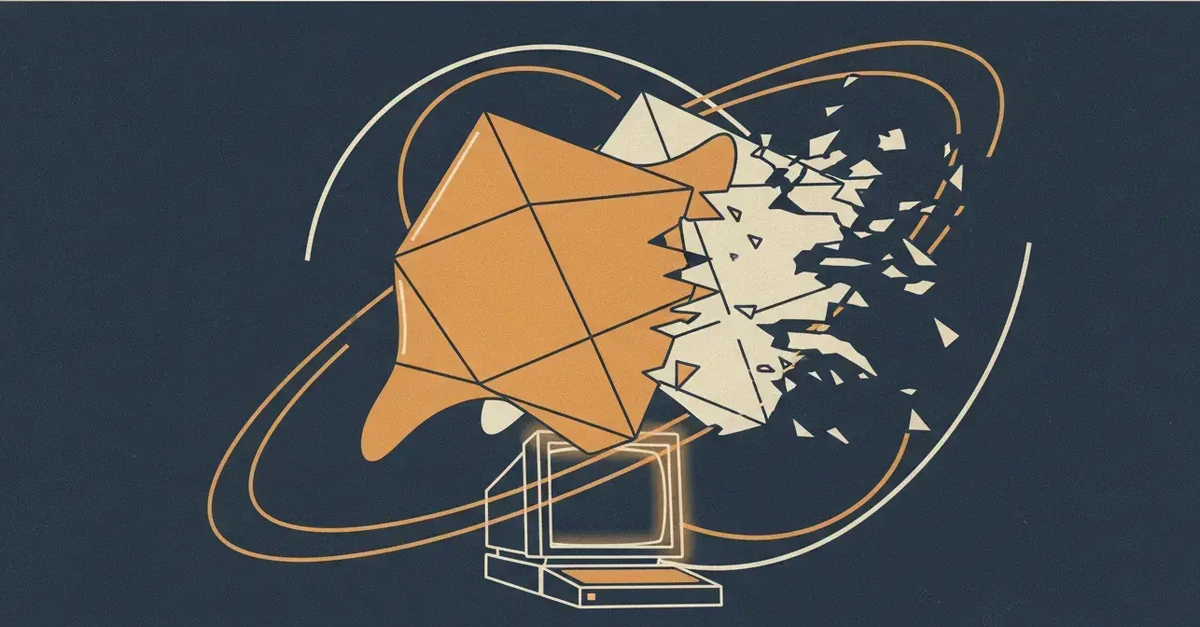
The part that came apart was a circle that rotates as it moves. Play it back frame by frame and you see path fragments detaching from their own shape and flying off, like a diagram of an explosion. It took me longer than I'd like to admit to understand why, because two causes were tangled together, not one.
A note before the mechanism: libraries handle SVG morphing already (MorphSVG, Flubber, KUTE among them). I'm not reimplementing them. I'm after the mechanism they hide, plus two things they don't hand you: how to recover a rigid motion from two designer poses, and a build-pipeline trap that corrupts the shapes before any library sees them.